Are You Earning Up to Your Potential?
Most personal trainers are undervaluing their time and skills. Our Personal trainer Revenue Calculator helps you find out what you should be making, and how to get there.
No guesswork. Just real numbers.
.webp)
As a fitness coach, onboarding a client comes with several data-driven questions. ‘What’s your current weight’ and ‘what’s your height’ is just the beginning.
As a personal trainer, you have to deal with such data daily - crunching the numbers and making sense to draw out that perfect nutrition and workout plan for your clients.
BMR is one of the most important measurements you need to make in order to assess your clients' fitness level.
Whenever your client wants to lose weight, their first thought is "I need to cut my calories and get more exercise." This is because the details of losing weight and gaining it back are not well understood.
BMR metric will assist you in meal planning for your clients and you'll be able to determine exactly how many calories their body needs to function on a daily basis, as well as how many calories they need in order to maintain your current weight or lose weight.
BMR CalC will then create a meal plan based on this formula so that every meal you eat will ensure maximum results while still being nutritious.
The math might seem complex to many people (because it is), and it looks like this:
STEP 1: Calculating Base Metabolic Rate
Men: 66 + (13.7 X weight in kg) + (5 X height in cm) - (6.8 X age in years)
Women: 655 + (9.6 X weight in kg) + (1.8 X height in cm) - (4.7 X age in years)
💪 Got an idea for a brand? Let's bring it to life.
Launch your own fitness app with FitBudd in minutes!
💪 Got your brand name? Let’s bring it to life.
Launch your own fitness app with FitBudd in minutes!



88% trainers worldwide gave us 5 stars
Transform your fitness business with the power of your branded app on iOS and Android.
Try for FREESTEP 2: Find your 'maintenance calories' by taking into consideration your activity level
Once you have your Base Metabolic Rate ('BMR'), you need to find your 'maintenance calories'
Multiply your BMR by an appropriate activity factor
Sedentary = BMR X 1.2 (little or no exercise, desk job)
Lightly active = BMR X 1.375 (light exercise/sports 1-3 days/wk)
Mod. active = BMR X 1.55 (moderate exercise/sports 3-5 days/wk)
Very active = BMR X 1.725 (hard exercise/sports 6-7 days/wk)
Extra. Active = BMR X 1.9
STEP 3: Once you have this number, you look at your goal
Weight gain/muscle gain (calorie surplus) - add 15% of calories per day
weight loss / fat loss (calorie deficit) - minus 15% of calories per day
STEP 4: Macronutrient ratios
40% protein 30% carbs 30% fat of daily calories for cutting
40% carbs 30% protein 30% fat of daily calories for bulking
It’s a lengthy calculation! And while doing it for a handful of clients is manageable, it can get out of hand when you have several clients.
What if we told you that there’s an easier way to automate all these calculations and determine your clients’ Basal Metabolic Rate (BMR) in no time?
FitBudd's all-new BMR feature automates these calculations as your client advances in their fitness journey and even updates the minimum calories requirement to match the ongoing level.
To achieve this, we have integrated proven and standardized equations into our nutrition builder. The FitBudd platform lets you ask a set of questions to your clients and then uses this information for accurate calculations.
And when your clients progress in their fitness journey and feed their information on the app, like weight change, the platform updates their BMR calculation automatically.
Are you still wondering how you can do this?
To assign a BMR based meal plan to a client:
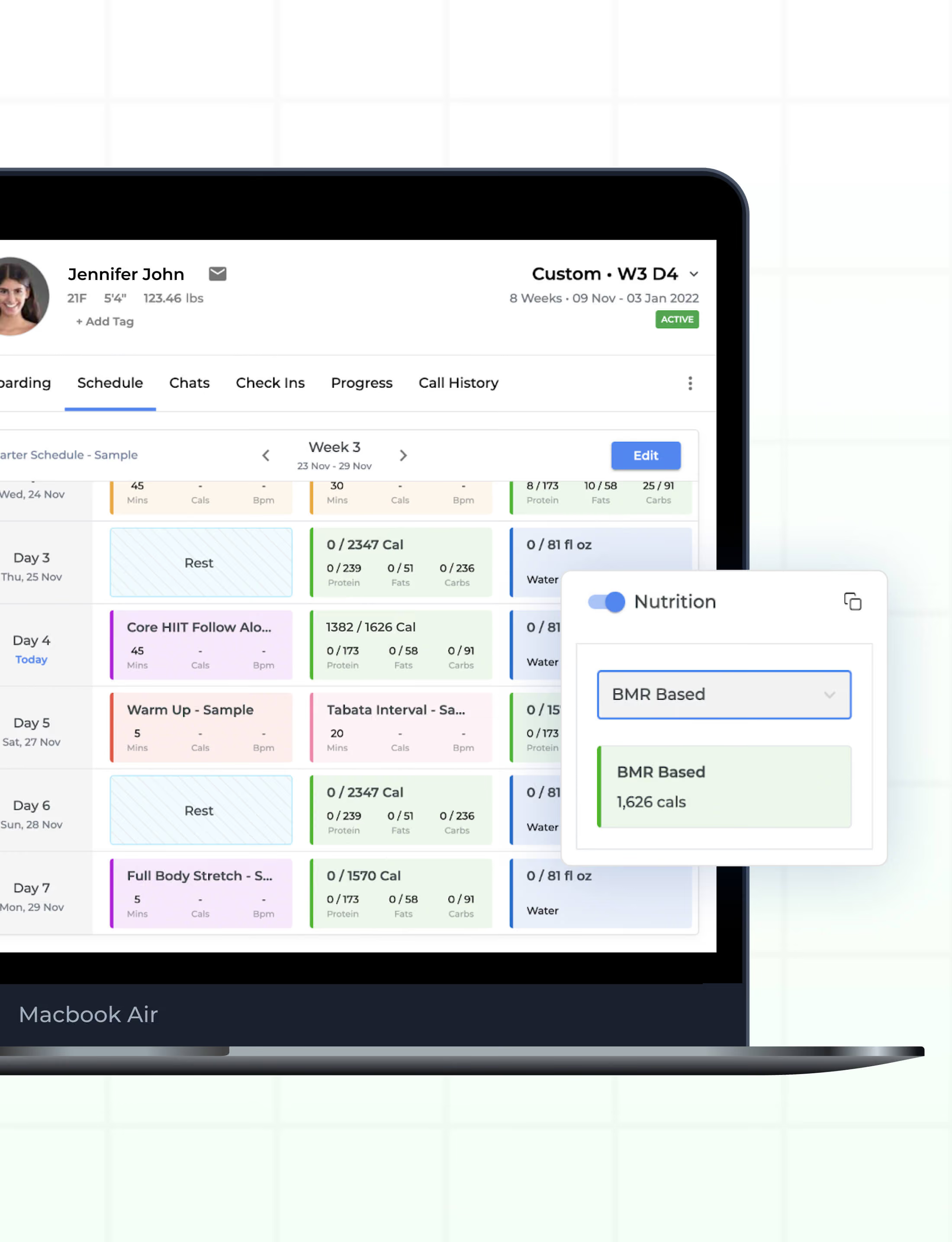
1. Go to the ‘Clients’ section, move to the ‘Active Clients’ section and open the profile of the client you want to assign the Meal Schedule to. Click on the ‘Schedule’ tab.
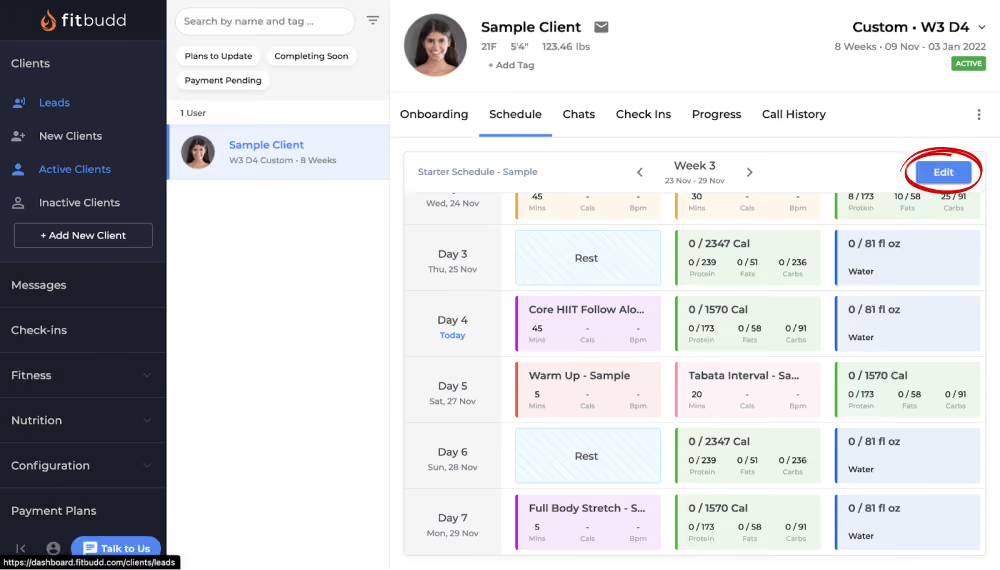
2. Click on the blue ‘Edit’ button on the right side of the screen. Switch ‘ON’ the toggle for nutrition.
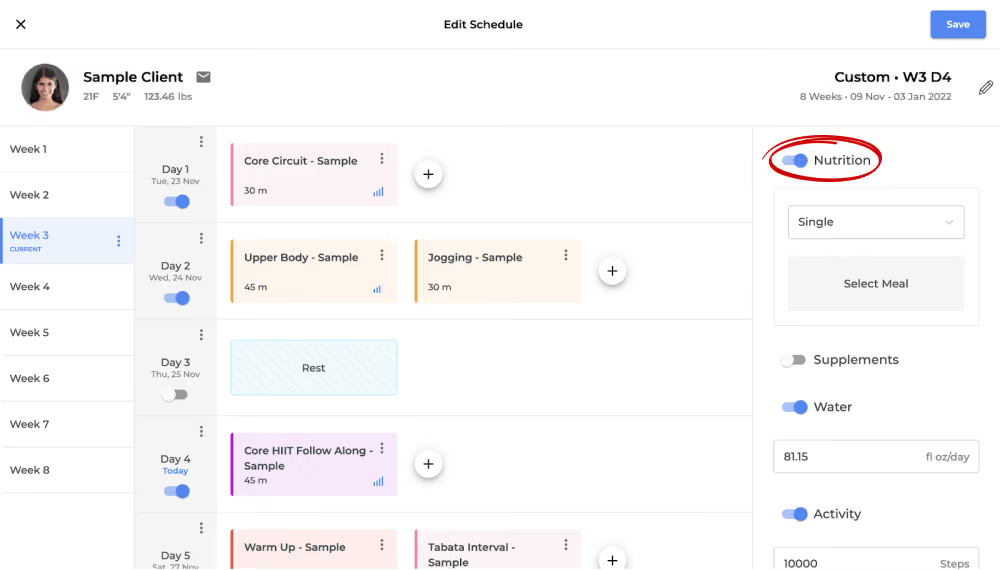
3. In the drop-down menu under Nutrition, select the ‘BMR Based’ option.
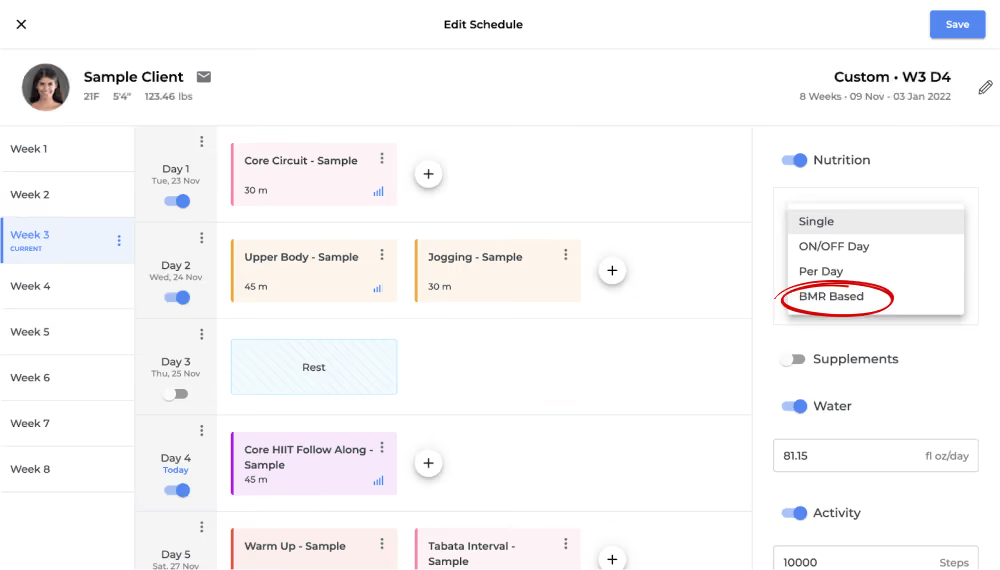
4. Once you select the ‘BMR Based’ option, a macro-based meal plan will be assigned to your client based on their basic details such as age, weight, height and the answer they have provided in the onboarding questionnaire. Click on ‘Save’ on the top right corner of the screen to assign this schedule to your client.
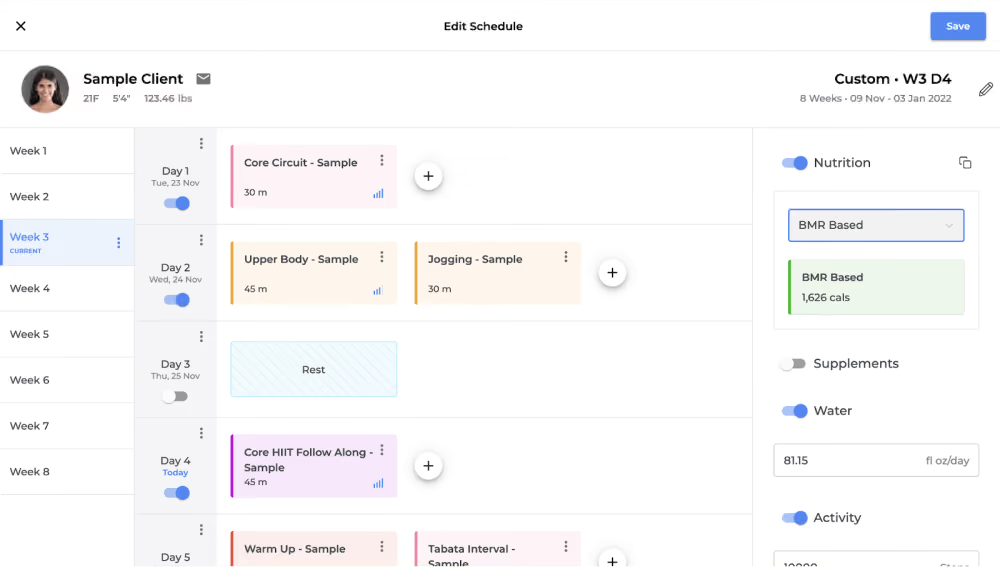
Calculating BMR is the first step in the process of determining how many calories you need for optimal nutrition. Ultimately, this will help you create a weekly meal plan/ diet plan for your clients. It will help you save time and choose healthy meal plans, personalized meal plans and create balanced nutrition for your clients.
This is just one feature. The FitBudd platform simplifies all the tasks that are required to run a successful fitness business. You can explore all its features and see if it’s the right fit for you!
So, why wait?
Get Started for FREE!


Meet the author
Kinshuk Snehi
Kinshuk Snehi, FitBudd's digital maestro, weaves marketing magic and leverages his deep understanding of FitBudd to empower personal trainers.
Frequently Asked Questions

Yangzey Sherpa leads content strategy at FitBudd, overseeing content planning and execution across fitness-focused digital channels. With over five years of experience in SEO and content, she works closely with the fitness industry to ensure content aligns with the needs of coaches, trainers, and gym owners. Her role keeps her deeply connected to fitness business workflows, coaching models, and how professionals use digital platforms to grow.


Apra Pathak has worked closely within the fitness niche for several years, supporting personal trainers and fitness coaches through content and digital marketing initiatives. Her experience centers on understanding how fitness professionals build visibility, communicate value, and engage clients online. Through sustained involvement with fitness-focused platforms and audiences, she has developed a strong understanding of the digital needs and growth challenges faced by modern fitness businesses.

Aishwarya Mehra has been actively involved in fitness-focused digital marketing, working closely with brands and platforms that serve coaches, trainers, and fitness businesses. Her experience spans engagement-driven strategies designed specifically for fitness audiences. Through ongoing exposure to fitness campaigns and communities, she remains closely aligned with how fitness professionals attract, convert, and retain clients in digital environments.

Suchandra Das has contributed content within the fitness niche, working on resources designed for coaches, trainers, and fitness business owners. Her experience involves supporting fitness-related topics with clear, structured, and accessible content. Through consistent involvement with fitness-focused platforms, she has developed familiarity with coaching workflows, client communication, and the informational needs of fitness professionals.
FitBudd is a fitness technology platform built exclusively for coaches, personal trainers, gym owners, and fitness professionals. The platform supports fitness businesses through branded apps, white-labeled solutions, and websites designed around real coaching and training workflows. FitBudd works closely with the global fitness community, maintaining deep, ongoing involvement in the fitness industry.

Ankit Uniyal has worked extensively with fitness-focused content, supporting platforms that cater to personal trainers, gym owners, and fitness professionals. His experience includes optimizing and structuring content around fitness-related search behavior and user intent. Through continued involvement in the fitness niche, he has gained a strong understanding of how trainers and coaches build discoverability and authority online.

Saumya Mittal is the Co-Founder and CEO of FitBudd. Since 2021, she has been actively engaged in the fitness technology sector, collaborating with global fitness companies to foster digital growth and scalable operations. With over a decade of experience leading high-impact projects in engineering and operations, Saumya has a strong background in developing reliable and scalable systems. Through FitBudd, she is dedicated to addressing the evolving needs of fitness professionals worldwide.

Kinshuk Snehi has been closely involved in the fitness space for over four years. Through his work at FitBudd, he has contributed to shaping how fitness professionals build their online presence, attract clients, and scale sustainable coaching businesses. Deeply interested in the intersection of fitness, technology, and growth, Kinshuk brings a hands-on understanding of the challenges faced by modern trainers. His passion lies in building systems and strategies that support long-term consistency, both in fitness journeys and business growth.

Kanika Verma has been closely involved in building solutions for the fitness industry, working with platforms used by coaches and trainers globally. Her experience includes direct exposure to fitness coaching workflows and operational needs. Through sustained involvement in fitness-focused product development, she has developed a strong understanding of how fitness professionals manage clients, programs, and daily operations.

Tanya Sharma has worked on branding initiatives within the fitness niche, supporting fitness platforms and businesses with visual identity design. Her experience includes creating brand systems used by coaches, trainers, and fitness-focused products. Through ongoing involvement in fitness-related design projects, she remains closely connected to how fitness brands communicate trust and professionalism.

Niharika Sonavane has contributed to visual design projects within the fitness industry, supporting platforms and brands serving fitness professionals. Her experience spans creating digital assets used across fitness apps, websites, and marketing materials. Through continued work in the fitness niche, she remains closely aligned with the visual communication needs of coaches and fitness businesses.

Elesh Patel has worked extensively on marketing initiatives within the fitness niche, managing paid campaigns for fitness-focused products and services. His experience includes supporting platforms that target personal trainers, gym owners, and fitness creators. Through long-term involvement in fitness marketing, he remains closely connected to how fitness professionals discover and adopt digital tools.

Retain Your Fitness Clients Guide
Learn strategies to keep your clients motivated and committed to their fitness journey with our comprehensive guide.
Download Now
Templates
These functional templates have the power to make any fitness trainer's life easier.
Subscribe To
Our Blog