Are You Earning Up to Your Potential?
Most personal trainers are undervaluing their time and skills. Our Personal trainer Revenue Calculator helps you find out what you should be making, and how to get there.
No guesswork. Just real numbers.
.webp)
As a coach, understanding human movement is essential, and two of the most fundamental anatomical movements are flexion and extension. These terms describe how joints move, impacting everything from weightlifting techniques to rehabilitation exercises. Let’s break down flexion vs extension, explore examples, and discuss their significance in training and movement.
What Is Flexion and Extension?
In anatomical terms:
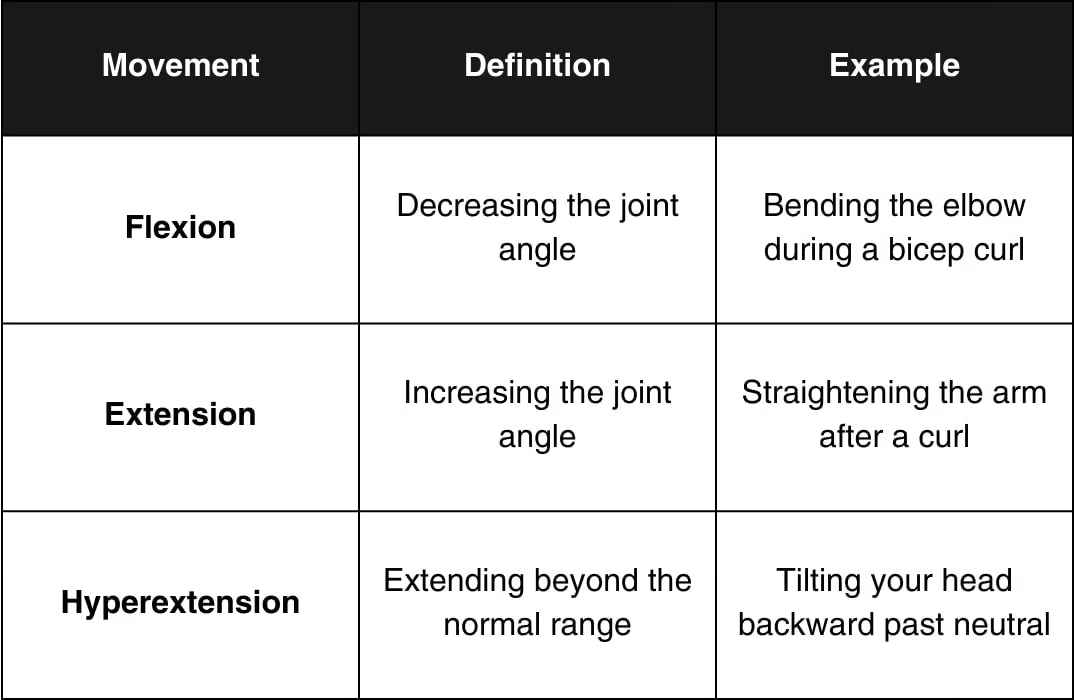
- Flexion refers to a movement that decreases the angle between two body parts.
- Extension refers to the movement that increases the angle between two body parts.
For example, when you perform a bicep curl, you flex your elbow, bringing your forearm closer to your upper arm. When you straighten your arm back, you extend the elbow.
Flexion vs Extension: Key Differences
What Are Examples of Flexion and Extension at Each Joint?
1. Shoulder Flexion and Extension
- Shoulder flexion: Raising your arm forward, like when performing a front raise.
- Shoulder extension: Moving your arm backward, such as in a triceps dip.
2. Arm Flexion vs Extension
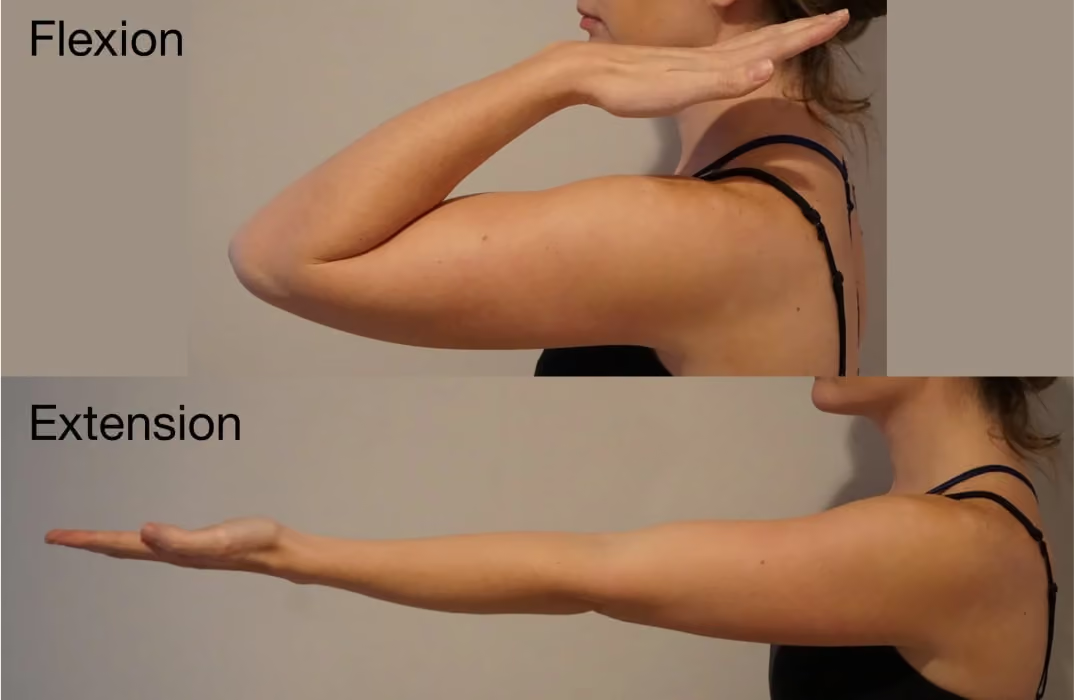
- Arm flexion: Arm flexion involves bending the arms during a bicep curl.
- Arm extension: Straightening the arm after a push-up.
3. Hip Flexion vs Extension
- Hip flexion: Lifting your knee toward your chest, as in high knees.
- Hip extension: Driving your leg backward, like in a sprint.
4. Knee Flexion vs Extension
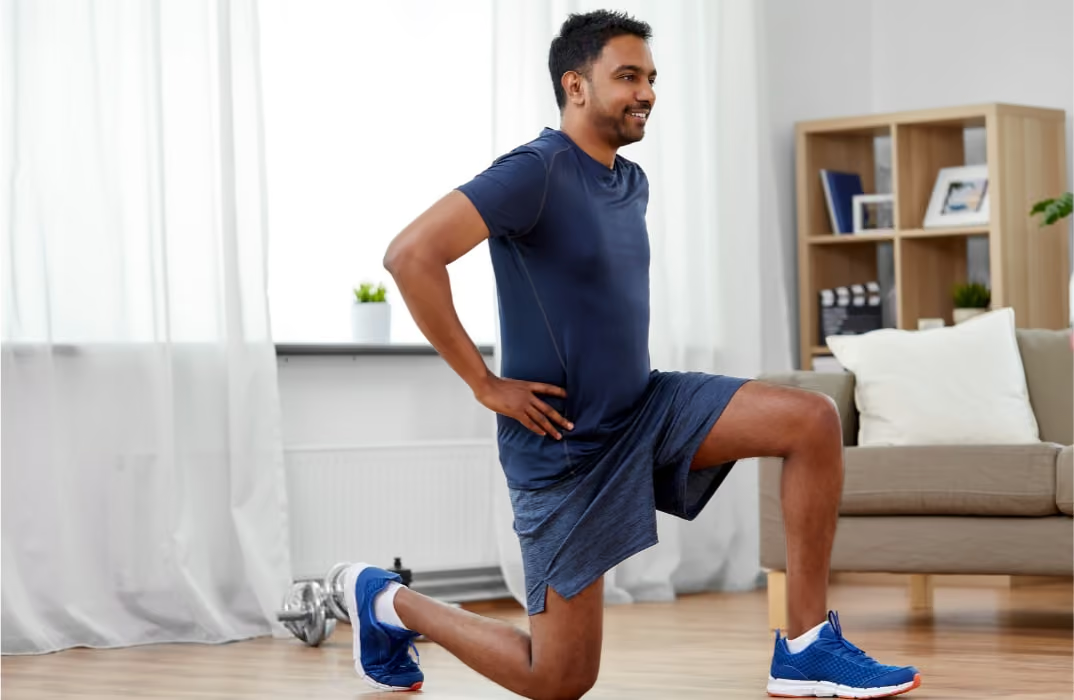
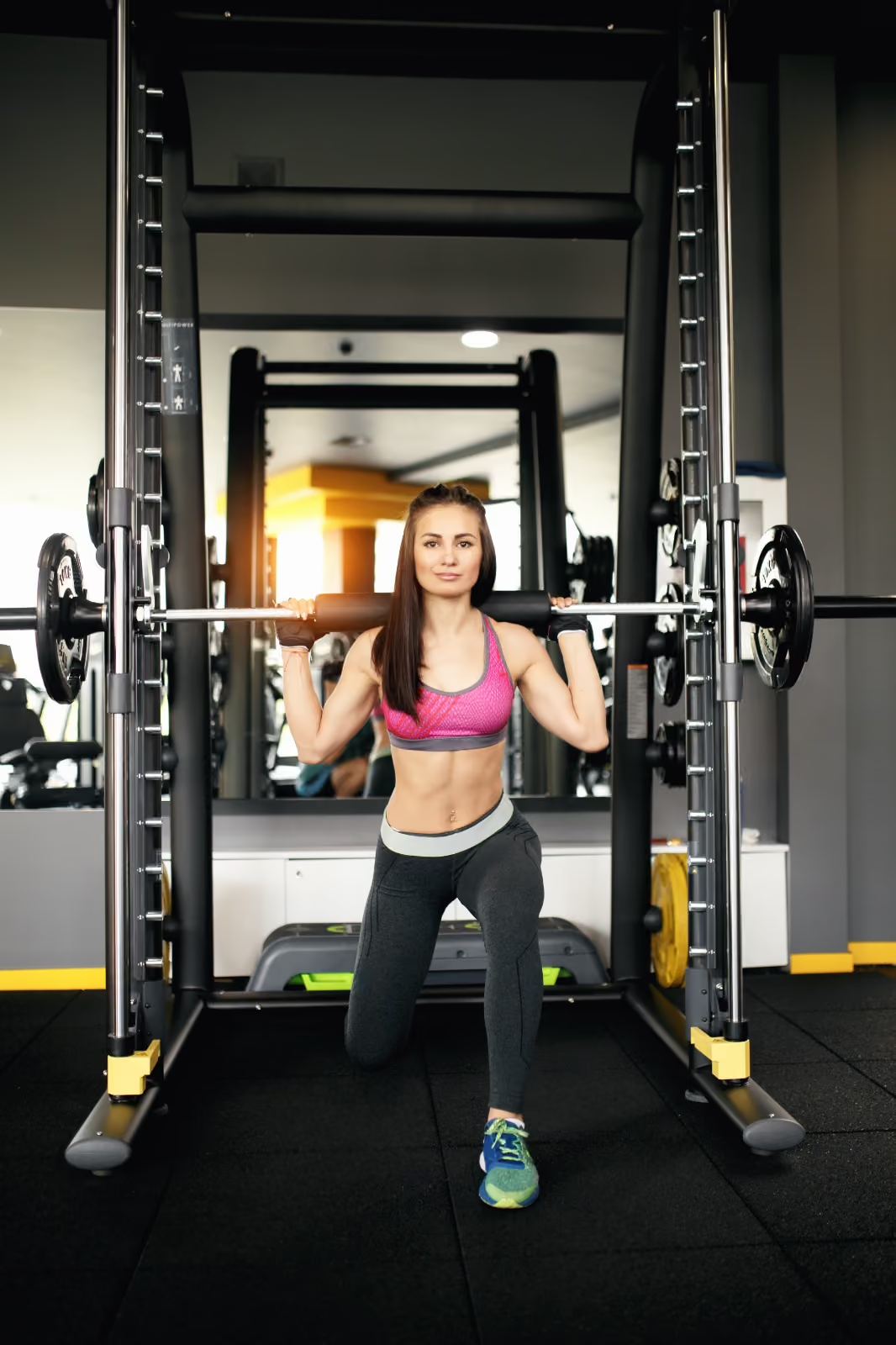
- Knee flexion: Knee flexion involves bending the knee, resulting in a bent position, like in a squat descent.
- Knee extension: Straightening your knee as you stand up from a squat.
5. Wrist Flexion vs Extension
- Wrist flexion: Bending the wrist downward, like in wrist curls.
- Wrist extension: Lifting the wrist upward, such as in a reverse wrist curl.
6. Leg Flexion vs Extension
- Leg flexion: Bringing the foot closer to the glutes, like in a hamstring curl.
- Leg extension: Straightening the leg, as in a leg extension machine.
Another example of flexion in the leg is plantar flexion, which occurs when the foot points downward.
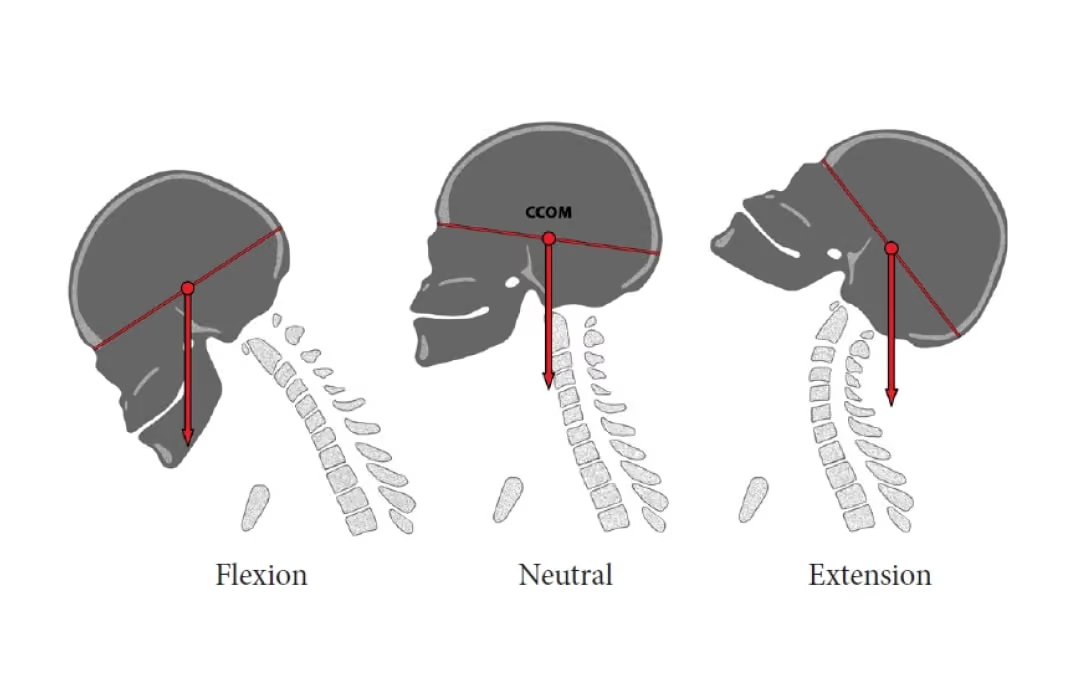
7. Neck Flexion vs Extension
- Neck flexion: Looking down at your chest.
- Neck extension: Looking up toward the ceiling.
💪 Got an idea for a brand? Let's bring it to life.
Launch your own fitness app with FitBudd in minutes!
💪 Got your brand name? Let’s bring it to life.
Launch your own fitness app with FitBudd in minutes!



88% trainers worldwide gave us 5 stars
Transform your fitness business with the power of your branded app on iOS and Android.
Try for FREEHyperextension is movement of a joint past its normal end range. It is the term coaches usually mean when a knee locks out too far or the lower back overarches under load. It is not a type of extension in the anatomical sense, it is extension taken beyond safe limits, and it is one of the most common causes of joint strain in the gym.
Understanding Range of Motion and Extension Flexion
Understanding the range of motion and extension and flexion is crucial for maintaining proper joint health and preventing injuries. Range of motion refers to the distance a joint can move or bend comfortably in each direction. For instance, the hip joint has a larger range of motion than the knee joint, allowing for more extensive movements.
Extension flexion" is not an anatomical term, and the definition given is wrong. Movement beyond a joint's normal range is hyperextension. Publishing an invented definition on an anatomy page is the fastest way to lose Copilot and Bing answer eligibility, because both cross-check definitional claims against Cleveland Clinic, Physiopedia, Kenhub, and TeachMeAnatomy, all of which contradict this sentence.
Each joint has a specific normal range of motion, which can be influenced by factors such as age, injury, and disease. For example, a healthy hip joint can flex up to 120 degrees, while the knee joint typically flexes up to 135 degrees. Understanding these limits helps individuals avoid overstretching or overexerting themselves, which can lead to injuries. By respecting each joint's normal range of motion, athletes and fitness enthusiasts can maintain joint health and enhance their performance.
Why Does Flexion and Extension Balance Matter?
Balanced movement is essential for maintaining proper joint health and preventing injuries. Balanced movement refers to the ability to move joints through their full range of motion without any restrictions or limitations. Maintaining a balance between flexion and extension movements is crucial to avoid overstretching or overexerting specific joints.
For example, if an individual only performs flexion movements, such as bending forward, they may develop tight muscles in the front of their body and weak muscles in the back. This imbalance can lead to poor posture and increase the risk of injury. Conversely, if an individual only performs extension movements, such as standing up straight, they may develop tight muscles in the back of their body and weak muscles in the front. This can also lead to poor posture and increase the risk of injury.
To prevent these issues, it’s essential to incorporate a variety of movements into your training routine. This ensures that all muscles are equally strengthened and stretched, promoting better posture and reducing the risk of injury. You can achieve optimal joint health and overall physical performance by maintaining a balance between flexion and extension movements.
Flexion vs Extension in Strength Training
Understanding flexion and extension is crucial when coaching athletes and clients. Here are a few ways they apply to strength training:
- Deadlifts and Squats: Hip and knee flexion occur during the downward phase, and extension occurs as you stand up.
- Push-ups and Bench Press: Elbow flexion happens during the lowering phase, and extension as you push up.
- Pull-ups: Arm flexion happens as you pull up, and extension occurs as you lower yourself.
Common Mistakes in Training
Several common mistakes individuals make when training can lead to injuries or poor joint health. One of the most frequent errors is overstretching or overexerting specific joints. This can result in injuries such as muscle strains or joint sprains, which can sideline an athlete for weeks or even months.
Another common mistake is neglecting to warm up or cool down properly. Warming up before exercise increases blood flow to the muscles and prepares the joints for movement, reducing the risk of injury. Cooling down after exercise helps reduce muscle soreness and aids in recovery, preventing injuries in the long run.
Additionally, many individuals fail to incorporate balanced movement into their training routine. This oversight can lead to muscle imbalances and increase the risk of injury. For example, if an individual only performs exercises that work the muscles in the front of their body, they may develop weak muscles in the back. This imbalance can lead to poor posture and increase the risk of injury.
In conclusion, understanding the range of motion and extension flexion, maintaining balanced movement, and avoiding common mistakes in training are essential for maintaining proper joint health and preventing injuries. By incorporating these principles into their training routine, individuals can reduce their risk of injury and maintain optimal joint health.

Injury Prevention and Proper Mechanics
One key benefit of understanding flexion and extension is injury prevention. Overuse or improper movement patterns can lead to issues such as hyperextension injuries in the knee or poor posture from excessive spine flexion.
Key Coaching Tips:
- Avoid hyperextension of joints, especially the lower back, knees, and elbows.
- Strengthen muscles responsible for both flexion and extension to improve balance and mobility.
- Teach clients proper joint alignment to reduce strain and risk of injury.
Conclusion
Mastering flexion and extension is crucial for coaches working with athletes, gym-goers, and rehabilitation clients. Whether you’re training for strength, mobility, or injury prevention, knowing the difference between flexed and extended positions ensures safe and effective movement patterns.



Meet the author
Apra Pathak
Meet Apra Pathak, a social media virtuoso and expert blogger dedicated to helping personal trainers thrive digitally.
Frequently Asked Questions

Yangzey Sherpa leads content strategy at FitBudd, overseeing content planning and execution across fitness-focused digital channels. With over five years of experience in SEO and content, she works closely with the fitness industry to ensure content aligns with the needs of coaches, trainers, and gym owners. Her role keeps her deeply connected to fitness business workflows, coaching models, and how professionals use digital platforms to grow.


Apra Pathak has worked closely within the fitness niche for several years, supporting personal trainers and fitness coaches through content and digital marketing initiatives. Her experience centers on understanding how fitness professionals build visibility, communicate value, and engage clients online. Through sustained involvement with fitness-focused platforms and audiences, she has developed a strong understanding of the digital needs and growth challenges faced by modern fitness businesses.

Aishwarya Mehra has been actively involved in fitness-focused digital marketing, working closely with brands and platforms that serve coaches, trainers, and fitness businesses. Her experience spans engagement-driven strategies designed specifically for fitness audiences. Through ongoing exposure to fitness campaigns and communities, she remains closely aligned with how fitness professionals attract, convert, and retain clients in digital environments.

Suchandra Das has contributed content within the fitness niche, working on resources designed for coaches, trainers, and fitness business owners. Her experience involves supporting fitness-related topics with clear, structured, and accessible content. Through consistent involvement with fitness-focused platforms, she has developed familiarity with coaching workflows, client communication, and the informational needs of fitness professionals.
FitBudd is a fitness technology platform built exclusively for coaches, personal trainers, gym owners, and fitness professionals. The platform supports fitness businesses through branded apps, white-labeled solutions, and websites designed around real coaching and training workflows. FitBudd works closely with the global fitness community, maintaining deep, ongoing involvement in the fitness industry.

Ankit Uniyal has worked extensively with fitness-focused content, supporting platforms that cater to personal trainers, gym owners, and fitness professionals. His experience includes optimizing and structuring content around fitness-related search behavior and user intent. Through continued involvement in the fitness niche, he has gained a strong understanding of how trainers and coaches build discoverability and authority online.

Saumya Mittal is the Co-Founder and CEO of FitBudd. Since 2021, she has been actively engaged in the fitness technology sector, collaborating with global fitness companies to foster digital growth and scalable operations. With over a decade of experience leading high-impact projects in engineering and operations, Saumya has a strong background in developing reliable and scalable systems. Through FitBudd, she is dedicated to addressing the evolving needs of fitness professionals worldwide.

Kinshuk Snehi has been closely involved in the fitness space for over four years. Through his work at FitBudd, he has contributed to shaping how fitness professionals build their online presence, attract clients, and scale sustainable coaching businesses. Deeply interested in the intersection of fitness, technology, and growth, Kinshuk brings a hands-on understanding of the challenges faced by modern trainers. His passion lies in building systems and strategies that support long-term consistency, both in fitness journeys and business growth.

Kanika Verma has been closely involved in building solutions for the fitness industry, working with platforms used by coaches and trainers globally. Her experience includes direct exposure to fitness coaching workflows and operational needs. Through sustained involvement in fitness-focused product development, she has developed a strong understanding of how fitness professionals manage clients, programs, and daily operations.

Tanya Sharma has worked on branding initiatives within the fitness niche, supporting fitness platforms and businesses with visual identity design. Her experience includes creating brand systems used by coaches, trainers, and fitness-focused products. Through ongoing involvement in fitness-related design projects, she remains closely connected to how fitness brands communicate trust and professionalism.

Niharika Sonavane has contributed to visual design projects within the fitness industry, supporting platforms and brands serving fitness professionals. Her experience spans creating digital assets used across fitness apps, websites, and marketing materials. Through continued work in the fitness niche, she remains closely aligned with the visual communication needs of coaches and fitness businesses.

Elesh Patel has worked extensively on marketing initiatives within the fitness niche, managing paid campaigns for fitness-focused products and services. His experience includes supporting platforms that target personal trainers, gym owners, and fitness creators. Through long-term involvement in fitness marketing, he remains closely connected to how fitness professionals discover and adopt digital tools.


Creative Fitness Challenges Ebook
Discover exciting challenges to boost your workouts and keep your fitness journey thrilling.
Download Now
Templates
These functional templates have the power to make any fitness trainer's life easier.
Subscribe To
Our Blog