Are You Earning Up to Your Potential?
Most personal trainers are undervaluing their time and skills. Our Personal trainer Revenue Calculator helps you find out what you should be making, and how to get there.
No guesswork. Just real numbers.
.webp)
Introduction to Progress Tracking
Progress tracking, as the name signifies, measures a client's progress in meeting their goals. It involves setting benchmarks, collecting data, and making adjustments as necessary to ensure that clients remain on track toward reaching their objectives.
One can use progress tracking for everything from health and fitness tracking to even business development.
The benefits of progress tracking include the following:
- Increased retention rates.
- Improved motivation levels among clients.
- Increased accuracy with services provided.
- Greater efficiency in goal-setting activities.
Additionally, progress tracking allows businesses to stay organized by providing an overview of each client's progress without reviewing exercise trackers or individual records or following up with them regularly.
Setting Up Progress Tracking
Once you've gathered enough client data and set the goals, you must determine how often progress tracking should occur. Establishing milestones for each goal to measure success and identify areas that need improvement is imperative. These milestones can range from weekly or monthly check-ins with a coach or mentor, completing certain tasks on a timeline, or reaching specific levels of achievement.
Each milestone should be defined clearly in the fitness logger/workout log app so that there are no misunderstandings about what needs to happen for progress tracking to be effective.
When setting up progress tracking, it is essential to establish methods to measure meaningful and relevant client success. These could include keeping the following:
- Workout trackers
- Progress trackers
- Recording metrics like body composition changes
- Taking note of successes outside the scope of traditional business measures like customer feedback
- Evaluating performance against other peers in similar situations.
The key is finding something measurable yet flexible enough to capture all aspects of the client's particular goals while still providing an objective way of assessing progress over time.

Businesses must also communicate regularly with their clients regarding progress during any progress-tracking activity. When establishing milestones at the start in your progress tracker/workout tracker app, discuss expectations around communication between both parties throughout this process. It will help ensure everyone remains accountable for following through on their commitments and seeing results over time.
Also, ensure clients understand how they can use the data obtained from
exercise tracker app/fitness progress trackers, alongside the information provided by trainers/mentors/coaches, etc., and how it can effectively monitor their development across various disciplines within a given program or initiative.
💪 Got an idea for a brand? Let's bring it to life.
Launch your own fitness app with FitBudd in minutes!

💪 Got your brand name? Let’s bring it to life.
Launch your own fitness app with FitBudd in minutes!



88% trainers worldwide gave us 5 stars
Transform your fitness business with the power of your branded app on iOS and Android.
Try for FREEImplementing Progress Tracking
After establishing the goals, it's crucial to determine how to track fitness progress and implement progress tracking. Selecting the appropriate fitness software for personal trainers and tools to help track data accurately and promptly is vital.
- Fitness trackers.
- Body workout progress trackers
- Project management applications.
- Customer relationship management (CRM) systems.
- Specialized software tailored to specific industries such as health care.
When choosing software and tools for progress tracking, consider compatibility with existing systems, scalability across different types of projects/clients/goals, user-friendliness for clients and staff members, functionality related to reporting/analytics capabilities, etc.
When incorporating progress tracking into services offered by individuals and businesses, they must ensure their clients understand what needs to be done. Setting clear expectations works best as it gives everyone a clear understanding of what needs to happen to make the progress-tracking activity effective, thus avoiding future hassles.
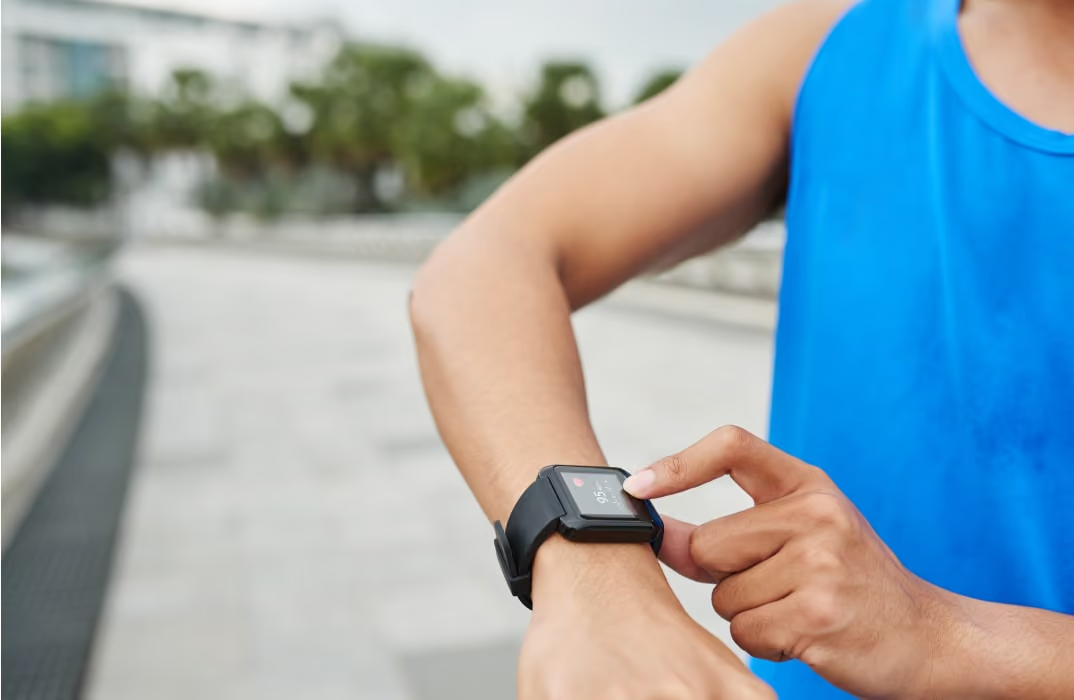
Additionally, provide adequate training on using any technology involved with the process (e.g., mobile apps). Finally, businesses should also create an environment where feedback is encouraged throughout this process—this helps foster trust between parties while giving everyone involved a better understanding of how each client's objectives are progressing over time.
The Value of Progress Tracking
Progress tracking is an effective way to keep track of client progress and ensure they are meeting their goals. By setting milestones, collecting data, and making adjustments as needed, businesses can:
- Increase retention rates
- Improve motivation levels among clients.
- Achieve better accuracy with the services provided
- Increased accountability on both sides – the business/organization providing the service and the client
- Progress tracking helps foster trust between parties while giving everyone involved a better understanding of how each individual's objectives are progressing over time.
Moreover, progress tracking can help businesses become more efficient in goal-setting activities by allowing them to monitor multiple clients at once without having to review individual records or follow up with them repeatedly manually.
Finally, communication is vital when utilizing any form of progress-tracking activity—businesses should set reasonable expectations around communication between both parties so that there are no misunderstandings about what needs to happen for this process.

Tips for Successful Progress Tracking
To ensure successful progress tracking:
- Businesses should make the process visible to all stakeholders. It involves regular updates on the client's progress using exercise log apps and maintaining transparency about any changes made along the way.
- Businesses should provide access points where clients can review their progress and accomplishments as well—this will help them gain insights into what they have achieved so far and further motivate them going forward.
- Businesses should stay organized throughout the entire process. Establishing clear milestones helps ensure a clear understanding of what steps must be taken to achieve a specific goal.
- Businesses must remain flexible when using any form of progress-tracking activity—making adjustments when necessary based on factors such as client feedback or changing goals/milestones over time. It helps keep engagement levels high while ensuring objectives remain achievable despite unexpected circumstances taking place throughout this process.
- Having a plan B ready before starting can also prove helpful; this could include alternative ways of achieving desired outcomes if initial plans do not work out as expected due to unforeseen events etc. It can also keep you ahead of potential disruptions and maintain momentum toward reaching your ultimate goal(s).

People Also Ask (PAA)
1. How does progress tracking improve client retention in fitness programs?
Progress tracking provides clients with tangible evidence of their improvements, fostering a sense of achievement and commitment. Regularly monitoring progress helps clients stay motivated and engaged, leading to higher retention rates in fitness programs.
2. What tools can personal trainers use to monitor client progress effectively?
Personal trainers can utilize comprehensive platforms like FITBUDD, which offers features such as detailed analytics, progress tracking, and seamless communication to monitor client performance and adjust training programs accordingly.
3. How often should progress assessments be conducted to maintain client motivation?
Regular assessments, such as weekly or monthly check-ins, are recommended to keep clients informed about their progress. This consistent feedback loop helps in identifying areas of improvement and celebrating achievements, thereby maintaining motivation.
4. Can progress tracking help in setting realistic fitness goals for clients?
Yes, progress tracking enables trainers and clients to set and adjust realistic, achievable goals based on empirical data. This approach ensures that objectives are tailored to individual capabilities and progress, enhancing the likelihood of success.
5. What role does client recognition play in enhancing motivation through progress tracking?
Recognizing client achievements, such as implementing a "Client of the Month" program, leverages progress tracking data to highlight successes. This personalized recognition boosts motivation and fosters a sense of community, contributing to increased client retention.
Conclusion
Progress tracking is a powerful tool for businesses and organizations to measure their clients' successes and help them reach their goals. Progress tracking provides tangible metrics that one can use to compare performance against peers in similar situations; measure successes outside traditional business measures like customer feedback; and use apps/trackers etc., to effectively monitor development across various disciplines within a given program or initiative.
Businesses can successfully implement progress tracking into services offered with increased efficiency by relying on the best exercise tracker apps like Fitbudd, which further motivates clients while helping them achieve better accuracy with services provided over time.
To know more about progress tracking and how Fitbudd is the right choice. Get in touch with us at Fitbudd.


Meet the author
FitBudd
Empowering coaches and trainers to thrive, FitBudd is the ultimate personal training software for accelerated business growth.
Frequently Asked Questions

Yangzey Sherpa leads content strategy at FitBudd, overseeing content planning and execution across fitness-focused digital channels. With over five years of experience in SEO and content, she works closely with the fitness industry to ensure content aligns with the needs of coaches, trainers, and gym owners. Her role keeps her deeply connected to fitness business workflows, coaching models, and how professionals use digital platforms to grow.


Apra Pathak has worked closely within the fitness niche for several years, supporting personal trainers and fitness coaches through content and digital marketing initiatives. Her experience centers on understanding how fitness professionals build visibility, communicate value, and engage clients online. Through sustained involvement with fitness-focused platforms and audiences, she has developed a strong understanding of the digital needs and growth challenges faced by modern fitness businesses.

Aishwarya Mehra has been actively involved in fitness-focused digital marketing, working closely with brands and platforms that serve coaches, trainers, and fitness businesses. Her experience spans engagement-driven strategies designed specifically for fitness audiences. Through ongoing exposure to fitness campaigns and communities, she remains closely aligned with how fitness professionals attract, convert, and retain clients in digital environments.

Suchandra Das has contributed content within the fitness niche, working on resources designed for coaches, trainers, and fitness business owners. Her experience involves supporting fitness-related topics with clear, structured, and accessible content. Through consistent involvement with fitness-focused platforms, she has developed familiarity with coaching workflows, client communication, and the informational needs of fitness professionals.
FitBudd is a fitness technology platform built exclusively for coaches, personal trainers, gym owners, and fitness professionals. The platform supports fitness businesses through branded apps, white-labeled solutions, and websites designed around real coaching and training workflows. FitBudd works closely with the global fitness community, maintaining deep, ongoing involvement in the fitness industry.

Ankit Uniyal has worked extensively with fitness-focused content, supporting platforms that cater to personal trainers, gym owners, and fitness professionals. His experience includes optimizing and structuring content around fitness-related search behavior and user intent. Through continued involvement in the fitness niche, he has gained a strong understanding of how trainers and coaches build discoverability and authority online.

Saumya Mittal is the Co-Founder and CEO of FitBudd. Since 2021, she has been actively engaged in the fitness technology sector, collaborating with global fitness companies to foster digital growth and scalable operations. With over a decade of experience leading high-impact projects in engineering and operations, Saumya has a strong background in developing reliable and scalable systems. Through FitBudd, she is dedicated to addressing the evolving needs of fitness professionals worldwide.

Kinshuk Snehi has been closely involved in the fitness space for over four years. Through his work at FitBudd, he has contributed to shaping how fitness professionals build their online presence, attract clients, and scale sustainable coaching businesses. Deeply interested in the intersection of fitness, technology, and growth, Kinshuk brings a hands-on understanding of the challenges faced by modern trainers. His passion lies in building systems and strategies that support long-term consistency, both in fitness journeys and business growth.

Kanika Verma has been closely involved in building solutions for the fitness industry, working with platforms used by coaches and trainers globally. Her experience includes direct exposure to fitness coaching workflows and operational needs. Through sustained involvement in fitness-focused product development, she has developed a strong understanding of how fitness professionals manage clients, programs, and daily operations.

Tanya Sharma has worked on branding initiatives within the fitness niche, supporting fitness platforms and businesses with visual identity design. Her experience includes creating brand systems used by coaches, trainers, and fitness-focused products. Through ongoing involvement in fitness-related design projects, she remains closely connected to how fitness brands communicate trust and professionalism.

Niharika Sonavane has contributed to visual design projects within the fitness industry, supporting platforms and brands serving fitness professionals. Her experience spans creating digital assets used across fitness apps, websites, and marketing materials. Through continued work in the fitness niche, she remains closely aligned with the visual communication needs of coaches and fitness businesses.

Elesh Patel has worked extensively on marketing initiatives within the fitness niche, managing paid campaigns for fitness-focused products and services. His experience includes supporting platforms that target personal trainers, gym owners, and fitness creators. Through long-term involvement in fitness marketing, he remains closely connected to how fitness professionals discover and adopt digital tools.



5 Types of Fitness Forms
Effortlessly manage client interactions with our suite of essential forms, covering every aspect of
Download Now
Templates
These functional templates have the power to make any fitness trainer's life easier.
Subscribe To
Our Blog

.avif)