Are You Earning Up to Your Potential?
Most personal trainers are undervaluing their time and skills. Our Personal trainer Revenue Calculator helps you find out what you should be making, and how to get there.
No guesswork. Just real numbers.
.webp)
One robust characteristic of a personal training fitness expert is to assist clients in defining their goals. An efficient way to decide these goals is to apply the SMART technique, which exists for goals that are:
- Specific
- Measurable
- Attainable
- Relevant and
- Time-bound.
Goal setting can be a compelling way of assisting you in preparing and attaining what you need. To generate your health and fitness goals, distinguish what you intend to accomplish or an area you would like to improve on, and then concentrate on the actionable steps you require to take to attain that goal. Establishing workout programs utilizing the SMART goal-setting method can benefit client adherence, enthusiasm, development tracking, and reducing setbacks.
💪 Got an idea for a brand? Let's bring it to life.
Launch your own fitness app with FitBudd in minutes!
💪 Got your brand name? Let’s bring it to life.
Launch your own fitness app with FitBudd in minutes!



88% trainers worldwide gave us 5 stars
Transform your fitness business with the power of your branded app on iOS and Android.
Try for FREEBe SPECIFIC to Your Goal
The goals must explicitly state what you wish to achieve. They should be transparent and straightforward to understand for you and your online personal trainer. Actual goal setting requires more than an imprecise thought of what you intend to achieve. So, be specific while deciding your goals; imagining the "5 W's namely what, when, who, where, why, and exactly how," can help track workouts.
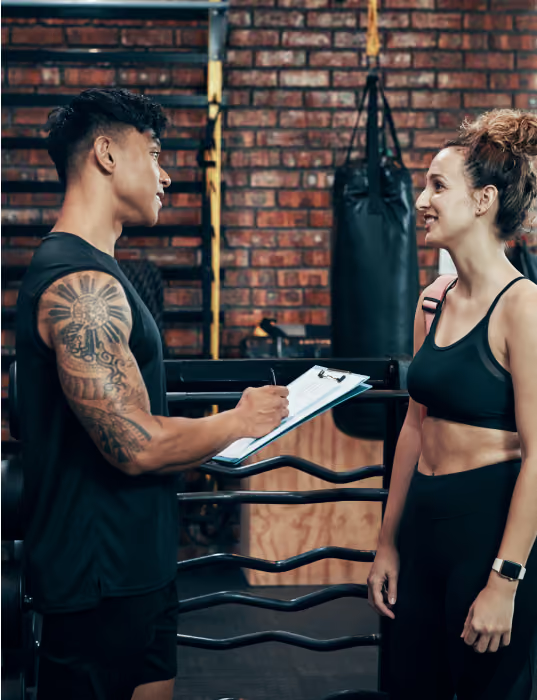
Before hiring a personal trainer, openly discuss what you're attempting to succeed in and why you would like to make your goal a reality. When you come up with a particular purpose, it feels great to achieve it and work out what's left. For example, liking to be able to do a full plank for 30 seconds is a much more specific goal if you think about developing your overall fitness and strength. It also delivers a focus for your exercise, making it simpler to work.
Consistent MEASURE Your Goals
Why is it essential to measure your goal? According to fitness experts, it is, and to make it more convenient, they recommend building a dedicated workout calendar. It makes you competent enough to track your progress over time, but you will also realize when you've attained your desired goal.
When you can chase your improvements against a standard, you know if you are moving closer to reaching your goals, enhancing your motivation levels.
For example, an important fitness goal would be: "I want to be capable of doing a full plank for 30 seconds." By stipulating how many seconds you choose to do, you can gradually work towards that figure each time you start your training sessions.
Make Your Goals ACHIEVABLE and Practical
To become a personal trainer, you must help your clients reach their goals, as it strengthens their dedication to the program and inspires them to continue.
As a client, remember that while your goals must test you, they must also be practical. You can still go forward and imagine big things! According to several online fitness coaches, an excellent way to tackle your larger goals is to break them into smaller, more achievable goals. For example, let's consider the objective of doing a full plank for 90 seconds.
When your client is new to fitness goals, devise a smart goal for physical activity and target it in 2 - 4 months. Divide the entire plan into small goals, like doing 20 seconds of plank, before striving to attain the ultimate 90 seconds plank.
Stay RELEVANT to Your Goals
Your fitness goal plan must be appropriate and should consider your living standard, health conditions, available resources, current fitness level, and accessible time. Will doing a plank for 90 seconds improve your value of life?
Think about why you need to attain your goal. Do you need to feel healthier and more vital to take further action with your loved ones? These are profound sources of inspiration, and, as a result, you may be more motivated and loyal to investing in the workout routine.
Likewise, if a personal training client of yours chooses to go for a marathon running in a year, setting a goal such as "expanding their chest press mass by 25 kilograms in 4 weeks" is irrelevant!
Although upper body power may help a marathon runner, an appropriate SMART goal for working out must concentrate on cardio exercise instead. And it requires the relevant time structure of one year, not four weeks! Do your best to uplift yourself with your targets, but ensure they fit your everyday lifestyle too.

TIME-BOUND: Define Your Time Limits
When you put yourself in a reasonable time frame, it's simpler to prepare and schedule tasks that require more time and will help you reach your goal faster; plus, a definite time limit will always keep you on your toes—as per fitness experts, putting a start and an end time is an excellent way to remain on track.
It permits you to work out a blueprint to accomplish your goal by smashing it into daily activities, assessing your progress by recognizing minor achievements, and commemorating when you ultimately achieve them! Here's the plank goal from before enclosed as a timely target: "I want to be capable of doing 90 seconds plank in four months".
SMART goals must also encompass product and process goals in your workout plan.
For example, you can obtain a product goal at the end, like weight loss, or if a specific line states, "I will lose 5 kilograms," the kilograms lost are the end product. Similarly, if the statement reads, "I will do a 90-second plank," the 90-second accomplishment is the result or outcome. Usually, a product goal is a significant part of a SMART goal, and a process goal is what a client does (e.g., conduct) to attain the product goal.
Process goals are definite actions or 'procedures' of performing, for example, aiming to work out for 2 hours in the morning every day. Process goals are 100 percent manageable by the individual.
No matter how large or modest the goal—whether doing 90 seconds or 90 minutes plank, losing 5 kilograms or 50 kilograms— you must assist your clients in their transformation by designing and setting up SMART goals.
Get in touch with our experts at FitBudd App to transform how you set and manage SMART fitness goals for your clients. With FitBudd’s personal training software, you can create structured workout programs, track measurable progress, and keep clients motivated through real-time updates—all from your own branded fitness app. Start building SMART goals that lead to lasting success today.


Meet the author
FitBudd
Empowering coaches and trainers to thrive, FitBudd is the ultimate personal training software for accelerated business growth.
Frequently Asked Questions

Yangzey Sherpa leads content strategy at FitBudd, overseeing content planning and execution across fitness-focused digital channels. With over five years of experience in SEO and content, she works closely with the fitness industry to ensure content aligns with the needs of coaches, trainers, and gym owners. Her role keeps her deeply connected to fitness business workflows, coaching models, and how professionals use digital platforms to grow.


Apra Pathak has worked closely within the fitness niche for several years, supporting personal trainers and fitness coaches through content and digital marketing initiatives. Her experience centers on understanding how fitness professionals build visibility, communicate value, and engage clients online. Through sustained involvement with fitness-focused platforms and audiences, she has developed a strong understanding of the digital needs and growth challenges faced by modern fitness businesses.

Aishwarya Mehra has been actively involved in fitness-focused digital marketing, working closely with brands and platforms that serve coaches, trainers, and fitness businesses. Her experience spans engagement-driven strategies designed specifically for fitness audiences. Through ongoing exposure to fitness campaigns and communities, she remains closely aligned with how fitness professionals attract, convert, and retain clients in digital environments.

Suchandra Das has contributed content within the fitness niche, working on resources designed for coaches, trainers, and fitness business owners. Her experience involves supporting fitness-related topics with clear, structured, and accessible content. Through consistent involvement with fitness-focused platforms, she has developed familiarity with coaching workflows, client communication, and the informational needs of fitness professionals.
FitBudd is a fitness technology platform built exclusively for coaches, personal trainers, gym owners, and fitness professionals. The platform supports fitness businesses through branded apps, white-labeled solutions, and websites designed around real coaching and training workflows. FitBudd works closely with the global fitness community, maintaining deep, ongoing involvement in the fitness industry.

Ankit Uniyal has worked extensively with fitness-focused content, supporting platforms that cater to personal trainers, gym owners, and fitness professionals. His experience includes optimizing and structuring content around fitness-related search behavior and user intent. Through continued involvement in the fitness niche, he has gained a strong understanding of how trainers and coaches build discoverability and authority online.

Saumya Mittal is the Co-Founder and CEO of FitBudd. Since 2021, she has been actively engaged in the fitness technology sector, collaborating with global fitness companies to foster digital growth and scalable operations. With over a decade of experience leading high-impact projects in engineering and operations, Saumya has a strong background in developing reliable and scalable systems. Through FitBudd, she is dedicated to addressing the evolving needs of fitness professionals worldwide.

Kinshuk Snehi has been closely involved in the fitness space for over four years. Through his work at FitBudd, he has contributed to shaping how fitness professionals build their online presence, attract clients, and scale sustainable coaching businesses. Deeply interested in the intersection of fitness, technology, and growth, Kinshuk brings a hands-on understanding of the challenges faced by modern trainers. His passion lies in building systems and strategies that support long-term consistency, both in fitness journeys and business growth.

Kanika Verma has been closely involved in building solutions for the fitness industry, working with platforms used by coaches and trainers globally. Her experience includes direct exposure to fitness coaching workflows and operational needs. Through sustained involvement in fitness-focused product development, she has developed a strong understanding of how fitness professionals manage clients, programs, and daily operations.

Tanya Sharma has worked on branding initiatives within the fitness niche, supporting fitness platforms and businesses with visual identity design. Her experience includes creating brand systems used by coaches, trainers, and fitness-focused products. Through ongoing involvement in fitness-related design projects, she remains closely connected to how fitness brands communicate trust and professionalism.

Niharika Sonavane has contributed to visual design projects within the fitness industry, supporting platforms and brands serving fitness professionals. Her experience spans creating digital assets used across fitness apps, websites, and marketing materials. Through continued work in the fitness niche, she remains closely aligned with the visual communication needs of coaches and fitness businesses.

Elesh Patel has worked extensively on marketing initiatives within the fitness niche, managing paid campaigns for fitness-focused products and services. His experience includes supporting platforms that target personal trainers, gym owners, and fitness creators. Through long-term involvement in fitness marketing, he remains closely connected to how fitness professionals discover and adopt digital tools.


Creative Fitness Challenges Ebook
Discover exciting challenges to boost your workouts and keep your fitness journey thrilling.
Download Now
Templates
These functional templates have the power to make any fitness trainer's life easier.
Subscribe To
Our Blog