Are You Earning Up to Your Potential?
Most personal trainers are undervaluing their time and skills. Our Personal trainer Revenue Calculator helps you find out what you should be making, and how to get there.
No guesswork. Just real numbers.
.webp)
If you’re a trainer, it’s your instinct to say that weight gain occurs due to “increasing calorie intake”, i.e., when an individual consumes more calories than they can burn. But is there any such finite number? If you can find out the answer to this question, you will have many happy clients.
This guide discusses different aspects of calories and how one can calculate daily calorie intake for weight gain.
So, without further ado, let’s begin:
How many calories are equal to 1 kg weight?
As per the literal definition, a calorie is a measurement of energy. It means that whatever food items you consume give you energy measured in calories or kilojoules.
According to studies, 1 kg weight or 1kg fat mass equals 7,700 calories.
Leading Causes of Being Underweight
Experts consider a BMI of less than 18.5 as underweight. For many, the following are the leading causes of being underweight:
- Malnutrition
- High metabolism
- Incessant physical activity
- Illness or disease
- Mental illness
- Family history
- Medication

How to Gain Weight Fast & Safely?
The fastest and safest way to help your client gain weight is by:
- Keeping a tab on their calorie intake by relying on a calorie calculator
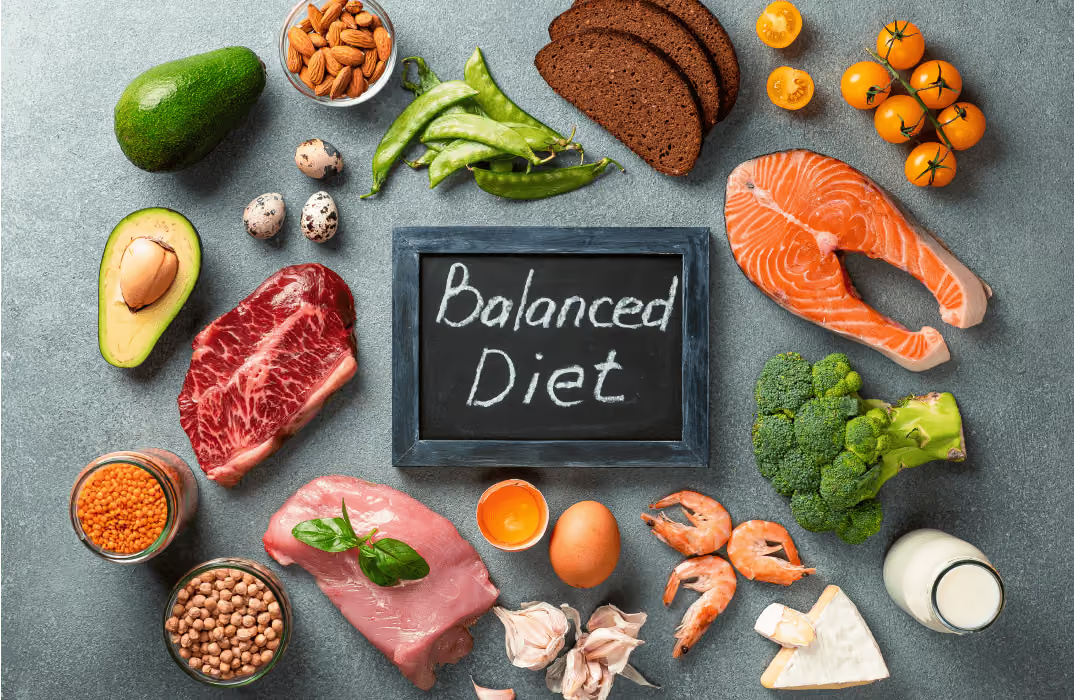
- Preparing a healthy diet chart that induces the necessary calories per day
- Chalking out a workout routine that helps with muscle building
- Ensuring the client adheres to your designed plan
💪 Got an idea for a brand? Let's bring it to life.
Launch your own fitness app with FitBudd in minutes!

💪 Got your brand name? Let’s bring it to life.
Launch your own fitness app with FitBudd in minutes!



88% trainers worldwide gave us 5 stars
Transform your fitness business with the power of your branded app on iOS and Android.
Try for FREEHow to calculate calories burnt?
A calorie calculator estimates the calories burned based on an individual’s activity level. However, if you’re calculating yourself, you must multiply the individual’s Basal Metabolic Rate (BMR) by their activity level.
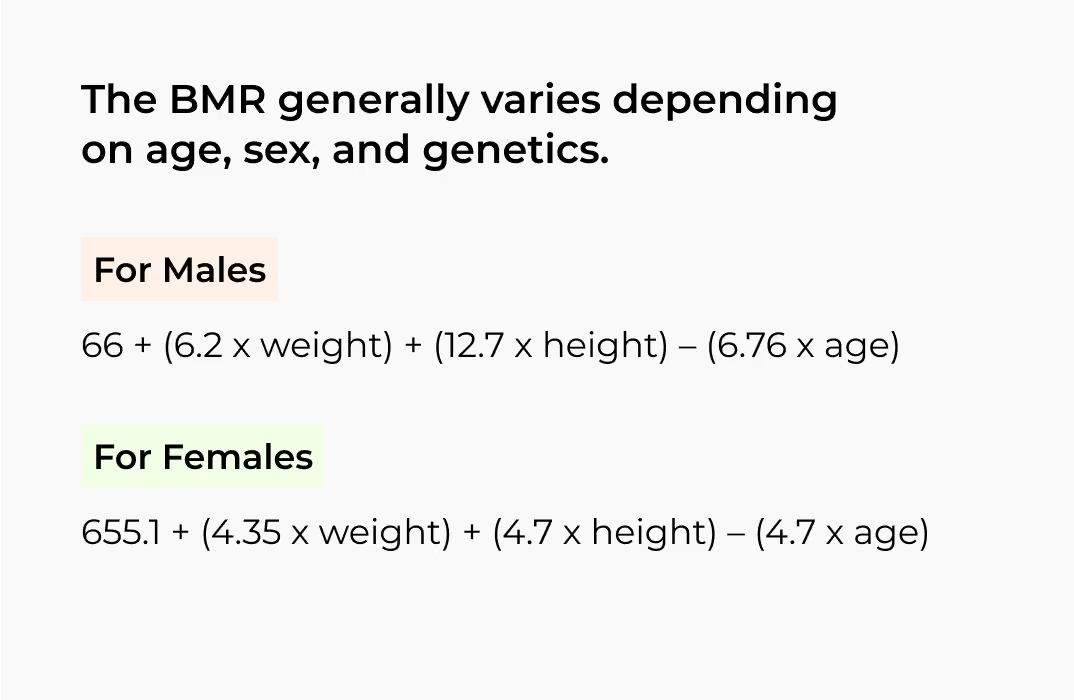
(Note: Height is in inches, and weight is in pounds)
The result from the calculation is multiplied by points for activity levels. Here’s a quick overview:
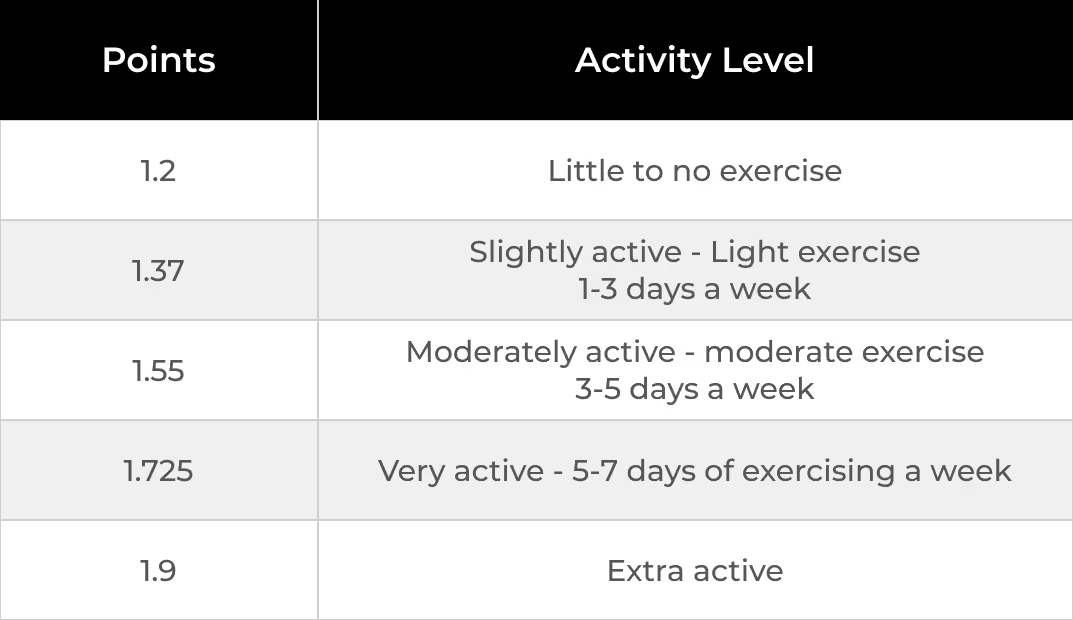
For example, a moderately active man of 35 years, 6 foot tall, and weighing 180 pounds will burn almost:
(66 + (6.2 x 180) + (12.7 x 6) – (6.76 x 34)) x 1.55 = 1593 calories/day.
TDEE Calculator
What are some popular calorie-rich healthy foods choices?
Some specific food items are rich in calories, provide adequate nutrition to the body, and are ideal for healthy weight gain. However, you can always rely on a food calorie calculator to know the caloric value of a particular food item.
Some popular food items that fall in the category of calorie-rich include:
- Dairy products
- Brown Rice
- Nuts
- Meat
- Protein shakes
- Fish

What are some helpful tips for gaining weight?
Nobody likes being skinny, but if you’re one and want to gain weight, utilize these weight-gain tips today. In addition, experts recommend:
- Eating more frequently
- Consuming nutrient-rich food
- Keeping track of every calorie you intake
- Have occasional treats
- Prioritizing your diet, sleep, and exercise
- Minding the fluid intake
You may also like: Plant-Based Diets for Athletes: A Comprehensive Guide for Fitness Professionals
How to Calculate Your Weight Gain Calorie Requirement?
If you’re undertaking a regimen to gain specific weight, you can rely on a weight gain calculator to determine how many calories you require to achieve your target weight.
A dedicated nutrition software for personal trainers can work as a calorie calculator for weight gain by considering your age, gender, current weight, height, activity level, and number of meals, then projecting the daily calorie intake you need.
A dedicated calorie calculator to gain weight considers your age, gender, current weight, height, activity level, and the number of meals and then projects your daily calorie intake.
How Many Calories Are Necessary Per Day to Gain Weight?
Many studies suggest that to gain 1kg of weight, one needs to consume 7000 calories over their regular calorie intake. It means a person must take 1000 calories more a day over their Daily Energy Expenditure (DEE) to gain 1kg weight in a week.
The Bottom Line
Assist your clients in picking a realistic and healthy weight goal and then utilize a dedicated calorie calculator to monitor their food intake.
A healthy and safe weight gain would require increasing calorie intake by 500-700 calories over the daily requirement. So, ensure your clients stick to the plan and help them achieve the goal.
What weight gain strategies have you relied upon in the past? Did those strategies work out? Do share your experience and stories with us via our Instagram channel.
Also read:
10 Best Low Calorie Starbucks Drinks You Can’t Miss
What is Casein Protein: A Comprehensive Guide
From Gym to Kitchen: 10 High-Protein Recipes for Muscle Gain and Recovery
Fueling Your Fitness Journey: Understanding the Basics of Nutrition for Optimal Performance


Meet the author
FitBudd
Empowering coaches and trainers to thrive, FitBudd is the ultimate personal training software for accelerated business growth.
Frequently Asked Questions

Yangzey Sherpa leads content strategy at FitBudd, overseeing content planning and execution across fitness-focused digital channels. With over five years of experience in SEO and content, she works closely with the fitness industry to ensure content aligns with the needs of coaches, trainers, and gym owners. Her role keeps her deeply connected to fitness business workflows, coaching models, and how professionals use digital platforms to grow.


Apra Pathak has worked closely within the fitness niche for several years, supporting personal trainers and fitness coaches through content and digital marketing initiatives. Her experience centers on understanding how fitness professionals build visibility, communicate value, and engage clients online. Through sustained involvement with fitness-focused platforms and audiences, she has developed a strong understanding of the digital needs and growth challenges faced by modern fitness businesses.

Aishwarya Mehra has been actively involved in fitness-focused digital marketing, working closely with brands and platforms that serve coaches, trainers, and fitness businesses. Her experience spans engagement-driven strategies designed specifically for fitness audiences. Through ongoing exposure to fitness campaigns and communities, she remains closely aligned with how fitness professionals attract, convert, and retain clients in digital environments.

Suchandra Das has contributed content within the fitness niche, working on resources designed for coaches, trainers, and fitness business owners. Her experience involves supporting fitness-related topics with clear, structured, and accessible content. Through consistent involvement with fitness-focused platforms, she has developed familiarity with coaching workflows, client communication, and the informational needs of fitness professionals.
FitBudd is a fitness technology platform built exclusively for coaches, personal trainers, gym owners, and fitness professionals. The platform supports fitness businesses through branded apps, white-labeled solutions, and websites designed around real coaching and training workflows. FitBudd works closely with the global fitness community, maintaining deep, ongoing involvement in the fitness industry.

Ankit Uniyal has worked extensively with fitness-focused content, supporting platforms that cater to personal trainers, gym owners, and fitness professionals. His experience includes optimizing and structuring content around fitness-related search behavior and user intent. Through continued involvement in the fitness niche, he has gained a strong understanding of how trainers and coaches build discoverability and authority online.

Saumya Mittal is the Co-Founder and CEO of FitBudd. Since 2021, she has been actively engaged in the fitness technology sector, collaborating with global fitness companies to foster digital growth and scalable operations. With over a decade of experience leading high-impact projects in engineering and operations, Saumya has a strong background in developing reliable and scalable systems. Through FitBudd, she is dedicated to addressing the evolving needs of fitness professionals worldwide.

Kinshuk Snehi has been closely involved in the fitness space for over four years. Through his work at FitBudd, he has contributed to shaping how fitness professionals build their online presence, attract clients, and scale sustainable coaching businesses. Deeply interested in the intersection of fitness, technology, and growth, Kinshuk brings a hands-on understanding of the challenges faced by modern trainers. His passion lies in building systems and strategies that support long-term consistency, both in fitness journeys and business growth.

Kanika Verma has been closely involved in building solutions for the fitness industry, working with platforms used by coaches and trainers globally. Her experience includes direct exposure to fitness coaching workflows and operational needs. Through sustained involvement in fitness-focused product development, she has developed a strong understanding of how fitness professionals manage clients, programs, and daily operations.

Tanya Sharma has worked on branding initiatives within the fitness niche, supporting fitness platforms and businesses with visual identity design. Her experience includes creating brand systems used by coaches, trainers, and fitness-focused products. Through ongoing involvement in fitness-related design projects, she remains closely connected to how fitness brands communicate trust and professionalism.

Niharika Sonavane has contributed to visual design projects within the fitness industry, supporting platforms and brands serving fitness professionals. Her experience spans creating digital assets used across fitness apps, websites, and marketing materials. Through continued work in the fitness niche, she remains closely aligned with the visual communication needs of coaches and fitness businesses.

Elesh Patel has worked extensively on marketing initiatives within the fitness niche, managing paid campaigns for fitness-focused products and services. His experience includes supporting platforms that target personal trainers, gym owners, and fitness creators. Through long-term involvement in fitness marketing, he remains closely connected to how fitness professionals discover and adopt digital tools.



Creative Fitness Challenges Ebook
Discover exciting challenges to boost your workouts and keep your fitness journey thrilling.
Download Now
Templates
These functional templates have the power to make any fitness trainer's life easier.
Subscribe To
Our Blog