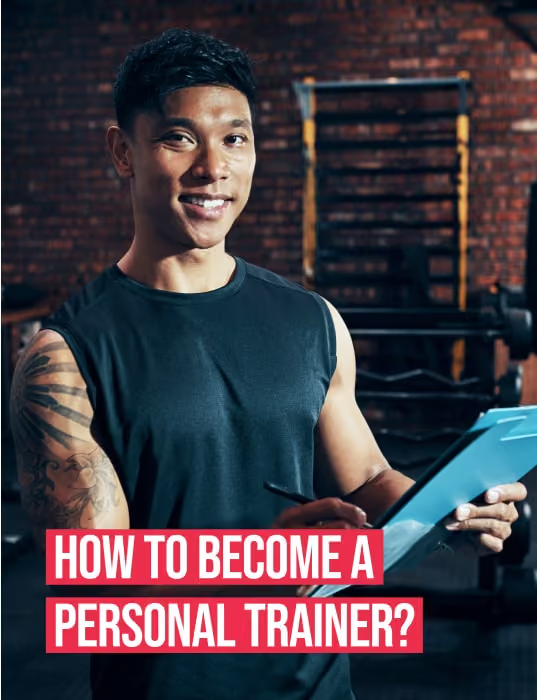
Are You Earning Up to Your Potential?
Most personal trainers are undervaluing their time and skills. Our Personal trainer Revenue Calculator helps you find out what you should be making, and how to get there.
No guesswork. Just real numbers.
.webp)
If you’re passionate about fitness and want to turn that passion into a career, becoming a personal trainer might be the right path for you. As a personal trainer, you’ll help people achieve their fitness goals, improve their health, and guide them on their fitness journey. This blog will take you through the steps on how to become a personal trainer, the certifications you’ll need, and tips for succeeding in the fitness industry.
Whether you want to work at a gym, become an online personal trainer, or start your own business, this guide covers everything you need to know to begin your career in personal training.
Step 1: Understand What It Takes to Be a Personal Trainer
Before you embark on your journey to becoming a certified personal trainer, it’s essential to know the role and responsibilities involved. Personal trainers develop customized fitness programs for clients based on their fitness levels, goals, and health conditions. This includes strength training, cardiovascular exercise, and flexibility training. Personal trainers not only teach clients how to exercise safely but also motivate them to stay consistent with their fitness routines.
You’ll need a mix of passion, knowledge, and certification to succeed as a personal trainer. To ensure you’re well-equipped to handle clients, it’s crucial to get the right education and certification from a recognized organization.
Step 2: Meet the Basic Requirements

To become a personal trainer, you must meet the basic qualifications. Most certifying bodies require:
- A high school diploma or GED: This is a fundamental requirement for most personal training certification programs.
- CPR and AED Certification: You must be certified in Cardiopulmonary Resuscitation (CPR) and Automated External Defibrillator (AED) usage. Many fitness facilities require this certification, and it is essential for emergencies in fitness environments.
Once you meet these basic requirements, you can begin exploring personal trainer certification programs.
Step 3: Choose a Personal Trainer Certification Program
Choosing the right personal trainer certification is essential to become a personal trainer. Reputable personal training certification programs provide the applied personal training education needed to succeed as a fitness trainer. Here are some well-known options:
- National Academy of Sports Medicine (NASM): Emphasizes corrective exercise and injury prevention.
- American Council on Exercise (ACE): A science-backed personal training course with a comprehensive fitness approach.
- International Sports Sciences Association (ISSA): Offers a flexible certification with an online final exam option.
- National Strength and Conditioning Association (NSCA): Great for those focused on strength training and sports performance.
Many personal trainer schools cover topics like exercise science, nutrition, and program design. Be sure to compare fees, formats, and requirements to find the right fit for your personal training journey.
💪 Got an idea for a brand? Let's bring it to life.
Launch your own fitness app with FitBudd in minutes!

💪 Got your brand name? Let’s bring it to life.
Launch your own fitness app with FitBudd in minutes!



88% trainers worldwide gave us 5 stars
Transform your fitness business with the power of your branded app on iOS and Android.
Try for FREEStep 4: Study and Pass the Certification Exam

Once you’ve selected a certification program, you’ll need to prepare for the certified personal trainer exam. Each certification body provides study materials, including textbooks, online resources, and practice tests. Some programs also offer in-person or online workshops for hands-on experience.
Your exam will assess your knowledge of exercise programs, anatomy, physiology, and how to create customized fitness programs for clients. For example, the NASM Certified Personal Trainer exam includes questions on corrective exercise, while the ACE Personal Trainer Certification exam emphasizes designing fitness plans for diverse populations.
Make sure to create a study plan and give yourself enough time to prepare for the final exam.
Step 5: Gain Practical Experience
Gaining practical experience is a crucial step in your journey to becoming a fitness professional. While theoretical knowledge is essential, hands-on experience allows you to apply what you’ve learned in a real-world setting. Many personal trainer programs include internships or practical training components that give you the opportunity to work with actual clients, assess their health and fitness levels, and design personalized exercise programs tailored to their needs.
If your personal training certification doesn’t offer a practical component, there are several ways to gain experience. Consider working at a gym where you can shadow professional trainers and observe how they interact with clients. Many gyms are eager to hire newly certified trainers and often provide additional training on their specific methods and protocols, which can greatly enhance your expertise.
Another option is to offer freelance or part-time training sessions. Whether you start small with friends and family or work with paying clients, this practical experience will sharpen your skills in client assessment, communication, and program design. Over time, you’ll build the confidence and competence necessary to succeed as a full-time fitness professional.
Hands-on experience is invaluable, as it prepares you for the challenges of guiding clients through their health and fitness journeys, ensuring you’re well-rounded and ready to grow your career in the fitness industry.
Step 6: Specialize and Continue Your Education
The fitness industry is always evolving, and continuing education is crucial for personal trainers to stay up-to-date with the latest exercise science and trends. After earning your initial certification, you may want to specialize in areas like sports medicine, corrective exercise, or nutrition to attract more clients and improve your expertise.
Popular specialization options include:
- Nutrition coaching: Helps clients meet their fitness goals with personalized nutrition plans.
- Strength and conditioning: Focuses on improving athletic performance and muscle development.
- Corrective exercise: Addresses muscular imbalances and helps prevent injuries.
Most certification programs require personal trainers to earn continuing education credits (CECs) or continuing education units (CEUs) to maintain their certification. You can earn these credits through workshops, fitness expos, or additional certification courses like the ACE Continuing Education program or the NSCA Continuing Education.
Step 7: Build Your Client Base

Once you’re a certified personal trainer, it’s time to start working with clients. Many new trainers begin by working at fitness clubs or fitness centers, but others choose to work independently or online.
Building your client base requires networking, marketing, and word-of-mouth referrals. Here are a few ways to attract potential clients:
- Social Media: Platforms like Instagram, YouTube, and Facebook allow you to showcase your expertise and reach fitness enthusiasts.
- Fitness facilities: Join a gym or fitness center where you can meet potential clients and offer your services.
- Online personal training: Offer virtual fitness programs to reach a broader audience.
- Specialize: Cater to niche markets like seniors, athletes, or those interested in weight loss.
It’s essential to provide exceptional service to your clients. Help them meet their health and fitness goals by offering personalized attention, tracking their progress, and adjusting their exercise programs as needed.
Also read: Enhance Client Experience with Hyper-personalization and Automation Using FitBudd
Step 8: Consider Starting Your Own Business
Many personal trainers eventually transition into owning their own fitness business. Whether you want to open your own gym, create online fitness programs, or offer mobile personal training, having a business plan is essential.
Starting your own business allows you to set your rates, create a flexible schedule, and build your brand. However, it also requires knowledge of marketing, finances, and client management. Luckily, tools like gym management software and online platforms can help you manage your business efficiently.
Step 9: Explore Personal Trainer Jobs
If you prefer working for a company, there are plenty of personal trainer jobs available in the fitness industry. Some common settings include:
- Gyms and fitness clubs: Chains like 24 Hour Fitness, LA Fitness, and Equinox often have open positions for trainers.
- Corporate wellness programs: Many companies offer fitness programs for employees, providing opportunities for trainers.
- Fitness centers: Specialized fitness centers may focus on specific types of training, like strength and conditioning or functional training.
- Sports teams: Trainers can work with athletes to enhance performance and prevent injury.
Also read: 20 Highest-Paying Fitness Jobs in 2024
Step 10: Stay Committed to Your Fitness Career
The fitness industry is competitive, but with the right certification, practical experience, and commitment to helping others, you can thrive. Becoming a certified personal trainer takes dedication, but the rewards of helping people achieve their fitness goals are well worth it.
As you continue to grow in your career, remember to keep learning, stay on top of industry trends, and always put your clients’ health and safety first.
FAQs About Becoming a Personal Trainer
- How long does it take to become a personal trainer?some text
- The time it takes depends on the certification program. Some can be completed in as little as three months, while others may take up to a year.
- How much does it cost to become a personal trainer?some text
- The cost varies by certification, but you can expect to pay between $400 to $1,200 for most personal trainer certification programs.
- Do I need a degree to become a personal trainer?some text
- No, a degree is not required, but a high school diploma or GED is necessary for certification. However, a background in exercise science or health sciences can be beneficial.
- Can I become a personal trainer online?some text
- Yes, many certification programs, like the NASM Certified Personal Trainer and ISSA, offer online courses and exams.
- How hard is it to become a personal trainer?some text
- The difficulty depends on your background and the certification program you choose. With dedication, studying, and practical experience, you can pass your certification exam and start your career.
- How do I maintain my certification?some text
- Most certifying bodies require continuing education credits to maintain your certification. Be sure to check the requirements of your specific certification program.
Conclusion
By following these steps, you can become a certified personal trainer and kickstart a rewarding career in the fitness industry. Remember to choose a reputable certification, gain practical experience, and continuously expand your knowledge to thrive in the ever-growing world of fitness professionals.
As you embark on this journey, managing and growing your personal training business is just as important as training clients. With FitBudd, you can launch your own customized fitness app, manage clients, track their progress, and scale your business efficiently.
Good luck on your path to becoming a certified personal trainer! When you're ready to take your business to the next level, let FitBudd help you turn your passion into a thriving fitness career.
Also read: The Ultimate Guide for Completing Fitness Trainer Certification
Best Personal Trainer Insurance Options
5 Steps for Making the Perfect Personal Trainer Business Card



Meet the author
Aishwarya Mehra
With a passion for digital strategy and a keen eye for engagement, Aishwarya Mehra is your partner in turning clicks into clients and likes into loyal followers.
Frequently Asked Questions

Yangzey Sherpa leads content strategy at FitBudd, overseeing content planning and execution across fitness-focused digital channels. With over five years of experience in SEO and content, she works closely with the fitness industry to ensure content aligns with the needs of coaches, trainers, and gym owners. Her role keeps her deeply connected to fitness business workflows, coaching models, and how professionals use digital platforms to grow.


Apra Pathak has worked closely within the fitness niche for several years, supporting personal trainers and fitness coaches through content and digital marketing initiatives. Her experience centers on understanding how fitness professionals build visibility, communicate value, and engage clients online. Through sustained involvement with fitness-focused platforms and audiences, she has developed a strong understanding of the digital needs and growth challenges faced by modern fitness businesses.

Aishwarya Mehra has been actively involved in fitness-focused digital marketing, working closely with brands and platforms that serve coaches, trainers, and fitness businesses. Her experience spans engagement-driven strategies designed specifically for fitness audiences. Through ongoing exposure to fitness campaigns and communities, she remains closely aligned with how fitness professionals attract, convert, and retain clients in digital environments.

Suchandra Das has contributed content within the fitness niche, working on resources designed for coaches, trainers, and fitness business owners. Her experience involves supporting fitness-related topics with clear, structured, and accessible content. Through consistent involvement with fitness-focused platforms, she has developed familiarity with coaching workflows, client communication, and the informational needs of fitness professionals.
FitBudd is a fitness technology platform built exclusively for coaches, personal trainers, gym owners, and fitness professionals. The platform supports fitness businesses through branded apps, white-labeled solutions, and websites designed around real coaching and training workflows. FitBudd works closely with the global fitness community, maintaining deep, ongoing involvement in the fitness industry.

Ankit Uniyal has worked extensively with fitness-focused content, supporting platforms that cater to personal trainers, gym owners, and fitness professionals. His experience includes optimizing and structuring content around fitness-related search behavior and user intent. Through continued involvement in the fitness niche, he has gained a strong understanding of how trainers and coaches build discoverability and authority online.

Saumya Mittal is the Co-Founder and CEO of FitBudd. Since 2021, she has been actively engaged in the fitness technology sector, collaborating with global fitness companies to foster digital growth and scalable operations. With over a decade of experience leading high-impact projects in engineering and operations, Saumya has a strong background in developing reliable and scalable systems. Through FitBudd, she is dedicated to addressing the evolving needs of fitness professionals worldwide.

Kinshuk Snehi has been closely involved in the fitness space for over four years. Through his work at FitBudd, he has contributed to shaping how fitness professionals build their online presence, attract clients, and scale sustainable coaching businesses. Deeply interested in the intersection of fitness, technology, and growth, Kinshuk brings a hands-on understanding of the challenges faced by modern trainers. His passion lies in building systems and strategies that support long-term consistency, both in fitness journeys and business growth.

Kanika Verma has been closely involved in building solutions for the fitness industry, working with platforms used by coaches and trainers globally. Her experience includes direct exposure to fitness coaching workflows and operational needs. Through sustained involvement in fitness-focused product development, she has developed a strong understanding of how fitness professionals manage clients, programs, and daily operations.

Tanya Sharma has worked on branding initiatives within the fitness niche, supporting fitness platforms and businesses with visual identity design. Her experience includes creating brand systems used by coaches, trainers, and fitness-focused products. Through ongoing involvement in fitness-related design projects, she remains closely connected to how fitness brands communicate trust and professionalism.

Niharika Sonavane has contributed to visual design projects within the fitness industry, supporting platforms and brands serving fitness professionals. Her experience spans creating digital assets used across fitness apps, websites, and marketing materials. Through continued work in the fitness niche, she remains closely aligned with the visual communication needs of coaches and fitness businesses.

Elesh Patel has worked extensively on marketing initiatives within the fitness niche, managing paid campaigns for fitness-focused products and services. His experience includes supporting platforms that target personal trainers, gym owners, and fitness creators. Through long-term involvement in fitness marketing, he remains closely connected to how fitness professionals discover and adopt digital tools.
.avif)


5 Types of Fitness Forms
Effortlessly manage client interactions with our suite of essential forms, covering every aspect of
Download Now
Templates
These functional templates have the power to make any fitness trainer's life easier.
Subscribe To
Our Blog
.avif)