Are You Earning Up to Your Potential?
Most personal trainers are undervaluing their time and skills. Our Personal trainer Revenue Calculator helps you find out what you should be making, and how to get there.
No guesswork. Just real numbers.
.webp)
The fitness industry has been going through a significant transformation. In the past, personal training was almost entirely delivered in person at gyms, studios, or private spaces. But now, online personal training is becoming one of the fastest‑growing services in fitness.
For fitness professionals, this shift is a huge opportunity. Moving your personal training business online lets you train clients remotely, reach more clients, and create flexible packages that fit both your schedule and theirs. You’re no longer limited by geography — your potential clients could be anywhere in the world.
However, many trainers hesitate because they’re worried they’ll lose that personal touch they’ve built with their in-person clients. The truth is, with the right online personal training software, tools, and approach, you can train clients online effectively while still delivering the same connection, results, and support your clients value most.
{{fitness-quote-generator-form="/blog-fitness-quote-generator"}}
1. Why Moving Clients Online Is a Game Changer
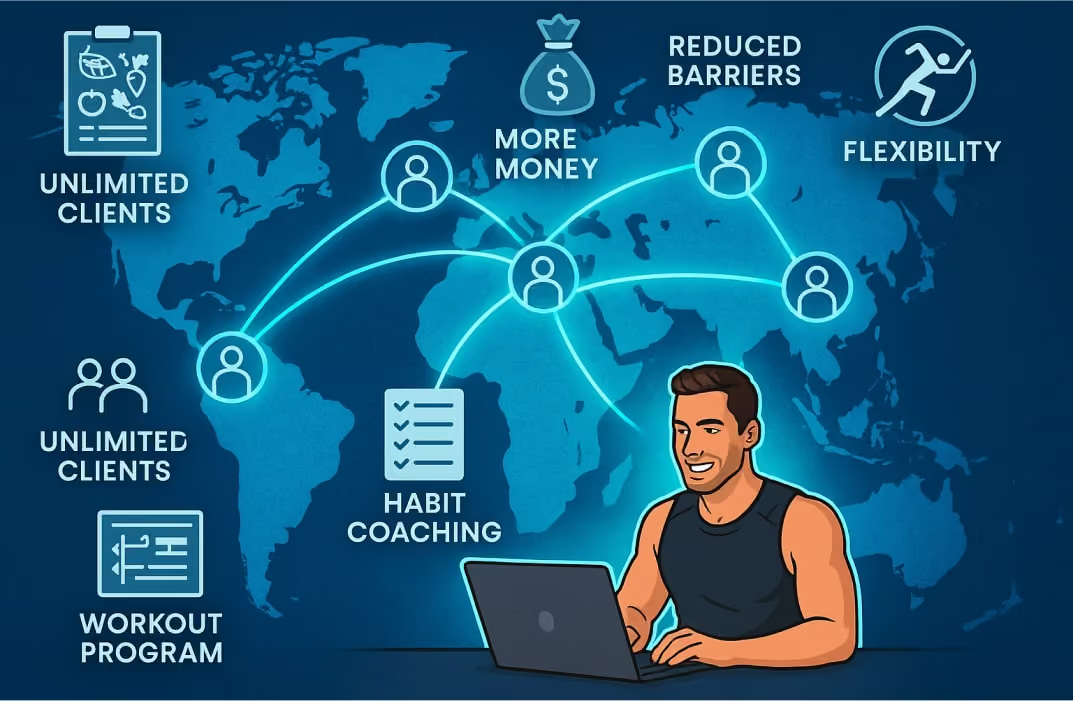
Shifting your personal training business online can feel like a leap — but it’s one worth taking. Here’s why:
- Unlimited clients: Online trainers can serve far more clients than with just in-person training, because you’re not limited to one‑hour sessions.
- More money: The ability to train multiple clients at once or sell programs means higher earning potential.
- Reduced barriers: Clients don’t have to commute, rearrange their schedules, or live near you.
- Flexibility: You can manage your business from anywhere — at home, while traveling, or even between in-person sessions.
You also gain the freedom to create programs, offer habit coaching, and deliver meal plans without the constraints of a physical location. This opens the door to working with potential clients across different time zones, giving you a true global reach.
The best part? You can still keep all my clients engaged and supported while creating a new income stream in your virtual fitness business — one that can scale without adding more hours to your day.
💪 Got an idea for a brand? Let's bring it to life.
Launch your own fitness app with FitBudd in minutes!

💪 Got your brand name? Let’s bring it to life.
Launch your own fitness app with FitBudd in minutes!



88% trainers worldwide gave us 5 stars
Transform your fitness business with the power of your branded app on iOS and Android.
Try for FREE2. How to Transition Your In‑Person Clients Online
If you’ve built your personal training business through in-person training, moving your clients online requires clear communication, reassurance, and a well‑planned approach. The goal is to help your in-person clients understand that they can still achieve — and even exceed — their fitness goals in a remote format.
Here’s how to make it work:
- Highlight the benefits: Emphasize flexibility, convenience, and the ability to access workouts anytime, anywhere. Remind them they’ll never have to miss a session due to travel, weather, or scheduling conflicts.
- Show your setup: Demonstrate your virtual personal training setup so clients feel confident in your professionalism and the quality of your services. Please give them a quick walkthrough of your personal training software or app so they can see how easy it is to follow programs.
- Personalize the transition: Offer hybrid model sessions at first — a mix of in-person and online — so they can adjust without feeling like they’re losing personal contact.
- Demonstrate exercises: Use your video library to show them exactly how to perform movements correctly. This reassures them they’ll still get expert form checks and guidance even without being in the same room.
You can also include habit coaching, meal plans, and progress tracking in your online programs to make the experience even more robust. When clients realize they’re getting more tools, more flexibility, and the same personal attention, they’re far more likely to make the switch.
When you help clients see that training clients remotely can still be just as engaging and results‑driven — often with the bonus of more resources — your fitness client retention rates stay high.
3. Setting Up Your Online Personal Training Business
Your online personal training business needs the proper foundation to succeed. The most critical step? Choosing the right personal training software that streamlines your onboarding process, keeps client engagement high, and allows you to track client progress easily. The right tools not only help you deliver better results but also free up your time so you can focus on coaching instead of getting bogged down by admin work.
Choosing the Best Personal Trainer Software
The best apps for online personal training make your work easier, your services more professional, and your clients more motivated. The right online coaching software for trainers should have features that support both you and your clients every step of the way:
- Track client progress: Monitor changes in weight, strength, body measurements, and habits to keep clients accountable and motivated.
- Own video library: Upload your videos to demonstrate exercises and provide clear technique instructions.
- Meal plans and habit coaching integration: Offer complete fitness solutions that go beyond workouts.
- Program adherence tracking: See exactly how well clients are following their training plans.
- Client engagement tools: Built‑in chat, push notifications, and goal reminders to maintain consistent communication.
- Easy onboarding process: Make it simple for new clients to get started — ideally with no credit card required for trials.
A great platform also allows you to create programs, assign workouts, and deliver nutrition guidance all in one place. Popular online personal training software gives you a single professional dashboard where you can manage all your clients, reducing the heavy lifting of admin tasks and giving you less time spent on paperwork and more time on helping clients achieve their fitness goals.
With the right tools in place, you’re not just running a business — you’re setting yourself up to become a successful online personal trainer who can confidently scale to unlimited clients without sacrificing quality.
4. Creating an Effective Virtual Personal Training Setup
You don’t need a high‑budget studio to run a virtual personal training setup, but presentation and professionalism matter. Even though you’re working online, clients still expect a polished experience that reflects the quality of your personal training business. A straightforward, well‑organized setup not only builds trust but also makes it easier for you to deliver programs, videos, and nutrition resources effectively.
Essentials for Training Clients Online
- Camera and lighting: High‑quality video and good lighting make a huge difference when you demonstrate exercises. Clear visuals help clients learn correct form and reduce injury risk.
- Video library: Build a well‑organized library of workouts so you can assign them instantly. Your video library can become a powerful asset that saves you time and reinforces your brand.
- Software/app: Use fitness coaching apps/tools or online personal training software to deliver workouts, manage client progress, and maintain regular communication.
- Meal plan templates: Add extra value by supporting clients’ nutrition alongside their workouts. Integrating meal plans within your training software creates a complete fitness solution.
With the proper setup, you can create programs, record professional videos, and deliver services that feel just as personal and high‑quality as in-person training. This foundation ensures that whether you’re working with clients online or through a hybrid model, your delivery is seamless, engaging, and effective.
5. How to Train Clients Online Without Losing the Personal Touch
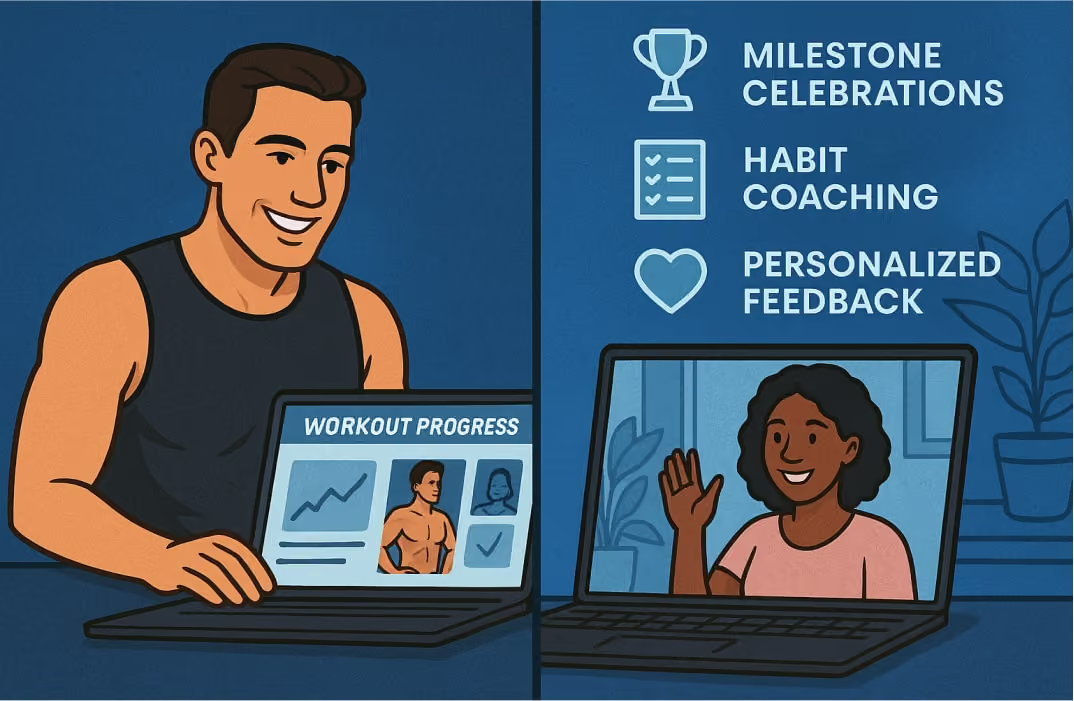
Many trainers fear that training clients remotely will feel impersonal. But here’s the truth — with intentional strategies, online trainers can build relationships that are just as strong as with in-person clients.
Ways to Keep the Connection Strong
- Video check‑ins: Weekly or bi‑weekly calls to discuss progress.
- Personalized feedback: Review the workout videos they send you.
- Celebrate wins: Acknowledge milestones in their fitness goals.
- Habit coaching: Support daily lifestyle changes, not just workouts.
- Track client progress: Use charts, photos, and notes to make progress visible.
These steps show that even though they’re working with an online personal trainer, they still get real‑time support and individual attention.
6. Client Retention in Your Online Personal Training Business
Getting more clients is excellent — but keeping them is better. Fitness client retention is about maintaining engagement and helping them achieve results.
How to Retain Fitness Clients Online
- Community support: Create private groups for clients to connect.
- Gamification: Use challenges to boost program adherence.
- Regular communication: Send motivational updates, nutrition tips, and health resources.
- Progress tracking: Clients stay motivated when they see measurable results.
A high positivity rate among your clients comes from feeling supported, connected, and valued — all things you can deliver online.
7. Generating Leads for Your Online Personal Training Business
You can’t grow without a steady stream of potential clients. Luckily, digital tools make it easier than ever to generate leads for your online personal training business.
Proven Lead Generation Ideas
- Social media content: Share workout tips, success stories, and quick exercise demos.
- Free challenges: Offer 5‑day or 7‑day programs with no credit card required.
- Email list building: Give away free meal plans or workout templates.
- Partnerships: Collaborate with local gyms, wellness brands, or influencers.
Once leads come in, your onboarding process should be welcoming and straightforward so you can turn them into paying clients quickly.
9. The Hybrid Model: Best of Both Worlds
Many trainers find success with a hybrid model — blending in-person training with online personal training.
Why the Hybrid Model Works
- Gives both you and your clients flexibility
- Allows you to keep a strong local presence while growing online
- Let's clients switch between in-person and online as needed
- Helps you serve more clients without burning out
By combining online training and in-person training, you give clients multiple ways to stay consistent and engaged.
10. Final Tips for Becoming a Successful Online Personal Trainer
The transition from in-person clients to clients online can feel overwhelming, but it’s achievable. Here’s how to become a successful online personal trainer:
- Invest in the best apps for online personal training — they save time and improve client results.
- Focus on engagement — high client interaction equals better retention.
- Keep programs personalized — generic workouts lose clients fast.
- Deliver professional services — even if you’re working from your living room.
- Track progress — clients love seeing their improvements.
- Create a community — people stay for connection as much as for results.
Running your online personal training business means wearing multiple hats — coach, marketer, program designer, and community leader. But with the right training software, tools, and systems, you can achieve incredible results for your clients and yourself.
Conclusion
The move to training clients online isn’t just a trend — it’s the future of personal training. It reduces barriers, opens up more clients than ever before, and allows you to scale without losing the personal touch your clients love.
By choosing the right online personal training software, building your video library, staying connected through habit coaching and regular check‑ins, and using a hybrid model when needed, you can keep clients motivated, improve program adherence, and grow your career in ways that in-person training alone could never achieve.
Whether you’re just figuring out how to start a virtual fitness business or you’re ready to scale your virtual personal training setup, now is the time to step into the online space. Done right, it’s a game changer for your business, your clients, and your career.


Meet the author
Ankit Uniyal
Frequently Asked Questions

Yangzey Sherpa leads content strategy at FitBudd, overseeing content planning and execution across fitness-focused digital channels. With over five years of experience in SEO and content, she works closely with the fitness industry to ensure content aligns with the needs of coaches, trainers, and gym owners. Her role keeps her deeply connected to fitness business workflows, coaching models, and how professionals use digital platforms to grow.


Apra Pathak has worked closely within the fitness niche for several years, supporting personal trainers and fitness coaches through content and digital marketing initiatives. Her experience centers on understanding how fitness professionals build visibility, communicate value, and engage clients online. Through sustained involvement with fitness-focused platforms and audiences, she has developed a strong understanding of the digital needs and growth challenges faced by modern fitness businesses.

Aishwarya Mehra has been actively involved in fitness-focused digital marketing, working closely with brands and platforms that serve coaches, trainers, and fitness businesses. Her experience spans engagement-driven strategies designed specifically for fitness audiences. Through ongoing exposure to fitness campaigns and communities, she remains closely aligned with how fitness professionals attract, convert, and retain clients in digital environments.

Suchandra Das has contributed content within the fitness niche, working on resources designed for coaches, trainers, and fitness business owners. Her experience involves supporting fitness-related topics with clear, structured, and accessible content. Through consistent involvement with fitness-focused platforms, she has developed familiarity with coaching workflows, client communication, and the informational needs of fitness professionals.
FitBudd is a fitness technology platform built exclusively for coaches, personal trainers, gym owners, and fitness professionals. The platform supports fitness businesses through branded apps, white-labeled solutions, and websites designed around real coaching and training workflows. FitBudd works closely with the global fitness community, maintaining deep, ongoing involvement in the fitness industry.

Ankit Uniyal has worked extensively with fitness-focused content, supporting platforms that cater to personal trainers, gym owners, and fitness professionals. His experience includes optimizing and structuring content around fitness-related search behavior and user intent. Through continued involvement in the fitness niche, he has gained a strong understanding of how trainers and coaches build discoverability and authority online.

Saumya Mittal is the Co-Founder and CEO of FitBudd. Since 2021, she has been actively engaged in the fitness technology sector, collaborating with global fitness companies to foster digital growth and scalable operations. With over a decade of experience leading high-impact projects in engineering and operations, Saumya has a strong background in developing reliable and scalable systems. Through FitBudd, she is dedicated to addressing the evolving needs of fitness professionals worldwide.

Kinshuk Snehi has been closely involved in the fitness space for over four years. Through his work at FitBudd, he has contributed to shaping how fitness professionals build their online presence, attract clients, and scale sustainable coaching businesses. Deeply interested in the intersection of fitness, technology, and growth, Kinshuk brings a hands-on understanding of the challenges faced by modern trainers. His passion lies in building systems and strategies that support long-term consistency, both in fitness journeys and business growth.

Kanika Verma has been closely involved in building solutions for the fitness industry, working with platforms used by coaches and trainers globally. Her experience includes direct exposure to fitness coaching workflows and operational needs. Through sustained involvement in fitness-focused product development, she has developed a strong understanding of how fitness professionals manage clients, programs, and daily operations.

Tanya Sharma has worked on branding initiatives within the fitness niche, supporting fitness platforms and businesses with visual identity design. Her experience includes creating brand systems used by coaches, trainers, and fitness-focused products. Through ongoing involvement in fitness-related design projects, she remains closely connected to how fitness brands communicate trust and professionalism.

Niharika Sonavane has contributed to visual design projects within the fitness industry, supporting platforms and brands serving fitness professionals. Her experience spans creating digital assets used across fitness apps, websites, and marketing materials. Through continued work in the fitness niche, she remains closely aligned with the visual communication needs of coaches and fitness businesses.

Elesh Patel has worked extensively on marketing initiatives within the fitness niche, managing paid campaigns for fitness-focused products and services. His experience includes supporting platforms that target personal trainers, gym owners, and fitness creators. Through long-term involvement in fitness marketing, he remains closely connected to how fitness professionals discover and adopt digital tools.




Ultimate Marketing Guide for Fitness Trainers
Boost your business growth with these tried and tested marketing strategies. Free for you to download.
Download Now
Templates
These functional templates have the power to make any fitness trainer's life easier.
Subscribe To
Our Blog
.avif)