Are You Earning Up to Your Potential?
Most personal trainers are undervaluing their time and skills. Our Personal trainer Revenue Calculator helps you find out what you should be making, and how to get there.
No guesswork. Just real numbers.
.webp)
Semi-private personal training is quickly becoming one of the most popular training models for gyms, fitness studios, and personal trainers. By combining the personalization of one-on-one sessions with the energy and affordability of small groups, it creates a win-win for both clients and trainers.
If you’re a personal trainer, gym owner, or fitness coach looking to scale your business, this model offers flexibility, higher revenue potential, and stronger client retention.
In this guide, we’ll break down the 5 biggest benefits and 2 common drawbacks of semi-private training. You’ll also find tips, pricing insights, and strategies to structure sessions that keep clients motivated while maximizing your income.
(Pro Tip: Many trainers now run semi-private sessions directly through their personal training software, which helps with scheduling, progress tracking, and online coaching.)
What Is Semi-Private Personal Training?
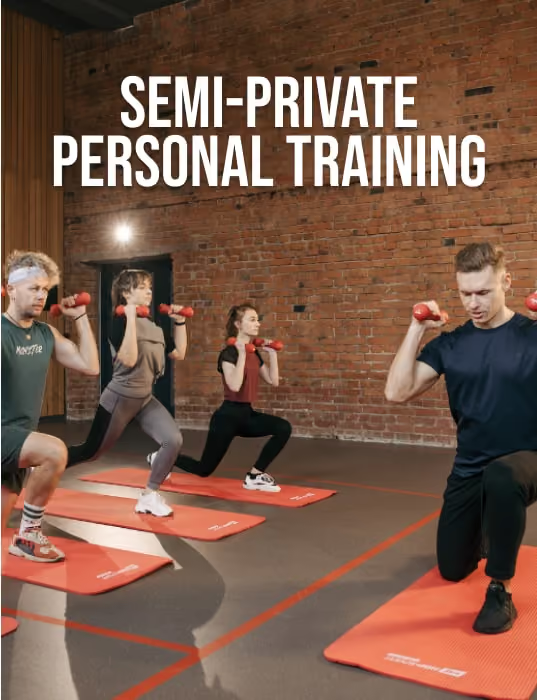
Semi private personal training typically involves two to four participants working with a personal trainer during the same training session. Unlike one-on-one training, semi private sessions allow clients to enjoy personalized guidance while sharing the trainer’s attention with a small group. A successful semi-private training model often relies on a combination of different types of fitness services to cater to diverse client needs and maximize revenue.
Why Semi-Private Training Is Gaining Popularity
As fitness trends evolve, more clients are searching for “semi private training near me“ rather than traditional private personal training. Semi private training strikes a balance between affordability, attention, and the motivation that a group setting provides, fostering an engaging environment that enhances efficiency and motivates individuals towards achieving their personal fitness goals.
5 Benefits of Semi-Private Personal Training
1. Personalized Attention Without the High Cost

One of the biggest advantages of semi-private training is personalized coaching at a fraction of the cost. Clients still receive technique correction, feedback, and program adjustments — but instead of paying $80–$100 for a private session, they typically invest $40–$50 each.
For trainers, this model means you can coach multiple clients in the same hour without reducing quality, effectively increasing your reach and impact. It’s an ideal way to make training more accessible while ensuring clients still feel supported.
(Tip: Using a fitness coaching app helps trainers customize workouts, track progress, and keep semi-private groups organized — boosting client satisfaction.)
2. Increased Motivation Through a Group Setting
Training alongside like minded individuals provides a powerful sense of community, friendly competition, and extra motivation. Most people find it easier to power through challenging workouts when they are surrounded by others working toward similar fitness goals, keeping them motivated. The vibrant atmosphere created during semi private training sessions keeps clients more focused, more accountable, and more energized compared to training alone. Each person in the group contributes to the collective spirit, helping everyone achieve results faster and more enjoyably.
3. More Flexibility for Trainers and Clients
Scheduling becomes significantly easier when offering semi private sessions. Trainers should take into account all aspects of service delivery, including administrative support, to determine a fair monthly fee for their online personal training services. Instead of being limited to specific one on one time slots, clients can select from broader options within a group setting. For trainers, this flexibility results in a more efficient week, improved time management, and the ability to serve more clients without working longer hours. It’s a win-win for both sides — offering structure while still giving clients enough flexibility to stick to their fitness journey.
4. Boost Your Business Revenue
With semi private training, trainers can dramatically increase their revenue potential. Instead of coaching one client for $80, you could train four clients at $40 each, earning $160 in the same hour, which means more money in your pocket. This approach allows you to maximize your earnings without having to double your training sessions. For gym owners and coaches aiming to grow their business sustainably, semi private training is one of the smartest models available.
5. Stronger Sense of Community and Support
Semi private groups naturally build a sense of belonging, making it easier for participants to stay committed to their fitness goals. Trainers are aware of individual clients' needs and progress, closely monitoring performance and making necessary adjustments. Clients share victories, support each other through setbacks, and find extra motivation during every exercise session. This sense of camaraderie is powerful: it not only helps people stay consistent, but it also enhances their overall experience. Finally, this emotional investment keeps clients engaged with their programs for the long term, driving better outcomes and stronger client retention for your gym or training business.
💪 Got an idea for a brand? Let's bring it to life.
Launch your own fitness app with FitBudd in minutes!

💪 Got your brand name? Let’s bring it to life.
Launch your own fitness app with FitBudd in minutes!



88% trainers worldwide gave us 5 stars
Transform your fitness business with the power of your branded app on iOS and Android.
Try for FREE2 Drawbacks of Semi-Private Personal Training
1. Less Individual Attention Compared to One-on-One

Although semi private personal training offers personalization, it cannot match the undivided focus of one on one training. Some clients may feel they are not receiving enough detailed corrections or personalized attention during semi private sessions. Trainers must be skilled at quickly identifying and addressing individual needs while managing a small group. There may also be doubt about the financial viability of adopting this model, but the underlying financial advantages remain clear and substantial.
2. Different Fitness Levels Within the Same Session
Handling several people with varying fitness abilities can be challenging. One participant might need modifications while another needs more advanced progressions. Without careful planning, the session can lose its flow, leading to dissatisfaction. Trainers must prepare multiple options for each exercise to keep everyone moving at their own pace. Over the course of their training journey, clients should focus on their individual progress and not compare themselves with others.
Who Should Offer Semi-Private Training?
Semi private personal training is ideal for:
- Personal trainers who want to work with more clients without extending their workweek
- Gym owners aiming to maximize space and earnings
- Coaches who want to create a strong community among clients
- Trainers who enjoy the energy of a group without the chaos of large group training classes
How to Structure Semi-Private Training Sessions
A typical semi private training session might look like:
- Warm-up: 5–10 minutes of dynamic movement together
- Main Workout: Circuit-style training tailored to individual goals
- Cooldown: Group stretching or light cardio
Example: Two people focusing on weight loss may perform high-intensity circuits, while a third person aiming to build strength works on heavier lifts during the same time block.
Examples of Semi-Private Programs
Some gyms offer packages like:
- 8-week semi private training program
- 2–3 semi private sessions per week
- Tailored fitness assessments before starting
- Accountability tracking to monitor progress
Offering programs helps both clients and trainers stay organized and goal-oriented. For more information or to schedule a session, please contact us.
Key Skills for Trainers in Semi-Private Settings
Successful semi private personal training requires:
- Clear communication
- Quick modifications
- Group management skills
- Motivational techniques
- Awareness of each participant’s progress and form
- The ability to teach different types of workouts in group classes, both in-person and virtually
How Semi-Private Differs from Other Types of Training
Unlike large group training, semi private training focuses on customized coaching rather than leading the entire group through identical exercises. Clients still receive coaching based on their personal needs.
Pricing Semi-Private Training
Pricing varies based on location, expertise, and session length. However, most semi private sessions are priced between 50% to 70% of private personal training rates, making them cost-efficient as the individual cost per person can be significantly reduced, sometimes to half of what a one-on-one training session would cost.
For example:
- Private Session: $100/hour
- Semi Private (3 clients): $45 each/hour
Mistakes to Avoid in Semi-Private Training
- Failing to individualize programs
- Overcrowding the session with too many participants
- Neglecting beginner clients while focusing only on advanced ones
- Ignoring accountability and progress tracking
- Overlooking the importance of mobility and recovery, which is a common mistake in personal training. In semi-private sessions, trainers can identify such mistakes and provide tailored guidance to enhance each member's fitness journey and safety.
How to Attract Clients to Semi-Private Sessions
Use marketing strategies such as:
- Offering free trial sessions
- Sharing client success stories
- Promoting the benefits of community and lower costs
- Running special promotions like "Bring a Friend" weeks
Is Semi-Private Personal Training Right for Your Gym?
If your goal is to:
- Serve more clients
- Increase your hourly revenue
- Create a supportive fitness community
- Offer flexible scheduling
- Optimize your income by generating high-ticket sales without needing to spend extensive hours in one-on-one sessions
Then adding semi private training sessions is an excellent move for your business.
Conclusion
Semi-private personal training offers the perfect middle ground: affordable, motivating, and scalable. It delivers the best of both worlds — enough personalization to keep clients progressing, plus the community vibe that keeps them accountable.
For trainers and gym owners, it’s also one of the smartest business models to increase revenue without adding more hours to your schedule. The key lies in careful session design, strong communication, and consistent tracking.
FAQ Section
What is semi private training?
Semi private training is a fitness model where a personal trainer works with two to four clients during the same session, offering customized workouts at a more affordable price than private personal training.
How does semi private training differ from one on one training?
While one on one training offers undivided attention, semi private training sessions provide personalized coaching within a small group setting, combining individualization with the energy and support of a group.
What are the benefits of semi private personal training?
The main benefits include cost savings, personalized programming, community support, greater motivation, and better scheduling flexibility for both clients and trainers.
Are there drawbacks to semi private training?
Yes, clients may receive slightly less attention than in one on one training, and trainers must manage varying fitness levels within the same group.
Can beginners join semi private sessions?
Absolutely. A skilled coach can modify exercises to fit the needs of beginners, ensuring everyone trains safely and effectively at their own pace.
How often should I attend semi private sessions?
Most clients find success with 2–3 semi private sessions per week, depending on their fitness goals and schedule.
Is semi private training better than large group training?
It depends on your fitness journey. If you prefer more personalized attention while still enjoying group energy, semi private options are ideal.



Meet the author
Aishwarya Mehra
With a passion for digital strategy and a keen eye for engagement, Aishwarya Mehra is your partner in turning clicks into clients and likes into loyal followers.
Frequently Asked Questions

Yangzey Sherpa leads content strategy at FitBudd, overseeing content planning and execution across fitness-focused digital channels. With over five years of experience in SEO and content, she works closely with the fitness industry to ensure content aligns with the needs of coaches, trainers, and gym owners. Her role keeps her deeply connected to fitness business workflows, coaching models, and how professionals use digital platforms to grow.


Apra Pathak has worked closely within the fitness niche for several years, supporting personal trainers and fitness coaches through content and digital marketing initiatives. Her experience centers on understanding how fitness professionals build visibility, communicate value, and engage clients online. Through sustained involvement with fitness-focused platforms and audiences, she has developed a strong understanding of the digital needs and growth challenges faced by modern fitness businesses.

Aishwarya Mehra has been actively involved in fitness-focused digital marketing, working closely with brands and platforms that serve coaches, trainers, and fitness businesses. Her experience spans engagement-driven strategies designed specifically for fitness audiences. Through ongoing exposure to fitness campaigns and communities, she remains closely aligned with how fitness professionals attract, convert, and retain clients in digital environments.

Suchandra Das has contributed content within the fitness niche, working on resources designed for coaches, trainers, and fitness business owners. Her experience involves supporting fitness-related topics with clear, structured, and accessible content. Through consistent involvement with fitness-focused platforms, she has developed familiarity with coaching workflows, client communication, and the informational needs of fitness professionals.
FitBudd is a fitness technology platform built exclusively for coaches, personal trainers, gym owners, and fitness professionals. The platform supports fitness businesses through branded apps, white-labeled solutions, and websites designed around real coaching and training workflows. FitBudd works closely with the global fitness community, maintaining deep, ongoing involvement in the fitness industry.

Ankit Uniyal has worked extensively with fitness-focused content, supporting platforms that cater to personal trainers, gym owners, and fitness professionals. His experience includes optimizing and structuring content around fitness-related search behavior and user intent. Through continued involvement in the fitness niche, he has gained a strong understanding of how trainers and coaches build discoverability and authority online.

Saumya Mittal is the Co-Founder and CEO of FitBudd. Since 2021, she has been actively engaged in the fitness technology sector, collaborating with global fitness companies to foster digital growth and scalable operations. With over a decade of experience leading high-impact projects in engineering and operations, Saumya has a strong background in developing reliable and scalable systems. Through FitBudd, she is dedicated to addressing the evolving needs of fitness professionals worldwide.

Kinshuk Snehi has been closely involved in the fitness space for over four years. Through his work at FitBudd, he has contributed to shaping how fitness professionals build their online presence, attract clients, and scale sustainable coaching businesses. Deeply interested in the intersection of fitness, technology, and growth, Kinshuk brings a hands-on understanding of the challenges faced by modern trainers. His passion lies in building systems and strategies that support long-term consistency, both in fitness journeys and business growth.

Kanika Verma has been closely involved in building solutions for the fitness industry, working with platforms used by coaches and trainers globally. Her experience includes direct exposure to fitness coaching workflows and operational needs. Through sustained involvement in fitness-focused product development, she has developed a strong understanding of how fitness professionals manage clients, programs, and daily operations.

Tanya Sharma has worked on branding initiatives within the fitness niche, supporting fitness platforms and businesses with visual identity design. Her experience includes creating brand systems used by coaches, trainers, and fitness-focused products. Through ongoing involvement in fitness-related design projects, she remains closely connected to how fitness brands communicate trust and professionalism.

Niharika Sonavane has contributed to visual design projects within the fitness industry, supporting platforms and brands serving fitness professionals. Her experience spans creating digital assets used across fitness apps, websites, and marketing materials. Through continued work in the fitness niche, she remains closely aligned with the visual communication needs of coaches and fitness businesses.

Elesh Patel has worked extensively on marketing initiatives within the fitness niche, managing paid campaigns for fitness-focused products and services. His experience includes supporting platforms that target personal trainers, gym owners, and fitness creators. Through long-term involvement in fitness marketing, he remains closely connected to how fitness professionals discover and adopt digital tools.



Ultimate Marketing Guide for Fitness Trainers
Boost your business growth with these tried and tested marketing strategies. Free for you to download.
Download Now
Templates
These functional templates have the power to make any fitness trainer's life easier.
Subscribe To
Our Blog
.avif)