
Have you ever wondered why some athletes seem to peak at exactly the right moment while others struggle with inconsistent performance?
The answer often lies in how they structure their training program. Block periodization has emerged as one of the most effective methods for optimizing athletic performance, revolutionizing how we think about periodization training.
The development of modern periodization models was heavily influenced by the systematic training practices of Soviet athletes, whose success in the Olympic Games of the 1950s and 1960s, as analyzed by Leo Matveyev, helped shape the scientific approach to organizing training cycles.
Unlike traditional training approaches that try to develop multiple fitness qualities simultaneously, block periodization takes a more focused approach. Traditional models are often criticized for being oversimplified and failing to account for the dynamic needs of individual athletes, which can limit their effectiveness.
In this guide, we’ll explore everything you need to know about block periodization training, from its scientific foundations to practical implementation strategies and workouts.
What is Block Periodization?
Block periodization is a training methodology that organizes athletic preparation into distinct phases or “blocks,” each focusing on the development of specific training qualities. This approach was pioneered by Dr. Yuri Verkhoshansky in the 1980s and later refined by Dr. Vladimir Issurin, who provided the scientific framework we use today. (source)
The fundamental principle behind block periodization is the concept of concentrated training loads. Instead of trying to improve multiple fitness qualities at once, this method dedicates entire training blocks to developing specific abilities in sequence. Each block typically lasts 2-6 weeks and targets compatible training adaptations while minimizing conflicting effects.
Block periodization training differs significantly from traditional periodization training methods. While conventional approaches often maintain all training qualities throughout the year with varying emphasis, block periodization completely concentrates on specific adaptations during designated periods. This focused approach enables more effective training stimuli and improved management of fatigue and recovery.
The Science Behind Block Periodization
The effectiveness of block periodization is rooted in several key physiological principles that make it superior to traditional training methods. Understanding these scientific foundations helps explain why block periodization training produces such remarkable results.
When examining these principles, it's important to consider how the body responds to training stimuli. According to Selye's General Adaptation Syndrome, the body progresses through three phases—alarm/reaction, resistance, and exhaustion—as it adapts to stress. Cycling through these phases is essential for optimizing performance and recovery while preventing overtraining.
Block periodization is a form of training periodization a science-based approach to structuring adaptation and recovery. This systematic method draws on foundational theories to maximize athletic development and performance.
Residual Training Effects
One of the most important concepts in block periodization is the theory of residual training effects. Different training adaptations have varying retention periods after the training stimulus is removed:
- Aerobic endurance: 30±5 days
- Maximum strength: 30±5 days
- Anaerobic glycolytic power: 18±4 days
- Explosive strength: 5±3 days
This knowledge allows coaches to strategically sequence training blocks to maintain previously developed qualities while focusing on new adaptations.
Understanding these residual effects is crucial for optimizing fitness adaptations, ensuring that athletes translate gains into sport-specific outcomes.
For example, an athlete can maintain their aerobic base for several weeks while concentrating on explosive power development.
Compatible vs. Conflicting Training Effects
Research has shown that certain training modalities enhance each other when performed together, while others can interfere with adaptation processes. Block periodization leverages this knowledge by grouping compatible training elements within the same exercise blocks while separating conflicting ones.
Targeting specific muscle groups within a block can further enhance adaptation and minimize interference, as each muscle group receives focused attention for optimal development.
Scientific Evidence
Multiple studies have demonstrated the superiority of block periodization over traditional methods. Research published in the Journal of Sports Medicine and Physical Fitness showed that athletes using block periodization training achieved significantly greater improvements in sport-specific performance compared to those following traditional periodization training approaches.
Additionally, studies have compared various periodization models, highlighting the advantages of block periodization in optimizing training session performance outcomes.
Types of Block Periodization
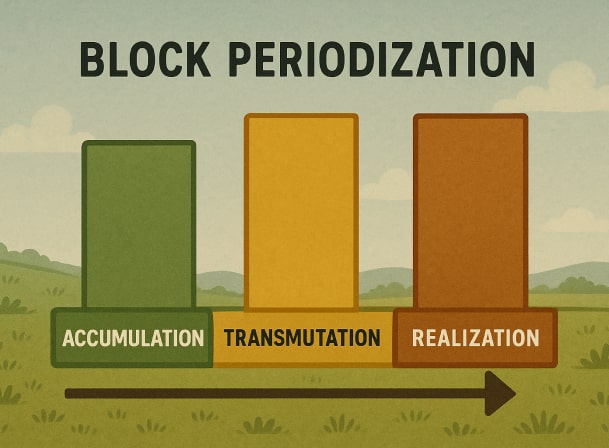
Block periodization is organized around three main types of training blocks, each serving a specific purpose in the athlete’s development. These training blocks represent specific phases within the overall periodization strategy, with each phase focusing on distinct training or rehabilitation goals.
Accumulation Blocks
Accumulation blocks form the foundation of block periodization training. These fitness blocks focus on developing basic training abilities and creating the physiological foundation for more intensive work to follow.
Characteristics of Accumulation Blocks:
- Duration: 3-4 weeks typically
- Training volume: High (70-85% of maximum)
- Training intensity: Moderate to high
- Focus: General physical preparation and basic abilities
Accumulation blocks are also highly effective for improving general fitness in non-competitive populations, helping recreational exercisers enhance overall health, prevent stagnation, and reduce injury risk.
Transmutation Blocks
Transmutation blocks represent the bridge between basic preparation and competition-specific training. These training blocks focus on converting the general abilities developed during accumulation into more sport-specific qualities. This phase emphasizes the development of sport specific skills tailored to the athlete's discipline, ensuring that training directly enhances performance in their chosen sport.
Characteristics of Transmutation Blocks:
- Duration: 2-4 weeks typically
- Training volume: Moderate to high
- Training intensity: High to very high
- Focus: Sport-specific abilities and technical elements
In transmutation blocks, the training becomes more specific to the demands of competition.
For strength athletes, this might involve converting hypertrophy gains into maximum strength. For endurance athletes, it could mean developing race-specific pacing and tactics.
Realization Blocks
Realization blocks, also known as the realization phase in periodization, are the final phase of block periodization designed to achieve peak performance for competition.
These workout blocks minimize training volume while maintaining very high intensity (often above 90% of 1RM) to allow for supercompensation and optimal performance.
Characteristics of Realization Blocks:
- Duration: 1-2 weeks typically
- Training volume: Low to moderate
- Training intensity: Very high
- Focus: Competition preparation and performance optimization
During the realization phase, athletes fine-tune their technical skills, practice competition strategies, and allow their bodies to recover from the accumulated training stress while maintaining peak fitness levels, often including a taper for optimal results.
Also read: Synergist Muscles Explained- Definition, Function, and Examples
Block Periodization Structure
Understanding how to structure block periodization is essential for successful implementation. The organization of training blocks follows specific principles that optimize adaptation while managing fatigue and recovery.
Each phase builds upon the adaptations achieved in the previous block, ensuring a progressive development of physical qualities and optimizing performance progression.
Block Duration and Sequencing
The duration of exercise blocks varies depending on several factors:
- Training age: Beginners may need longer blocks (4-6 weeks) to achieve adaptations
- Sport demands: Some sports require shorter, more frequent peaks
- Individual response: Athletes adapt at different rates
- Competition schedule: Blocks must align with competitive demands
It is important to allow adequate time in each block to ensure proper adaptation, peak performance, and injury prevention.
A typical preparatory phase block periodization sequence might look like this:
Microcycle Organization
Within each training block, the organization follows microcycle patterns that optimize adaptation and recovery. These shorter cycles typically last 5-7 days and follow specific loading patterns:
- Progressive loading: Gradual increase in training stress
- Maintenance loading: Consistent training stimulus
- Recovery loading: Reduced stress to promote adaptation
Integration of Training Components
Successful block periodization training requires careful integration of different training components within each block. This includes:
- Technical training: Skill development and refinement
- Tactical training: Strategy and game-specific elements
- Physical training: Fitness quality development. Conditioning programs are incorporated into each block to target specific aspects such as strength, endurance, and recovery, optimizing athletic performance and supporting structured training cycles.
- Recovery protocols: Active and passive recovery methods
Practical Applications and Uses
Block periodization for athletes has been successfully implemented across a wide range of sports, from individual disciplines to team sports. The versatility of this approach makes it applicable to various training contexts and athlete populations.
Strength Sports Applications
Block periodization for powerlifting has become increasingly popular due to its ability to develop the strength qualities needed for competition systematically. Structured strength training and the development of muscular strength are foundational in powerlifting, as they directly impact an athlete’s ability to generate maximal force and achieve peak performance.
A typical powerlifting block sequence might include:
Accumulation Block (4 weeks):
- Focus on hypertrophy and work capacity
- High volume training (70-75% 1RM)
- Accessory exercise emphasis
- Building muscular endurance
Transmutation Block (3 weeks):
- Maximum strength development
- Moderate volume, high intensity (80-90% 1RM)
- Competition lift focus
- Technical refinement
- This phase emphasizes force development and incorporates high intensity work, focusing on lifting at or above 80% of 1RM to maximize strength gains and improve the rate of force production.
Realization Block (2 weeks):
- Peak strength expression
- Low volume, very high intensity (90-100% 1RM)
- Competition simulation
- Optimal recovery protocols
Endurance Sports Implementation
Block periodization training has revolutionized endurance sports preparation and aligns well with established resistance training protocols.
Cyclists, runners, and swimmers use this approach to develop the energy systems required for their events systematically.
Endurance Block Sequence:
- Accumulation: Aerobic base development, high volume low intensity. This phase can also be used to improve body composition by increasing muscle mass and reducing fat, helping athletes optimize their physique for better performance.
- Transmutation: Lactate threshold and VO2 max development
- Realization: Race-specific intensity and tapering
Team Sports Adaptations
Team sports present unique challenges for block periodization due to their extended competitive seasons. Block periodization can be adapted to help athletes maintain peak performance and avoid performance decline throughout a long competitive season by structuring training phases around ongoing competitions. However, modified approaches have proven successful:
- Shorter block durations(2-3 weeks) to accommodate game schedules
- In-season maintenance blocks to preserve fitness qualities
- Position-specific blocks tailored to individual player needs
Bodybuilding Block Applications
Bodybuilding block periodization focuses on the systematic development of muscle mass, definition, and stage presentation. The approach typically follows this pattern:
Off-Season Accumulation (8-12 weeks):
- Maximum hypertrophy focus
- High volume, moderate intensity
- High repetitions are emphasized to promote muscular endurance and hypertrophy
- Nutritional surplus for muscle growth
Pre-Contest Transmutation (6-8 weeks):
- Strength maintenance with fat loss
- Moderate volume, high intensity
- Caloric restriction begins
Contest Realization (2-4 weeks):
- Peak conditioning and presentation
- Low volume, technique focus
- Final preparation protocols
Also read: Full Body Circuit Workout and Its Benefits
Block Periodization Examples and Templates
Understanding block periodization theory, including the integration of micro cycles, is important, but seeing practical examples helps bridge the gap between concept and application. Each example below is designed to address specific training goals for the target population.
Block Periodization Program Example for Strength Athletes
This block periodization template is designed for intermediate to advanced strength athletes preparing for competition:
Phase 1: Accumulation Block (4 weeks)
Week 1-2:
- Squat: 4 sets x 8-10 reps @ 70-75% 1RM
- Bench Press: 4 sets x 8-10 reps @ 70-75% 1RM
- Deadlift: 3 sets x 6-8 reps @ 75-80% 1RM
- Accessory work: 3-4 exercises, 3 sets x 10-15 reps
- Training frequency: 4-5 sessions per week
Week 3-4:
- Squat: 4 sets x 6-8 reps @ 75-80% 1RM
- Bench Press: 4 sets x 6-8 reps @ 75-80% 1RM
- Deadlift: 3 sets x 5-6 reps @ 80-85% 1RM
- Accessory work: 2-3 exercises, 3 sets x 8-12 reps
- Training frequency: 4-5 sessions per week
Phase 2: Transmutation Block (3 weeks)
During the transmutation block, For example, training is performed at higher intensities to maximize strength adaptations.
Week 1:
- Squat: 5 sets x 3-5 reps @ 80-85% 1RM
- Bench Press: 5 sets x 3-5 reps @ 80-85% 1RM
- Deadlift: 4 sets x 3-5 reps @ 85-90% 1RM
- Minimal accessory work
- Training frequency: 4 sessions per week
Week 2-3:
- Squat: 4 sets x 1-3 reps @ 85-95% 1RM
- Bench Press: 4 sets x 1-3 reps @ 85-95% 1RM
- Deadlift: 3 sets x 1-3 reps @ 90-95% 1RM
- Competition commands practice
- Training frequency: 3-4 sessions per week
Phase 3: Realization Block (2 weeks)
The realization block also involves higher intensities to peak performance before competition.
Week 1:
- Opener practice: 3 sets x 1 rep @ 90-95% 1RM
- Second attempt: 2 sets x 1 rep @ 100-105% 1RM
- Light technique work
- Training frequency: 2-3 sessions per week
Week 2:
- Competition simulation
- Opener only: 2 sets x 1 rep @ 90% 1RM
- Complete rest 2-3 days before the competition
- Training frequency: 1-2 sessions per week
Block Periodization Template for Endurance Athletes
This template works well for cyclists, runners, and other endurance athletes:
Accumulation Block (4 weeks):
- 80% of training at aerobic intensity (Zone 1-2)
- 15% at threshold intensity (Zone 3-4)
- 5% at high intensity (Zone 5-6)
- Total volume: 15-20 hours per week
- Focus: Aerobic base development. This phase emphasizes lower intensity training to build aerobic capacity and support recovery.
Transmutation Block (3 weeks):
- 60% at aerobic intensity
- 25% at threshold intensity
- 15% at high intensity
- Total volume: 12-16 hours per week
- Focus: Lactate threshold and VO2 max
Realization Block (2 weeks):
- 70% at aerobic intensity
- 10% at threshold intensity
- 20% at race-specific intensity
- Total volume: 8-12 hours per week
- Focus: Race preparation and tapering
Fitness Block Programming for the General Population
For recreational athletes and fitness enthusiasts, block periodization can be simplified while maintaining its effectiveness. Each block consists of specific workouts designed to target strength, power, or conditioning.
Strength Block (4 weeks):
- 3 full-body sessions per week
- Compound movements emphasize
- 3-4 sets x 6-10 reps
- Progressive overload focus
Power Block (3 weeks):
- 3 sessions per week
- Explosive movement patterns
- 3-5 sets x 3-6 reps
- Speed and power development
Conditioning Block (2 weeks):
- 2-3 high-intensity sessions
- Sport-specific movements
- Interval training focus
- Active recovery emphasis
Read more: What Is Muscle Elasticity? Definition & Importance
Comparative Analysis: Linear vs Block Periodization
Understanding the differences between various periodization training methods helps coaches and athletes choose the most appropriate approach for their specific needs and goals.
Linear Periodization Characteristics
Linear periodization follows a progressive model where training variables change gradually over time:
- Volume: Starts high, decreases progressively
- Intensity: Starts low, increases progressively
- Specificity: Moves from general to specific
- Duration: Typically 12-16 weeks per cycle
However, linear periodization may not be ideal for athletes who need to peak for multiple competitions throughout the year, as it is less adaptable to the varying demands of several events.
Block Periodization Characteristics
Block periodization uses concentrated training loads in sequential phases:
- Volume: Varies dramatically between blocks
- Intensity: Maintained high within specific blocks. Block periodization often includes phases of higher intensity training (typically 75-90% of 1RM) to drive specific adaptations and optimize strength and performance.
- Specificity: Alternates between general and specific
- Duration: Flexible, typically 2-6 weeks per block
Performance Comparison
Research comparing linear vs block periodization has consistently shown advantages for the block approach. Block periodization is specifically designed to improve performance across multiple peaks and competitive events:
Block vs Undulating Periodization
Undulating periodization varies training variables within shorter time frames (daily or weekly), while block periodization maintains consistency within blocks but varies dramatically between them.
Undulating Periodization Advantages:
- Prevents accommodation through constant variation
- Maintains multiple qualities simultaneously
- Good for recreational athletes with limited time
Block Periodization Advantages:
- Allows for deeper adaptations through concentration
- Better fatigue management through strategic sequencing
- Superior for competitive athletes needing predictable peaks
Block Periodization Benefits for Athletic Performance
The advantages of block periodization training extend beyond simple performance improvements, particularly when applied over longer periods . This method offers numerous block periodization benefits that make it the preferred choice for many elite athletes and coaches.
Enhanced Training Adaptations
Block periodization produces superior adaptations through concentrated training stimuli. By focusing on specific qualities for extended periods, athletes can achieve deeper physiological changes than possible with traditional methods.
Key Adaptation Benefits:
- Deeper physiological changes through concentrated stimuli
- Promotes adaptations in the neuromuscular system, leading to improved strength and power
- Reduced training interference between conflicting qualities
- Enhanced recovery through strategic load management
- Improved training efficiency by focusing resources
Superior Performance Outcomes
Athletes using block periodization training consistently demonstrate better competitive results in sports training compared to those using traditional methods. Studies show improvements of 10-15% in sport-specific performance measures.
Performance Benefits:
- More frequent performance peaks throughout the year
- Better maintenance of previously developed qualities
- Improved competition preparation through a systematic approach
- Enhanced consistency in performance delivery
- Increased power output, which is critical for athletic success
Psychological Advantages
The structured nature of block periodization provides psychological benefits that contribute to overall athletic success:
- Clear focus during each training phase reduces mental fatigue
- Visible progress through concentrated development builds confidence
- Reduced monotony through varied training emphasis
- Better motivation through achievable short-term goals
Injury Prevention Benefits
Block periodization can reduce injury risk through several mechanisms:
- Systematic load management prevents overuse injuries and helps avoid overtraining by balancing training loads with recovery phases
- Planned recovery periods allow tissue adaptation; excessive training without proper recovery can lead to overtraining and increased injury risk
- Varied movement patterns reduce repetitive stress
- Progressive loading within blocks builds resilience
Implementation Guidelines for Block Training
Successfully implementing block periodization requires careful planning and attention to detail. A thorough preparation phase is essential during the initial assessment and planning, as it lays the groundwork for subsequent training blocks and ensures clients are ready for more demanding activities. These guidelines will help you design and execute effective training blocks for optimal results.
Initial Assessment and Planning
Before beginning block periodization training, conduct a thorough assessment of the athlete’s current status:
Physical Assessment:
- Current fitness levels across all relevant qualities
- Injury history and movement limitations. Collaboration with physical therapy professionals can help address movement limitations and support recovery, especially after injuries or surgeries.
- Recovery capacity and training tolerance
- Competition schedule and peak performance requirements
Goal Setting:
- Specific performance targets for each competitive period
- Priority ranking of different fitness qualities
- Timeline constraints and deadlines
- Available training time and resources
Designing Your FirstBlock Periodization Program
Start with a simple three-block sequence to learn the system before progressing to more complex arrangements:
Step 1: Identify Priority Qualities
- Determine which fitness qualities are most important for your sport
- Assess current levels and identify the biggest limiters
- Plan the sequence of development based on residual training effects
Step 2: Plan Block Sequence
- Begin with longer blocks (4-6 weeks) for beginners
- Use shorter blocks (2-3 weeks) for advanced athletes
- Allow adequate recovery between high-stress blocks
Step 3: Design Individual Blocks
- Focus on 1-2 compatible qualities per block
- Plan progressive loading within each block
- Include appropriate recovery and testing protocols
Monitoring and Adjustment Strategies
Successful block periodization requires ongoing monitoring and adjustment based on athlete response:
Key Monitoring Variables:
- Training load metrics: Volume, intensity, frequency
- Performance indicators: Sport-specific tests and measures
- Recovery markers: Heart rate variability, subjective wellness
- Adaptation signs: Strength, power, and endurance improvements
Adjustment Protocols:
- Extend blocks if adaptations are still occurring
- Shorten blocks if fatigue accumulates too quickly
- Modify intensity based on recovery status
- Adjust volume based on individual tolerance
Common Implementation Mistakes
Avoid these frequent errors when implementing block periodization:
Mistake 1: Too Much Variety
- Trying to develop too many qualities within a single block
- Solution: Focus on 1-2 compatible qualities maximum
Mistake 2: Inadequate Recovery
- Not allowing sufficient recovery between high-stress blocks
- Solution: Plan strategic deload periods and monitor fatigue
Mistake 3: Rigid Adherence
- Following the plan regardless of the athlete's response
- Solution: Maintain flexibility and adjust based on feedback
Mistake 4: Poor Block Sequencing
- Not considering residual training effects when planning the sequence
- Solution: Study retention periods and plan accordingly
AdvancedBlock Periodization Strategies
Once you’ve mastered basic block periodization principles, several advanced strategies can further optimize your training approach.
Conjugate Block Sequencing
This approach involves running multiple shorter blocks simultaneously for different body parts or movement patterns:
- Upper body strength block(3 weeks)
- Lower body power block(3 weeks)
- Concurrent but focused development
- Reduced interference through body part specialization
Pendulum Periodization
This method alternates between opposing qualities in a wave-like pattern:
- Strength block→Power block→Strength block→Power block
- Maintains quality through regular revisiting
- Prevents detraining of important abilities
- Suitable for sports requiring multiple peaks
Block Periodization for Team Sports
Team sports require modified approaches due to extended competitive seasons:
In-Season Blocks:
- Maintenance blocks(2-3 weeks): Preserve fitness qualities
- Development blocks(2-3 weeks): Address weaknesses during breaks
- Preparation blocks(1-2 weeks): Prepare for important competitions
Position-Specific Blocks:
- Goalkeeper blocks: Reaction time and agility focus
- Defender blocks: Strength and aerial ability emphasis
- Midfielder blocks: Endurance and technical skills
- Forward blocks: Speed and finishing ability
The Future of Periodization Training
Block periodization continues to evolve as our understanding of training science advances. Several trends are shaping the future of this methodology:
Technology Integration
Modern technology is enhancing block periodization implementation:
- Wearable devices provide real-time feedback on training load and recovery
- Data analytics help optimize block duration and sequencing
- Virtual reality enables sport-specific skill development
- Artificial intelligence assists in program individualization
Individualization Advances
Future block periodization will become increasingly personalized:
- Genetic testing to determine optimal training responses
- Biomarker analysis for precise recovery monitoring
- Individual adaptation curves for customized block duration
- Personalized nutrition timing within training blocks
Integration with Other Methods
Block periodization is being combined with other training approaches:
- Autoregulation for daily load adjustments within blocks
- Concurrent training methods for time-efficient development
- Recovery modalities for enhanced adaptation between blocks
- Nutritional periodization aligned with training blocks
Final thoughts
Block periodization represents a significant advancement in training methodology, offering athletes and coaches a systematic approach to optimizing performance. Through concentrated training loads and strategic sequencing, this method produces superior adaptations while managing fatigue more effectively than traditional approaches.
The key to successful block periodization training lies in understanding its scientific foundations and applying them systematically in sports medicine. Whether you’re implementing block periodization for powerlifting, designing fitness blocks for general population clients, or creating sport-specific programs for elite athletes, the principles remain consistent.
92% trainers worldwide gave us 5 stars
Talk to your dedicated success manager and launch your branded fitness app during the demo in minutes.
Start your paid subscription for $79 FREE



%20to%20Become%20a%20Certified%20Personal%20Trainer-min.jpg)


