
Your clients open their phones dozens of times a day. None of those moments belongs to you. Generic portal links, a software company's logo on every screen, progress notes on a spreadsheet, they stopped checking in week two.
Your coaching may be solid, but it is the product they actually experience between sessions is forgettable.
That is the retention problem most personal trainers never name correctly. It is not programming. It is brand presence.
A white-label fitness app puts your name, logo, and coaching tools on your clients' home screens. This guide cuts through the noise, separates native-branded apps from portal workarounds, and identifies which platform delivers at each business stage.
What Is a White Label Fitness App?
A white label fitness app is a pre-built mobile app that a fitness business can brand as its own, with its studio name, logo, color scheme, app name, in-app colors, and custom domain. Clients download the app from the App Store or Google Play and see the trainer's brand, not the software company's.
The result is a branded mobile app experience rather than the platform provider's brand.
The distinction between a true white label app and a branded portal matters enormously in practice.
True white label app
It is a native iOS and Android application listed in the App Store under your business name. Clients search for your studio, download your app, and open it just like any other app on their phone. Your brand occupies the home screen real estate. Push notifications come from your studio name.
The IDEA Health & Fitness Association notes that "with wellness increasingly seen as essential healthcare, opportunities are abundant across gyms, boutique studios, corporate wellness, and digital platforms" — and that digital expansion, with online classes and personal training apps supplementing in-person work, is one of the key trends reshaping fitness careers in 2025. For personal trainers building an online practice, the branded app is the single touchpoint that makes digital coaching feel like a professional service rather than a shared software subscription.
IDEA Health & Fitness Association. The State of the Fitness Job Market in 2025. Read the report →
Branded portal
It is a web-based interface with your logo applied. Clients access it through a link, often through a shared container app published under the software company's name. The experience works, but the brand perception is entirely different.
A client who downloads "FitByCoachSarah" from the App Store has a fundamentally different relationship with that coach than a client who bookmarks a web portal.
The most important question to ask any white label fitness app platform: is the app listed in the App Store under your business name, or does it run inside a shared container app under the software company's name?
Several platforms in this category advertise white-label branding while offering the second option.
Read more: White Label Fitness App: What It Is and How It Works
Why Personal Trainers Are Moving to Branded Fitness Apps in 2026
The shift toward branded fitness apps for coaches is driven by three measurable business realities.
Client retention rates are higher with a branded app
Research consistently shows that branded mobile applications produce stronger client engagement than web-based portals. Clients who have your app on their phone interact with your program more frequently between sessions, which directly correlates with renewal rates and referrals.
The Health & Fitness Association's 2025 US Consumer Report — based on a nationally representative survey of 18,000 Americans — found that nearly one in four fitness facility members (22.6%) worked with a personal trainer in 2024, marking a historic high for the category. Women's use of personal training grew 15.9% year-over-year. The data confirms that coaching demand is at its strongest recorded level, making brand differentiation — what clients see, interact with, and remember between sessions — an increasingly critical competitive advantage for individual trainers.
Health & Fitness Association (formerly IHRSA). 2025 US Health & Fitness Consumer Report: Expanded Insights. Read the report →
Brand equity compounds over time
Every session your client opens your branded app, they associate that experience with your coaching, not with a software company. When they recommend you to a friend, they say, "download my trainer's app." This is meaningfully different from "log in to this portal."
The online coaching market demands a professional product
In 2026, the average fitness consumer evaluates a coach's digital presence before committing. A personal trainer with a branded app in the App Store signals an established, invested business. It separates professionals from hobbyists in a market where both are competing for the same clients.
The Best White Label Fitness App for Personal Trainers in 2026: Full Comparison
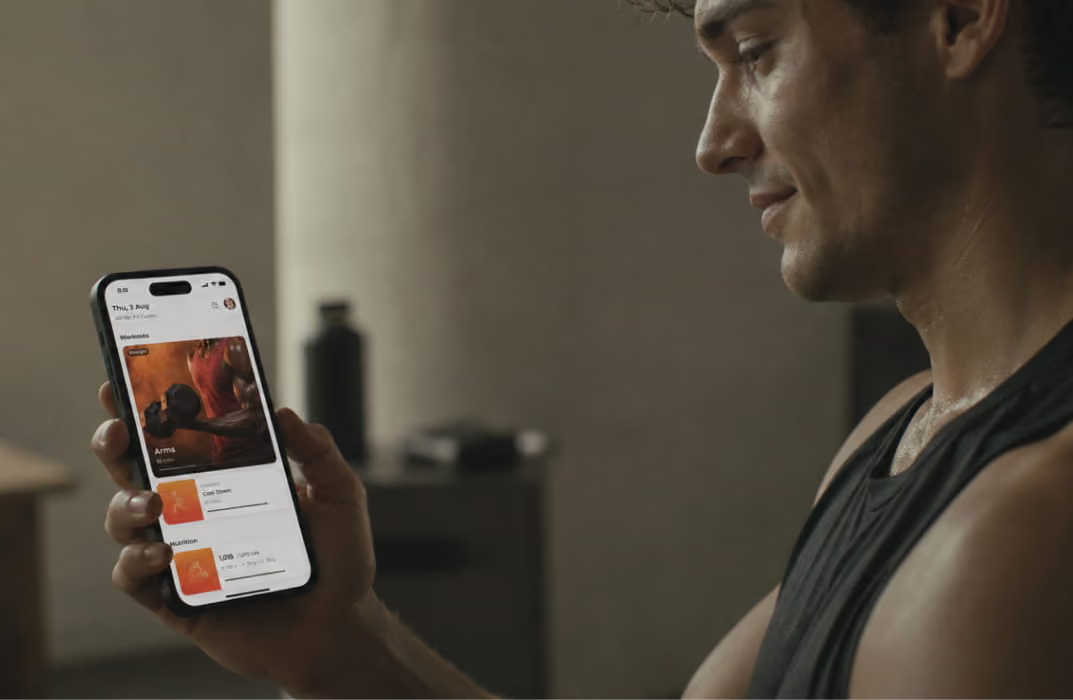
Here is a direct comparison of the leading white label coaching apps available to personal trainers in 2026.
Pricing disclaimer: Pricing is subject to change. Always confirm directly with each vendor before purchasing.
The price column alone does not tell the full story. The more important column is the one for zero-commission payments. A platform charging $39 per month but taking a revenue share on every client transaction often costs more than a $149 flat-rate platform at any meaningful scale.
FitBudd
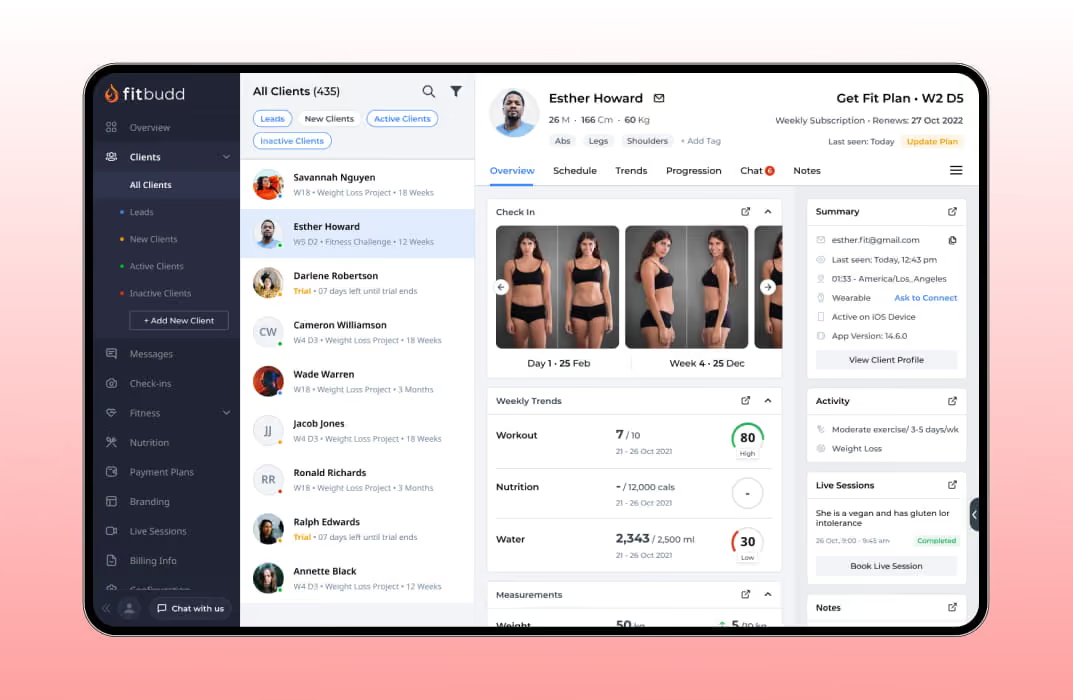
FitBudd's Super Pro plan is built for one specific use case: a personal trainer or small coaching business that wants a fully branded iOS and Android app, all-in-one coaching tools, and 0% commission on every client payment, at a price that makes sense before the business reaches enterprise scale.
Here is what that looks like in practice.
- The branded app
FitBudd publishes your app to the App Store and Google Play under your business name. Your clients search for your studio, download your app, and interact with your brand whenever they open their phones. The setup requires a one-time $75 fee and takes days, not months. After that, the app is yours.
- Coaching tools, all in one place
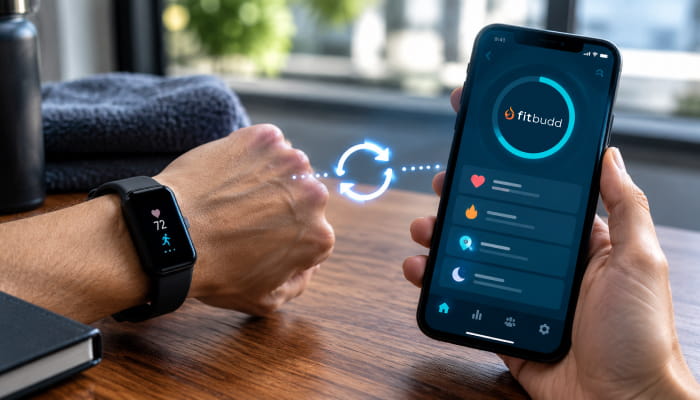
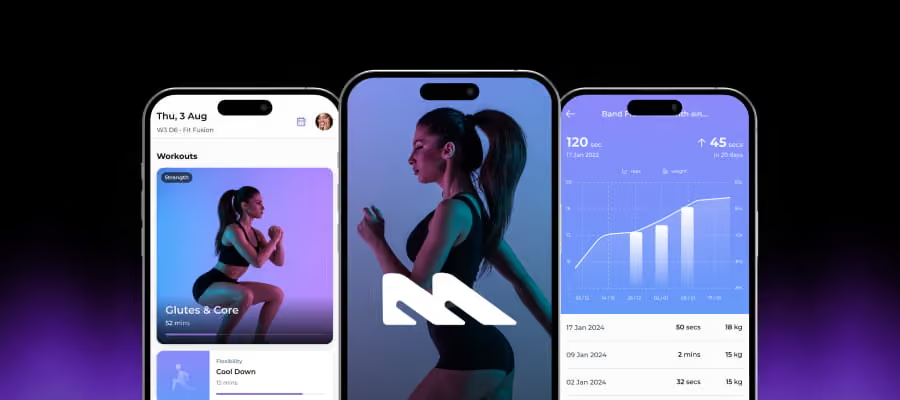
The FitBudd platform includes workout delivery with a 4,000+ exercise library, nutrition tracking, habit check-ins, wellness logs, follow-along video workouts, video calling, direct messaging, and progress tracking. These are not add-ons. They are included in the base plan. A trainer does not need a separate nutrition app, video tool, or check-in system.
- Zero commission on payments
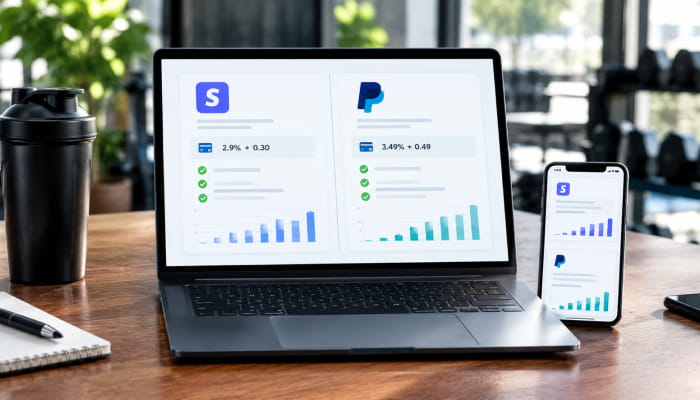
FitBudd connects directly to Stripe and PayPal. Every payment from every client goes to the trainer at Stripe's standard processing rate. FitBudd takes 0%. A trainer with 40 clients paying $200 per month processes $8,000 per month. At a 2% platform commission, that is $160 per month going to the software, not the trainer. At scale, zero commission is not a minor benefit.
- Flat pricing
$149 per month covers unlimited clients. There are no per-client fees, and there are no plan tiers based on client count. A trainer moving from 10 to 50 clients pays the same platform fee on day one and day 500.
- Human onboarding support
FitBudd includes dedicated onboarding assistance from real people, not a tutorial library. For trainers who are not technical, this removes the most common reason coaches abandon a platform before they see results.
Explore the full feature set: FitBudd Custom Branded App
See pricing in full: FitBudd Pricing
Kahunas vs FitBudd
Kahunas is the platform that most directly competes with FitBudd at the white label tier. Its Ultimate plan at $99/month includes a fully branded iOS and Android app listed in the App Store under your business name, unlimited clients, and 0% commission on payments via Stripe and PayPal. For coaches whose primary concern is a branded App Store presence without per-client fees, Kahunas is a legitimate option worth evaluating directly.
The differences become relevant as a coaching business grows.
Coaching depth
Kahunas covers workout delivery, nutrition tracking, check-in forms, habit tracking, a content library, and messaging. It does not include an AI workout builder, integrated video calling, or the depth of automation in FitBudd's Smart Flow system. Coaches who want to automate onboarding sequences, program delivery, and re-engagement workflows will find Kahunas more manual.
App Store listing requirements
Kahunas requires the coach to set up their own Apple Developer Account ($99/year separately) and handles the submission process with guidance. FitBudd's $75 one-time setup fee covers the submission with direct onboarding support. The practical difference is the level of hand-holding during setup.
Business tools
FitBudd includes a website builder with embedded lead-capture forms starting from the Pro plan. Kahunas does not include a website builder. For coaches building their online presence from the same platform that runs their app, this gap matters.
Kahunas at $99/month is a strong entry point if your primary need is a branded App Store listing at a lower price point and you're comfortable using separate tools for automation and lead generation. FitBudd at $149/month includes those tools in one place.
Related: White Label Fitness App Customization Guide
Trainerize White Label
Trainerize is one of the most established platforms in personal trainer software. Its base Pro 5 plan starts at $23/month, but the custom branded app is a $169 one-time add-on, and it is a shared container, not a native App Store listing under your name. Clients who download the app see Trainerize branding, not yours.
To get a studio-level branded app with your name in the App Store, you need the Studio Plus plan at $248/month. That plan includes the branded app, advanced nutrition, payments, and video coaching. The feature set is capable and polished. For an established training business with 100+ clients and a monthly revenue to justify the cost, the Studio Plus structure makes sense.
For an independent personal trainer or a coaching business with a monthly revenue of $5,000-$15,000, paying $248/month before the first client signs up is a significant barrier. And even then, the app is a studio-level branded experience, not the same as FitBudd or Kahunas publishing a fully independent app under your business name.
FitBudd's $149/month entry point delivers a native-branded App Store listing, not a shared container. That is the structural difference, not a feature comparison.
My PT Hub
My PT Hub's Premium plan at $59/month (or $22.50/month on annual billing) covers unlimited clients, workout delivery, nutrition tracking, automated check-ins, habit coaching, and community features. The custom branded app, which applies your logo and colors to the client-facing experience, is a $95 one-time add-on available on any plan.
The distinction to understand: the $95 custom branded app changes how the app looks to your clients, but does not give you your own App Store listing. Your clients still download an app under My PT Hub's name. For a fully white-labeled App Store listing under your business name, you need the $145/month white label add-on on top of your Premium subscription, making the total $204/month for Premium plus white label.
At that price point, My PT Hub with white label is competitive with FitBudd Super Pro for coaching features. The differences are that FitBudd's $149/month plan includes the App Store listing without a separate add-on, and its $75 one-time setup fee offers a more transparent cost structure than a recurring $145/month add-on.
My PT Hub is a strong option for coaches who want to start with the $95 custom branded app at a lower cost and add the full App Store listing later as the business grows.
Everfit
Everfit's free plan supports up to 5 clients and includes core workout-delivery features. The Pro plan starts at $19/month for 5 clients, scaling per-client from there: $49/month for 20 clients, $95/month for 50 clients. Payments, automation (Autoflow), meal plans, and on-demand content are separate paid add-ons.
The platform is technically capable. Custom branding (logo and colors applied to the client app) is available on Pro and Studio plans. The full white label option, which gives you an independent App Store listing under your business name, is available only to the Enterprise tier and requires a custom quote.
For a trainer at the 20-50 client stage evaluating white label options, Everfit's pricing model requires stacking several add-ons before reaching the same capability as FitBudd's flat-rate plans. White label, specifically, is not accessible without an Enterprise conversation.
Everfit is worth evaluating for coaches who want strong per-client pricing at lower roster sizes and do not yet need an independent branded App Store listing.
Exercise.com
Exercise.com covers workout delivery, custom-branded apps, lead management, billing, business analytics, and an online portal. The feature set is comprehensive and suits established multi-service fitness businesses with administrative staff.
Pricing is entirely custom and quote-based. No figures are published on the Exercise.com pricing page, which directs all visitors to book a demo. Third-party sources estimate pricing typically runs $300-$600+/month, but this cannot be verified without a direct sales conversation.
G2 and Capterra reviewers consistently reference a steep learning curve. For a solo trainer or a small coaching business, operational overhead is typically disproportionate to actual workflow needs.
What to Look for in a White Label Coaching App: A Trainer's Checklist
Before evaluating any platform, work through these criteria. They separate white label apps that support a growing training business from those that create ceiling problems at scale.
1. Native app vs shared container
Ask the platform directly: Is the app listed in the App Store under your business name, or does it run inside a shared container under the software company's name? This is a yes-or-no question. Accept nothing vague.
2. Payment commission structure
Calculate the annual cost of any transaction fee at your current and projected revenue before comparing monthly prices. A lower monthly fee with a 2-3% commission can cost more than a higher flat-rate platform once you reach 30+ clients.
3. Which features are included vs add-ons at the white label tier
Some platforms bundle nutrition, video calling, and automations. Others charge separately for each. Build the total monthly cost before comparing headline prices.
4. Per-client fee modeling
Run the numbers at 20, 50, and 100 clients. A platform that looks affordable today can change the economics significantly as your roster grows.
5. What "onboarding support" actually means
Ask specifically: Does a person walk you through the App Store submission, or do you receive a documentation link? Most platforms require you to set up your own Apple Developer Account ($99/year). The difference is how much of the process you handle on your own.
6. Client experience before you commit
Download the platform's demo app and navigate it as a client would. A branded app your clients find confusing or slow to load does not solve the retention problem it's supposed to fix.
Browse the full white label resource library: FitBudd White Label Fitness Apps
How to Set Up Your Branded Fitness App with FitBudd: What the Process Looks Like
Setting up a white label coaching app on FitBudd takes four steps.
Step 1: Select the Super Pro plan ($149/month) for the branded App Store listing, or start on Pro ($79/month) with all coaching tools and upgrade when ready.
Step 2: Upload your logo, set your app name and colors using the built-in theming tools. No custom development needed for most coaching brands.
Step 3: Pay the $75 one-time setup fee. This covers Apple Developer account setup and App Store and Google Play submission.
Step 4: Build your program library, configure nutrition plans, and connect Stripe for payments. Clients find your app by searching your studio name. Every payment goes directly to you at Stripe's standard rate.
FitBudd's onboarding team handles the submission process with you directly rather than handing off documentation. Most apps go live within a few days of submission.
For trainers evaluating personal trainer software: FitBudd Personal Trainer Software
White Label Fitness Apps by Business Stage: Which Platform Fits Where
Different platforms fit different business stages. Here is an honest breakdown.
Solo trainer, under 20 clients, building the foundation
FitBudd Pro at $79 per month gives full coaching tools, payment processing, client management, and a website builder. Upgrade to Super Pro when the branded app becomes a priority. Starting with FitBudd at this stage means no migration later.
Growing coaching business, 20 to 80 clients
This is when the branded App Store listing starts paying for itself in retention. Three options worth comparing directly:
- Kahunas Ultimate ($99/month) - branded App Store listing, unlimited clients, 0% commission
- FitBudd Super Pro ($149/month) - adds automation depth, website builder, video calling
- My PT Hub Premium + white label ($204/month) - solid feature set, higher combined cost
Trainerize Studio Plus ($248/month) only makes sense if you need its specific integrations.
Established training business, 80 to 200 clients
Two costs compound at this scale: per-client fees and payment commission. A 2% commission on $15,000/month in client payments costs $3,600/year. Kahunas and FitBudd both charge 0% with no per-client fees. For multi-coach setups, FitBudd Studio Elite adds a dedicated account manager and Mindbody or Zapier integration.
Influencer or fitness entrepreneur with a large online audience
Standard coaching platforms are not built for this. You need on-demand video libraries, community features, and audience monetization tools. FitBudd Creator Elite and Everfit Enterprise both support this model. Kahunas and My PT Hub do not.