

Ask any online personal trainer what keeps them up at night, and client retention will almost always come up within the first two answers. Attracting new clients is hard work. Keeping them is a different skill entirely, and for most coaches, it's where the real money is.
The math is straightforward: according to the Harvard Business Review, acquiring a new customer costs anywhere from five to twenty-five times more than retaining an existing one and a 5% improvement in retention can increase profits by 25% to 95%. In personal training, where the relationship is the product, that math matters even more.
Industry data from IHRSA (the global trade association for the fitness industry) shows that personal training studios achieve around 80% annual client retention nearly 9 points higher than traditional gyms a gap IHRSA attributes directly to the frequency and quality of one-to-one coach-client interaction. The more structured the touchpoints, the lower the dropout rate
This playbook covers the best strategies, tools, and frameworks that are actually working for fitness professionals in 2026, including how platforms like FitBudd are helping coaches build retention into their day-to-day operations rather than treating it as an afterthought.
Why Online Clients Leave (And It's Rarely What You Think)
Before jumping into solutions, it's worth being honest about why clients actually churn. Most coaches assume it's a price. Sometimes it is. But the more common culprits are:
Jonathan Goodman, founder of the Personal Trainer Development Center, author of Ignite the Fire and The Obvious Choice (HarperCollins), and mentor to over 65,000 fitness professionals worldwide, has studied client churn more systematically than almost anyone in the industry. His conclusion is direct: "Retention comes from the strength of your client relationships. Keeping your clients for a long time is what great trainers do and struggling trainers ignore. It's a simple equation: Clients come for the training, buy for the people, and stay for the relationships." Price is rarely the real issue. Relationship density is. Every strategy in this playbook is ultimately a mechanism for deepening that relationship at scale.
Loss of progress visibility
Clients stop feeling like they're moving forward. They're doing the workouts, but they can't see or articulate how far they've come. Without visible evidence of progress, it's easy to talk yourself into quitting.
Low accountability between sessions
Online personal training removes the physical presence that kept clients accountable in a gym setting. Without it, life gets in the way. A client misses one workout, then two, then stops logging their food, and before long, they've psychologically checked out even if they haven't canceled yet.
Feeling like a number
When a client feels like they're receiving a generic plan that could have been sent to anyone, they lose the sense that their coach actually knows them. Personalization isn't just a nice-to-have for client engagement; it's a retention mechanism.
Goodman's survey-based research on why clients leave personal trainers consistently identifies this as a primary driver of churn — not dissatisfaction with results, but disconnection from the coach. His framing from Ignite the Fire captures the stakes precisely: "People buy trainers, not training." The program is the vehicle. The relationship is the product. Online coaching removes the physical presence that made that relationship feel real in a gym setting — which is exactly why every digital touchpoint a coach creates between sessions is doing the work that proximity used to do automatically.
Plateaus without context
Clients hit a progress wall, don't understand why, and interpret it as the program failing them rather than as a normal part of the process. Coaches who communicate proactively during plateaus retain far more clients than those who wait for the client to raise it.
Tech friction
If clients have to use multiple apps, remember different logins, or navigate a confusing interface to check their workout, log food, and message their coach, they'll start to disengage. The easier you make it for clients to stay engaged in their program, the more of them will stay engaged.
Understanding this matters because the best client retention strategies address these root causes directly, rather than just offering discounts or bonus sessions when someone signals they're about to leave.
What Are the Best Ways for Personal Trainers to Retain Clients?
1. Build a Retention-Focused Onboarding Experience
The first two weeks of a new client relationship predict long-term retention more reliably than almost anything else. Coaches who nail onboarding achieve significantly higher 90-day retention rates than those who deliver a plan and then go quiet.
A strong onboarding sequence for a fitness check-in app for trainers includes:
- A client accountability app fitness app intake questionnaire that captures goals, injury history, equipment access, schedule, and food preferences before the first session
- A welcome message or video that sets expectations clearly: what the client will receive, how often to expect communication, and how to log their progress
- A simplified first week: don't overwhelm new clients with a complex program right away. Give them early wins that build confidence and momentum
- A 7-day check-in, either automated or manual, to make sure the client is finding their feet
The research on first-impression retention effects in service businesses is unambiguous. ACE's professional development curriculum on personal training sales and client retention identifies the onboarding window as the point where "measuring impact to demonstrate value and build trust with clients" has its highest leverage — because the client's frame of reference is still forming. A trainer who captures detailed intake data and references it in the first two weeks of programming signals something specific: that this coach paid attention. That signal is what converts a trial client into a committed one, and it happens in the first ten days or not at all.
FitBudd's automation features include an automated onboarding questionnaire that clients complete before you even schedule the first call. You set it up once, and every new client who joins your coaching business gets a personalized welcome experience. This alone removes hours of manual admin per client, and it signals professionalism from day one.
Pro Tip: Send a short personal video message within 24 hours of a new client joining. It doesn't need to be long. Sixty seconds of genuine acknowledgment ("I saw your goals, here's what I'm thinking for your first week") creates a connection that a written welcome email simply doesn't replicate.
2. Make Habit Tracking the Core of Your Coaching Model
Most online coaches deliver a workout program and a nutrition plan. The coaches with the best client retention rates go one layer deeper: they track the habits that make the program work.
This is where client habit-tracking software becomes less of a nice add-on and more of a core coaching tool. When clients are logging sleep, water intake, steps, supplement compliance, and daily movement alongside their workouts and meals, two things happen.
First, the client develops a behavioral relationship with their health that goes beyond just showing up for sessions. Second, the coach gets a much fuller picture of why results are or aren't happening.
Habit tracking for personal trainers should cover:
- Daily water intake targets (with reminders)
- Sleep logging or wearable-synced sleep data
- Step count tracking against a daily target
- Supplement compliance
- Workout completion rates by week
- Nutrition compliance against their macro or calorie targets
Peer-reviewed research published in the US National Library of Medicine shows that implementation intentions — structured 'if-then' plans specifying exactly when, where, and how a behavior will happen — significantly increase physical activity follow-through compared to open-ended goals, with effects that persist even after direct coaching contact ends.
3. Automate Check-Ins Without Losing the Personal Touch
This is one of the most practical and scalable client retention strategies available to online personal trainers in 2026. A weekly check-in, even a short automated one, keeps the coach-client relationship active between sessions and surfaces issues before they become cancellations.
The classic problem: coaches know check-ins matter, but manually messaging 30, 50, or 80 clients every week isn't sustainable. The answer isn't to do fewer check-ins; it's to use fitness coaching automation software to handle the delivery while keeping the content personal.
A well-structured automated check-in covers:
- How does the client feel about their energy and recovery this week
- Any sessions missed and why
- Nutrition compliance (did they hit their targets?)
- Progress toward their primary goal (weight, strength, endurance, depending on the client)
- One open-ended question: "Is there anything you'd like to adjust this week?"
The last question is important. It gives clients a structured way to communicate dissatisfaction or confusion before it becomes a quiet decision to cancel. Many coaches find that clients signal their issues in check-ins weeks before they churn, and a proactive response at that point saves the relationship.
4. How Can Personal Trainers Improve Client Retention Rates Through Progress Tracking?
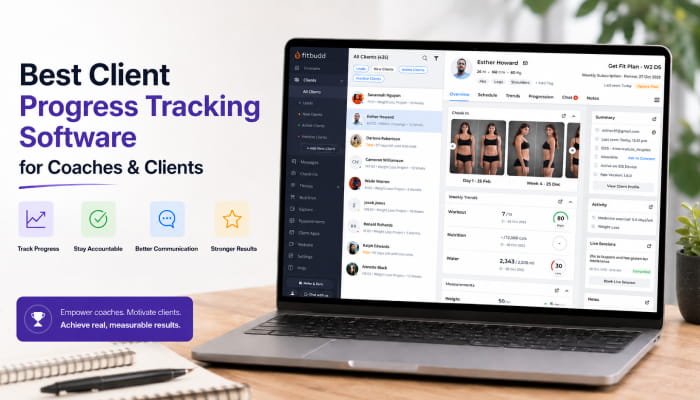
Progress tracking is arguably the most underused client retention tool in online personal training, not because coaches aren't doing it, but because they're not making the data visible and meaningful to the client.
Here's what actually retains clients: showing them how far they've come, not just tracking it in a spreadsheet the coach never shares. When clients can see their exercise history, their strength progression, their body composition changes over time, and their habit compliance scores, progress becomes less abstract and more motivating.
The fitness progress tracking software you use should let clients access their own data easily, on their phone, in real time, without having to ask the coach to pull a report.
The practical application: pick a fixed day each month to send clients a personalized "progress snapshot." Something as simple as "In the last 30 days, you've completed 18 of 20 workouts, your squat has gone from 60kg to 72.5kg, and you've hit your water target on 22 days. That's a strong month." That message costs you two minutes. The retention value it creates is significant.
Progress Tracking Must-Haves for Online Coaches
5. What Tools Help Trainers Keep Clients Motivated Long-Term?
Motivation is not a stable state. Every coach knows this, but the business model of most fitness client management software treats motivation as the client's problem to solve. The better approach is to design systems that sustain engagement even when motivation is low.
The tools that actually help here:
In-app messaging with real-time response
When a client is struggling mid-week and sends a message, getting a response within the same interface where they do their workouts feels seamless and supportive. Sending them to WhatsApp or email creates friction and psychologically separates the coaching relationship from the training environment.
On-demand content library
Clients who travel, change gyms, or have irregular schedules need flexible options. An on-demand content library lets clients access workouts they can do anywhere, which prevents the "I can't do my normal workout, so I'll skip it" pattern that erodes habit compliance.
Group coaching and community
Isolation is one of the silent killers of online coaching engagement. When clients feel like they're on a solo journey with just a weekly check-in for the company, the relationship becomes transactional. Group coaching elements, like a private community feed, group challenges, or group check-ins, create social accountability that individual coaching can't replicate.
Nutrition compliance tools
A client who is training hard but not seeing results because their nutrition is off will blame the program, not their food choices. Coaches who deliver nutrition plans and actively track nutrition compliance alongside workout compliance have significantly better client outcomes, and better outcomes mean better retention.
6. Best Client Retention Strategies for Online Coaches: The Non-Obvious Ones
The strategies above are the fundamentals. Here are the things most coaches overlook:
Celebrate non-scale victories loudly
A client who is sleeping better, has more energy, or has just run their first 5km without stopping needs to hear that this matters. Coaches who acknowledge holistic coaching wins, not just body composition changes, build deeper emotional loyalty.
Have a proactive cancellation conversation
When a client goes quiet, misses two check-ins, or drops their workout compliance below 50% for two consecutive weeks, reach out directly. Not with a generic "just checking in," but with a specific observation: "I noticed you've had a tough couple of weeks with workouts. Is everything OK?" This kind of proactive outreach signals that the coach is paying attention, and it often surfaces a solvable problem before the client has made a final decision.
Use milestones to reset commitment
Every 90 days, schedule a deliberate milestone review with each client. This isn't just a progress check; it's a structured opportunity to reset goals, adjust the program, and recommit. Clients who go through a milestone review are significantly more likely to continue than those who just receive a renewal notice.
Price anchoring through results
The best retention strategy is one you don't have to think about: results. Coaches who consistently deliver measurable outcomes retain clients without needing to discount or constantly re-pitch. This is why the habit-tracking, check-in automation, and progress-visibility strategies above matter so much. They're not just retention tactics; they're the infrastructure that makes results more likely.
Pro Tip: Create a simple "client health score" in your dashboard that combines workout compliance, check-in response rate, and progress toward the primary goal into a single weekly metric per client. Any client whose score drops significantly two weeks in a row gets a personal outreach from you. This proactive system prevents silent churn far more effectively than reactive outreach after a cancellation notice.
Also watch: https://youtu.be/T2i58mISu8Q?si=G93WL3mbQPv8VnAk
How FitBudd Builds Retention Into the Coaching Platform
Most personal training software is built for program delivery. FitBudd is built for client relationships, and there's a meaningful difference.
The platform's retention-relevant features work together in one app, which matters more than it sounds.
When a client has to leave the personal trainer client tracking app to log food in a nutrition and habit tracking app, then switch to WhatsApp to message their coach, then open another browser tab to submit their weekly check-in, each context switch creates an opportunity to disengage.
Consolidating everything into a single client app isn't just convenient; it's a structural retention advantage.
Here's how FitBudd's key features map to the retention strategies covered in this post:
Compare FitBudd with Trainerize, Everfit, and other similar platforms.
Building Your Client Retention System: A 30-Day Action Plan
If you're reading this as a coach who wants to improve retention without overhauling everything overnight, here's a realistic 30-day approach:
Week 1: Fix your onboarding
Set up an automated intake questionnaire. Create a welcome message template that feels personal. Define what the first 7 days of a new client relationship look like, and document it so it runs the same way every time.
Week 2: Implement weekly check-ins
Build a weekly check-in template and automate its delivery. Make sure it asks about compliance, recovery, and any needed adjustments. Review responses every Monday and respond personally to any client who flags something.
Week 3: Activate progress tracking
Set up your progress tracking workflow. Decide what metrics matter for each client type, and schedule your first monthly "progress snapshot" message to your current client roster.
Week 4: Add habit tracking
Identify the two or three habits that most directly predict results for your client base. Build them into your standard program as tracked behaviors, not just recommendations.
By the end of 30 days, you should have a retention infrastructure that runs largely without daily input from you, freeing you to focus on the coaching conversations that actually require your expertise.