
Your clients train hard in your sessions. Then they walk out the door, and you lose the plot.
No visibility into what they ate, how they slept, whether they hit their daily water goal, or stayed consistent between appointments. That's the accountability gap every trainer knows, but few solve. A reminder text does not close it. The right habit-tracking app does, by keeping your coaching present in your clients' lives every day, not just the few hours a week they spend with you.
This guide covers the best habit-coaching and habit-tracking apps designed specifically for fitness professionals. You'll see exactly what each platform does well, where it falls short, and why FitBudd's all-in-one approach is the strongest choice for trainers who want habit tracking inside their full coaching system.
Why Habit Tracking Changes Client Results (Not Just Client Experience)
![Split view of a client checking off daily habits on a mobile app and a coach reviewing compliance data on a dashboard]](https://cdn.prod.website-files.com/61713dc07218ee71af5413af/6a3e75a479244e21456eead0_Why%20Habit%20Tracking%20Changes%20Client%20Results.avif)
Workouts are one variable. Habits are everything else.
Your client might train 4 days a week. That's 4 hours. There are 168 hours in a week. What happens in the other 164 actually determines their results. Sleep quality, water intake, daily steps, stress management, and nutrition consistency all of it adds up to the real picture of progress.
When a client is stuck on a plateau, it's rarely because their program is wrong. It's because one or two daily habits are quietly working against everything else. Without a tracking system, you're flying blind. You can't coach what you can't see.
Habit coaching closes that gap. According to research published in the European Journal of Social Psychology, it takes an average of 66 days for a new behavior to become automatic. That window of consistency is exactly where most coaching programs lose clients and where a strong habit tracking app keeps them on course.
The best habit coaching apps for trainers don't just let clients check boxes. They surface compliance data in your dashboard so you can intervene early, adjust the program, and maintain an active relationship between sessions.
What to Look for in a Habit Tracking App for Trainers
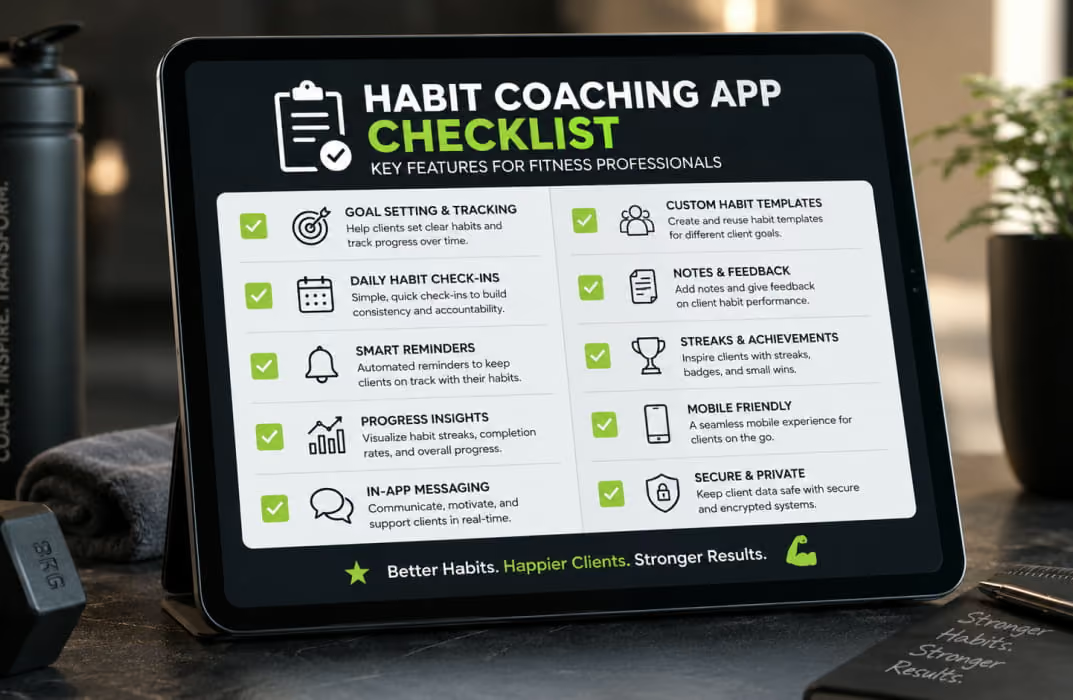
Not every habit app is built for professional use. Most are built for individuals. The features that matter to trainers differ.
Coach-facing dashboard
You need to see all your clients' habit compliance in one place, without having to log in to each person's account separately. Look for compliance scoring, trend views, and at-a-glance status for your full roster.
Custom habit creation
Pre-built habit libraries are useful, but your clients have specific goals. You need to create habits tailored to each client: daily protein targets, post-workout stretching, consistent bedtimes, and hydration goals.
Automated reminders
The best habit-tracking apps send clients prompts without you having to touch anything. Morning check-in reminders, evening summary notifications, and nudges when streaks are at risk should all be automatic.
Integration with workouts and nutrition
A habit app that lives in isolation from your program builder and nutrition tools creates yet another tab your client has to manage. The strongest platforms connect all three.
Branded client experience
If your clients see another company's logo every time they open the app, you're not building your brand, you're building theirs. A white-label fitness app puts your name and colors on the experience clients see daily.
The Best Habit Tracking Apps for Trainers: A Detailed Breakdown
1. FitBudd: Best All-in-One Habit Coaching App for Fitness Professionals
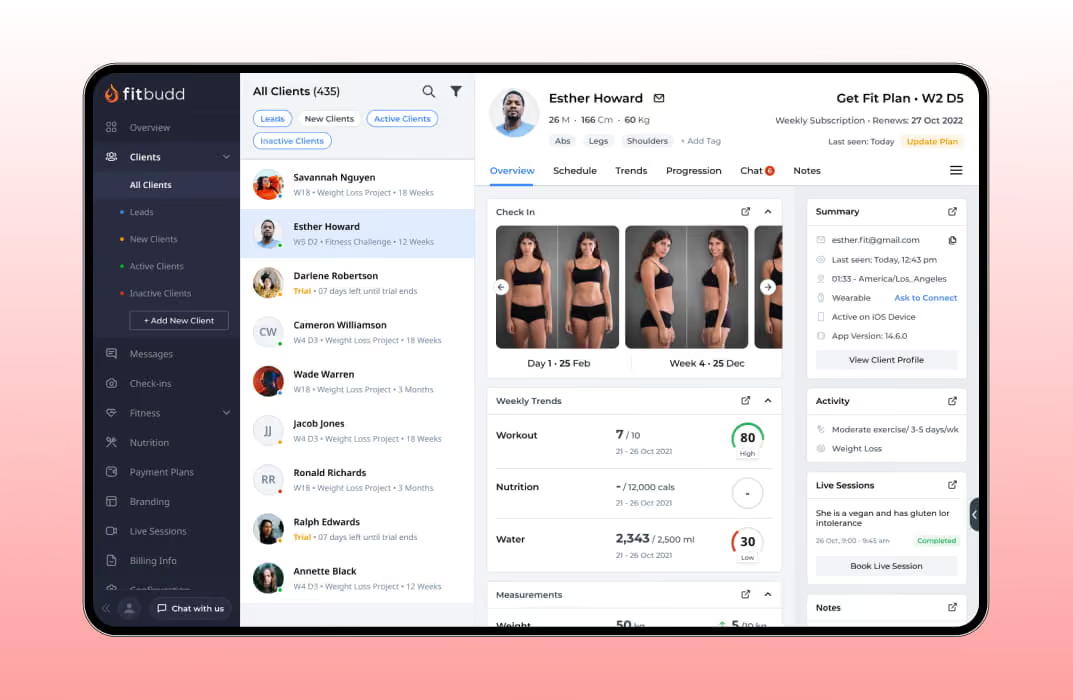
FitBudd is the strongest option for trainers who want habit coaching built directly into their full coaching platform, not bolted on as an afterthought.
What FitBudd's habit tracking covers:
FitBudd's habit-tracking software lets trainers assign custom daily habits to individual clients, track completion rates, and view compliance trends over time. Key habit categories include:
- Daily water intake goals with periodic tracking
- Daily activity monitoring through wearable integration (Apple Watch and Fitbit)
- Custom habit assignments tailored to each client's lifestyle goals
- Supplement plan delivery linked to habit routines
- Compliance metrics visible to the coach in real time
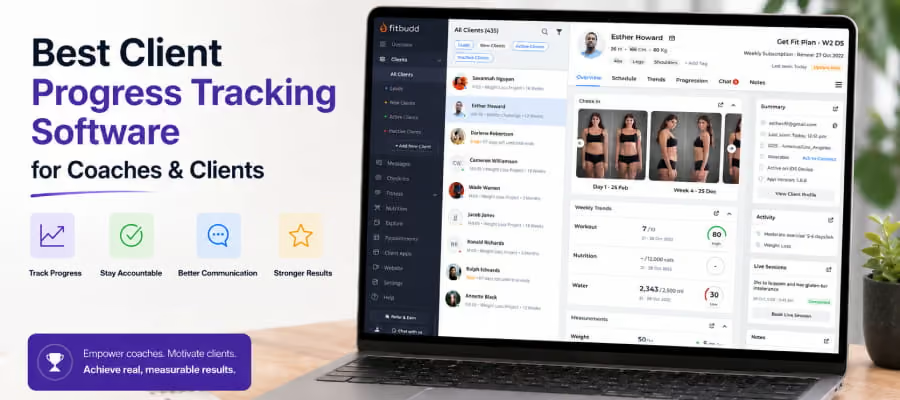
Habit data does not live in a silo. It sits alongside workout completion, nutrition logs, progress photos, and check-in data inside a single dashboard. When a client's habit compliance drops, you see it immediately, and you can respond with a message, a program adjustment, or a check-in without switching tools.
Wearable integration matters here :
FitBudd connects to Apple Watch and Fitbit to pull real-world data, including steps, active calories, and heart rate, into the client's profile. This means habit tracking isn't dependent on the client's self-reporting. The data is automatically imported, reducing the friction of daily logging.
How it compares
Most habit tracking tools require clients to open a separate app or visit a third-party platform. FitBudd puts habits, workouts, nutrition, and check-ins inside one client-facing experience that carries your branding. Clients open one app. You manage one dashboard.
Best for: Personal trainers, online coaches, nutritionists, gym owners, and studio operators who want habit coaching embedded in their full-service delivery, not managed through a separate tool.
Pricing: FitBudd's Starter plan begins at $15/month for up to 2 clients. The Pro plan is $79/month for up to 20 clients, with additional clients at $2/month each, and includes custom app theming, a branded website, automation tools, and 1:1 video calling. The Super Pro plan at $149/month adds a fully white-labeled iOS and Android app under your brand in the App Store and Google Play. The Elite plan covers large gyms, studios, and influencer brands managing 100+ clients. See full plan details here.
Watch this
2. CoachAccountable: Best for Structured Accountability Coaching
CoachAccountable is a well-built platform for coaches focused on structured accountability. It has a clean, professional interface that works well for life coaches, business coaches, and fitness professionals who operate primarily through 1:1 sessions and goal-based programs.
What it does well:
- Habit tracking with daily check-in reminders
- Milestone and goal tracking inside a client portal
- Worksheets, journal prompts, and session reflection tools
- Calendar management and automated reminders
- Metric tracking with customizable data points
- Team Edition for larger coaching practices with multiple coaches
What it lacks:
CoachAccountable is not built for fitness-specific workflows. There is no workout builder, no exercise library, no nutrition tracking, and no progress photo feature. If your coaching includes program delivery, you'll need separate tools for that, which puts you back to managing multiple platforms.
It also lacks a branded mobile app. Clients access the platform via a web portal or a generic mobile experience, so you can't build your own branded presence the way you can with a custom branded app.
Pricing: Starts at $20/month for up to 2 clients. Scales by client count.
Best for: Life coaches and general wellness coaches who primarily deliver accountability sessions and don't need workout or nutrition delivery in the same platform.
3. Nudge Coach: Best for Scalable Health Engagement Programs
Nudge Coach is built for health and wellness teams who need to keep large numbers of clients engaged between sessions. It focuses on client communication, habit tracking, and the delivery of educational content.
What it does well:
- Configurable mobile client app with habit tracking and goal monitoring
- Direct messaging between coach and client
- Educational content delivery inside the client app
- Integration with fitness tracking devices
- Simple, clean UI that clients find easy to adopt
- Designed for group programs and scaled health coaching
What it lacks:
Nudge Coach is a communication and habit platform; it's not a fitness coaching platform. There's no workout programming, no exercise library, no nutrition plan builder, and no payment processing. For trainers who need to deliver actual fitness programs alongside habit coaching, this creates an immediate integration gap.
It also does not offer a white-label, branded app at the level of fitness-specific platforms. Coaches looking to build a personal training brand under their own name will find Nudge Coach limiting as a standalone tool.
Best for: Corporate wellness teams, health coaches, and programs focused primarily on behavior change and communication rather than structured fitness delivery.
4. Everfit: Best for Habit and Task Delivery Alongside Workout Programs
Everfit is a personal training platform that includes a task and habit module alongside its workout builder. It competes in a similar space to FitBudd and Trainerize, with a cleaner habit delivery system than most.
What it does well:
- Task and habit assignment with built-in reminders
- Habit categories covering sleep, hydration, steps, mindfulness, and journaling
- Check-in scheduling, including weigh-ins and progress photos
- Reading assignments and audio/video content delivery
- Custom metrics for tracking non-workout progress markers
What it lacks:
Everfit offers a branded client app as a paid add-on rather than a standard part of every plan, so the fully branded experience is available at a higher tier. Its habit module is functional, but does not pull wearable data as deeply into the client profile. Pricing also scales quickly as your client base grows.
Best for: Online trainers who want workout programming and basic habit delivery in one tool and don't yet need a fully branded client app.
5. Trainerize (ABC Trainerize): Best for Trainers Already in the ABC Fitness Ecosystem
Trainerize is one of the most widely used coaching platforms globally. Its habit-tracking module allows coaches to assign habits to four categories: Active Lifestyle, Nutrition, Sleep, and Mindfulness. Clients track completion through the Trainerize app, and coaches see compliance rates in their dashboard.
What it does well:
- Pre-built habit library with video lessons attached to each habit
- Achievement badges and streak tracking for client motivation
- Water tracking with compliance monitoring
- Custom habits with coach-defined goals
- Integrates with MyFitnessPal, Apple Watch, and Strava
What it lacks:
On most plans, Trainerize does not give you a standalone app published under your own name in the App Store. Clients access coaching through the generic Trainerize client app instead. For trainers building a personal brand, that is a meaningful gap, and pricing scales steeply as client counts increase.
Best for: Trainers already using the ABC Fitness or Trainerize ecosystem who want habit tracking added to an existing workout delivery setup.
What Separates FitBudd's Habit Coaching from Every Other Platform
On most platforms, habit tracking is a bolt-on feature. In FitBudd, it is wired into the rest of the coaching system, which changes what you can do with the data.
Here's exactly what that means in practice:
Habit data feeds into program decisions
When you see a client's habit compliance dropping fewer steps, lower water intake, or inconsistent sleep, you have context to adjust their training load or check in proactively. That data lives on the same dashboard as their workout logs and nutrition reports, so the picture is complete.
Wearables close the self-reporting gap
Clients don't always remember to log. FitBudd's integration with Apple Watch and Fitbit automatically pulls activity data, including steps, active calories, and heart rate during workouts, making compliance data more reliable than self-reported entries.
Automation handles the follow-up
FitBudd's Smart Flow automation lets you set up reminders, check-in nudges, and follow-up messages based on client behavior. A client who hasn't logged their habits for 3 days can automatically receive a check-in message, so you don't have to act manually.
Everything lives in one app
Habit tracking, workout delivery, nutrition plans, progress photos, in-app messaging, video calls, and payments. Clients open one app. Your brand is on every screen. No context switching, no confusion, no "which app do I use for what?"
This is what coaches mean when they describe FitBudd as a habit coaching app for trainers that actually fits how they coach. Not a tool they manage separately. A system that runs alongside their work.
See how FitBudd's habit tracking, nutrition, and progress features work together for fitness coaches: Explore FitBudd's personal trainer software.
How to Use a Habit Tracking App to Improve Client Retention
Getting clients' results is one part of the retention equation. Keeping them engaged during the slow, invisible stretches of the weeks when progress isn't visible yet is the other part.
Habit tracking does three things that directly drive retention:
- It creates visible progress before the body changes.
A client who can see they hit their water intake 6 out of 7 days this week, completed 18 out of 20 assigned habits this month, and logged their meals consistently has evidence of effort. That evidence matters on the days when the scale hasn't moved.
- It gives you something to coach between sessions.
Without habit data, your weekly check-in is generic. With it, you can say, "Your sleep compliance was low this week, and your workout intensity dropped. Let's talk about that." That level of specificity is what makes clients feel genuinely coached, not just programmed.
- It closes the accountability loop automatically.
Clients who know their coach is tracking their habits behave differently. Not because they're being watched, but because the coaching relationship feels ongoing rather than limited to scheduled sessions.
For trainers running a nutrition coaching practice or a hybrid model, habit tracking is the connective tissue between the program and the client's daily life. FitBudd's platform links habit data to nutrition logs, workout completion, and progress metrics so that the full lifestyle picture is accessible in one place.
Habit-Based Nutrition Coaching: The Platform Requirement Most Coaches Miss
![Split view of client logging food via barcode scanner in a branded app and coach viewing macro and habit compliance overview]](https://cdn.prod.website-files.com/61713dc07218ee71af5413af/6a3e765ff3b50b27e3f2bb58_Habit-Based%20Nutrition%20Coaching.avif)
Nutrition habits are the hardest category to track well. It's one thing to assign "eat protein with every meal" as a daily habit. It's another to actually see whether clients are hitting their macros, logging their meals, and staying within their targets.
This is where platforms diverge sharply.
CoachAccountable and Nudge Coach do not have built-in nutrition tracking. Trainerize integrates with MyFitnessPal but requires clients to use a separate app. Everfit allows some habit-based nutrition tracking but lacks a full food database.
FitBudd's nutrition coaching software includes:
- A food database with over 1 million items
- Barcode scanning inside the client-facing app
- Macro and calorie targets with daily tracking
- Meal plan creation and delivery from the coach dashboard
- BMR calculation for accurate baseline planning
- Recipe library sharing inside the branded app
- Daily meals and macros tracker accessible to the coach in real time
This means nutrition habits aren't tracked through a separate integration; they're tracked in the same system where you see workout completion, check-in data, and overall compliance. The habit of eating enough protein is linked directly to the nutrition log that confirms it.
For trainers asking "what software should I use for habit-based nutrition coaching," this integration is the answer. You're not coordinating between platforms. Everything is in one place.
Building a Program with Habit Tracking: How to Structure It
A program builder with habit tracking changes how you structure a client's experience from the start.
Here's a practical structure that works for most coaching models:
Week 1: Foundation habits only
New clients can't build everything at once. Assign 2–3 foundational habits: daily water intake, logging meals, and completing the onboarding check-in. Let them build the routine of opening the app before adding workout complexity.
Weeks 2–4: Add progressive habits
Layer in habits aligned with the training phase: morning mobility routine before sessions, post-workout protein window, 7,000 steps on rest days. Each habit should support what's happening in the program.
Month 2 onward: Compliance-based adjustments
Review habit compliance data at each check-in. If a client consistently hits 80%+ on all assigned habits, add a new habit. If they're struggling, reduce rather than push.
FitBudd's AI workout builder pairs naturally with this approach; it generates structured programs based on client goals and equipment, freeing up the time you'd spend writing programs to actually review habit data and make coaching decisions that matter.
For gym and studio operators managing multiple trainers or client groups, FitBudd's gym CRM software handles the organizational layer: bulk habit assignments across client groups, team-level compliance monitoring, and automated reminders without manual follow-up.









.jpg)