Are You Earning Up to Your Potential?
Most personal trainers are undervaluing their time and skills. Our Personal trainer Revenue Calculator helps you find out what you should be making, and how to get there.
No guesswork. Just real numbers.
.webp)
The fitness industry has changed dramatically over the past decade. More and more people are turning to online trainers, workout apps, and digital coaching programs instead of traditional in-person gyms. As a result, personal trainers and fitness coaches are realizing that social media platforms are no longer optional-they’re essential. With more trainers shifting online, choosing the best online personal trainer platforms in 2025 has become just as critical as picking the right personal training software for online training to streamline your business
If you’re a fitness professional running an online fitness coaching business, your social media presence can make the difference between struggling to find new clients and building a thriving community. But with so many platforms available, which ones work best for fitness coaches? Where should you be posting your workout videos, client success stories, and nutrition plans in 2025?
This guide breaks down the best social platforms for online fitness coaching, why they matter, and how to use them effectively. Whether you’re an online personal trainer just starting or you already have a fitness coaching business and want to scale, this article will give you the roadmap to reach a wider audience and keep your clients motivated.
Why Social Media Matters for Fitness Coaches
Before diving into specific platforms, let’s talk about why social media is so essential for the personal training business today.
Powerful marketing tool:
Social media is one of the most cost-effective marketing tools available. Unlike traditional advertising, you don’t need a huge budget. You need consistency, creativity, and a solid social media strategy. For many personal trainers, this has become the easiest entry point into the world of social media marketing.
Reach a wider audience:
Platforms like Instagram, TikTok, and YouTube allow you to share short videos, workout tips, exercise demos, and healthy recipes with millions of people instantly. By optimizing your social media profiles with clear branding and relevant keywords, you can expand your visibility and connect with a much larger pool of potential clients.
Client management:
Pro tip: Keep your posting schedule consistent. Post regularly—3 to 5 times a week—to stay top-of-mind with your target audience. In fact, Instagram continues to be regarded as the best social media platform for fitness because of its unique blend of visual storytelling and community engagement..Most of these tools come with a user-friendly interface that makes it easier to stay organized and keep your social media posts consistent.
Social proof:
Sharing success stories, testimonials, and user-generated content builds trust and credibility. Creating content that highlights fundamental transformations shows that your personal training services deliver results, which is key to winning over new clients.
Engagement:
Posting regularly keeps your audience engaged and reminds them of their fitness goals. Whether through interactive polls, comments, or direct messaging, strong engagement ensures that your community feels supported throughout their fitness journey.
In short, social media channels for personal trainers are an essential tool for growing an online fitness business. The real question is: where should you focus your energy?
The Best Social Platforms for Online Fitness Coaching
Not all platforms are created equal. Some are better for video content, others for building communities, and some for posting schedule automation. Let’s look at the best social platforms for online fitness coaching and how you can use them to grow your fitness coaching business in 2025.
1. Instagram: The Visual Powerhouse
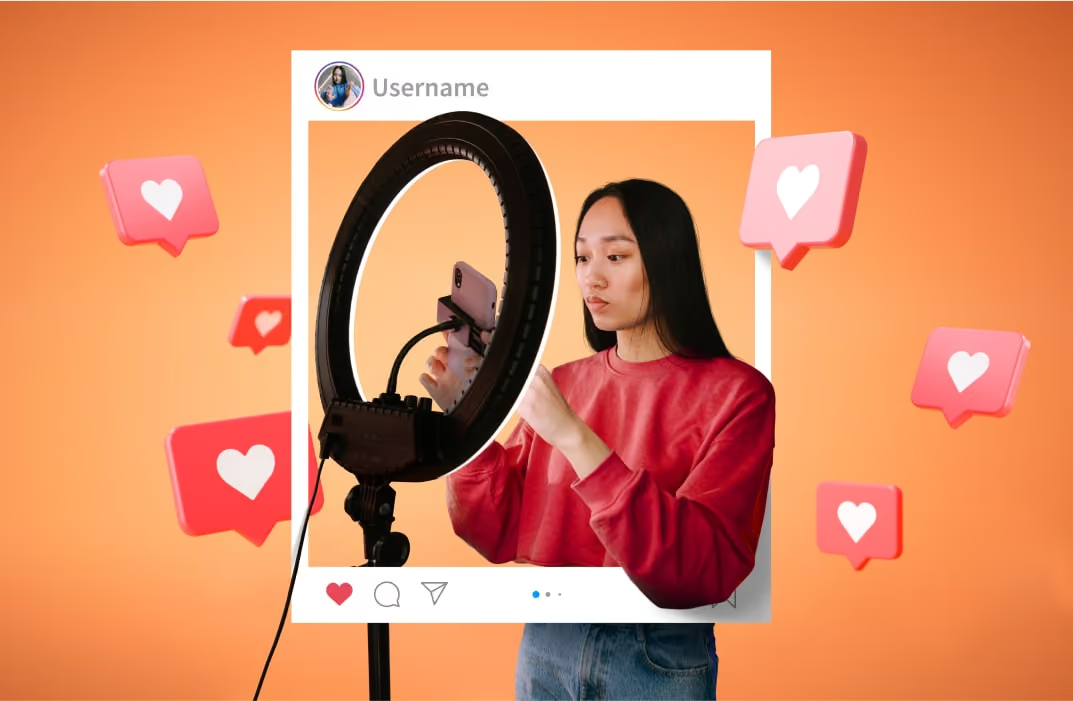
Instagram remains one of the top choices for fitness coaches because it’s built around visual storytelling.
- Why it works:
Instagram supports short videos, workout tips, exercise demos, and client success stories. It’s perfect for showing your personality and building trust with personal training clients. - Best content:
- Reels with quick workout plans or exercise demos
- Carousel posts with nutrition plans or healthy recipes
- Stories to keep clients motivated
- Transformation photos to showcase success stories
- Features:
- Targeted ads to find new clients
- User-generated content from your community
- Schedule posts with third-party apps to save time
- Pro tip: Keep your posting schedule consistent. Post regularly—3 to 5 times a week—to stay top-of-mind with your target audience.
In 2025, Instagram remains one of the best social platforms for online fitness coaching, especially if you want a mix of engagement and visibility.
💪 Got an idea for a brand? Let's bring it to life.
Launch your own fitness app with FitBudd in minutes!
💪 Got your brand name? Let’s bring it to life.
Launch your own fitness app with FitBudd in minutes!



88% trainers worldwide gave us 5 stars
Transform your fitness business with the power of your branded app on iOS and Android.
Try for FREE2. TikTok: The Home of Short-Form Fitness Content
TikTok is no longer just for dance trends—it has become a hub for fitness trainers and online classes.
- Why it works:
TikTok’s algorithm helps personal trainers reach a wider audience quickly. Even if you’re a small online personal trainer, one viral video can bring in hundreds of new clients. - Best content:
- Short videos (15–60 seconds) with workout tips
- “Day in the life of a fitness coach” behind-the-scenes clips
- Quick healthy recipes or snack ideas
- Fun challenges that keep clients motivated
- Features:
- TikTok’s robust algorithm shows your videos to potential clients outside your followers.
- Built-in editing tools make content creation easier and less time-consuming.
- You can link your other social media accounts for a more comprehensive solution.
If you’re wondering where fitness coaches should post in 2025, TikTok is at the top of the list.
3. YouTube: The Long-Form Education Hub
YouTube has always been the go-to platform for educational content and workout videos. It’s perfect for fitness professionals who want to provide more in-depth value.
- Why it works:
YouTube videos show up in Google search results, which helps you attract new clients searching for workout plans or nutrition advice. - Best content:
- Full online classes and tutorials
- In-depth workout plans
- Client success stories in video format
- Track client progress, tips, and tools
- Features:
- Monetization options through ads and memberships
- Integration with a custom-branded app for membership management
- Evergreen content that keeps bringing in potential clients
For online trainers looking to establish authority, YouTube is one of the most valuable social media channels.
4. Facebook: Still a Community Builder
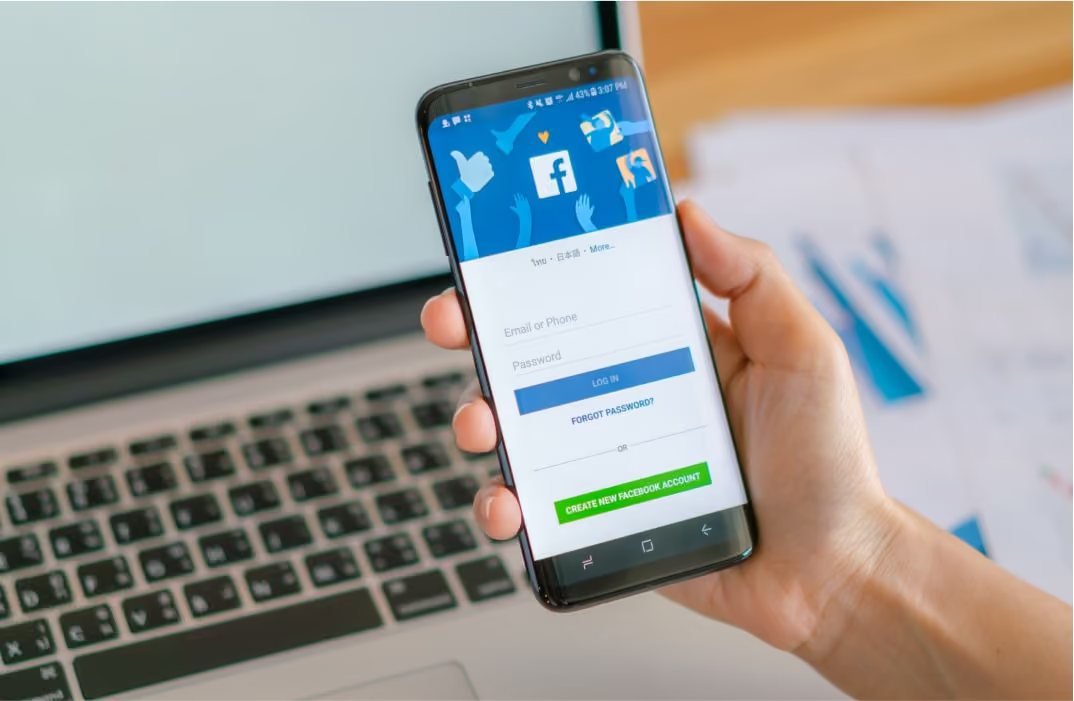
Even though Facebook is no longer the trendiest platform, it’s still a goldmine for fitness businesses.
- Why it works:
Facebook remains powerful for building Facebook groups, running targeted ads, and hosting online classes. - Best content:
- Client success stories in group communities
- Weekly live workout sessions
- Educational posts with nutrition plans and healthy recipes
- Features:
- Scheduling capabilities for posts
- Easy to integrate with membership management tools
- Robust advertising options to reach your exact target audience
If your social media strategy involves creating a loyal, interactive community, Facebook remains an essential tool.
5. LinkedIn: The Professional Edge
LinkedIn might not be the first platform you think of for fitness coaches, but it’s perfect for networking and positioning yourself as an authority in the fitness industry.
- Why it works:
LinkedIn is ideal for fitness professionals who offer corporate wellness programs, online seminars, or want to connect with other coaches. - Best content:
- Articles about personal training services and the digital age
- Sharing success stories with a professional spin
- Tips on how to manage clients and save valuable time
- Features:
- Ability to connect with business leaders and HR teams
- Great for B2B opportunities like online wellness workshops
- Adds credibility to your brand
If you want to expand your online fitness business beyond individual personal training clients, LinkedIn is worth including in your social media strategy.
6. Pinterest: The Underrated Search Engine
Pinterest may not get the hype of TikTok or Instagram, but it works wonders for driving traffic to your fitness coaching business website or custom-branded app.
- Why it works:
Pinterest acts like a visual search engine. People use it to find workout plans, healthy recipes, and fitness journey inspiration. Since Pinterest is also a fitness social media platform, it doubles as a discovery tool where your workout boards or recipes can drive traffic to nutrition coaching software or your branded app.
- Best content:
- Infographics with workout tips
- Healthy recipes with step-by-step guides
- Inspirational fitness journey boards
- Features:
- Pins stay visible for months (unlike posts that disappear in hours)
- Easy way to funnel potential clients to your sales page
- Integrates with all the features of modern fitness business websites
For personal trainers who want long-term visibility, Pinterest is a brilliant addition to your social media accounts.
How to Build a Winning Social Media Strategy
Knowing the best social platforms for online fitness coaching is only step one. The real success comes from building a clear, consistent, and practical social media strategy that not only attracts new clients but also keeps your existing community inspired and engaged. Here’s how to put it all together:
Define your target audience:
- Be crystal clear about who you’re talking to. Are you helping busy professionals who want to lose weight, athletes trying to improve performance, or everyday people looking for accountability on their fitness journey? The clearer your audience, the easier it is to create content that speaks directly to them.
Pick 2–3 platforms:
Don’t spread yourself too thin by trying to be everywhere at once. Choose the social media channels that best match your strengths and where your audience spends most of their time. For example, if you love making workout videos and short videos, TikTok and Instagram might be perfect. If you prefer educational content, YouTube could be a better fit.
Create a posting schedule:
Consistency beats perfection. Use tools with scheduling capabilities to save time and ensure regular posting. A steady rhythm of content helps keep your brand visible and positions you as a reliable online fitness coach.
Mix up your content:
Don’t just post one type of content. Keep it fresh with a variety of workout videos, short videos, educational content, nutrition plans, client progress updates, and success stories. Add in lifestyle posts or behind-the-scenes clips to humanize your brand and make your social media profiles feel more approachable.
Use engagement features:
Social media is a two-way street. Go live, answer comments, run polls, and share user-generated content to keep your audience engaged. The more interaction you create, the stronger your community becomes.
Track client progress:
Show real results. Share before-and-after photos, testimonials, and milestones to not only celebrate your training clients but also demonstrate your credibility to potential clients. This helps build social proof and encourages others to join your fitness coaching business.
Leverage tools:
Many apps today function as an all-in-one solution with robust features like membership management, content creation, scheduling posts, and even a custom-branded app for your personal training services. These tools allow you to save valuable time, reduce the stress of managing multiple platforms, and focus on what you do best—helping clients stay motivated and reach their fitness goals.
Final Thoughts
In today’s digital age, being a great fitness trainer isn’t enough—you need visibility. In 2025, the best online fitness coaching platforms are those that not only provide visibility but also integrate seamlessly with software for fitness trainers, allowing you to deliver personalized coaching at scale. Choosing the best social platforms for online fitness coaching can help you reach a wider audience, manage clients effectively, and save valuable time while growing your fitness coaching business.
- Instagram and TikTok are your go-to for short, engaging content.
- YouTube is your library for long-form, evergreen videos.
- Facebook builds community through groups and live sessions.
- LinkedIn adds a professional edge.
- Pinterest quietly drives long-term traffic.
With the right mix of platforms, a strong social media strategy, and a commitment to post regularly, you’ll attract new clients, keep your clients motivated, and build a thriving online fitness business in 2025 and beyond.
What is the best social media platform for coaches?
The best social media platform for coaches depends on your content style and target audience. For most fitness coaches, Instagram and TikTok work best because they’re built around visual, engaging content like workout videos, client success stories, and short tips. If you want to create longer tutorials and educational content, YouTube is the go-to platform. Meanwhile, Facebook Groups are still powerful for building a community, and LinkedIn is useful for coaches offering corporate wellness or professional services. Ideally, choose 2–3 platforms where your audience spends the most time instead of trying to be everywhere.
What is the best platform for fitness influencers?
For fitness influencers, Instagram and TikTok are currently the top choices. Both platforms reward creativity and consistency, and their algorithms can quickly boost your reach if you post regularly. Instagram is great for polished social media posts, transformation photos, and Reels, while TikTok is perfect for fun, authentic short videos that go viral easily. Suppose you’re aiming to build authority and long-form content. In that case, YouTube is also a strong choice, as many influencers use it to post workout plans, nutrition tips, and educational content that attracts a loyal following.
Is there a fitness social media?
Yes, there are platforms explicitly dedicated to fitness. While mainstream channels like Instagram, TikTok, and YouTube dominate the space, several apps and communities function as fitness social media. Examples include Fitocracy, Strava, and MyFitnessPal, where users can track workouts, share progress, and connect with others on their fitness journey. Many personal trainers also create private communities through Facebook Groups or custom apps that offer workout plans, nutrition guidance, and client progress tracking—essentially acting as a fitness-only social media hub for their clients.
How to promote social fitness?
Promoting social fitness means creating opportunities for people to connect, share, and stay motivated through community-driven activities. As a fitness coach, you can do this by:
- Hosting online classes or live workouts on Instagram, TikTok, or Facebook.
- Encouraging user-generated content, like transformation posts or workout challenges, to build social proof.
- Creating private social media groups where members can share their fitness goals, success stories, and workout tips.
- Using social media marketing campaigns with challenges, giveaways, or collaborations to encourage participation.
- Sharing educational content and healthy recipes to keep your audience engaged and connected.
At its core, promoting social fitness is about using social media platforms as a powerful marketing tool while also fostering a sense of community where people support one another on their fitness journey.


Meet the author
Suchandra Das
Frequently Asked Questions

Yangzey Sherpa leads content strategy at FitBudd, overseeing content planning and execution across fitness-focused digital channels. With over five years of experience in SEO and content, she works closely with the fitness industry to ensure content aligns with the needs of coaches, trainers, and gym owners. Her role keeps her deeply connected to fitness business workflows, coaching models, and how professionals use digital platforms to grow.


Apra Pathak has worked closely within the fitness niche for several years, supporting personal trainers and fitness coaches through content and digital marketing initiatives. Her experience centers on understanding how fitness professionals build visibility, communicate value, and engage clients online. Through sustained involvement with fitness-focused platforms and audiences, she has developed a strong understanding of the digital needs and growth challenges faced by modern fitness businesses.

Aishwarya Mehra has been actively involved in fitness-focused digital marketing, working closely with brands and platforms that serve coaches, trainers, and fitness businesses. Her experience spans engagement-driven strategies designed specifically for fitness audiences. Through ongoing exposure to fitness campaigns and communities, she remains closely aligned with how fitness professionals attract, convert, and retain clients in digital environments.

Suchandra Das has contributed content within the fitness niche, working on resources designed for coaches, trainers, and fitness business owners. Her experience involves supporting fitness-related topics with clear, structured, and accessible content. Through consistent involvement with fitness-focused platforms, she has developed familiarity with coaching workflows, client communication, and the informational needs of fitness professionals.
FitBudd is a fitness technology platform built exclusively for coaches, personal trainers, gym owners, and fitness professionals. The platform supports fitness businesses through branded apps, white-labeled solutions, and websites designed around real coaching and training workflows. FitBudd works closely with the global fitness community, maintaining deep, ongoing involvement in the fitness industry.

Ankit Uniyal has worked extensively with fitness-focused content, supporting platforms that cater to personal trainers, gym owners, and fitness professionals. His experience includes optimizing and structuring content around fitness-related search behavior and user intent. Through continued involvement in the fitness niche, he has gained a strong understanding of how trainers and coaches build discoverability and authority online.

Saumya Mittal is the Co-Founder and CEO of FitBudd. Since 2021, she has been actively engaged in the fitness technology sector, collaborating with global fitness companies to foster digital growth and scalable operations. With over a decade of experience leading high-impact projects in engineering and operations, Saumya has a strong background in developing reliable and scalable systems. Through FitBudd, she is dedicated to addressing the evolving needs of fitness professionals worldwide.

Kinshuk Snehi has been closely involved in the fitness space for over four years. Through his work at FitBudd, he has contributed to shaping how fitness professionals build their online presence, attract clients, and scale sustainable coaching businesses. Deeply interested in the intersection of fitness, technology, and growth, Kinshuk brings a hands-on understanding of the challenges faced by modern trainers. His passion lies in building systems and strategies that support long-term consistency, both in fitness journeys and business growth.

Kanika Verma has been closely involved in building solutions for the fitness industry, working with platforms used by coaches and trainers globally. Her experience includes direct exposure to fitness coaching workflows and operational needs. Through sustained involvement in fitness-focused product development, she has developed a strong understanding of how fitness professionals manage clients, programs, and daily operations.

Tanya Sharma has worked on branding initiatives within the fitness niche, supporting fitness platforms and businesses with visual identity design. Her experience includes creating brand systems used by coaches, trainers, and fitness-focused products. Through ongoing involvement in fitness-related design projects, she remains closely connected to how fitness brands communicate trust and professionalism.

Niharika Sonavane has contributed to visual design projects within the fitness industry, supporting platforms and brands serving fitness professionals. Her experience spans creating digital assets used across fitness apps, websites, and marketing materials. Through continued work in the fitness niche, she remains closely aligned with the visual communication needs of coaches and fitness businesses.

Elesh Patel has worked extensively on marketing initiatives within the fitness niche, managing paid campaigns for fitness-focused products and services. His experience includes supporting platforms that target personal trainers, gym owners, and fitness creators. Through long-term involvement in fitness marketing, he remains closely connected to how fitness professionals discover and adopt digital tools.



5 Types of Fitness Forms
Effortlessly manage client interactions with our suite of essential forms, covering every aspect of
Download Now
Templates
These functional templates have the power to make any fitness trainer's life easier.
Subscribe To
Our Blog

.avif)