Are You Earning Up to Your Potential?
Most personal trainers are undervaluing their time and skills. Our Personal trainer Revenue Calculator helps you find out what you should be making, and how to get there.
No guesswork. Just real numbers.
.webp)
AI for gyms means using software that learns from member data to personalize programs, flag members who are about to cancel, forecast busy hours and automate routine communication. For gym owners, the payoff is practical: more members get a personalized experience without adding trainers, and staff spend their time on the members who need them most. This guide covers how gyms are using AI today, what AI gym analytics can tell you, which tasks to automate first and how to get started. If you coach clients one-on-one, our guide to AI in fitness covers how trainers use it to scale.
The Role of Artificial Intelligence in Fitness
AI for gyms is software, usually built into your gym management platform or member app, that analyzes check-ins, bookings, workout logs and payments to automate tasks and predict what members will do next. Instead of reacting after a member cancels, you see the warning signs weeks earlier and can act on them. The most common uses are personalized programming, churn prediction, demand forecasting and automated member communication.
Key Applications of AI in Gyms
Personalized Training Programs
Personalized training programs are transforming the fitness experience by offering tailored solutions based on individual needs. Using AI algorithms, these programs analyze metrics like fitness levels and personal goals to create tailored workout plans that evolve with progress, ensuring sustained engagement and optimal results.
One key benefit is real-time adjustments, where AI modifies workout intensity or suggests alternatives to keep members on track while minimizing injury risks. Paired with real-time feedback, members are motivated and guided toward efficient goal achievement.
AI often integrates nutrition plans with fitness routines, creating a holistic approach to health. Additionally, behavioral analysis helps predict disengagement and provides timely encouragement, boosting member engagement and retention.
For gym owners, AI offers scalability by automating data analysis to deliver a personalized experience for all members. Wearables and mobile apps enhance accessibility, allowing members to track progress and stay accountable anytime, anywhere.
By combining adaptability, analytics, and convenience, AI-powered personalized training programs redefine gym operations, keeping members motivated and loyal while giving gym owners a competitive edge.
Virtual Personal Trainers
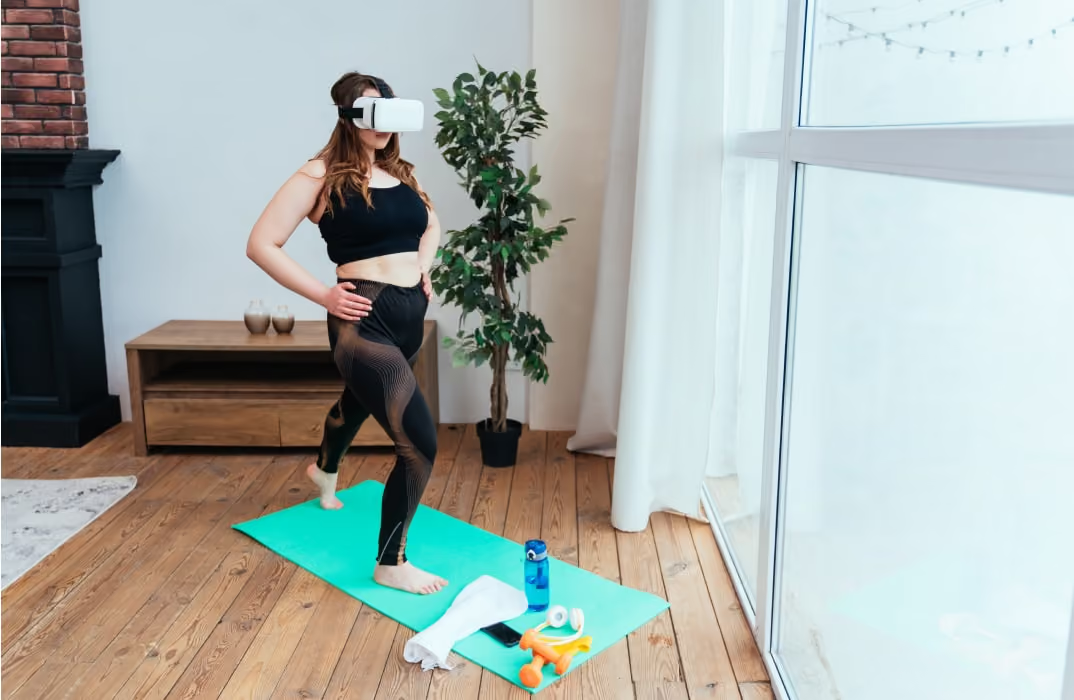
Virtual personal trainers powered by artificial intelligence are reshaping the way gyms provide guidance and support to their members. These AI-driven trainers are available 24/7 and offer members a personalized fitness experience that goes beyond traditional in-person sessions. By analyzing member data and fitness goals, virtual trainers deliver tailored workout plans, monitor progress, and provide real-time feedback to ensure effective and safe workouts.
One of the standout features of virtual trainers is their ability to use computer vision technology to correct form and technique during exercises. This capability minimizes the risk of injury and ensures members maximize their workouts, even without a human trainer physically present.
Virtual trainers are particularly appealing to busy members who need flexibility. Whether at home or in the gym, they can access guided workouts via fitness apps or connected devices, making fitness routines more adaptable to individual schedules. For gym owners, this means catering to a broader audience, including those who may not have time for traditional personal training sessions.
These AI-powered trainers also support long-term engagement by offering motivation and encouragement. Through constant interaction, they help members stay consistent with their routines and maintain focus on their fitness goals. Integration with health monitoring devices allows virtual trainers to provide recommendations based on real-time health metrics, creating a truly personalized fitness journey.
For gyms, virtual personal trainers reduce the demand on human staff while maintaining high-quality services. By combining technology with personalized care, gym owners can enhance member engagement, increase retention, and offer cutting-edge fitness solutions that set their businesses apart in a competitive market.
💪 Got an idea for a brand? Let's bring it to life.
Launch your own fitness app with FitBudd in minutes!

💪 Got your brand name? Let’s bring it to life.
Launch your own fitness app with FitBudd in minutes!



88% trainers worldwide gave us 5 stars
Transform your fitness business with the power of your branded app on iOS and Android.
Try for FREEPredictive Equipment Maintenance
Maintaining gym equipment is crucial for fitness operators looking to optimize gym operations. AI technology can predict when fitness equipment is likely to need maintenance, allowing gym owners to schedule repairs proactively. By analyzing usage patterns and wear-and-tear data, AI can predict potential issues with fitness equipment before they cause disruption. This reduces downtime and helps maintain a seamless fitness experience for members, keeping their workouts uninterrupted.
AI-Powered Recommender Systems
AI models can create personalized experiences for members by recommending classes, workouts, or even fitness apps based on their preferences and fitness goals. These AI-powered recommender systems analyze member behavior to offer tailored suggestions that will keep them engaged and encourage attendance. For example, suppose a member regularly participates in high-intensity interval training (HIIT). In that case, the system can recommend similar classes or routines, keeping their fitness journey exciting and aligned with their interests.
Virtual Group Classes
With AI, gym owners can also offer virtual group classes, enabling members to join sessions remotely. AI systems can create dynamic schedules and even customize the class experience based on the collective fitness levels and health metrics of the virtual class members. This technology also allows gyms to expand their reach, attracting fitness enthusiasts who prefer working out at home but still want a social and engaging class experience.
Sentiment Analysis and Feedback
AI can help gym owners understand how their members feel about the services offered. By using sentiment analysis, AI tools can analyze feedback from surveys, reviews, and social media to gauge member satisfaction. This enables gyms to make data-driven decisions to improve customer experiences, address concerns, and enhance member retention.
Customer Service Chatbots
To streamline gym management, AI-powered chatbots can handle routine customer service tasks, such as answering queries about membership plans, class schedules, and equipment usage. These chatbots can operate 24/7 and provide immediate responses to potential and existing members. By automating repetitive tasks, gym operators can focus on more complex matters while improving member engagement and satisfaction.
Improved Member Retention and Engagement
AI can help improve member retention by analyzing member data to predict patterns and behaviors. By understanding when members are likely to leave or disengage, gym owners can implement targeted strategies to keep them active, whether that’s offering personalized workout plans or providing special incentives for new members. AI’s ability to predict member behavior ensures that gym owners can stay proactive in maintaining member engagement.
Demand Forecasting
For gym owners managing schedules, AI can assist in demand forecasting by analyzing historical data and trends to predict peak hours, class attendance, and equipment usage. This helps optimize class schedules, ensure the right number of trainers are available, and ensure that there’s enough gym equipment during busy hours. By forecasting demand, gym owners can make informed decisions to maximize their operations and revenue.
Virtual Reality (VR) Workouts
AI in the fitness industry also extends to virtual reality (VR). AI-powered VR workouts allow members to experience immersive fitness routines, whether it’s running through a mountain trail or participating in a boxing match. By combining fitness technology trends with AI, gyms can offer a futuristic workout experience that appeals to fitness enthusiasts looking for variety and excitement.
Also read: Ultimate Guide to Health and Fitness Tech: What's New & What Works
Enhanced Data Analytics
Data-driven insights are vital in understanding member behavior and improving gym operations. AI-powered systems can provide gym owners with valuable insights into member acquisition, attendance patterns, and fitness progress. By analyzing this data, gym operators can tailor their offerings and marketing strategies to meet member expectations and stay competitive in the fitness and wellness industry.
AI-Enhanced Safety Measures
AI technology can also enhance gym safety by utilizing computer vision to monitor member activities and detect potential risks, such as improper form or dangerous exercises. These AI systems can provide real-time feedback to prevent injuries and ensure that members are exercising safely. This not only boosts member confidence but also helps gym owners comply with safety regulations.
Energy Optimization
AI can also help gyms reduce their environmental footprint and operating costs. By using AI systems to monitor energy consumption, gym owners can optimize the use of lighting, HVAC systems, and other utilities based on peak and off-peak hours. This leads to energy optimization, cutting down on operational expenses while making the gym more sustainable.
Benefits for Gym Owners and Fitness Operators
- Enhanced Member Experience: Leveraging AI tools helps gym owners create customized plans, improving overall fitness experiences.
- Efficient Gym Management: AI gym software automates repetitive tasks, freeing up staff to focus on personal interactions.
- Competitive Edge: By adopting AI technology, gym owners can attract new members and retain existing members by offering innovative solutions.
- Informed Decision-Making: AI provides data-driven insights into member behavior, equipment usage, and operational efficiency.
How to Leverage AI for Your Fitness Business
- Adopt AI Gym Software
- Use AI-powered systems to manage memberships, track member attendance, and analyze trends in member acquisition.
- AI tools simplify club operations, helping gym owners focus on delivering exceptional customer experiences.
- Enable Personalized Experiences
- Implement AI models to design programs that cater to all their members and address individual needs.
- Offer tailored workout plans and nutrition plans to meet diverse fitness goals.
- Stay Ahead of Fitness Technology Trends
- Incorporate fitness apps and AI-powered fitness apps into your offerings to provide on-the-go solutions for members.
- Use mobile apps integrated with AI to offer features like virtual coaching and progress tracking.
- Optimize Equipment Maintenance
- AI can predict equipment maintenance needs, reducing downtime and ensuring a seamless experience for members.
- Track equipment usage and plan upgrades to keep up with fitness trends.
The Future of AI in the Fitness Industry
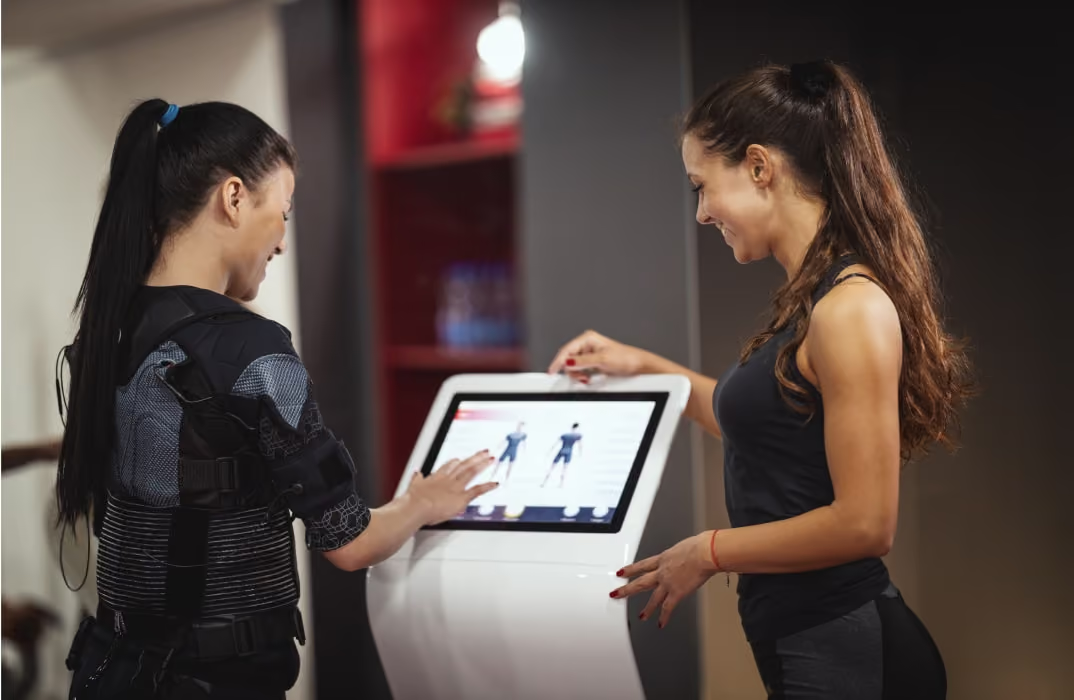
As AI evolves, its applications in the fitness and wellness industry will expand further. From improving member acquisition and member engagement to optimizing club operations, AI technology is set to redefine the fitness world. By adopting AI systems, gym owners can offer unparalleled experiences, ensuring members stay motivated and achieve their fitness goals.
In the coming years, gyms will increasingly use AI agents that handle front desk questions, member onboarding and scheduling together, with staff stepping in for the conversations that need a person.
Final Thoughts
For gym owners, AI is quickly becoming a standard part of running the business. Start where the payoff is clearest: personalized member programs, analytics that flag at-risk members, and automation for routine communication. Gyms that get those three right can serve more members with the same team. If you want this delivered through your own branded member app, see how FitBudd works for gyms.
Also read:
Revolutionizing Fitness: How AI is Transforming Workout Regimens
15 AI Tools for Personal Trainers: Boost Your Fitness Business with Cutting-Edge Technology
8 AI Tools Every Fitness Entrepreneur Should Use



Meet the author
Aishwarya Mehra
With a passion for digital strategy and a keen eye for engagement, Aishwarya Mehra is your partner in turning clicks into clients and likes into loyal followers.
Frequently Asked Questions

Yangzey Sherpa leads content strategy at FitBudd, overseeing content planning and execution across fitness-focused digital channels. With over five years of experience in SEO and content, she works closely with the fitness industry to ensure content aligns with the needs of coaches, trainers, and gym owners. Her role keeps her deeply connected to fitness business workflows, coaching models, and how professionals use digital platforms to grow.


Apra Pathak has worked closely within the fitness niche for several years, supporting personal trainers and fitness coaches through content and digital marketing initiatives. Her experience centers on understanding how fitness professionals build visibility, communicate value, and engage clients online. Through sustained involvement with fitness-focused platforms and audiences, she has developed a strong understanding of the digital needs and growth challenges faced by modern fitness businesses.

Aishwarya Mehra has been actively involved in fitness-focused digital marketing, working closely with brands and platforms that serve coaches, trainers, and fitness businesses. Her experience spans engagement-driven strategies designed specifically for fitness audiences. Through ongoing exposure to fitness campaigns and communities, she remains closely aligned with how fitness professionals attract, convert, and retain clients in digital environments.

Suchandra Das has contributed content within the fitness niche, working on resources designed for coaches, trainers, and fitness business owners. Her experience involves supporting fitness-related topics with clear, structured, and accessible content. Through consistent involvement with fitness-focused platforms, she has developed familiarity with coaching workflows, client communication, and the informational needs of fitness professionals.
FitBudd is a fitness technology platform built exclusively for coaches, personal trainers, gym owners, and fitness professionals. The platform supports fitness businesses through branded apps, white-labeled solutions, and websites designed around real coaching and training workflows. FitBudd works closely with the global fitness community, maintaining deep, ongoing involvement in the fitness industry.

Ankit Uniyal has worked extensively with fitness-focused content, supporting platforms that cater to personal trainers, gym owners, and fitness professionals. His experience includes optimizing and structuring content around fitness-related search behavior and user intent. Through continued involvement in the fitness niche, he has gained a strong understanding of how trainers and coaches build discoverability and authority online.

Saumya Mittal is the Co-Founder and CEO of FitBudd. Since 2021, she has been actively engaged in the fitness technology sector, collaborating with global fitness companies to foster digital growth and scalable operations. With over a decade of experience leading high-impact projects in engineering and operations, Saumya has a strong background in developing reliable and scalable systems. Through FitBudd, she is dedicated to addressing the evolving needs of fitness professionals worldwide.

Kinshuk Snehi has been closely involved in the fitness space for over four years. Through his work at FitBudd, he has contributed to shaping how fitness professionals build their online presence, attract clients, and scale sustainable coaching businesses. Deeply interested in the intersection of fitness, technology, and growth, Kinshuk brings a hands-on understanding of the challenges faced by modern trainers. His passion lies in building systems and strategies that support long-term consistency, both in fitness journeys and business growth.

Kanika Verma has been closely involved in building solutions for the fitness industry, working with platforms used by coaches and trainers globally. Her experience includes direct exposure to fitness coaching workflows and operational needs. Through sustained involvement in fitness-focused product development, she has developed a strong understanding of how fitness professionals manage clients, programs, and daily operations.

Tanya Sharma has worked on branding initiatives within the fitness niche, supporting fitness platforms and businesses with visual identity design. Her experience includes creating brand systems used by coaches, trainers, and fitness-focused products. Through ongoing involvement in fitness-related design projects, she remains closely connected to how fitness brands communicate trust and professionalism.

Niharika Sonavane has contributed to visual design projects within the fitness industry, supporting platforms and brands serving fitness professionals. Her experience spans creating digital assets used across fitness apps, websites, and marketing materials. Through continued work in the fitness niche, she remains closely aligned with the visual communication needs of coaches and fitness businesses.

Elesh Patel has worked extensively on marketing initiatives within the fitness niche, managing paid campaigns for fitness-focused products and services. His experience includes supporting platforms that target personal trainers, gym owners, and fitness creators. Through long-term involvement in fitness marketing, he remains closely connected to how fitness professionals discover and adopt digital tools.
.avif)



Workout Schedule & Progress Tracker Template
Stay on top of your fitness game with our customizable tracker to monitor progress and plan workouts.
Download Now
Templates
These functional templates have the power to make any fitness trainer's life easier.
Subscribe To
Our Blog