Are You Earning Up to Your Potential?
Most personal trainers are undervaluing their time and skills. Our Personal trainer Revenue Calculator helps you find out what you should be making, and how to get there.
No guesswork. Just real numbers.
.webp)
You load two 45-pound weight plates on each side of the bar. That's 180 pounds of weight plates. But how much are you actually lifting?
If you don't know the bar's weight, you're guessing. And guessing doesn't work when you're trying to track progress, hit PRs, or program training for clients.
Here's the problem: not all barbells weigh the same. The standard Olympic barbell weighs 45 pounds, but Smith machines, EZ curl bars, trap bars, and other specialty equipment vary widely, sometimes by 30+ pounds.
This guide breaks down the exact weight of every bar you'll find in a commercial or home gym, so you can log your lifts accurately and train with confidence.
{{gym-name-generator-form="/blog-gym-name-generator"}}
The Quick Answer: Standard Gym Bar Weights
Most barbells you encounter in a gym weigh 45 pounds (20 kg). This applies to:
- Men's Olympic barbells
- Standard power bars
- Most squat racks and bench press stations
If you're using the main barbell at a gym for exercises like squats, bench press, or deadlifts, assume it weighs 45 lbs unless marked otherwise.
But here's where it gets complicated. Women's Olympic bars, Smith machines, specialty bars, and lighter training bars all have different weights. Let's break down each type.
💪 Got an idea for a brand? Let's bring it to life.
Launch your own fitness app with FitBudd in minutes!
💪 Got your brand name? Let’s bring it to life.
Launch your own fitness app with FitBudd in minutes!



88% trainers worldwide gave us 5 stars
Transform your fitness business with the power of your branded app on iOS and Android.
Try for FREEOlympic Barbell Weight
The Olympic barbell is the gold standard. It's what you'll find in most gyms, CrossFit boxes, and serious home gyms.
Men's Olympic Barbell:
- Weight: 45 lbs (20 kg)
- Length: 7.2 feet (2.2 m)
- Shaft diameter: 28mm
- Sleeve diameter: 50mm (fits Olympic plates)
Women's Olympic Barbell:
- Weight: 33 lbs (15 kg)
- Length: 6.5 feet (2.01 m)
- Shaft diameter: 25mm
- Sleeve diameter: 50mm
The women's bar is lighter and thinner to accommodate smaller hands and the different proportions typical in women's weightlifting. If you're competing in Olympic weightlifting, the competition uses gender-specific bars.
Why the weight matters: A men's bar weighing 20 kg technically equals 44.1 lbs, but everyone rounds to 45 lbs. This is why "one plate per side" equals 135 lbs (45 + 45 + 45) and why gym math works in increments of 45.
Power Bar Weight
Power bars look nearly identical to Olympic bars but are designed for powerlifting movements. The powerlifting barbell is built specifically for exercises like squats, bench press, and deadlifts.
Standard Power Bar:
- Weight: 45 lbs (20 kg)
- Length: 7.2 feet
- Shaft diameter: 28.5-29mm
- Features: Stiffer construction, more aggressive knurling, center knurl for squats
Unlike Olympic bars, power bars have minimal "whip" (flex). They're built rigidly to handle heavy loads without bending. The International Powerlifting Federation (IPF) uses the same 45-lb bar weight for both men and women in competition.
Specialty squat bars used in some powerlifting gyms weigh 55-65 lbs (25-29 kg) due to their thicker shafts and longer length
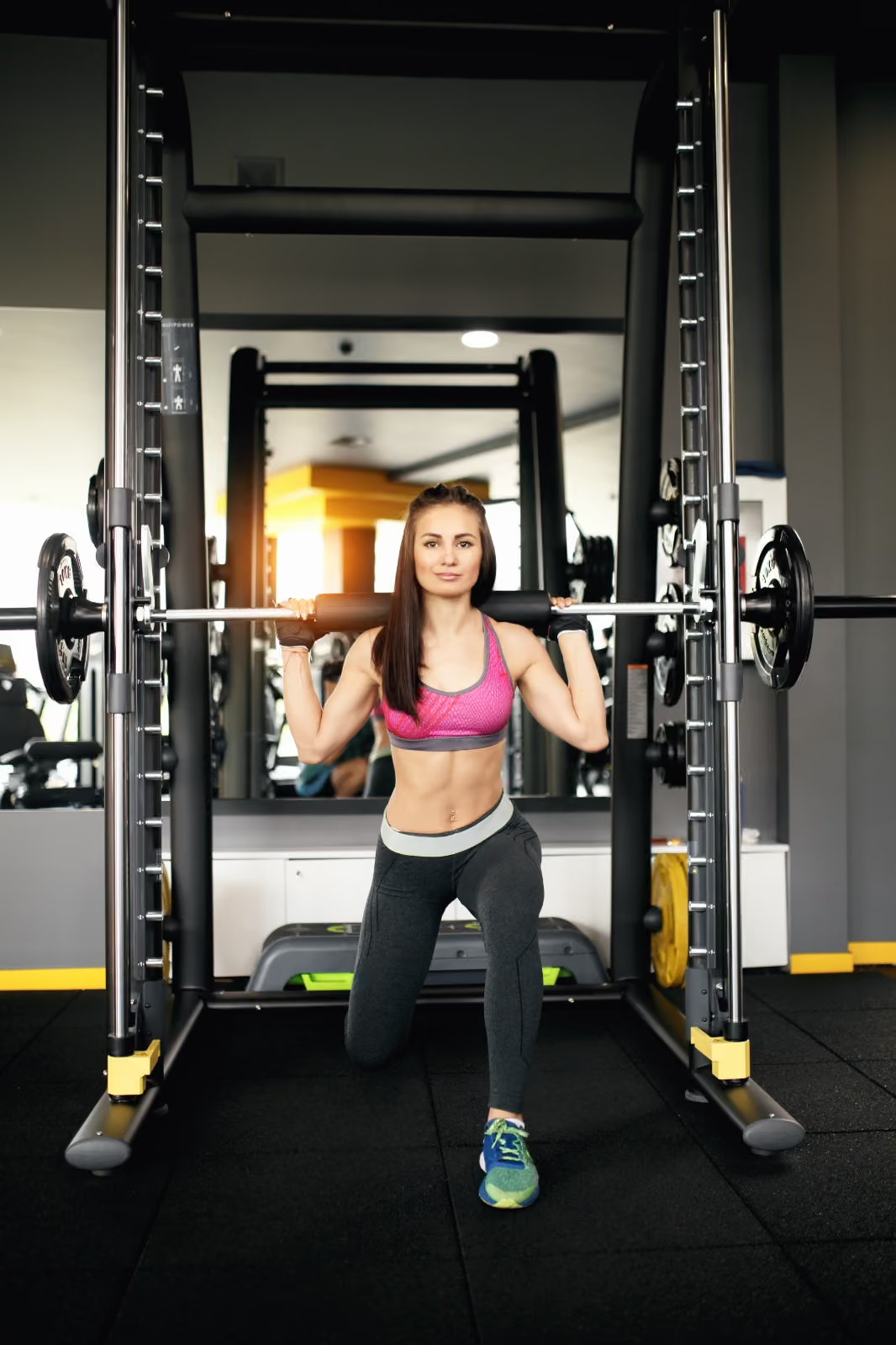
Smith Machine Bar Weight
This is where things get tricky. These bars don't have a standard weight, and the actual resistance you feel varies dramatically between machines.
Typical Smith Machine Bar Weights:
- Counterbalanced (most commercial gyms): 15-25 lbs (6-11 kg)
- Non-counterbalanced: 30-45 lbs (14-20 kg)
- Some heavily counterbalanced models: As light as 6 lbs
Why the huge range? Many commercial Smith machines use a counterweight pulley system to reduce the effective bar weight. This makes the bar feel lighter than it actually is, great for beginners, confusing for anyone tracking their numbers.
Gym-specific examples:
- Planet Fitness: 15-20 lbs
- LA Fitness: 15-25 lbs
- Anytime Fitness: 15-25 lbs
How to find out: Check the machine itself (some have weight labels), ask gym staff, or use a luggage scale to weigh the bar directly.
Important: Smith machine lifts don't translate directly to free-weight barbells anyway. The fixed track removes stabilization demands, so most people lift 5-15% more on a Smith machine than they would with a free barbell. Track your Smith machine progress separately from your barbell lifts.
EZ Curl Bar Weight
EZ curl bars have a zigzag shape that allows for a more natural wrist position during biceps curls and triceps extensions. They're shorter and lighter than Olympic bars.
Standard EZ Curl Bar:
- Weight: 10-15 lbs (4.5-7 kg)
- Length: 45-48 inches
- Sleeve diameter: 1 inch (standard weight plates)
Olympic EZ Curl Bar:
- Weight: 18-25 lbs (8-11 kg)
- Length: 47-57 inches
- Sleeve diameter: 2 inches (Olympic plates)
Rackable EZ Curl Bar:
- Weight: 30-35 lbs (14-16 kg)
- Length: 71-75 inches
- Fits on a squat rack for easier loading
Fixed EZ Curl Bars (pre-loaded, found in most commercial gyms):
- Weight: 20-110 lbs total
- Usually increment by 10 lbs
- Weight is printed on the end caps
If you're doing curls with a standalone EZ bar and adding plates, you need to know the bar's weight. Most Olympic EZ bars at commercial gyms weigh around 20-25 lbs.
Trap Bar (Hex Bar) Weight
Trap bars, also called hex bars, have a hexagonal frame that lets you stand inside the bar with handles at your sides. They're popular for deadlift exercises and farmer's walks.
Standard Trap Bar:
- Weight: 45-60 lbs (20-27 kg)
- Most common: 45-55 lbs
Heavy-Duty Trap Bar:
- Weight: 60-75 lbs (27-34 kg)
- Built for higher load capacities
The weight varies because trap bars have extra steel in their frame compared to a straight barbell. The handles, extra bends, and often dual-height grip options add material and mass.
Pro tip: Many trap bars have two handle heights, a high handle (easier on the lower back) and a low handle (more similar to a conventional deadlift). The bar weighs the same regardless of which handle you use.
Safety Squat Bar Weight
The safety squat bar (SSB) has a padded yoke that rests on your shoulders and forward-facing handles. It's designed for people with shoulder mobility issues or those who want to shift the load position during squat exercises.
Safety Squat Bar:
- Weight: 45-70 lbs (20-32 kg)
- Most common: 60-65 lbs
The padding, cambered design, and handles add significant weight compared to a straight bar. Always check the specific bar's weight before loading plates; a 65-lb SSB plus plates adds up faster than you'd expect.
Technique / Training Bar Weight
Technique bars (also called training bars or youth bars) are lightweight bars designed for learning Olympic lifts, warming up, or training young athletes.
Technique Bar:
- Weight: 15-25 lbs (7-11 kg)
- Often made from aluminum
- Same dimensions as full-size bars, just lighter
These are useful for drilling snatch and clean technique without the load of a full 45-lb bar. Many CrossFit gyms and weightlifting clubs keep technique bars for beginners.
Other Specialty Bars
Understanding all the exercise equipment in your gym helps you train more effectively. Here are additional specialty bars you might encounter, all created equal when it comes to building strength across different muscle groups:
Deadlift Bar:
- Weight: 45 lbs (20 kg)
- Longer and thinner than standard bars, more whip
- Used in some powerlifting federations
Cambered Bar:
- Weight: 45-85 lbs (20-38 kg)
- Has a curved or bent shaft
- Used for specialty squat and pressing variations
Swiss Bar / Football Bar:
- Weight: 35-55 lbs (16-25 kg)
- Multiple neutral-grip handle options
- Popular for pressing exercises with shoulder issues
Axle Bar:
- Weight: 20-45 lbs (9-20 kg)
- Thicker diameter (2+ inches), no rotating sleeves
- Used in strongman training
Complete Gym Bar Weight Reference Chart
Should You Count the Bar Weight?
Yes. Always.
The bar is part of the total load you're lifting. If you're bench pressing with two 45-lb plates per side (180 lbs of plates) plus a 45-lb bar, you're lifting 225 lbs, not 180 lbs.
Ignoring the bar weight means you're underestimating your lifts by 20-30% on lighter loads. That matters for tracking progress and comparing your numbers to strength standards.
When someone asks "how much do you bench?" the answer includes the bar. That's how everyone counts it.
How to Find Out What a Bar Weighs
If you're unsure about a bar's weight:
- Check for labels. Many bars have weight stamped on the end cap or sleeve.
- Look up the manufacturer specs. If you can identify the brand, the weight is usually listed online.
- Ask gym staff. They should know the equipment specs.
- Weigh it yourself. A luggage scale works for bars under 75 lbs. Hook it to the bar and lift.
- Use a bathroom scale. Stand on the scale holding the bar, then subtract your body weight.
For Smith machines specifically, trial and error is common. If the same plate load feels dramatically different at a new gym, the bar weight is probably different.
Understanding Different Types of Barbells Can Make All the Difference
Different bars serve different purposes in your training. A versatile piece of equipment like the standard Olympic barbell can handle everything from overhead presses to squats, but choosing the right bar for specific exercises ensures proper form and helps you target the correct muscle groups effectively.
Serious lifters know that not all barbells are designed to withstand heavy loads equally. While most standard bars can handle substantial weight, specialized equipment like deadlift bars, cambered bars, and hex bars exist to provide unique benefits for specific lifts.
Different types of barbells offer various grip options and slightly shorter or longer lengths depending on their intended use. Whether you're performing Olympic style lifts, powerlifting movements, or accessory work with EZ bars, understanding your equipment helps you train smarter and safer.
The key takeaway? Know your equipment. Different bars, different weights, different applications—each one serving a specific purpose in helping lifters of all levels achieve their strength goals across various exercises.
Want to track your clients' lifts accurately across different equipment? A branded fitness app lets you log workouts, monitor progress, and keep training data organized, whether clients are using Olympic bars, Smith machines, or specialty equipment. See how FitBudd helps coaches scale their training business.


Meet the author
Frequently Asked Questions

Yangzey Sherpa leads content strategy at FitBudd, overseeing content planning and execution across fitness-focused digital channels. With over five years of experience in SEO and content, she works closely with the fitness industry to ensure content aligns with the needs of coaches, trainers, and gym owners. Her role keeps her deeply connected to fitness business workflows, coaching models, and how professionals use digital platforms to grow.


Apra Pathak has worked closely within the fitness niche for several years, supporting personal trainers and fitness coaches through content and digital marketing initiatives. Her experience centers on understanding how fitness professionals build visibility, communicate value, and engage clients online. Through sustained involvement with fitness-focused platforms and audiences, she has developed a strong understanding of the digital needs and growth challenges faced by modern fitness businesses.

Aishwarya Mehra has been actively involved in fitness-focused digital marketing, working closely with brands and platforms that serve coaches, trainers, and fitness businesses. Her experience spans engagement-driven strategies designed specifically for fitness audiences. Through ongoing exposure to fitness campaigns and communities, she remains closely aligned with how fitness professionals attract, convert, and retain clients in digital environments.

Suchandra Das has contributed content within the fitness niche, working on resources designed for coaches, trainers, and fitness business owners. Her experience involves supporting fitness-related topics with clear, structured, and accessible content. Through consistent involvement with fitness-focused platforms, she has developed familiarity with coaching workflows, client communication, and the informational needs of fitness professionals.
FitBudd is a fitness technology platform built exclusively for coaches, personal trainers, gym owners, and fitness professionals. The platform supports fitness businesses through branded apps, white-labeled solutions, and websites designed around real coaching and training workflows. FitBudd works closely with the global fitness community, maintaining deep, ongoing involvement in the fitness industry.

Ankit Uniyal has worked extensively with fitness-focused content, supporting platforms that cater to personal trainers, gym owners, and fitness professionals. His experience includes optimizing and structuring content around fitness-related search behavior and user intent. Through continued involvement in the fitness niche, he has gained a strong understanding of how trainers and coaches build discoverability and authority online.

Saumya Mittal is the Co-Founder and CEO of FitBudd. Since 2021, she has been actively engaged in the fitness technology sector, collaborating with global fitness companies to foster digital growth and scalable operations. With over a decade of experience leading high-impact projects in engineering and operations, Saumya has a strong background in developing reliable and scalable systems. Through FitBudd, she is dedicated to addressing the evolving needs of fitness professionals worldwide.

Kinshuk Snehi has been closely involved in the fitness space for over four years. Through his work at FitBudd, he has contributed to shaping how fitness professionals build their online presence, attract clients, and scale sustainable coaching businesses. Deeply interested in the intersection of fitness, technology, and growth, Kinshuk brings a hands-on understanding of the challenges faced by modern trainers. His passion lies in building systems and strategies that support long-term consistency, both in fitness journeys and business growth.

Kanika Verma has been closely involved in building solutions for the fitness industry, working with platforms used by coaches and trainers globally. Her experience includes direct exposure to fitness coaching workflows and operational needs. Through sustained involvement in fitness-focused product development, she has developed a strong understanding of how fitness professionals manage clients, programs, and daily operations.

Tanya Sharma has worked on branding initiatives within the fitness niche, supporting fitness platforms and businesses with visual identity design. Her experience includes creating brand systems used by coaches, trainers, and fitness-focused products. Through ongoing involvement in fitness-related design projects, she remains closely connected to how fitness brands communicate trust and professionalism.

Niharika Sonavane has contributed to visual design projects within the fitness industry, supporting platforms and brands serving fitness professionals. Her experience spans creating digital assets used across fitness apps, websites, and marketing materials. Through continued work in the fitness niche, she remains closely aligned with the visual communication needs of coaches and fitness businesses.

Elesh Patel has worked extensively on marketing initiatives within the fitness niche, managing paid campaigns for fitness-focused products and services. His experience includes supporting platforms that target personal trainers, gym owners, and fitness creators. Through long-term involvement in fitness marketing, he remains closely connected to how fitness professionals discover and adopt digital tools.

.avif)
Workout Schedule & Progress Tracker Template
Stay on top of your fitness game with our customizable tracker to monitor progress and plan workouts.
Download Now
Templates
These functional templates have the power to make any fitness trainer's life easier.
Subscribe To
Our Blog