Are You Earning Up to Your Potential?
Most personal trainers are undervaluing their time and skills. Our Personal trainer Revenue Calculator helps you find out what you should be making, and how to get there.
No guesswork. Just real numbers.
.webp)
TL;DR: Planet Fitness lists Classic at $15 a month and Black Card at $24.99, both with a $49 annual fee. Their real first-year cost is closer to $229, not $180, and that gap is the opening. You cannot win on price against a chain running thousands of locations. You win on the four things volume pricing structurally cannot deliver: a coach who knows the member's name, programming that changes, accountability between sessions, and a result the member can point at.
A budget chain opened near you, and your prospects are asking why you charge four times as much. The instinct is to discount. The data says do not.
This covers what a $15 membership actually costs the member, why the price gap is smaller than it looks, and what independent gyms and studios sell that a chain cannot.

What does a $15 gym membership actually cost?
More than $15, and knowing the real number changes the conversation with a prospect.
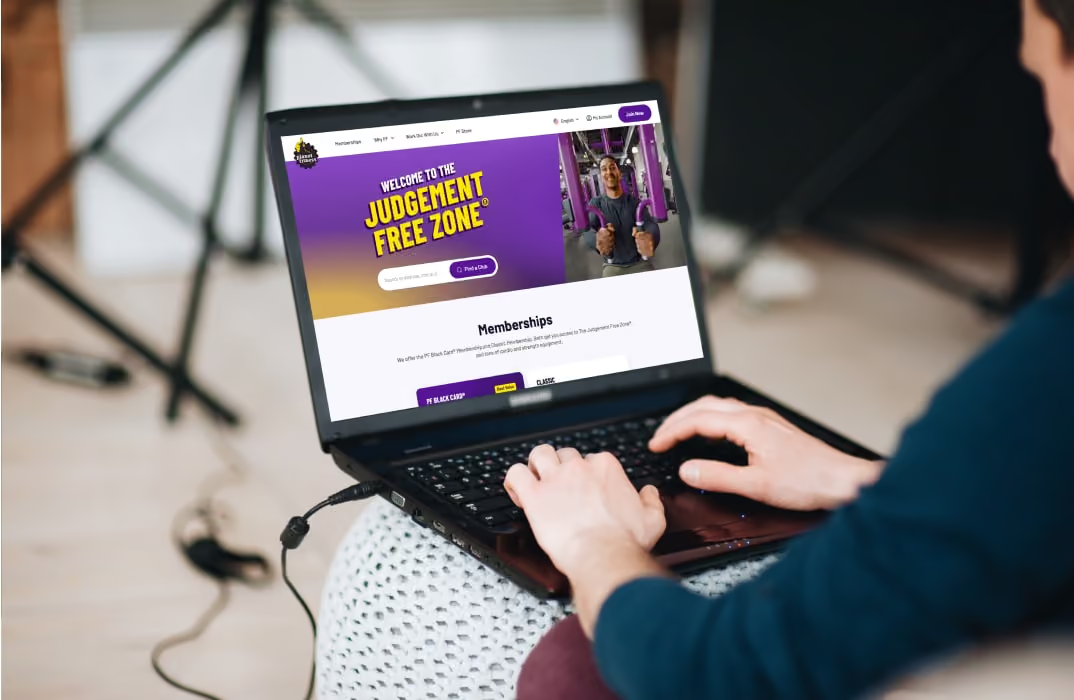
Planet Fitness lists Classic memberships beginning at $15 a month and PF Black Card at $24.99, both subject to a $49 annual fee. Most clubs add a one-time startup fee, typically $1 to $49 depending on the promotion running.
So the sticker says $180 a year and the member pays about $229. Planet Fitness also states that memberships may include a 12-month commitment, and canceling inside that term can trigger a buyout of around $58.
None of that is hidden. It is disclosed on their own page. But almost no prospect has done the arithmetic, and a prospect comparing your $120 studio membership against "$15" is comparing against a number that does not exist.
Worth running your own equivalent before the next conversation. If you have never written down your true cost per member and your break-even headcount, the gym business plan template has the format.
Why does matching their price not work?
Because their price is a function of volume, and yours cannot be.
A chain with thousands of locations spreads equipment purchasing, marketing, and back-office costs across a membership base that dwarfs yours. Their model also depends on a large share of members who join and rarely attend, a revenue structure a small gym cannot replicate and wouldn't want.
The industry data says the price war is unnecessary anyway. Average US gym membership sits around $65 a month, with budget chains at the $10 to $15 floor and boutique studios running from $100 to $500. Unlimited boutique memberships generally range from $110 to $360, and the average boutique member spends 2.3 times as much per month as a traditional gym member.
That gap has held for years. It exists because the two things are not the same product, and members who want the second one are not shopping on price.
💪 Got an idea for a brand? Let's bring it to life.
Launch your own fitness app with FitBudd in minutes!

💪 Got your brand name? Let’s bring it to life.
Launch your own fitness app with FitBudd in minutes!



88% trainers worldwide gave us 5 stars
Transform your fitness business with the power of your branded app on iOS and Android.
Try for FREEWhat are you actually selling that they are not?
Four things, and none of them can be delivered at $15 a month.
A coach who knows the member's name.
Attrition is highest among members who feel anonymous. Someone noticing they missed a week is a retention mechanism, and it does not exist at volume.
Programming that changes.
A chain sells access to equipment. You sell a plan that progresses, adjusts around an injury, and gets harder when it should. That is the difference between a gym and coaching.
Accountability between sessions.
Most of a member's week happens outside your building. Whoever is present in those six days gets the result, which is why client retention tracks contact frequency more closely than facility quality.
A result they can name.
"I can carry my kid up the stairs again" is not a feature a $15 membership competes with, and it only exists if someone recorded where the member started. That is what progress tracking is actually for.
If your marketing sells equipment, hours, and cleanliness, you are competing on their terms, and you will lose. Those are table stakes now.
How should you price against a budget chain?
Price on the outcome, and make the comparison honest rather than defensive. Coaching pricing benchmarks give you the floor and ceiling for your format before you set a number against theirs.
Do the arithmetic out loud
Their first year is about $229. If you charge $120 a month, you are $1,211 more expensive over twelve months, roughly $23 a week. Framing it weekly against a specific outcome is a very different conversation from a monthly number against $15.
Do not create a budget tier to match them
It cannibalizes your full-price members, and the ones who move down were the easiest to keep. If you need an entry point, use a time-boxed intro offer instead. Studios converting trial participants into recurring members typically land in the 25 to 45 percent range.
Raise prices annually and say so early
Increases of three to seven percent hold retention when communicated 30 to 60 days ahead with a reason attached. Studios that never raise prices end up making one large jump that costs them members.
Sell the term, not the month
A twelve-week program with a defined endpoint outsells an open-ended membership against a cheap competitor because it is a different category of purchase, not a more expensive version of the same one. Building that block once as a reusable template in an AI workout builder makes it a product you sell repeatedly, not a one-off.
What should you do when a member says they are leaving for a cheaper gym?
Ask one question before you counter: what are they actually leaving for.
If it is genuinely money, a discount rarely fixes it and usually delays the cancellation by a month. Offering a smaller package, fewer sessions or a self-guided plan at a lower price keeps the relationship without devaluing your rate for everyone else.
If it is convenience, that is a scheduling problem you may be able to solve. If it is results, that is the one worth knowing about, and it is the only version of this conversation where the answer is not about price at all.
Members who leave for $15 and come back within six months are common enough to plan for. Make leaving easy and the return easier.
Where do independent gyms actually lose?
Not on price. On the things a chain has systematized, and most small gyms do by memory.
Follow-up
A chain's app sends the reminder automatically. If your follow-up depends on remembering, it happens for your favorite members and nobody else.
A booking link that works
Referrals evaporate when the answer to "how do I sign up" is a phone number and a callback, which is the case for class scheduling that a prospect can complete without speaking to anyone.
Something between sessions
The member who trains twice a week with you goes five days without contact. That silence is where a $15 alternative starts to look reasonable.
All three are operational rather than strategic, which is the good news. A branded app puts your programming, check-ins, and payments in one place under your own name, so the member experience between sessions is yours rather than a gap.
If you are weighing platforms rather than starting from scratch, the gym management software comparison puts the main options side by side on price and what they cover.
Four things to do this month
- Work out your real first-year number and theirs. Put both on one page. Most owners have never written their own down.
- Rewrite one piece of marketing to lead with an outcome. If it currently opens with equipment or opening hours, it is competing on the chain's terms. The same applies to how you show up in local search, which is where most of these comparisons actually start.
- Set a contact cadence and automate it. Send one message between sessions, whether or not you remember. This is the highest-return change on the list.
- Pick your annual increase date now. Three to seven percent, announced 60 days out, with a reason attached.
If the contact cadence is the piece you are missing, book a demo, and we will set up the between-session flow before your next intake.



Meet the author
Suchandra Das
A versatile writer with a keen eye for detail, specializing in creating engaging content for diverse industries.
Frequently Asked Questions

Yangzey Sherpa leads content strategy at FitBudd, overseeing content planning and execution across fitness-focused digital channels. With over five years of experience in SEO and content, she works closely with the fitness industry to ensure content aligns with the needs of coaches, trainers, and gym owners. Her role keeps her deeply connected to fitness business workflows, coaching models, and how professionals use digital platforms to grow.


Apra Pathak has worked closely within the fitness niche for several years, supporting personal trainers and fitness coaches through content and digital marketing initiatives. Her experience centers on understanding how fitness professionals build visibility, communicate value, and engage clients online. Through sustained involvement with fitness-focused platforms and audiences, she has developed a strong understanding of the digital needs and growth challenges faced by modern fitness businesses.

Aishwarya Mehra has been actively involved in fitness-focused digital marketing, working closely with brands and platforms that serve coaches, trainers, and fitness businesses. Her experience spans engagement-driven strategies designed specifically for fitness audiences. Through ongoing exposure to fitness campaigns and communities, she remains closely aligned with how fitness professionals attract, convert, and retain clients in digital environments.

Suchandra Das has contributed content within the fitness niche, working on resources designed for coaches, trainers, and fitness business owners. Her experience involves supporting fitness-related topics with clear, structured, and accessible content. Through consistent involvement with fitness-focused platforms, she has developed familiarity with coaching workflows, client communication, and the informational needs of fitness professionals.
FitBudd is a fitness technology platform built exclusively for coaches, personal trainers, gym owners, and fitness professionals. The platform supports fitness businesses through branded apps, white-labeled solutions, and websites designed around real coaching and training workflows. FitBudd works closely with the global fitness community, maintaining deep, ongoing involvement in the fitness industry.

Ankit Uniyal has worked extensively with fitness-focused content, supporting platforms that cater to personal trainers, gym owners, and fitness professionals. His experience includes optimizing and structuring content around fitness-related search behavior and user intent. Through continued involvement in the fitness niche, he has gained a strong understanding of how trainers and coaches build discoverability and authority online.

Saumya Mittal is the Co-Founder and CEO of FitBudd. Since 2021, she has been actively engaged in the fitness technology sector, collaborating with global fitness companies to foster digital growth and scalable operations. With over a decade of experience leading high-impact projects in engineering and operations, Saumya has a strong background in developing reliable and scalable systems. Through FitBudd, she is dedicated to addressing the evolving needs of fitness professionals worldwide.

Kinshuk Snehi has been closely involved in the fitness space for over four years. Through his work at FitBudd, he has contributed to shaping how fitness professionals build their online presence, attract clients, and scale sustainable coaching businesses. Deeply interested in the intersection of fitness, technology, and growth, Kinshuk brings a hands-on understanding of the challenges faced by modern trainers. His passion lies in building systems and strategies that support long-term consistency, both in fitness journeys and business growth.

Kanika Verma has been closely involved in building solutions for the fitness industry, working with platforms used by coaches and trainers globally. Her experience includes direct exposure to fitness coaching workflows and operational needs. Through sustained involvement in fitness-focused product development, she has developed a strong understanding of how fitness professionals manage clients, programs, and daily operations.

Tanya Sharma has worked on branding initiatives within the fitness niche, supporting fitness platforms and businesses with visual identity design. Her experience includes creating brand systems used by coaches, trainers, and fitness-focused products. Through ongoing involvement in fitness-related design projects, she remains closely connected to how fitness brands communicate trust and professionalism.

Niharika Sonavane has contributed to visual design projects within the fitness industry, supporting platforms and brands serving fitness professionals. Her experience spans creating digital assets used across fitness apps, websites, and marketing materials. Through continued work in the fitness niche, she remains closely aligned with the visual communication needs of coaches and fitness businesses.

Elesh Patel has worked extensively on marketing initiatives within the fitness niche, managing paid campaigns for fitness-focused products and services. His experience includes supporting platforms that target personal trainers, gym owners, and fitness creators. Through long-term involvement in fitness marketing, he remains closely connected to how fitness professionals discover and adopt digital tools.




Food Log Template
Track your dietary intake and make informed choices with our convenient food log template.
Download Now
Templates
These functional templates have the power to make any fitness trainer's life easier.
Subscribe To
Our Blog
.avif)
.avif)