
-1.avif)

Only 35% of patients fully comply with their prescribed home exercise programs. Some research puts non-adherence even higher, at 70%, particularly in unsupervised rehabilitation settings.
A 2023 peer-reviewed study published in Musculoskeletal Science and Practice by researchers at Bellin College and Duke University confirmed non-adherence rates as high as 70% in PT patients. The study also found that patients who followed their prescribed HEPs showed significantly better functional outcomes at discharge than those who did not — a 12.4-point mean difference on functional assessment scores. As lead author Peer Himler, DSc, PT, ATC and colleagues concluded, adherence to a HEP is directly associated with superior clinical results — making compliance tracking tools a clinical priority, not just a convenience feature.
That single statistic explains most of the gap between what happens in a PT clinic and what actually drives patient outcomes. Therapists design excellent programs. Patients leave with good intentions. Then compliance falls apart because the exercises live on a printed sheet or a link to a generic video that has nothing to do with the patient’s name, their progress, or their specific program.
Digital platforms help bridge this gap, leading to better outcomes and increased patient satisfaction by improving adherence to and engagement with home exercise programs. These solutions also deliver significant time savings for therapists by streamlining workflows and reducing administrative tasks, enabling clinicians to spend more time on patient care.
This is supported by a 2024 independent review from the Peterson Health Technology Institute, which assessed more than 2,000 pieces of clinical literature and found that virtual MSK solutions guided by physical therapists deliver clinically meaningful improvements in pain and function — comparable to in-person care. Roger Herr, PT, MPA, President of the American Physical Therapy Association, responded to the findings by stating that digital PT tools "can help reduce overall health care costs, ease administrative burdens on physical therapists, close an access gap for millions, and deliver improved clinical outcomes." The APTA views this as a call to action for therapists and policymakers to embrace digital platforms as a core part of the care model.
Physical therapy exercise software closes this gap by delivering personalized exercise programs to patients’ phones with video demonstrations, automated reminders, and compliance tracking, including robust progress monitoring that the therapist can see in real time.
The right platform means patients actually do the work between sessions, and therapists have the data to adjust programming without waiting for the next appointment.
This guide compares the best physical therapy exercise software and HEP software available in 2026, with specific attention to tools that serve PT clinics, rehab coaches, and cash-pay practices looking to extend care beyond the treatment table.
The best physical therapy exercise software combines a customizable exercise library with video demonstrations, the ability to create custom programs tailored to individual patient needs, home exercise program delivery to patients’ phones, compliance tracking, and therapist-facing progress data for effective progress monitoring.
These features not only improve patient care but also save therapists time by streamlining administrative tasks. For licensed PT clinics with billing and EMR needs, platforms such as WebPT and PtEverywhere offer comprehensive clinical workflows.
For rehab coaches, cash-pay PT clinics, and practitioners focused specifically on exercise program delivery and client compliance, FitBudd’s custom exercise builder, video demo library, and compliance-tracking tools provide a purpose-built solution without the clinical EMR complexity. A user-friendly interface ensures both patients and therapists can easily navigate and engage with the platform, enhancing the overall experience.
What Is Physical Therapy Exercise Software?
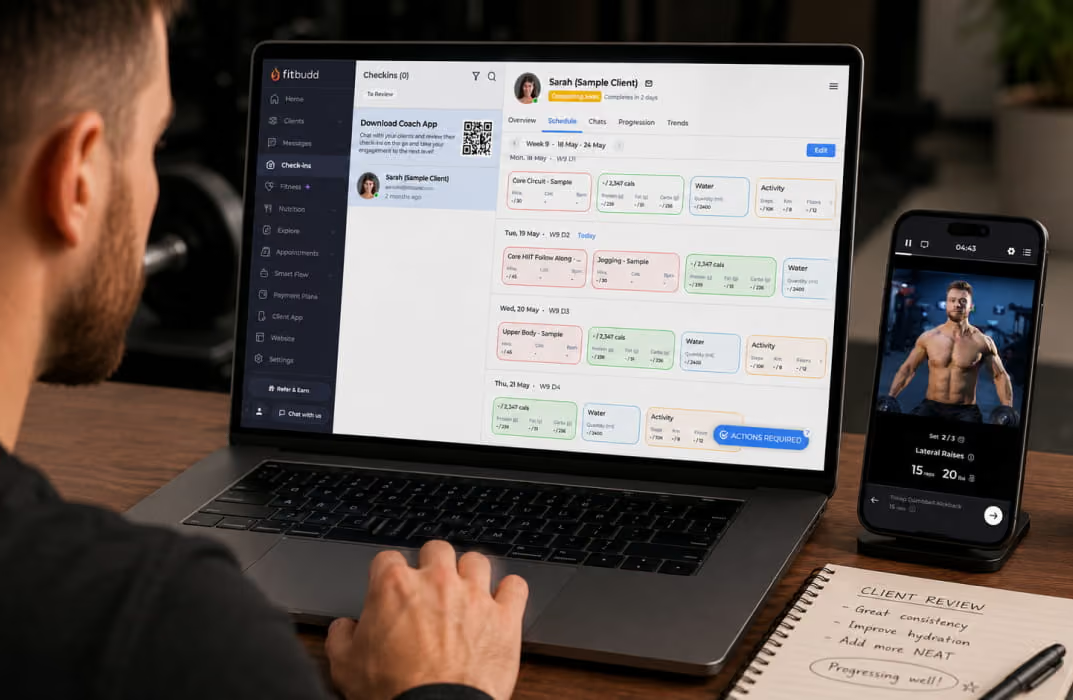
Physical therapy exercise software is a platform that helps physical therapists, rehab coaches, and clinical practitioners create, assign, and track exercise programs for patients and clients, both inside the clinic and at home.
At its core, physical therapy exercise software solves one problem: the breakdown between what therapists prescribe in session and what patients actually do between sessions. A paper handout works for some patients.
For most, it does not. A printed sheet cannot send a reminder at 9 am, cannot show a patient exactly how to perform a movement with correct form, and cannot tell the therapist whether the patient completed their Tuesday exercises before Friday's session.
Physical therapy home exercise program software specifically addresses the home component. A home exercise program, commonly called a HEP, is a set of prescribed exercises a patient performs independently between clinic visits. HEP software delivers these programs digitally, with video guidance, session-by-session tracking, and therapist notifications when a patient misses sessions or reports pain above a threshold.
The integration of technology into home exercise programs enables remote monitoring, allowing therapists to provide continuous support and make timely adjustments to treatment plans without requiring frequent in-person visits. Real-time adherence tracking is a common feature in dedicated exercise prescription software.
The category includes several distinct types of tools:
Full clinical PT management platforms encompass EMR documentation, SOAP notes, insurance billing, scheduling, and HEP delivery in a single system. Examples include WebPT, PtEverywhere, and SPRY PT. These are built for licensed outpatient PT clinics managing insurance reimbursement.
Dedicated HEP software focuses on creating exercise programs and delivering them to patients. Examples include HEP2go and MovementRx. These are often used alongside an EMR rather than replacing it.
Rehab and coaching platforms offer custom exercise program builders, video delivery, client compliance tracking, and business tools for practitioners who operate outside traditional insurance billing models. This is the category FitBudd serves for rehab coaches, cash-pay PT clinics, and sports performance coaches.
Many platforms now include patient engagement tools, such as mobile apps and progress-tracking features, to motivate patients and ensure adherence to their rehabilitation plans.
Understanding which platform type you need before evaluating specific tools saves significant time and prevents mismatched purchases.
Exercise Software for Physical Therapists: What to Look For
"Exercise software for physical therapists" covers tools with very different feature sets. Evaluating them requires clarity on what your specific practice actually needs.
Exercise library size and quality: A robust exercise library with clear, professionally produced video demonstrations is the foundation of any PT exercise software. Therapists need to find the right movement quickly, assign it with accurate form cues, and know that patients can actually understand what they are watching. For rehab coaches who work with proprietary or specialized movement protocols, the ability to upload custom exercise videos is equally important.
Customization of exercise prescriptions: Physical therapy is inherently individual. The software needs to allow therapists to adjust sets, reps, hold times, rest periods, and progression criteria for each patient and each exercise. A platform that only delivers preset programs without modification is limited for clinical use.
Home exercise program delivery to patients' phones: Patients should receive their programs in an intuitive mobile interface with video guidance accessible on demand. The experience should require minimal technical knowledge from the patient. Programs that require app downloads from the patient are acceptable if the download experience is simple and the interface is clean.
Compliance tracking and therapist notifications: This is the feature that turns HEP software from a convenience tool into a clinical outcome tool. Therapists need to see which patients completed their exercises, which skipped sessions, and whether pain scores changed between visits. Without this data, program adjustments are based on patient self-report rather than actual behavior.
Communication tools: Secure messaging between therapist and patient, the ability to send exercise corrections or encouragement between sessions, and automated reminder notifications are all features that meaningfully increase program adherence.
Pricing transparency: Physical therapy practices operate on tight margins. Software that obscures pricing behind a sales call or adds fees per patient, per feature, or per location creates ongoing financial unpredictability. Platforms with clear, fixed monthly pricing are easier to budget and evaluate honestly.

Physical Therapy Home Exercise Program Software: The Patient Adherence and HEP Compliance Problem
“Physical therapy home exercise program software” addresses the most clinically critical aspect of rehabilitation: what patients do when the therapist is not watching.
Research across orthopedic, sports, and neurological rehabilitation is consistent. Adherence to home exercise programs is the biggest driver of long-term outcomes, more influential than patient age, diagnosis, or even visit frequency in some studies. Yet only 30 to 35% of patients consistently follow their prescribed HEPs. Non-adherence delays recovery, increases the risk of reinjury, and extends treatment timelines.
A 2022 systematic review with meta-analysis published in the Journal of Orthopaedic & Sports Physical Therapy — covering randomized controlled trials across five major databases — found that digital rehabilitation programs produced significantly better therapeutic exercise adherence than non-digital approaches at mid-term follow-up (SMD 0.53, 95% CI: 0.35–0.70). The reviewers used the GRADE evidence framework. Their conclusion: digital delivery measurably changes whether patients actually do their exercises.
Zhang Z-Y, Tian L, He K, et al. Digital Rehabilitation Programs Improve Therapeutic Exercise Adherence for Patients With Musculoskeletal Conditions: A Systematic Review With Meta-Analysis. Journal of Orthopaedic & Sports Physical Therapy, 2022. Read the study →
The reasons for non-compliance are well documented. Patients forget the exercises when the program is on paper and put it in a drawer. They perform movements incorrectly because they cannot remember the verbal instructions from the session. They lose confidence in the program when they cannot communicate easily with their therapist between appointments. Keeping patients engaged in their home programs is key to improving adherence and achieving better compliance, which ultimately supports more successful rehabilitation.
Dr. Andrew Gorecki, PT, DPT, FAFS — founder of MovementRx and owner of Superior Physical Therapy — spent over a decade watching this exact pattern play out. "Patients would improve dramatically during their in-clinic visits, then plateau or regress at home," he has described. His response was to build a remote monitoring solution specifically because he could not find software that closed the compliance gap from the practitioner side. Dr. Gorecki argues that digital exercise monitoring should not be optional in modern PT — it should be the expected standard of care.
HEP software addresses each of these directly.
Video demonstrations show patients exactly how to perform each movement, and they can be viewed as many times as needed on their phone just before training. Automated push notifications remind patients at the right time each day rather than relying on memory. In-app messaging allows patients to ask questions and receive reassurance between sessions. Compliance tracking gives therapists the data to have evidence-based conversations about adherence at the next visit, rather than starting from “how has your week been?” Improved patient adherence enabled by these features leads to better outcomes and more effective therapy.
For PT clinics and rehab coaches evaluating home exercise program software for physical therapy, compliance tracking is the single most important differentiator between basic digital program delivery and a tool that actually changes patient outcomes.
A 2022 systematic review with meta-analysis published in the Journal of Orthopaedic & Sports Physical Therapy, covering randomized controlled trials across five major databases, found that digital rehabilitation programs produced significantly better therapeutic exercise adherence than non-digital approaches at mid-term follow-up — with a standardized mean difference of 0.53 (95% CI: 0.35–0.70). The reviewers used the GRADE evidence framework, and their conclusion is direct: digital delivery is not just a convenience feature, it is a clinically validated tool for improving whether patients actually do their exercises.
For a comprehensive overview of how home exercise program software works for both trainers and rehab businesses, the HEP software guide covers the full setup and operational workflow.
Platforms that keep patients engaged and motivated can drive better compliance and improved outcomes, making them essential tools for modern physical therapy practices.
Exercise Program Software: The Market in 2026
“Exercise program software” in 2026 spans a wider market than it did five years ago. The COVID-19 pandemic accelerated the adoption of digital exercise delivery across both clinical and coaching contexts, driving innovation in physical therapy practice management and supporting professional development through features like continuing education.
In 2026, the global physical therapy software market is on track to reach USD 1.2 billion, growing at a CAGR of 7.5% according to market research.
That growth has produced a crowded market with significant variation in what different platforms actually do. Here is where the major categories sit:
Full clinical EMR platforms dominate the insurance-billing PT clinic market. WebPT, SPRY PT, and PtEverywhere are the most widely reviewed. They are comprehensive and designed to comply with clinical documentation standards, and increasingly support remote therapeutic monitoring (RTM) as an emerging capability. Integrating exercise management directly with Electronic Medical Records (EMR), SOAP notes, and clinic billing is ideal for full-suite platforms.
Dedicated HEP tools like HEP2go and Limber Health serve therapists who want lightweight exercise delivery without full EMR integration. They are often used alongside clinical platforms rather than as replacements.
Coaching and rehab platforms serve practitioners operating outside the clinical insurance model. FitBudd, Exercise.com, and TrueCoach all appear in this category, with significant differences in what each actually offers for exercise delivery, video management, and client compliance tracking. Many platforms now leverage analytics and reporting to provide valuable insights from patient data, helping tailor more effective and individualized treatment plans.
The most important evaluation question is not “which platform has the most features?” but “which platform is actually built for how my practice operates?” A solo rehab coach who does not bill insurance needs fundamentally different software than a 10-therapist outpatient clinic processing Medicare claims.
Best Physical Therapy Exercise Software: Full Comparison
1. FitBudd: Best Exercise Delivery and Compliance Platform for Coaches and Cash-Pay PT Clinics
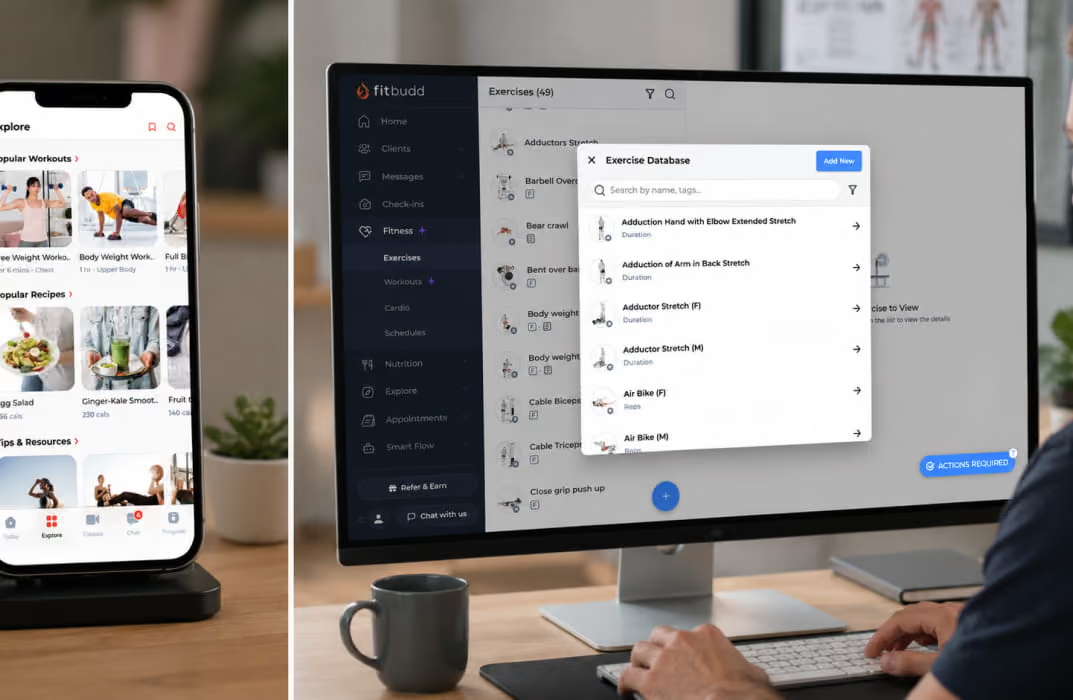
FitBudd is built for practitioners who want to extend exercise programming beyond the session and track whether clients are actually following through. Its workout builder pulls from a 4,000-exercise library, supports custom video uploads from YouTube, Vimeo, or directly as an MP4, and allows full customization of sets, reps, hold times, rest periods, and coaching notes per exercise and per client.
Clients receive their programs through FitBudd's branded app with on-demand video access. The FitBudd on-demand content feature also lets practitioners build libraries of warm-up, mobility, and recovery content that clients access independently between sessions. Compliance tracking shows exactly which sessions were completed and when, eliminating guesswork before each appointment.
The AI workout builder generates structured starting programs that practitioners can customize for each client. In-app messaging, automated push notifications, and Stripe and PayPal payment processing with zero commission are all included. At the Super Pro tier, the practitioner's own branded app is published in the App Store and Google Play under their name.
FitBudd is not a clinical EMR and does not provide SOAP note templates or insurance billing. Licensed clinics with those needs should evaluate WebPT or PtEverywhere.
- Pricing: Pro at $79/month. Super Pro (branded app) at $149/month. Studio Elite at custom pricing. See full details on the FitBudd pricing page.
- Best for: Rehab coaches, cash-pay PT clinics, sports performance coaches, and functional movement practitioners
- Gap: Not suited for licensed PT clinics requiring HIPAA-certified EMR documentation or insurance billing
2. WebPT: Best Full-Service Platform for Outpatient PT Clinics With Insurance Billing
WebPT is the most widely adopted physical therapy software platform globally, used by more than 150,000 rehab therapy professionals. It covers the full clinical workflow: scheduling, documentation, SOAP notes, billing, insurance claims, and HEP delivery in one integrated system.
The WebPT HEP module delivers exercises via the StriveHub patient app with video demonstrations. Patients can mark exercises as too easy or too difficult and send feedback to the therapist directly within the app. WebPT reports HEP engagement rates above 50%, significantly above the Medicare Meaningful Use guideline benchmark.
WebPT is the right choice for licensed outpatient PT clinics that need documentation, billing, and HEP delivery in one platform. It is not the right choice for rehab coaches or cash-pay practitioners who do not need clinical EMR functionality and would be paying for extensive clinical infrastructure they will not use.
- Pricing: Pricing: Approximately $99 per user per month. WebPT does not publicly list pricing and requires a demo for accurate quotes. Enterprise options available at custom rates.
- Best for: Outpatient PT clinics managing insurance billing alongside HEP delivery
- Gap: No branded app. Cost is significant for solo practitioners or small cash-pay practices.
3. PtEverywhere: Best All-in-One for Clinics Wanting HEP Inside an EMR
PtEverywhere combines scheduling, EMR charting, billing, telehealth, and a home exercise program engine in one cloud-based platform. The HEP component includes customizable exercise videos, automated reminders, and compliance data that feeds directly into progress notes and analytics dashboards.
The platform is HIPAA-compliant and particularly suited to clinics offering hybrid in-person and telehealth models. Its HEP compliance automation triggers patient re-engagement messages when exercise streaks are missed and automatically routes high pain scores to therapist alerts.
- Pricing: Starting at approximately $49/month.
- Best for: Small to mid-size PT clinics wanting HEP compliance data integrated directly into their clinical documentation
- Gap: More complexity than rehab coaches need. Not designed for practitioners outside clinical insurance-billing workflows.
4. TrueCoach: Workout Delivery Without Clinical or Business Infrastructure
TrueCoach is a program-delivery and client-communication platform used by personal trainers and some rehab coaches for exercise assignments and tracking. Its program builder is clean and easy to use, allowing for the creation of customizable programs and tailored exercise plans to fit individual patient needs. Exercise delivery through the TrueCoach client and patient mobile app is straightforward, enhancing patient engagement and adherence.
Where TrueCoach consistently falls short for practitioners looking to grow a rehab coaching business: there is no website builder and no branded App Store listing. According to verified reviews, TrueCoach's marketing and lead management tools are minimal.
The platform is designed to manage existing clients, not acquire new ones. Multiple user reviews confirm that TrueCoach lacks group messaging, payment customization, and nutrition integration that competing platforms already offer.
For rehab coaches who want exercise delivery, compliance tracking, professional client acquisition infrastructure, and payment processing in one platform, TrueCoach requires multiple external tools to cover the gaps FitBudd addresses in a single subscription.
- Pricing: Starter at $26.34/month (5 clients). Standard at $57.99/month (20 clients). Pro at $136.99/month (50 clients).
- Best for: Solo coaches who only need clean program delivery and compliance tracking with no business growth tools
- Gap: No website builder, no branded app, no payment processing customization, and minimal lead generation capability
5. Exercise.com: Enterprise Platform for Established Multi-Service Fitness Businesses
Exercise.com is a comprehensive platform covering workout delivery, custom-branded apps, lead management, billing, business analytics, and a robust online portal. Its exercise library and program builder offer extensive, customizable templates and programs, allowing practitioners to efficiently design and manage personalized exercise plans for patients. The platform supports flexible delivery methods, including a patient mobile app for real-time updates and enhanced engagement.
For established fitness businesses with dedicated administrative staff and revenue to justify the investment, Exercise.com covers considerable ground, especially with its integrated progress monitoring tools that track adherence and patient outcomes.
The challenge for individual rehab coaches or small cash-pay PT clinics: pricing is custom and quote-based, typically in the $300-$600 per month range, according to published industry estimates. G2 and Capterra reviewers consistently reference a steep learning curve that requires meaningful onboarding time.
For a rehab coach who is also the lead practitioner delivering sessions, the operational overhead of Exercise.com can feel disproportionate to the actual workflow needs.
FitBudd delivers branded app functionality, custom exercise program delivery, compliance tracking, and payment processing at $149 per month with significantly less setup complexity.
- Pricing: Custom quote. Typically $300 to $600 per month, or more.
- Best for: Established fitness and wellness businesses with multi-service operations and administrative bandwidth
- Gap: Cost and complexity are mismatched for individual rehab coaches or small PT practices
6. HEP2go: Best Free Physical Therapy Exercise Software for Basic Program Creation
HEP2go is the most widely known free physical therapy exercise software available. It is used by physical therapists, occupational therapists, and athletic trainers to create and share basic home exercise programs.
The platform provides a structured exercise library and enables therapists to quickly generate printable or digital HEPs using basic tools for program creation. HEP2go supports the development of custom programs and customizable programs, allowing practitioners to tailor exercise plans to individual patient needs.
Users can modify content, upload personal media, and deliver exercise plans flexibly. A free demo is available, allowing potential users to try the platform and experience its features without commitment.
HEP2go's limitations are significant for any clinic or rehab coach wanting compliance data. There is no built-in progress tracking, no adherence reminders, and no analytics showing whether patients have viewed or completed their programs. As one independent analysis notes, dropout rates as high as 50% are associated with traditional HEP delivery models that lack these features.
HEP2go is appropriate for practitioners who need a quick, zero-cost way to create and share programs and are managing compliance through other means. It is not a solution for clinics wanting data-driven HEP management.
- Pricing: Free basic tier. Paid plans at approximately $10 to $20 per month for Pro features.
- Best for: Practitioners who need fast, no-cost program creation with no compliance tracking requirement
- Gap: No progress tracking, no adherence reminders, no analytics, no patient-facing mobile app with video delivery
7. Limber Health: Best for Physical Therapy Clinics Using Remote Therapeutic Monitoring
Limber Health is a digital health platform built specifically for rehab therapy organizations. It provides home exercise programs from a library of more than 7,000 professionally produced exercise videos, along with patient-reported outcome collection, remote therapeutic monitoring support, and data analytics.
The RTM integration is particularly relevant for clinics looking to bill Remote Therapeutic Monitoring CPT codes (98975-98981) alongside exercise delivery. Limber Health connects HEP compliance data directly to outcomes reporting, which is increasingly important as value-based care models expand in physical therapy.
- Pricing: Contact for pricing.
- Best for: PT clinics integrating HEP delivery with RTM billing and outcomes-based care models
- Gap: Not designed for rehab coaches operating outside clinical insurance billing frameworks
How FitBudd Fits Into a Rehab Coaching Practice
FitBudd is not positioned as a clinical EMR. It does not replace WebPT or PtEverywhere for licensed PT clinics managing insurance billing and SOAP documentation.
What FitBudd does is serve the growing category of rehab coaches, sports performance practitioners, and cash-pay physical therapists who need professional exercise delivery and compliance tools without clinical EMR infrastructure.
Here is how a rehab coach uses FitBudd in practice:
Building the program: The practitioner opens FitBudd's workout builder and builds a phased rehabilitation protocol using the 4,000-exercise library. Where proprietary movements or clinic-specific modifications are needed, they upload custom video demonstrations. Sets, reps, hold times, and coaching notes are added per exercise.
Delivering to the client: The program is assigned directly to the client's app. The client receives their exercises with video guidance accessible on their phone, exactly as prescribed, with a session-by-session structure. No paper handout. No generic YouTube link.
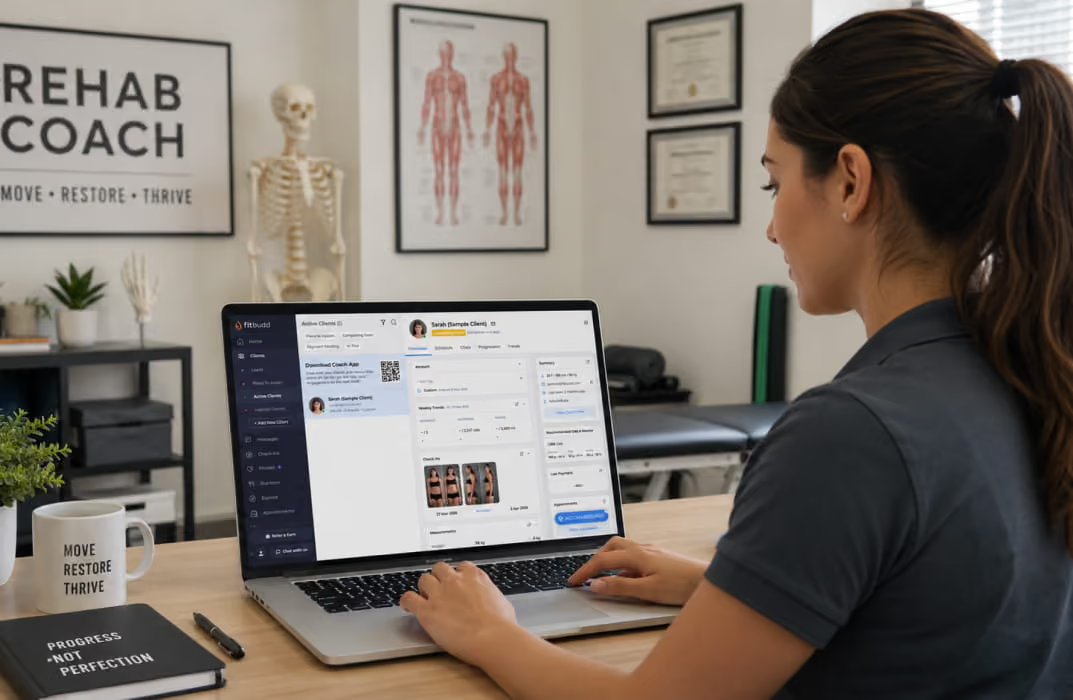
Tracking compliance between sessions: The practitioner checks their dashboard before each session and sees which exercises were completed, when they were logged, and what performance data the client recorded. This turns the session opening from "how did your exercises go this week?" into "I can see you completed Monday and Wednesday, but not Friday. What happened on Friday?"
Adjusting programming remotely: If the practitioner sees a client struggling with a particular exercise or consistently missing sessions, they can update the program directly in the dashboard and send a message through FitBudd's in-app messaging tool. The client receives the updated program without needing to schedule an additional session.
On-demand content between sessions: Through FitBudd's on-demand feature, practitioners can build a library of warm-up sequences, mobility protocols, or recovery exercises that clients can access at any time independently. This extends the practitioner's value beyond scheduled sessions.
The FitBudd workout and exercise delivery features cover the full capability set for exercise program management, including program structures, exercise library filters, video upload specifications, and client assignment workflows.
For rehab coaches transitioning from in-person only to a hybrid coaching model with online exercise delivery, the hybrid personal training guide outlines how to structure both the in-person and digital components effectively.
Free Physical Therapy Exercise Software: What You Get and Where the Gaps Are
"Free physical therapy exercise software" and "physical therapy exercise software free" are high-volume searches that reflect the cost sensitivity of many PT practitioners, particularly those early in their practice or running small cash-pay operations.
The honest answer is that genuinely useful free tools exist, but come with real limitations.
HEP2go is the most established free option. It is functional for creating basic home exercise programs and sharing them digitally. It lacks compliance tracking, patient-facing video delivery through a dedicated app, and analytics.
The free tiers of paid platforms typically limit the number of clients, restrict access to compliance-tracking features, and watermark patient-facing materials with the platform's branding rather than the practitioner's branding. For rehab coaches building a professional practice, these limitations typically make free tiers impractical beyond the initial evaluation phase.
FitBudd's 30-day free trial provides full access to the platform, including the workout builder, exercise library, compliance tracking, and client delivery tools. This allows practitioners to evaluate whether the platform actually fits their workflow before committing financially. After the trial, the Pro plan at $79/month provides full coaching functionality for up to 20 clients.
For rehab coaches building their practice systems from the beginning, the Starting an Online Personal Training Business guide covers how to structure your digital infrastructure from scratch, including how exercise delivery software fits into the broader business setup.
Choosing Between Physical Therapy Exercise Software Categories: A Decision Framework
Use this framework to identify which type of platform your practice actually needs before evaluating specific tools:
The key distinction is whether you need clinical EMR documentation and insurance billing alongside exercise delivery, or whether you need exercise delivery, compliance tracking, and coaching business tools. These are different products serving different workflows.
The Bottom Line: Match the Tool to the Workflow
Physical therapy exercise software is not one product. It spans full clinical EMR platforms, dedicated HEP tools, and rehab coaching platforms. Choosing the right tools is crucial not only for streamlining your workflow but also for improving patient outcomes by ensuring effective management and tracking of Home Exercise Programs (HEPs).
High-quality software for HEPs generally falls into two main categories: standalone exercise prescription platforms and all-in-one practice management systems with built-in exercise builders. The right tool depends entirely on how your practice operates.
For licensed PT clinics managing insurance billing, SOAP documentation, and multi-therapist workflows, WebPT and PtEverywhere provide the clinical infrastructure that matters.
For rehab coaches, sports performance coaches, and cash-pay PT practitioners, FitBudd provides what this specific context actually needs: a custom exercise builder with video upload capability, a 4,000-exercise library, client-facing program delivery through a branded app, compliance tracking, in-app messaging, on-demand content delivery, and payment processing, all in one platform at $149 per month with zero commission on payments.
TrueCoach delivers basic program delivery but lacks the business-growth tools, a branded app, and compliance infrastructure that a growing rehab-coaching practice needs. Exercise.com delivers everything, but at enterprise pricing and complexity levels that are mismatched for individual practitioners and small clinics.
For rehab coaches who want to understand how FitBudd's exercise delivery and compliance tools connect to a broader online coaching business, the digital marketing and client conversion guide for coaches covers how to turn exercise delivery into a complete client experience.
Start your 30-day free trial with FitBudd. No credit card required.

















.jpg)