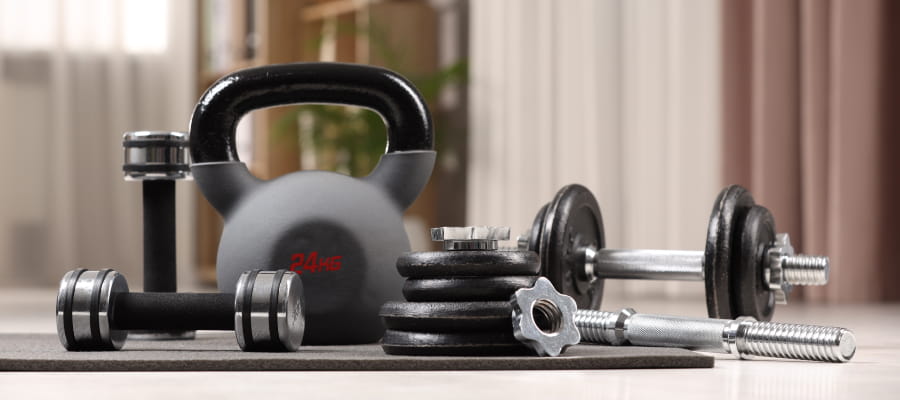
Every piece of gym equipment performs one of three functions: raises the heart rate, trains a certain motion, or helps with recovery. Once you understand these functions, you can stop being intimidated by a crowded floor of gym equipments.
This gym machine guide for beginners explains what falls under each category, what muscles each machine works, and which ones to start with if you're new. Trainers can use it to walk clients through their first floor tour without a single "what does that do?" moment, and clients can use it to stop guessing at the machine wall.
What are the main types of gym equipment?
The types of gym equipment are split into 5 groups:
Every commercial floor is a mix of these five. The mix tells you what the gym is for: machine-heavy floors serve general fitness; rack-heavy floors serve strength.
What are the most common gym equipment names and uses?
These are the gym equipment names and uses clients ask about most, grouped by body region:
- Lat pulldown
Cable machine pulling a bar to your chest; trains back width and grip.
- Seated row
Horizontal cable pull; trains mid-back and posture muscles.
- Chest press machine
Guided horizontal push; trains chest, shoulders, and triceps.
- Leg press
Plate-loaded sled push; trains quads and glutes without loading the spine.
- Leg extension and leg curl
Isolate quads and hamstrings, respectively.
- Cable machine / functional trainer
Adjustable pulleys for presses, pulls, and rotations at any angle.
- Smith machine
Barbell fixed on rails; guided squats and presses with built-in safety catches.
- Power rack
Open frame with safety bars for barbell squats, presses, and rack pulls.
- Adjustable bench
Flat-to-incline platform that turns dumbbells into a full upper-body toolkit.
- Hip thrust machine
Pads the hips under load; trains glutes with less lower-back strain than a barbell hip thrust.
- Assisted pull-up/dip machine
Counterweights are part of your bodyweight; build toward a strict pull-up or dip.
- Battle ropes and TRX
Accessories for conditioning and bodyweight strength work in the functional zone.
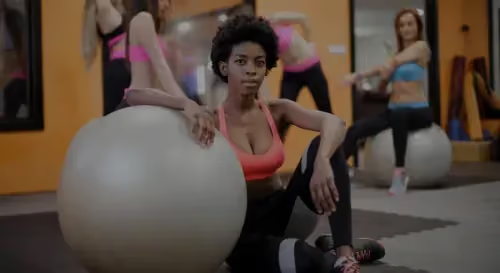
- Medicine ball
Weighted ball for rotational power and core work; also used for partner throws in group classes.
That list covers roughly 80% of what clients will touch in year one. Trainers can build programs from these workout plan template samples.
Which gym machines should beginners use first?
Begin with four devices: leg press, chest press, lat pulldown, and seated row. This beginner's guide to gym equipment was created because machines help keep your form and path intact. The Physical Activity Guidelines require you to perform muscle-strengthening exercises twice a week, and using the machines is the fastest and safest way to do so.
Move on to using free weights in approximately 4 to 8 weeks.
What is on a commercial gym equipment list?
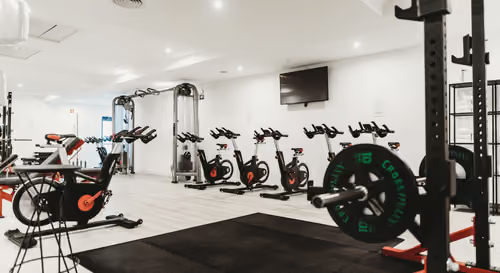
A full commercial gym equipment list covers 4 zones:
- cardio deck (8 to 20 machines across treadmills, bikes, rowers, and climbers),
- selectorized circuit (10 to 15 machines covering every major muscle),
- free weight area (dumbbells 5 to 100 lbs, 2 to 6 racks, benches, and barbells), and
- functional zone (cables, bands, sleds, and turf)
Strength keeps gaining floor space for a reason: traditional strength training ranked #7 in the ACSM fitness trends, its 17th top-10 finish in 20 years.
Trainers touring a new facility should count racks and cable stations first. Those two numbers cap how many clients can train simultaneously at peak hours.
What gym equipment do you need at home?
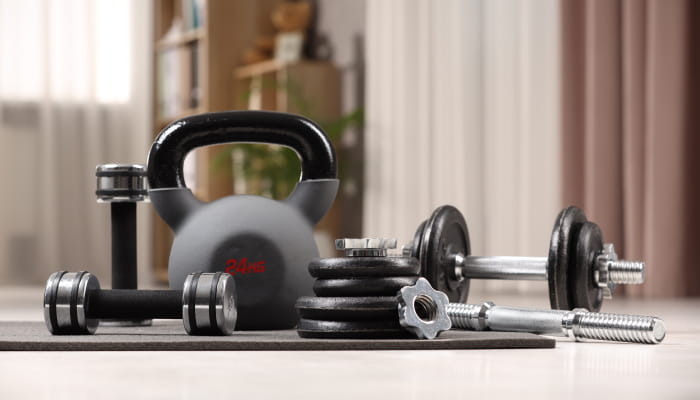
Home workout equipment explained in one sentence: buy a barbell, a rack with safeties, an adjustable bench, and plates, then stop. That setup covers every major strength movement, and lifters who built theirs say the same.
A thread on r/powerlifting titled "Home gym setups: what works, what doesn't" runs on exactly this consensus, with experienced lifters warning against machines that do one job.
A tight budget or limited space changes the answer: adjustable dumbbells, a bench, and bands. Roundups like Healthline land on the same core once they filter out the gimmicks.
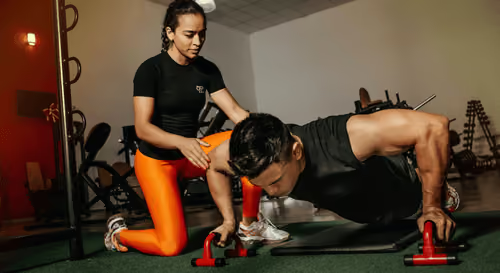
How should trainers use equipment knowledge with clients?
Program movements, then assign whatever equipment the client has access to, by hand or with an AI workout builder that filters exercises by available equipment. A client's gym may lack a hack squat, but it will have something that loads a squat pattern, and the coach's job is the substitution. Equipment-agnostic programming is what makes a plan survive travel, home weeks, and crowded Januaries.
Coaches managing clients across different gyms and home setups deliver those substitutions through a personal trainer app, with video demos attached so "cable row" never needs a follow-up text.
Final Thoughts
Equipment knowledge is a floor, not a ceiling. Knowing every machine matters less than progressing on 5. Pick one machine per movement pattern (push, pull, squat, hinge, carry), add load or reps weekly, and the rest of the floor becomes optional. Clients do not need every machine; they need a plan for the ones in front of them.
Create your branded app and deliver that plan with video demos, substitutions, and progress tracking under your own name.





.jpg)