

You share useful advice, promote your coaching, and still receive few suitable inquiries or purchases. Weight loss program marketing works better when interested people have a clear way to become clients, and that starts well before your next post.
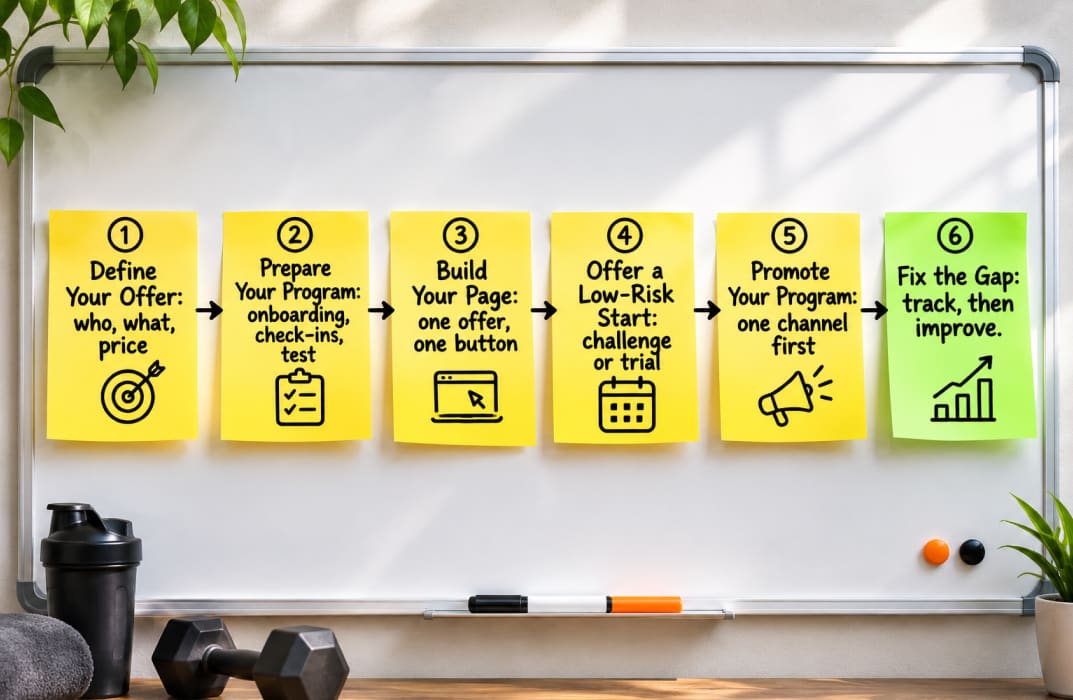
Much of the advice on weight loss program marketing targets medical clinics and big brands. This guide is for independent coaches and personal trainers who sell their own programs. It walks you through defining a program people can evaluate, preparing enrollment and delivery, addressing hesitation, promoting it through existing relationships and relevant channels, and measuring purchases.
How Is Weight Loss Program Marketing Different From Network Marketing?
Weight loss program marketing promotes your own coaching, which you design, price, and deliver yourself. Network marketing weight loss means joining a company, selling its products, and earning commission on your sales and your recruits' sales.
The difference changes how you sell. When you market your own program, you control the offer, the client experience, and your claims. In weight loss network marketing, the company sets the products, the pay plan, and most of the marketing rules.
Income is another difference. An FTC staff review of 70 multi-level marketing income disclosure statements found that the vast majority of participants received $1,000 or less per year (FTC, 2024).
Marketing health and wellness products also puts the product at the center of your pitch. Marketing your own coaching lets you sell your method, your feedback, and your accountability, which a product cannot give a client. This table shows the main differences.
Step 1: Define a Weight Loss Coaching Offer People Can Understand
A clear weight loss coaching offer tells someone who the program is for, what they receive, what it costs, and why they can trust you. You will use this wording on your program page, in your Instagram bio and posts, and in your emails and DMs.
1.1 Choose a Specific Audience and Problem
"Anyone who wants to lose weight" is too wide to write a useful offer for, so choose a group whose needs you can support. Describe their circumstances, barriers, and support needs as well as their demographics, because two working parents can need different kinds of help.
- Too broad: "Weight loss coaching for everyone."
- More specific: "Home fitness coaching for working parents who need scheduled workouts and weekly accountability."
Clients who train at home need a clear weekly routine, so look at how the best home workout programs for weight loss structure their weeks before you write yours.
1.2 Explain What Clients Receive
Nobody can judge a program until they know what it includes, so check that your offer covers each of these details:
- Individual or group coaching
- Program duration or subscription terms
- Weekly workout commitment
- Equipment requirements
- Check-in frequency
- Feedback and contact options
- Nutrition support within your qualifications
The American Council on Exercise's 2013 position statement says fitness professionals can share general nutrition information. It places individualized meal planning outside their scope unless the plan follows government guidelines or comes from a registered dietitian or physician.
These details turn a vague promise into something a person can evaluate:
- Before: "Get fit and feel confident with my 6-week coaching."
- After: "6-week group program | Three 30-minute home workouts a week | Sunday check-in | Written feedback from me"
1.3 Make the Price and Commitment Clear
State the total price, payment schedule, start date, and enrollment deadline on your program page, then repeat them in your Instagram captions, launch emails, and group posts. People should never have to message you to learn what the program costs or when it begins.
Count your delivery time and support when you choose a price, because daily messaging takes more hours than a weekly check-in. To check whether your price fits, read this guide on how to charge for online training.
1.4 Why Should Someone Trust You?
Trust comes from evidence a person can check, so add whichever of these you have, in these places:
- Relevant qualifications, listed in your Instagram bio and on your program page
- A walkthrough of your coaching process, shown in a short video on your program page
- Genuine client feedback, shared with context and permission, on your program page and in Instagram Story highlights
- A sample coaching week, posted as an Instagram carousel if you do not have testimonials yet
Ask for feedback right after a client reaches a milestone, while the result is fresh. This guide to building a personal trainer brand covers testimonials in more detail.
Combine your audience, inclusions, price, and proof into one offer paragraph, then save it for your page, posts, and messages.
1.5 How Do You Position a Weight Loss Program for Clients on GLP-1 Medication?
Position it around strength, movement, and accountability, and leave medication decisions to the client's prescriber. Gallup's 2026 survey found that 11% of US adults take a GLP-1 medication for weight loss, so some of your prospects already do.
NASM says trainers can program exercise, support movement, and coach behavior, but cannot recommend doses or tell a client to stop treatment. State that scope on your program page. FitBudd's GLP-1 personal trainer guide covers the 2026 research on muscle loss and strength training.
Step 2: Prepare Your Weight Loss Program Before Opening Enrollment
Before you ask anyone to pay, decide how clients start and set up onboarding and check-ins.
2.1 Choose a Coaching Format
Choose individual coaching if each client needs a personal plan. Choose a fixed group program if you want everyone to start together, or an ongoing subscription if clients will stay month to month. Then use this table to list what you need to organize:
2.2 Organize Onboarding, Delivery, and Check-Ins
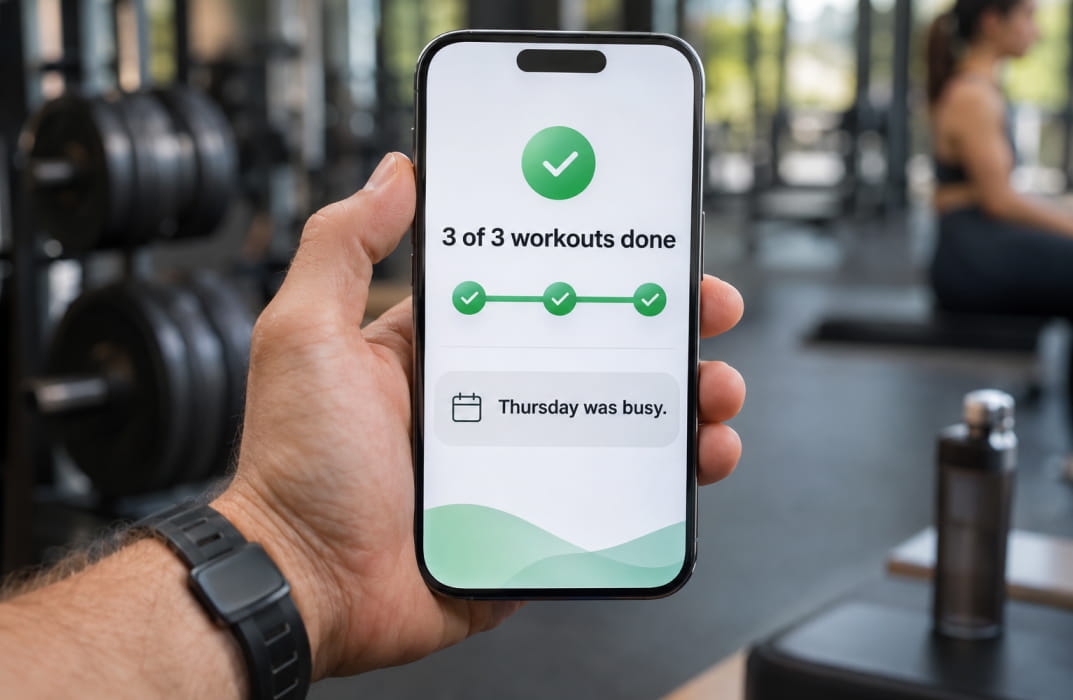
Set up these five items before your first client joins, and save your wording so you can reuse it:
- Collect screening and planning information: Build a short personal trainer questionnaire that asks about goals, training history, medical concerns, schedule, and equipment. Refer anyone with a medical concern to a qualified professional before they start.
- Show clients where to find everything: Send one welcome message that explains where workouts and instructions appear. For example, "Your week 1 workouts are ready in your program. Start with Monday's 30-minute session."
- Set check-in questions and dates: Choose one weekly check-in day and ask the same questions each time. For example, "By 6 p.m. Sunday, tell me how many workouts you finished, what got in the way, and what you want help with next week."
- Publish realistic response times: State when you reply, then keep to it. For example, "I reply to check-ins by Tuesday and to messages within one business day."
- Explain payment, access, and support terms: Add these to your welcome message, so clients know when they pay, how long they keep access, and how to reach you.
2.3 Test Enrollment Before Promotion
Buy the program yourself, or ask a friend to do it, and check each of these before you announce anything:
- Payment goes through at the right price
- The confirmation arrives
- Onboarding starts
- The client can reach the program
- Start dates are correct
Step 3: How Do Coaches Build Branded Landing Pages for Program Launches?
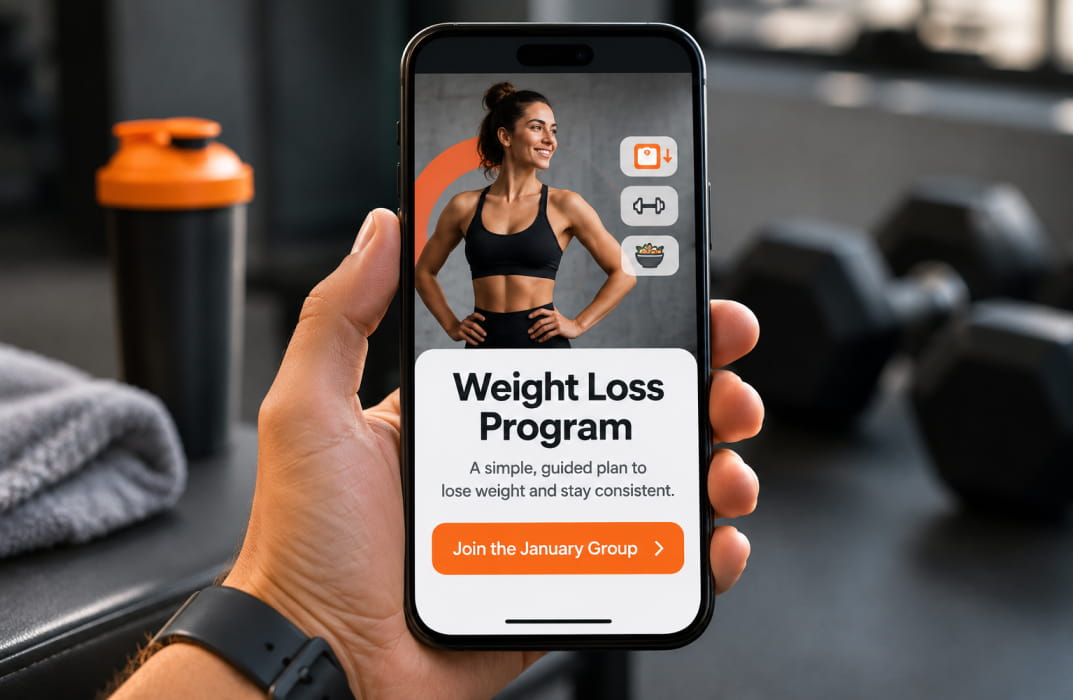
Your program page is a branded landing page that answers a visitor's buying questions in one place and ends with one clear action.
3.1 Explain the Offer in a Useful Order
Cover these points in order, so each answer leads to the next question:
3.2 Choose the Right Next Step
Your enrollment action depends on the price and how much you need to know about each person:
Each route still needs enough information on the page for someone to assess the offer before they act.
3.3 Connect the Page to Payment and Onboarding
Create your plan, form, or booking page first, then paste its link into the action button on your program page. Write a confirmation message that tells each new client what happens next, such as "Check your email for your welcome message and week 1 plan."
If you use FitBudd, its fitness website builder includes sections for an introduction, success stories, testimonials, FAQs, and plans. Branded websites come with Pro and above, and coaches can take direct payments through Stripe and PayPal.
Ready to build your program page? Start 30-Day Free Trial. No credit card required. Add your plans, take payments through Stripe or PayPal, and launch your branded website from one dashboard.
3.4 Check the Page on a Phone
Open the page on your phone and check that the headline is easy to read, the buttons are easy to tap, and the tables fit the screen. Fix anything that fails before you share the link.
Review your testimonials too, because the FTC's Gut Check guide says it is not enough to write "results not typical" or "your results will vary" when an endorser's weight loss is not typical.
Step 4: Offer a Low-Risk Start for Your Weight Loss Program
A free challenge, a paid group challenge, or a free trial gives hesitant people a lower-risk way to start working with you. Choose the one that fits your offer.
4.1 How Do You Run a Free Community Challenge to Generate Leads?
A free community challenge generates leads when people want to experience your feedback, structure, or accountability before they buy. It cannot resolve a budget or scheduling mismatch, so ask what is holding someone back first. This example uses a seven-day walking challenge, which you can adapt to someone's mobility or space.
- Define participant outcomes: Aim for completed activities, a workable time slot, an identified barrier, and a next-week adjustment. This free Fitness Challenge Ideas Generator can suggest other activities.
- Open registration: Explain the dates, daily commitment, support, and how you will communicate. Collect email addresses so you can stay in touch after Instagram.
- Send preparation instructions: Share how to get access, the schedule, the first task, and alternatives such as walking indoors.
- Deliver daily coaching: Follow a simple daily plan, such as this one:
- Introduce paid support on day six: Explain what the paid program adds. For example, "This week you found a time to walk. My paid program adds a workout plan, weekly check-ins, and personal feedback."
- Review results: Compare registrations, activation on day one, final check-ins, purchases, and your support time.
You can find other formats in this list of fitness challenge ideas.
4.2 What's the Simplest Way to Host a 6-Week Transformation Challenge Online?
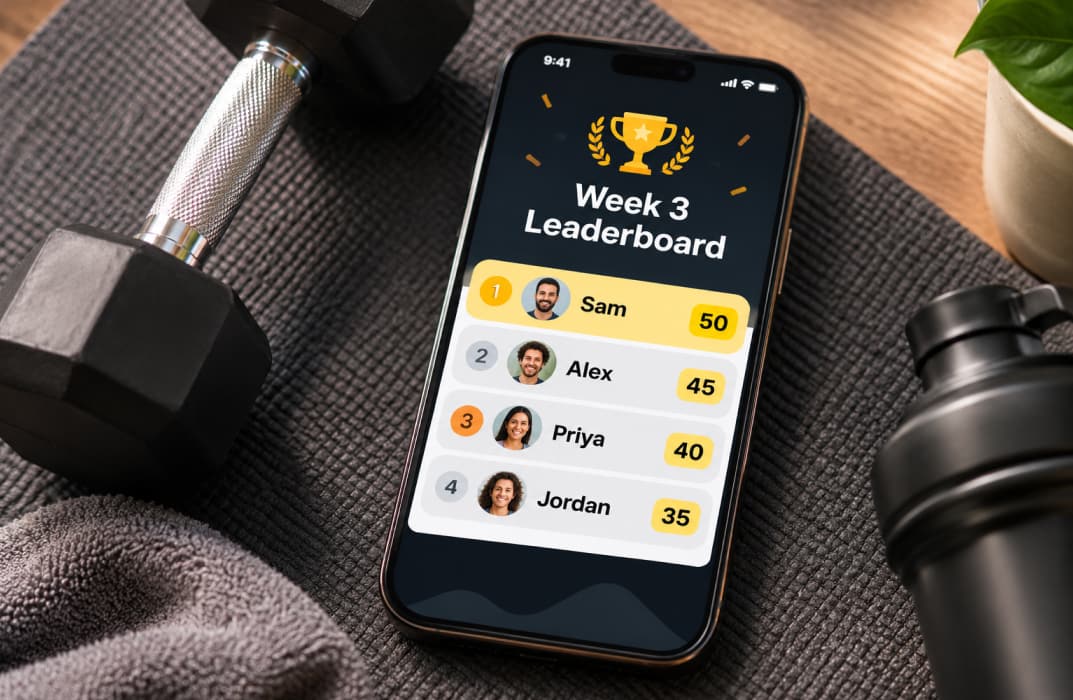
The simplest way to host a six-week transformation challenge online is to sell one payment plan, deliver one shared workout schedule, and run the group in one private community. A challenge needs rules people can compete on, so give each week one task, a point value, and a leaderboard update. Here is how a six-week challenge could be organized, using the parts of a successful weight loss plan as your guide:
Post each week's challenge on Monday, update the leaderboard in your private group every Sunday, and give the top scorer a simple prize such as a free coaching call. Award points for effort and never for weight lost, so every client can compete whatever their starting point. The six weeks define your coaching support and make no promise about pounds lost, so say that clearly in your program materials. Make starting measures optional, and let clients track habits instead, because public weigh-ins can discourage some people.
4.3 How Can Trainers Offer Free Trials That Convert to Paid Subscriptions?
A free trial converts to a paid subscription when people experience your coaching and know exactly what happens when it ends.
- Explain the terms before signup: State the trial length, support included, subscription price, first billing date, and cancellation process before anyone signs up. FitBudd lets coaches add a free period to a subscription payment plan, and its help guide shows how to create trial duration settings.
- Plan the first week: A short plan gives trial users a reason to stay active and a clear decision at the end:
- Measure conversion and delivery effort: Calculate trial-to-paid conversion using completed trials, so people who never started do not skew the result. In a hypothetical example, 4 paying clients from 10 completed trials gives you 40%. Track cancellations and coaching time too, then use these strategies to retain online fitness clients after the first charge.
Step 5: Promote Your Weight Loss Program on the Right Channels
Weight loss program marketing works best when you start with one channel, then add others once it brings you suitable inquiries. Sections 5.2 to 5.9 cover each channel, so go straight to the one you choose.
5.1 Choose Your First Promotion Channel
Start with the audience and relationships you already have, because those people can respond soonest. This table matches what you have now to a starting point:
Choose one primary channel, since you do not need to launch everywhere, and record where each inquiry comes from. With no audience yet, Ruzuku's 2026 coaching guide suggests 15 structured conversations with former colleagues and other warm contacts. It reports that coaches often sign their first paying clients within two to four weeks this way.
5.2 What's the Fastest Way to Turn Instagram Followers Into Paying Clients?
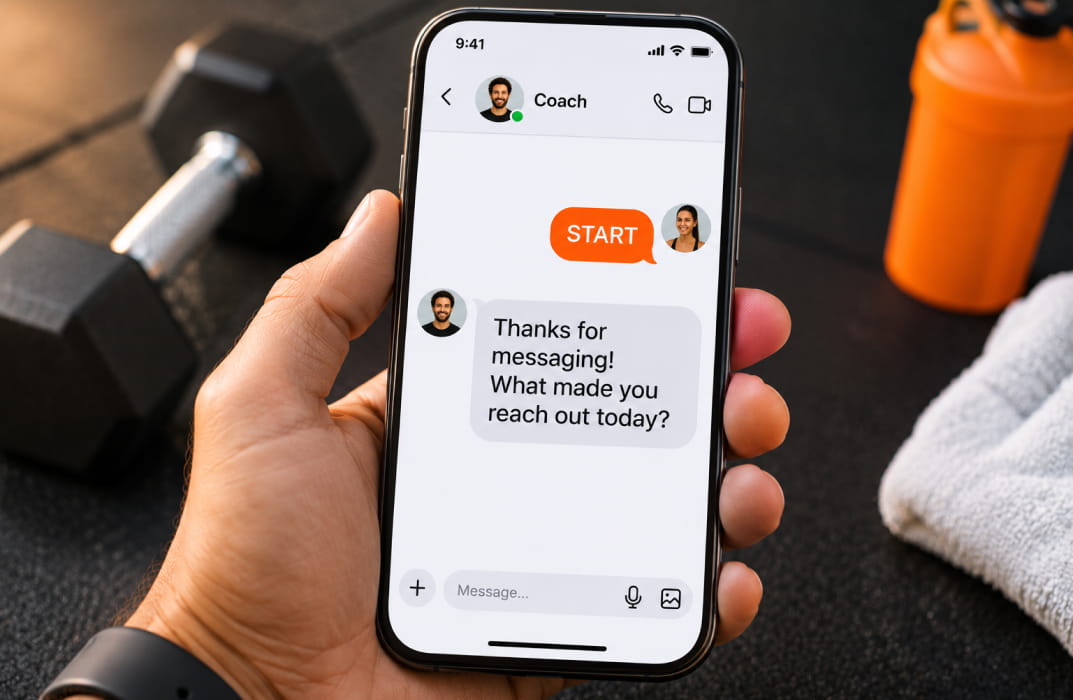
The fastest way to turn Instagram followers into paying clients is to publish a specific offer, invite a DM, check fit, and send one clear next step. Jonathan Goodman of The PTDC argues that a smaller audience that may buy is worth more than a large one that has no idea who you are.
Work through this sequence, using each example as a starting point:
- Clarify the profile: Turn your offer into one short bio line with a clear action. For example, "Online coach for shift workers. Get fit around rotating shifts. DM START to join."
- Publish a specific offer: Post your offer as a Reel with a genuine deadline, then repeat it as text on a Story. For example, "8-week program for shift workers: 20-minute workouts, weekly voice feedback, $249. DM START by Friday."
- Warm up followers with Story polls and question stickers: Ask a question such as "What stops you training three times a week?" Reply to every answer in the DMs, because each reply starts a conversation with someone who has shown interest.
- Invite one DM keyword: Ask interested followers to message START, so every conversation begins the same way. Your first reply could be "Thanks for messaging! What made you reach out today?" If you use a comment-to-DM tool, it can send that first reply automatically when someone comments START, and you take over from there.
- Check fit: Ask a few questions before you mention your program. For example, "What have you tried so far, what usually gets in the way, and how many days a week can you train?"
- Recommend the next step: Use those answers to send a checkout link or invite them to a call. For a lower-priced program, try "You want workouts that fit around rotating shifts, so this program suits you. Here's the link." For higher-priced coaching, try "You said night shifts throw you off. Want to talk through your plan on a 15-minute call?" A call lets you hear a prospect's concerns and answer them directly.
- Follow up helpfully: If someone goes quiet, answer the last question they asked and remind them of the real deadline. For example, "You asked whether dumbbells are enough. They are, and enrollment closes Friday if you'd like to join."
Track relevant inquiries, suitable prospects, and purchases instead of likes, because those numbers show whether your messages are building trust. Amy Hollings, a fitness trainer and weight management specialist, explains why that matters in FitBudd's fitness funnel example:
"The best funnels aren't built on hard selling, they're built on trust. People only buy when they feel like you genuinely understand their struggles."
5.3 How Do You Use a Lead Magnet to Capture Emails From Instagram Followers?
A lead magnet is a free resource that someone swaps for their email address, and it lets you reach followers outside Instagram. Choose one that matches your offer, such as a seven-day walking plan, a weekly habit tracker, or a grocery list built on government nutrition guidelines.
Share it in a Story or a pinned Reel, and ask people to comment or DM a keyword to receive the link. Then send a short welcome email that introduces your program and links to your program page. This keeps your audience reachable if your reach drops or your account changes.
5.4 How Do You Sell a Weight Loss Program to Your Existing Clients?
Offer the program to existing personal training clients at a natural checkpoint, such as a progress review or the end of a training block. Explain what it adds, such as a structured plan, weekly check-ins, or a group, and give a clear start date and price.
Existing clients already trust you, so keep the invitation short and let them decide. Do not pressure anyone.
5.5 Email Your Existing Subscribers
Email people who chose to join your list, and send each of them to your program page with three messages:
- Launch announcement: Share the complete offer details, such as "Enrollment is open for my 8-week program, and here's what's included."
- Buying question: Answer a question people have asked, such as "What happens if I miss a week?"
- Deadline reminder: Send this before the real enrollment deadline, such as "Enrollment closes Friday at 6 p.m."
Send the launch announcement about 10 days before enrollment closes, the buying-question email around day four, and the deadline reminder 24 hours before the close.
5.6 Ask Clients for Introductions
Ask satisfied current or former clients who know someone with a similar goal, and give them a short message to forward. Let the referred person contact you themselves, so nobody feels pressured:
"My coach is opening a few spots in a new program. Here's the page if it sounds useful, and you can message them with any questions."
5.7 Use Facebook Communities Appropriately
In your own group, you can post the offer directly and link to your program page. In someone else's community, read the rules and ask an admin for permission before you promote anything. You could write, "Would you be open to a free Q&A on building a home workout routine? I'd only mention my program if you're comfortable with that."
5.8 Connect YouTube Content to Coaching
A video on a related topic can introduce your coaching to viewers who already want help with that problem. Put your program page link in the description, and repeat the invitation in a pinned comment. Your spoken invitation near the end can be as simple as "My next group is open if you want weekly help with this."
5.9 Explore Relevant Partnerships
Workplace communities, local businesses, and organizations serving your audience can all introduce you to new people. Propose one useful session, an agreed promotion plan, and an optional coaching invitation. You could write, "I can run a free 30-minute session on fitting exercise into a workday. I'd share one optional link to my program at the end."
5.10 What Does a Six-Week Launch Calendar Look Like for Your Weight Loss Program?
A six-week launch calendar works backward from your start date, so you finish the offer, test enrollment, run a free challenge, and send your launch emails in order. This example starts the program on January 11 and closes enrollment on January 8, matching the program page example earlier. Shift the dates to fit your own launch.
Step 6: Find and Fix the Gap in Your Weight Loss Program Marketing
When your weight loss program marketing is not bringing enough suitable clients, find the stage where people stop and fix that one first. This table links each problem to where you should look
Simple math shows whether a launch was worth your time. In this hypothetical example, 40 people ask about a $199 program and 8 buy, which gives you a 20% conversion rate and $1,592 in revenue. If tools and fees cost $150 and delivery takes 30 hours, your profit is $1,442, or about $48 per coaching hour.
Revenue alone can hide a launch that took too many hours, so check both numbers, then choose one improvement based on what you found.
Make Your Next Launch Easier to Act On
- Finalize the offer.
- Prepare delivery, test enrollment, and publish your program page.
- Choose one primary promotion channel.
- Invite suitable prospects.
- Track purchases and improve the largest observed gap.
Turning interest into paying clients takes a clear offer and a reliable way to deliver it. Start 30-Day Free Trial. No credit card required. Set up your next weight loss program with check-ins, payments, and your own branded website in one place.