


Are You Earning Up to Your Potential?
Most personal trainers are undervaluing their time and skills. Our Personal trainer Revenue Calculator helps you find out what you should be making, and how to get there.
No guesswork. Just real numbers.
.webp)
TL;DR
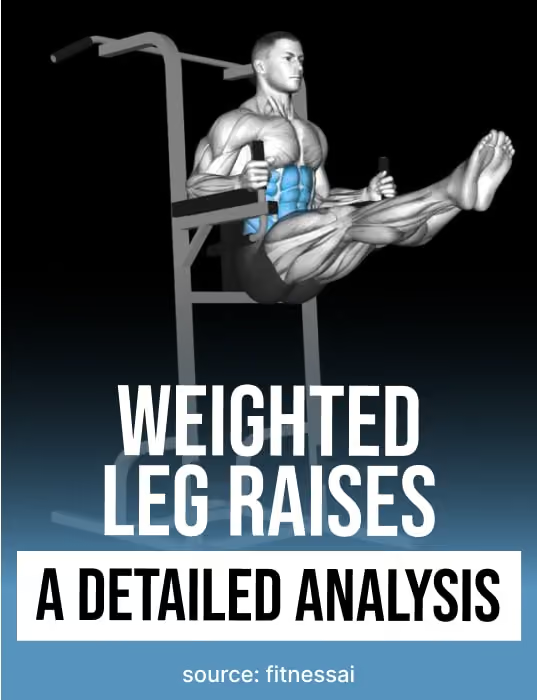
Weighted leg raises add resistance to a lower-ab movement that plateaus fast at bodyweight. Do them right by keeping your lower back pressed flat to the floor through every rep, and only add weight once you can hit 15 strict bodyweight reps with a 3-second lowering phase. Start with 1 to 2 kg ankle weights and progress in the smallest increment your equipment allows.
Bodyweight leg raises stop working once your core adapts. You can grind out 20 clean reps, feel nothing the next day, and wonder why the movement stopped giving you anything. Weighted leg raises solve that the way every other lift solves it, by adding resistance so the tissue has a reason to keep adapting. That is progressive overload applied to a movement most people never think to load.
This guide covers what the movement actually trains, how to do leg raises correctly on the floor, when you have earned the right to add weight, the three ways to load it, and the progression ladder from bent knees up to toes to bar.
One naming note before we start. You will see this movement called leg lifts, leg ups, or leg raises, depending on who is coaching you. Same pattern, different gym vernacular. This guide says leg raises throughout.
What Do Leg Raises Do?
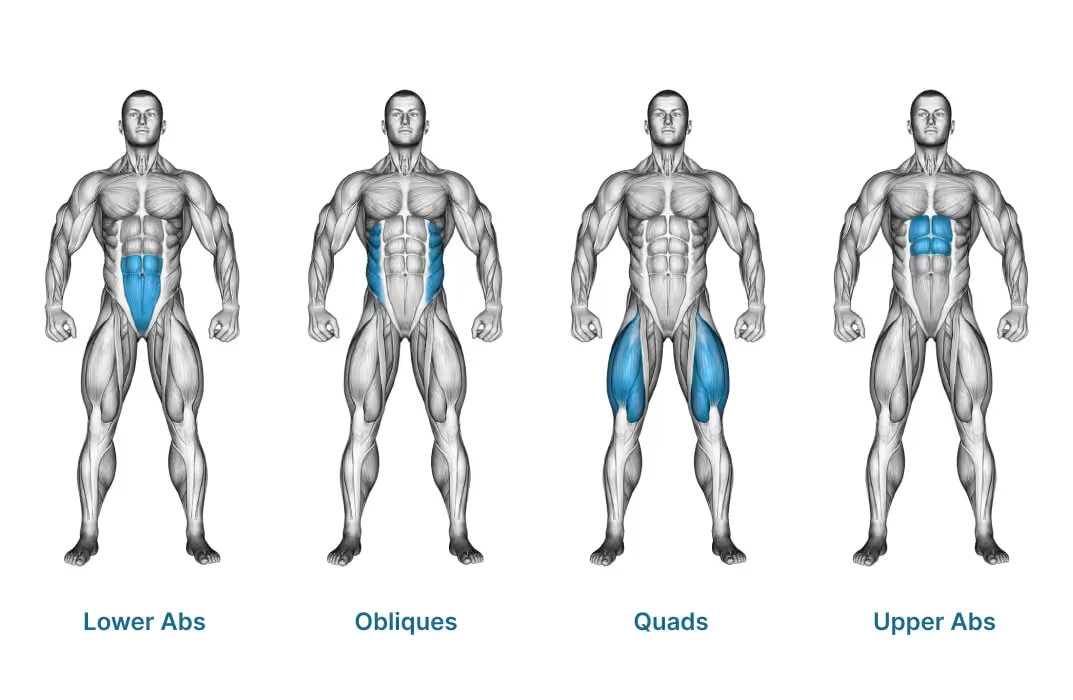
Leg raises train hip flexion under load while your abdominal wall works to stop your pelvis and lumbar spine from moving. That second job is the one people miss, and it is why form matters more here than in almost any other core exercise. The abs are not lifting your legs. They are holding your pelvis still so your hip flexors can
That last row corrects something you will read on a lot of exercise pages. Lowering your legs is hip extension, and gravity is producing it. Your hip flexors control the descent eccentrically, which is why that is where you feel the burn. Your glutes and hamstrings are the muscles that would resist that descent, so they stay largely passive. A leg raise is not a posterior chain exercise, no matter how much weight you strap on.
Why this movement is worth loading rather than replacing. Abdominal recruitment follows the resistance. Crunch-pattern movements put the load up at your shoulders and bias the upper abdominal wall. Leg raises put it down at your feet and bias the lower segments, which is what a diagnostic ultrasound comparison of upper- and lower-segment ab exercises found (International Journal of Exercise Science).
That is the practical case for running both rather than arguing about which is better, and it is why adding weight matters here. Once bodyweight reps stop being hard, load is the only thing keeping the lower-bias work progressing.
How Are Leg Raises with Parallel Bars Beneficial?
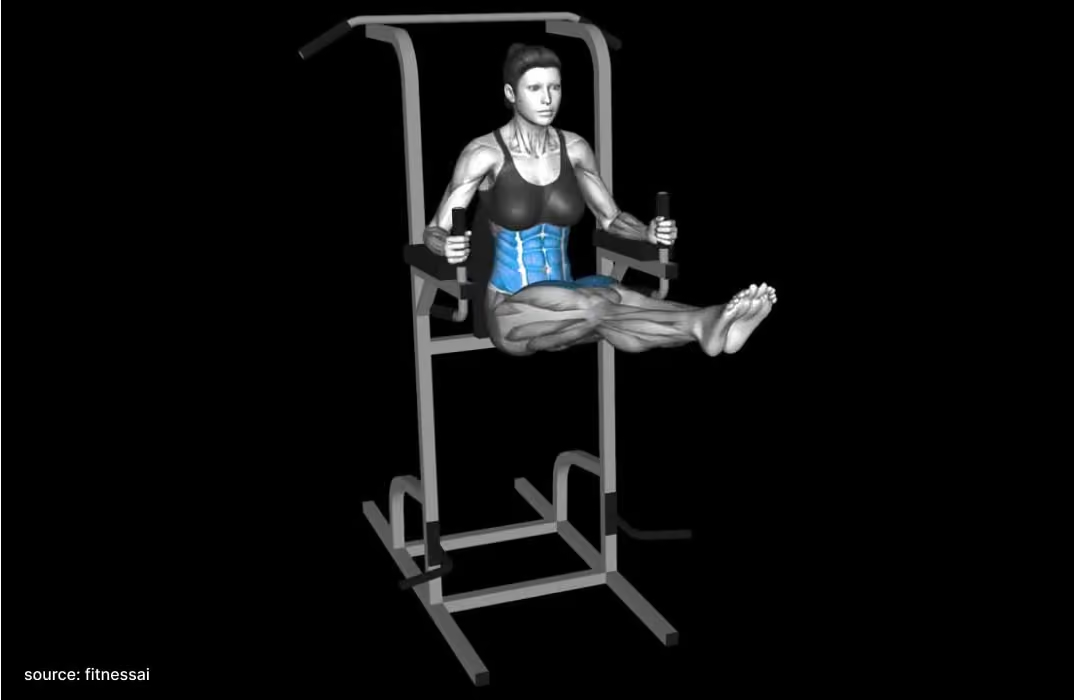
Lie flat, press your lower back into the floor, and keep it there for every rep. That single instruction is most of what separates a leg raise that trains your abs from one that trains your lower back.
Here is how to do leg raises correctly, on the floor, before any weight is involved.
- Set up
Lie on your back on a mat with your legs straight and together. Put your hands palm down beside your hips, or tucked just under your glutes if your lower back wants to arch.
- Flatten and brace
Tilt your pelvis slightly toward your ribs so your lower back presses into the floor. Brace as if you are about to take a light punch to the stomach. There should be no gap between the mat and your lumbar spine.
- Lift
Exhale and raise both legs together, keeping them as straight as your hamstrings allow, until they are roughly vertical.
- Pause
Hold for a beat at the top. Do not let your hips roll off the floor.
- Lower under control
Inhale and lower over about three seconds, stopping when your heels are a few inches off the floor. This is the part that builds the strength. It is also the part where the arch shows up.
- Stop the set at the arch, not at failure
The moment your lower back peels off the mat, that rep and every rep after it is being absorbed by your spine. End the set there.
Where your hands go changes the difficulty. Tucking your hands under your glutes shortens the lever and helps hold your pelvis down, so it makes the movement easier and is the right choice while you are learning. Moving your hands overhead or behind your head makes it harder because you are working further from your centre of gravity.
💪 Got an idea for a brand? Let's bring it to life.
Launch your own fitness app with FitBudd in minutes!

💪 Got your brand name? Let’s bring it to life.
Launch your own fitness app with FitBudd in minutes!



88% trainers worldwide gave us 5 stars
Transform your fitness business with the power of your branded app on iOS and Android.
Try for FREELeg Raises Form: What Does Proper Technique Look Like?
6 checkpoints are the whole of leg raises form, and they hold whether you are on the floor, on parallel bars, or hanging from a bar.
- Lower back flat
Non-negotiable on floor variations. Slide a hand under your lumbar spine at the start; you should feel pressure, not space.
- Pelvis tucked before the first rep, not during it
Set the tilt first. If you have to chase it mid-set, the weight is too heavy.
- No swing
If the legs are being thrown rather than lifted, momentum is doing the work. Slow the lowering phase down until the swing disappears.
- Legs as straight as your hamstrings allow, not straighter
Locked-out legs with a rounded pelvis is worse than a soft 20 degree knee bend with a flat back. Bend the knees to whatever angle lets you keep checkpoint one.
- Shoulders down and neck relaxed
Shrugging or craning the head forward on hanging and parallel bar versions adds neck strain and nothing else.
- Breath out on the lift, in on the lower
Holding your breath spikes pressure and usually comes with the pelvis losing position.
People search how to properly do leg raises and how to do proper leg raises expecting two different answers. There is one, and it is the list above. The same six also answer how to properly do leg lifts and how to do leg lifts correctly, because leg lifts and leg raises are the same movement. The fault list does not change with the name.
Keep those six as your leg raises proper form checklist. When a rep goes wrong, one of them is the reason.
A note on the straight-leg rule. Plenty of guides say to keep your legs perfectly straight and never bend the knees. That is bad advice for anyone with tight hamstrings or an anterior pelvic tilt, because the only way they can achieve it is by letting the lower back arch.
There is research support for the softer version: a 2018 Journal of Physical Therapy Science study (Yoo) of four supine leg-raising positions found the best co-contraction ratio, meaning both muscles fired together most evenly, between the rectus abdominis and the multifidus came from raising the legs with the knees flexed, and recommended that variation where lumbar instability is a concern.
When Are You Ready to Add Weight to Leg Raises?
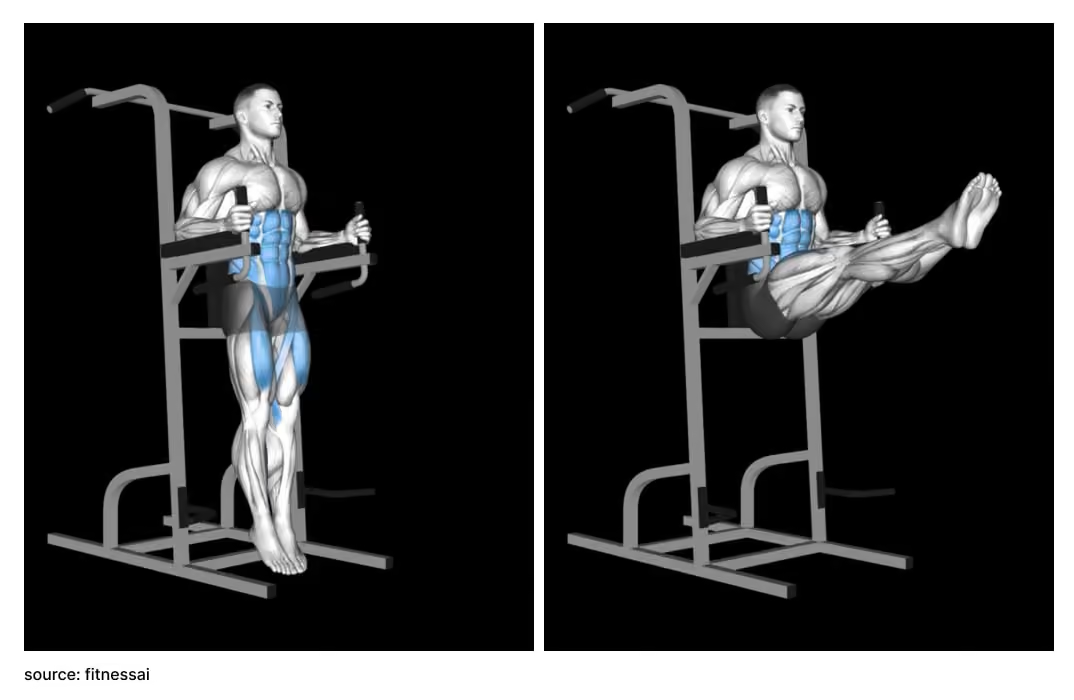
Use this gate: 15 strict bodyweight reps, lower back flat throughout, no swing, three second lowering phase. If you cannot hit that, adding weight will not make your abs work harder. It will make your lower back compensate sooner.
This is the question every leg raise guide skips. They all say "start light" and none of them tell you when to start at all. Fifteen is a practical coaching threshold rather than a research finding, and it is deliberately conservative because the failure mode here is a lumbar one. For comparison, Hybrid Calisthenics sets its published standard for the unweighted full leg raise at two sets of 25 before moving up its progression.
Two more things to check before you load:
- Can you keep the tempo? If your last three reps are visibly faster than your first three, you are already past your capacity.
- Does your lower back feel it the next day? If yes, the movement is landing in the wrong place. Fix that before adding resistance.
How Do You Add Weight to Leg Raises?
Three methods, each with a different tradeoff. Weighted leg raises work with any of them, and the right one depends on where you are in the progression rather than which is objectively best.
Practical starting loads. For most people that means 1 to 2 kg ankle weights to begin with, working up over months rather than weeks. A 5 to 10 kg dumbbell held between the feet is an experienced lifter's load, not a starting point. Progress in the smallest increment your equipment allows, and only when you can complete every prescribed rep with the six form checkpoints intact.
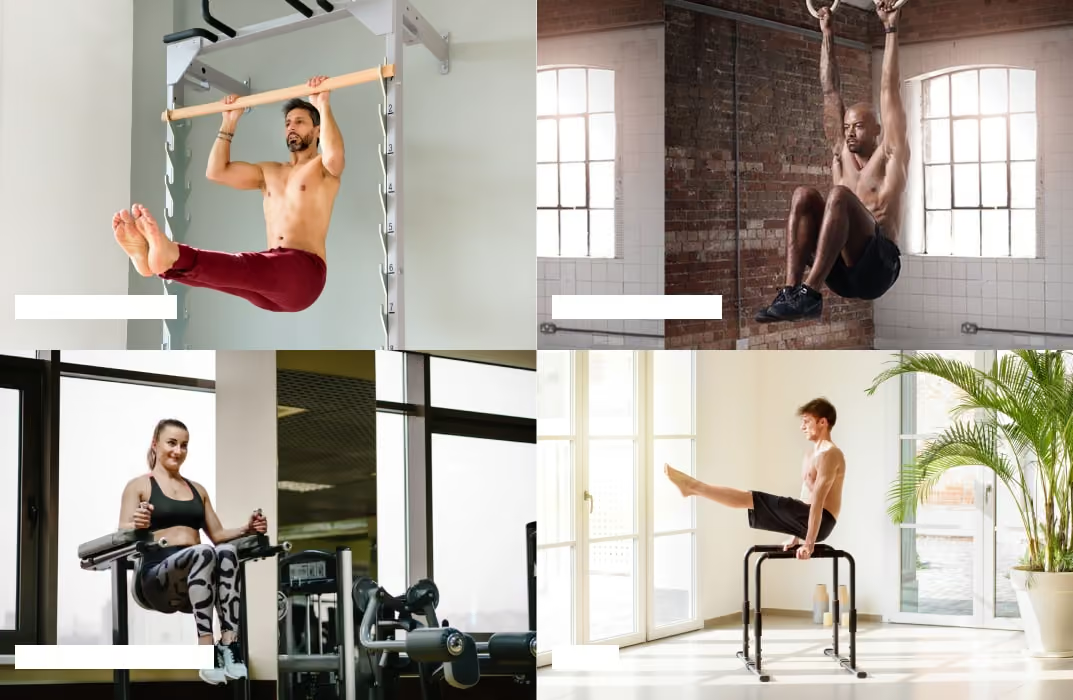
Which Weighted Leg Raise Variation Should You Use?
Work up this ladder in order. Each rung earns you the next one, and adding weight at any rung is a legitimate alternative to moving up.
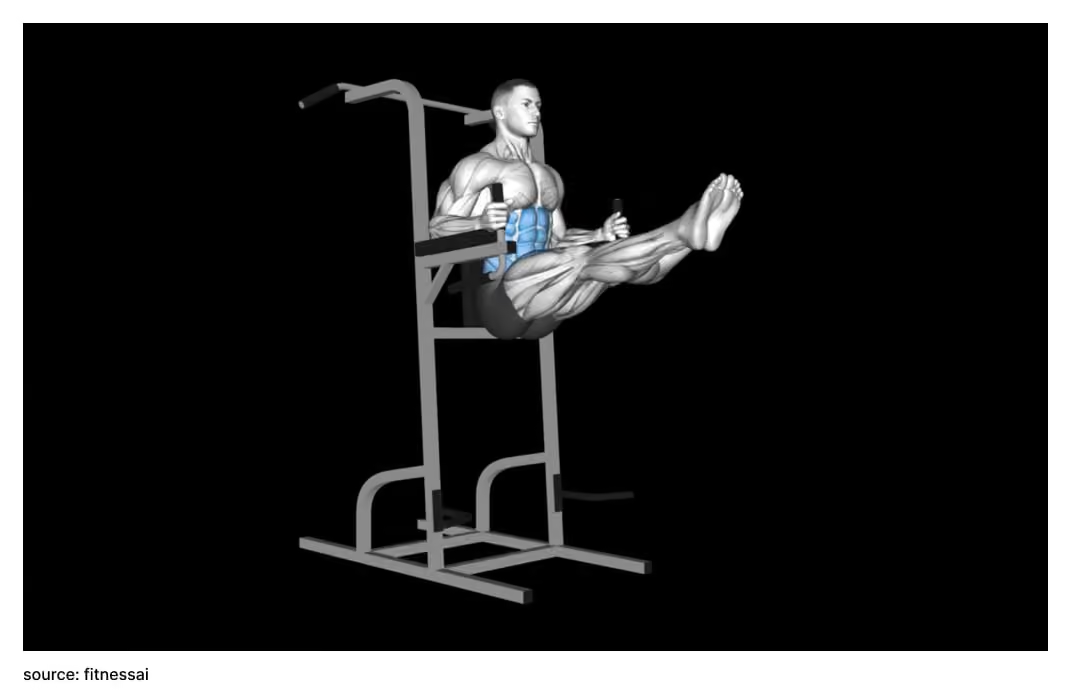
For rungs 5 through 9 you need somewhere to hang. A doorway or wall-mounted pull-up bar is the cheapest piece of home gym equipment that gets you access to half this list.
How Should Beginners Start With Leg Raises?
Leg raises for beginners start with bent knees and no weight at all, and the first goal is not reps, it is holding a flat lower back for the whole set.
Here is the first four weeks:
- Weeks 1 to 2
Bent-knee raises, knees at 90 degrees, heels tapping the floor at the bottom. Two sets of 10, three days a week. Hands tucked under your glutes. If your back arches at rep six, stop at rep five.
- Weeks 2 to 3
Add reps before you add range. Build to two sets of 15 to 20 bent-knee reps.
- Week 3 onward
Start straightening. Bend to roughly 45 degrees instead of 90, and hold the lower back position. Drop back to 10 reps when you change the angle.
- When you clear 15 strict straight-leg reps
Add 1 kg ankle weights and start the whole progression again from a lower rep count.
The mistake nearly every beginner makes is going straight to straight legs because that is what the movement is supposed to look like. Straight legs with an arched back trains almost nothing you wanted and irritates your lumbar spine.
Bent knees with a flat back trains the thing. If you are building a wider routine around this, our exercise routine for beginners covers where core work sits in a full week.
What Are the Most Common Leg Raise Mistakes?
Six mistakes account for almost every failed rep, and all six trace back to the lower back losing its flat position.
Who Should Avoid Weighted Leg Raises?
Skip or modify this movement if any of the following apply. Cleveland Clinic names specific groups who should not treat floor leg lifts as a default.
- Existing lower back pain or diagnosed lumbar instability. Bent-knee variations only, and get cleared first. The Journal of Physical Therapy Science work on co-contraction supports the bent-knee version specifically for this group.
- Previous hip injury, or anyone for whom getting down to and up off the floor is difficult.
- Pregnancy and the postpartum period. Floor-based core work is often restricted here. This is a conversation with a clinician, not a decision to make from an article.
- Anyone who feels the movement exclusively in their hip flexors and never in the abs. That is a pelvic position problem, not a load problem. Fix it before loading it.
If you are coaching someone rather than training yourself, the safe default is bent knees and no external load until you have watched them do a full set.
How Do You Program Weighted Leg Raises for Clients?
Put weighted leg raises at the end of a session, not the start. Loaded hip flexion fatigues the deep stabilisers, and a fatigued trunk makes every compound lift that follows it worse.
A workable prescription for most intermediate clients:
- Sets and reps: 3 sets of 8 to 12, two to three times a week
- Tempo: 1 second up, 1 second pause, 3 seconds down
- Progression: add reps to the top of the range first, then add the smallest available load and drop back to 8
- Regression trigger: any visible arch on rep 6 or earlier means the load comes off, not the reps
The reason this movement gets coached badly is that the failure is invisible in a rep count. A client can log 3 sets of 12 and have arched through nine of them. The only reliable check is video: ask for one set filmed from the side, and look at the gap between the lower back and the floor rather than at the legs.
That is the kind of detail worth systemising rather than remembering. FitBudd lets coaches build workout programs with video demos and rep targets attached to each exercise, so a client sees the cue at the moment they are doing the movement instead of trying to recall it from a session three days ago. Check-ins sit in the same place, which means you can track client progress on a movement like this without a separate spreadsheet.
Consistency compounds here. Most client dropout happens before a new habit becomes automatic, and structured check-ins keep people through that window better than frequent but scattered contact does. It's also one less piece of manual tracking adding to the non-billable hours that drive coach burnout.
Test yourself this week. Fifteen strict bodyweight reps, film one set from the side, and look at your lower back rather than your legs. If the gap stays closed, add a kilo. If it does not, the work is bent-knee reps for another fortnight, and that is not a step backward.
Also read:
Full Body Circuit Workout and Its Benefits
If You Weight-Lift One Hour a Day, This Is What Will Happen to Your Body
Insanity vs HIIT: What's the Difference?
Exercise Routine for Beginners


Meet the author
Aishwarya Mehra
With a passion for digital strategy and a keen eye for engagement, Aishwarya Mehra is your partner in turning clicks into clients and likes into loyal followers.
Frequently Asked Questions

Yangzey Sherpa leads content strategy at FitBudd, overseeing content planning and execution across fitness-focused digital channels. With over five years of experience in SEO and content, she works closely with the fitness industry to ensure content aligns with the needs of coaches, trainers, and gym owners. Her role keeps her deeply connected to fitness business workflows, coaching models, and how professionals use digital platforms to grow.


Apra Pathak has worked closely within the fitness niche for several years, supporting personal trainers and fitness coaches through content and digital marketing initiatives. Her experience centers on understanding how fitness professionals build visibility, communicate value, and engage clients online. Through sustained involvement with fitness-focused platforms and audiences, she has developed a strong understanding of the digital needs and growth challenges faced by modern fitness businesses.

Aishwarya Mehra has been actively involved in fitness-focused digital marketing, working closely with brands and platforms that serve coaches, trainers, and fitness businesses. Her experience spans engagement-driven strategies designed specifically for fitness audiences. Through ongoing exposure to fitness campaigns and communities, she remains closely aligned with how fitness professionals attract, convert, and retain clients in digital environments.

Suchandra Das has contributed content within the fitness niche, working on resources designed for coaches, trainers, and fitness business owners. Her experience involves supporting fitness-related topics with clear, structured, and accessible content. Through consistent involvement with fitness-focused platforms, she has developed familiarity with coaching workflows, client communication, and the informational needs of fitness professionals.
FitBudd is a fitness technology platform built exclusively for coaches, personal trainers, gym owners, and fitness professionals. The platform supports fitness businesses through branded apps, white-labeled solutions, and websites designed around real coaching and training workflows. FitBudd works closely with the global fitness community, maintaining deep, ongoing involvement in the fitness industry.

Ankit Uniyal has worked extensively with fitness-focused content, supporting platforms that cater to personal trainers, gym owners, and fitness professionals. His experience includes optimizing and structuring content around fitness-related search behavior and user intent. Through continued involvement in the fitness niche, he has gained a strong understanding of how trainers and coaches build discoverability and authority online.

Saumya Mittal is the Co-Founder and CEO of FitBudd. Since 2021, she has been actively engaged in the fitness technology sector, collaborating with global fitness companies to foster digital growth and scalable operations. With over a decade of experience leading high-impact projects in engineering and operations, Saumya has a strong background in developing reliable and scalable systems. Through FitBudd, she is dedicated to addressing the evolving needs of fitness professionals worldwide.

Kinshuk Snehi has been closely involved in the fitness space for over four years. Through his work at FitBudd, he has contributed to shaping how fitness professionals build their online presence, attract clients, and scale sustainable coaching businesses. Deeply interested in the intersection of fitness, technology, and growth, Kinshuk brings a hands-on understanding of the challenges faced by modern trainers. His passion lies in building systems and strategies that support long-term consistency, both in fitness journeys and business growth.

Kanika Verma has been closely involved in building solutions for the fitness industry, working with platforms used by coaches and trainers globally. Her experience includes direct exposure to fitness coaching workflows and operational needs. Through sustained involvement in fitness-focused product development, she has developed a strong understanding of how fitness professionals manage clients, programs, and daily operations.

Tanya Sharma has worked on branding initiatives within the fitness niche, supporting fitness platforms and businesses with visual identity design. Her experience includes creating brand systems used by coaches, trainers, and fitness-focused products. Through ongoing involvement in fitness-related design projects, she remains closely connected to how fitness brands communicate trust and professionalism.

Niharika Sonavane has contributed to visual design projects within the fitness industry, supporting platforms and brands serving fitness professionals. Her experience spans creating digital assets used across fitness apps, websites, and marketing materials. Through continued work in the fitness niche, she remains closely aligned with the visual communication needs of coaches and fitness businesses.

Elesh Patel has worked extensively on marketing initiatives within the fitness niche, managing paid campaigns for fitness-focused products and services. His experience includes supporting platforms that target personal trainers, gym owners, and fitness creators. Through long-term involvement in fitness marketing, he remains closely connected to how fitness professionals discover and adopt digital tools.


Creative Fitness Challenges Ebook
Discover exciting challenges to boost your workouts and keep your fitness journey thrilling.
Download Now
Templates
These functional templates have the power to make any fitness trainer's life easier.
Subscribe To
Our Blog
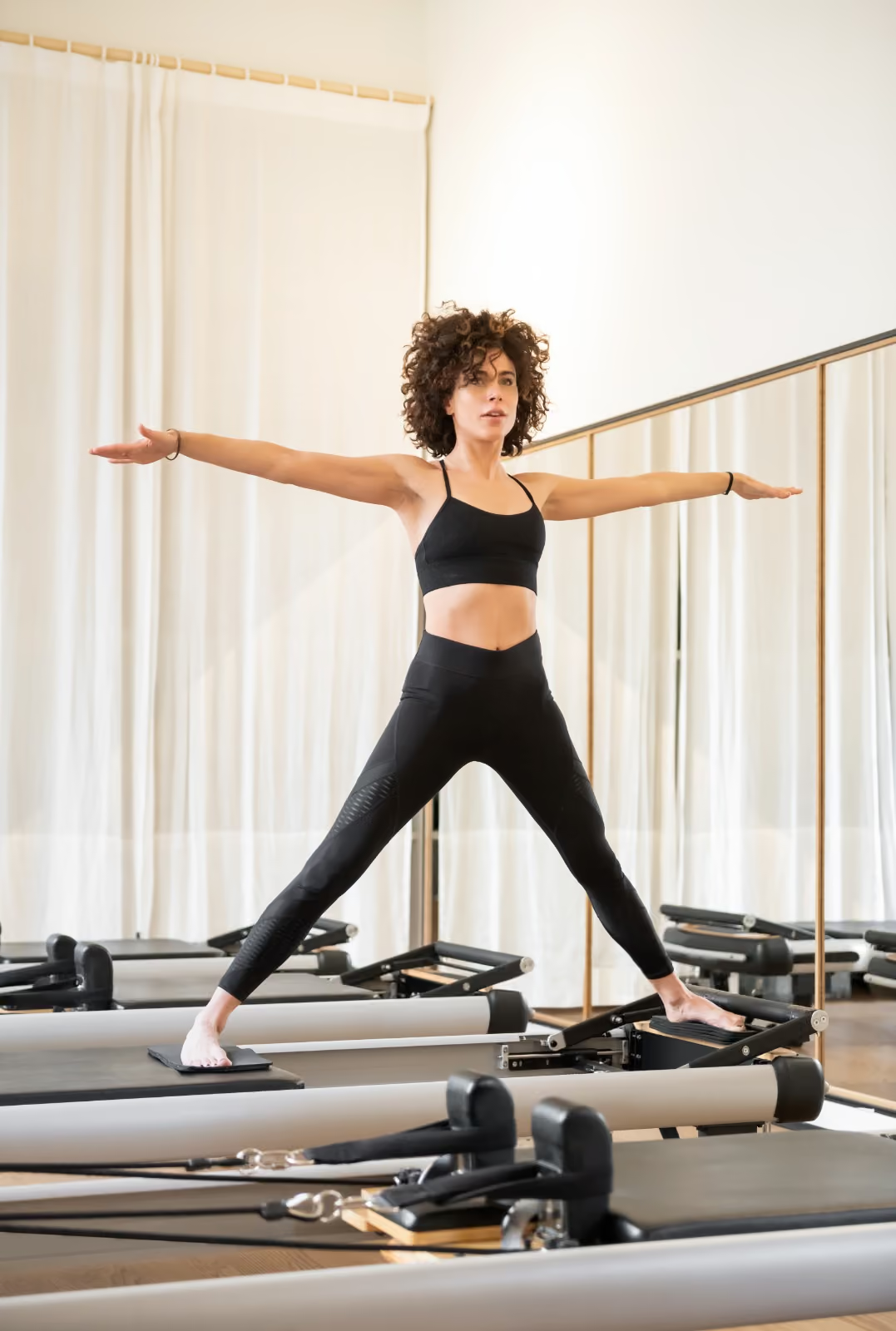
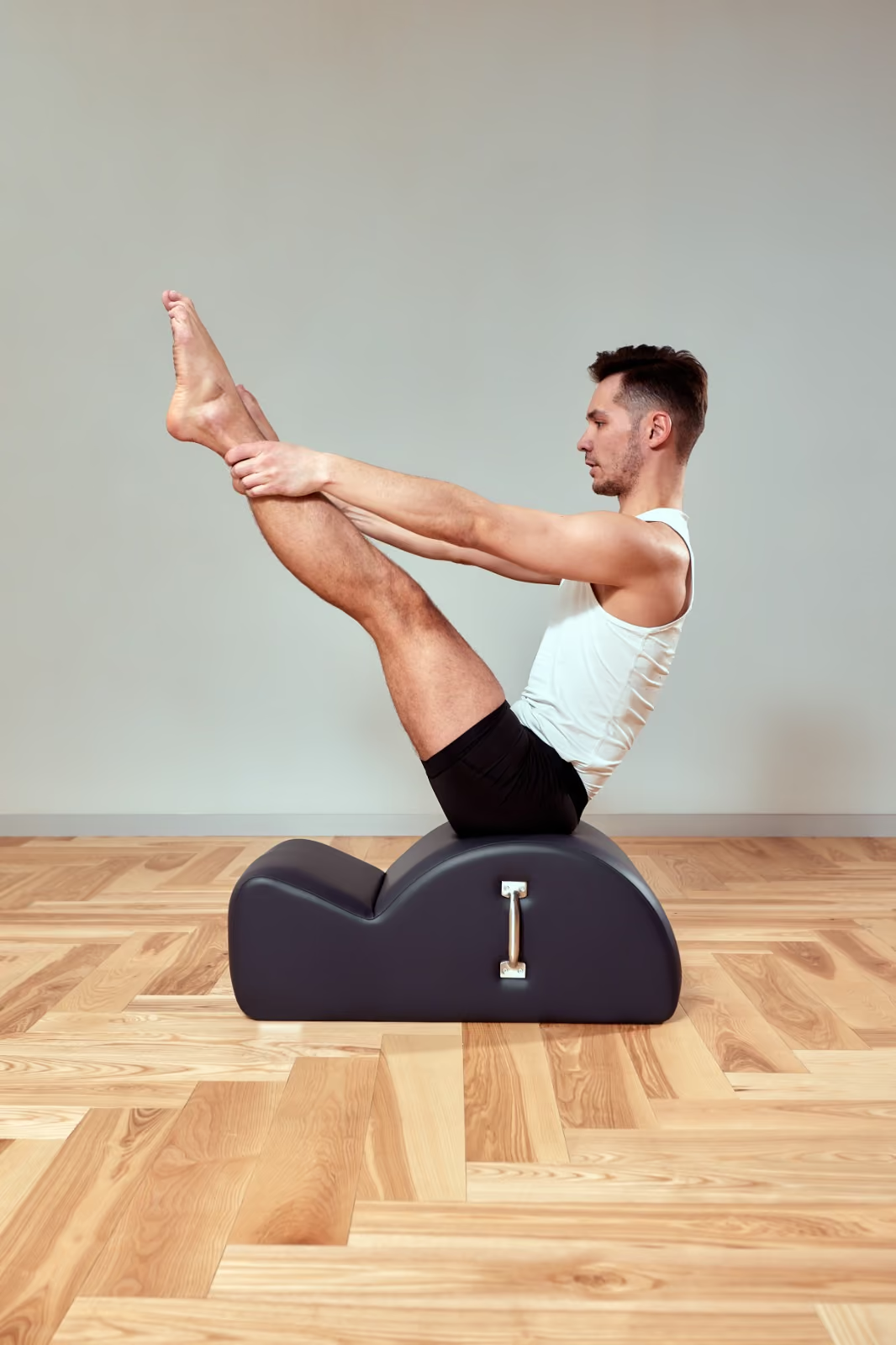








Hanging leg raises primarily work the hip flexors and the abdominals, and are a great addition to any fitness routine for overall spine health, core strength and mobility. You get additional benefits of working your grip and shoulder strength by hanging from the bar and stabilizing your body throughout the movement."
Mitchell Fischer, ACSM-Certified Personal Trainer & Weightlifting Coach, Gold's Gym