


10 min read
TL;DR
- To do a pistol squat, stand on one leg, extend the other forward, lower your hips under control, then push through your standing foot to rise.
- If you lose balance or control, start with a supported pistol squat or box pistol squat.
- As you improve, progress to partial pistols, pistol squat negatives and then full pistol squats.
- Move forward by using less support, squatting deeper or completing more controlled reps.
You watch someone do a squat on one leg, a pistol squat. They lower their hips almost to the floor while the other leg stretches out in front. Then, they come right back up, almost like their body just folds and unfolds.
You watch someone do a pistol squat and think, that looks ridiculously smooth. They lower themselves almost to the floor on one leg, keep the other leg stretched out in front, then stand right back up as if their body simply folds and unfolds.
Regular squats already feel comfortable, so you decide to give it a try. How hard can one squat on a single leg really be?
Then you lift one foot off the floor and start lowering yourself. A few inches down, your ankle starts wobbling, your body tips to one side and suddenly you are reaching for the nearest wall or putting your foot down to catch yourself.
That first attempt tells you something important: a pistol squat asks for more than simply doing a regular squat on one leg. But you also do not need to force yourself all the way to the bottom on day one.
This guide helps you figure out where you’re getting stuck and choose what to practice next. You’ll work toward your first full rep, learn when to try something harder and get a downloadable plan to track your progress.
What Is a Pistol Squat?
The pistol squat is a form of unilateral training, where one limb works independently at a time.
The two legs have different jobs:
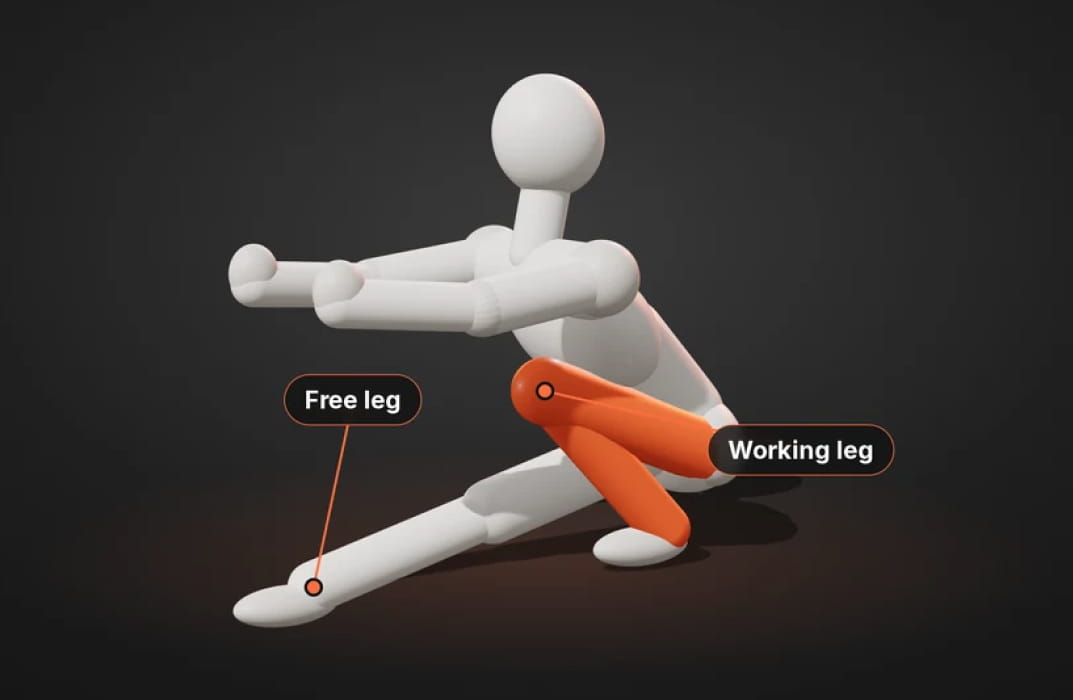
- Working leg: supports your body, controls you on the way down and pushes you back up.
- Free leg: stays off the floor, in the air, throughout the repetition.
As you descend, the knee of your working leg moves forward, your ankle bends and your hips lower toward your heel. Then the same leg has to reverse the movement and bring you back to standing.
That is what makes a pistol squat different from simply “squatting on one leg.” You need enough single-leg strength, ankle movement, balance and free-leg control to complete the whole movement.
How to Do a Pistol Squat With Proper Form
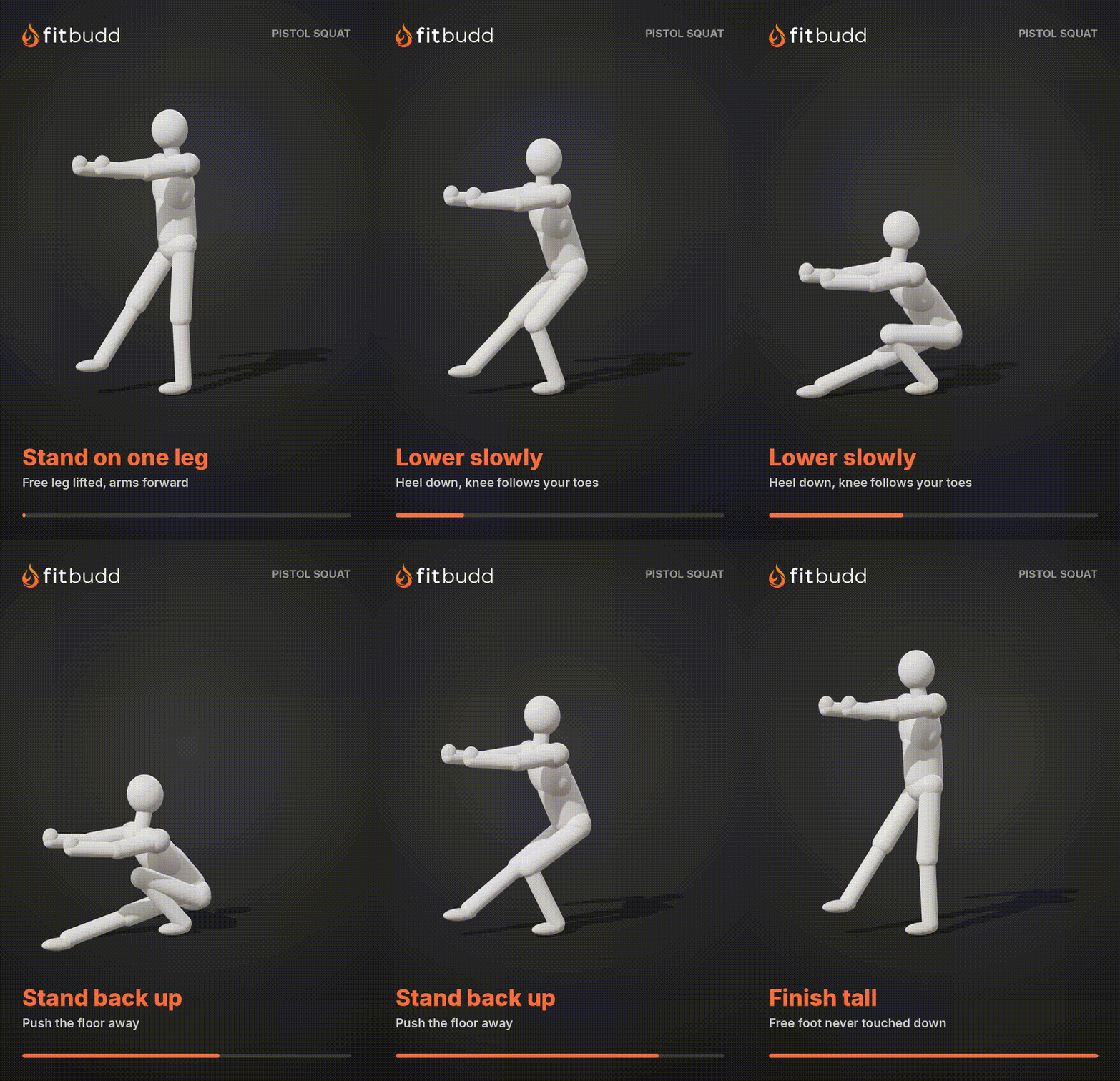
To do a pistol squat, stand on one leg with the other stretched out in front. Bend your standing leg to lower your hips toward the floor, while keeping the raised leg off the ground. Slowly straighten your standing leg to come back up.
Step 1: Set Your Working Foot
Stand tall and shift your weight onto one leg, keeping your whole foot in contact with the floor rather than shifting completely onto your heel or toes. Lift your other foot just high enough to clear the floor, and reach your arms forward if that helps you balance.
Step 2: Lower on One Leg
Bend your working knee and begin lowering your hips, letting your knee travel forward over your toes while keeping your heel down. Keep the knee controlled rather than letting it suddenly collapse inward, and lower only as far as you can control.
Step 3: Pause at the Bottom
As you reach the bottom, slow down rather than dropping through the last few inches. Pause briefly without bouncing, then begin pushing yourself back up. If you lose balance or cannot lower any further with control, stop there rather than forcing yourself deeper.
Step 4: Stand Back Up
Push the floor away with your standing foot and straighten your leg to rise. Keep the other leg lifted in front until you are fully standing again.
What Does a Clean Pistol Squat Look Like?
Once you know the steps, use these checks to judge your rep:
☐ Heel stayed down: Your standing foot remained flat on the floor.
☐ Knee stayed controlled: It followed the direction of your toes instead of collapsing inward.
☐ Free leg stayed up: Your other foot did not touch the floor.
☐ You did not reach for support: You were not grabbing for a wall, chair or anything nearby to stop yourself from falling.
☐ You stayed balanced: A little shaking is fine. But you were not tipping backward or falling to one side.
☐ You controlled the way down: You did not suddenly drop the last few inches.
☐ You came back up on one leg: You did not put your free foot down, bounce or twist your body to finish the rep.
One side may feel easier than the other, so check each leg separately and only train to the depth you can control on that side.
What Do Pistol Squats Work, and Why Should You Train Them?
What Muscles Do Pistol Squats Work?
Where you feel the effort during a pistol squat can tell you which muscles are doing the work:
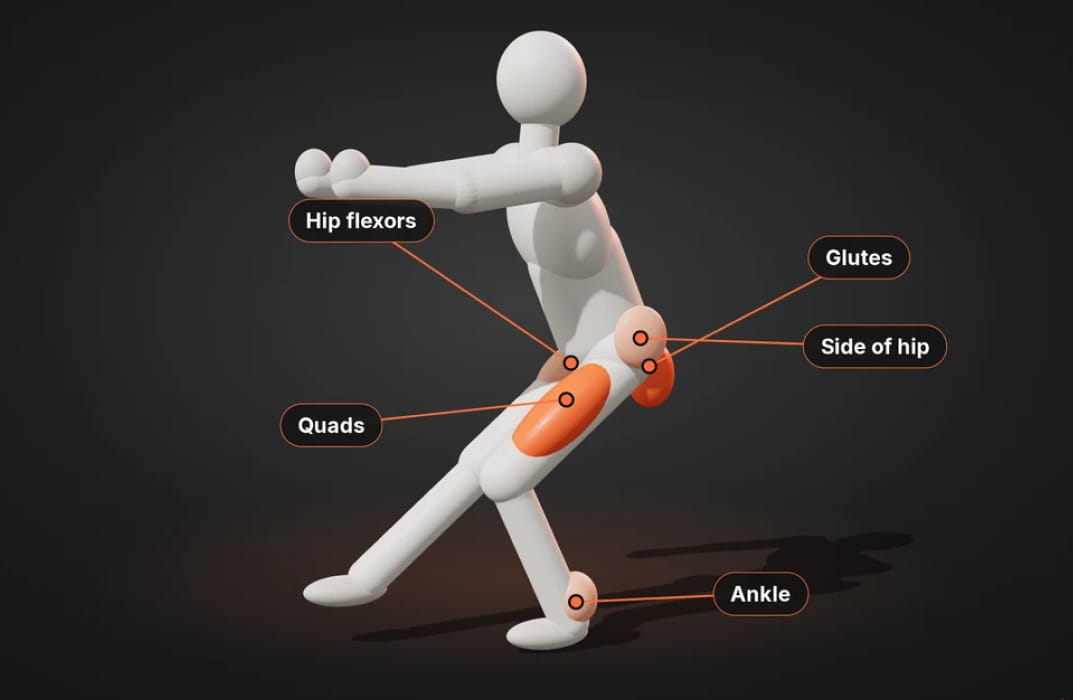
- Burning in the front of your standing thigh?
Your quadriceps are working to control the descent and help you stand back up. - Feeling your glutes as you rise?
They help extend your hip and drive you back to standing. - Shaking around your ankle or foot?
The muscles around your ankle are working to keep you stable as your weight shifts through the movement. - Feeling the side of your hip working?
Your hip muscles help keep your pelvis and standing leg stable while your weight is supported on one side. - Feeling the front of your raised hip or thigh?
Your hip flexors help hold the leg up, while your quadriceps help keep the knee straight.
The Journal of Athletic Training measured how different muscles worked during three variations of a single-leg squat. When participants held their free leg in front, similar to a pistol squat, the gluteus maximus (buttocks), gluteus medius (side of the hip) and inner hamstring (back of the thigh) worked harder during the lowering phase than when the free leg was held behind.
Because each leg works independently, pistol squats can also make differences in strength and control between your left and right sides easier to notice. This is one reason asymmetrical training can be useful when one side consistently feels weaker or less stable.
Will Pistol Squats Change How Your Legs Look?
If you want stronger or more muscular legs, pistol squats can help. They place much of your bodyweight on one leg, particularly challenging your quads and glutes.
The American College of Sports Medicine's 2026 review analyzed evidence covering more than 30,000 participants. It found that resistance training promotes muscle growth, with higher weekly training volume supporting greater hypertrophy.
If you want slimmer thighs or calves, pistol squats cannot target fat loss in those areas. They strengthen the muscles underneath, but where you lose body fat depends on your overall fat loss rather than the exercise you choose for that body part.
Your calves do work during a pistol squat to help stabilize your ankle. However, pistol squats are not primarily a calf-building exercise. If bigger calves are your goal, direct calf training will be more specific.
The main pistol squat benefits are therefore single-leg strength, balance and control, especially if you train without heavy equipment.
Where Do Pistol Squats Fit Into Your Training?
What Is Stopping Your Pistol Squat?
This is the most important part if you cannot do a full rep yet.
Hold a securely fixed support and attempt a slow pistol squat on each leg.
Don't worry about reaching the floor. Watch what fails first.
If your heel rises or you repeatedly fall backward as you get deeper, check your ankle movement before simply adding more leg exercises.
That frustration comes up often among people learning the movement. One Reddit user described having the leg strength for a pistol squat but still falling backward at full depth when their ankle could not move far enough forward.
Is Your Ankle Mobility Limiting Your Pistol Squat?
Your ankle needs to bend enough for your knee to move forward while your heel stays down. If it cannot, you may:
- lift your heel as you go lower
- tip backward near the bottom
- squat deeper on one side than the other
Try the knee-to-wall test: Face a wall with one foot in front. Keep your heel flat and slowly move your knee toward the wall. Test both sides and compare how far each ankle can move without the heel lifting.
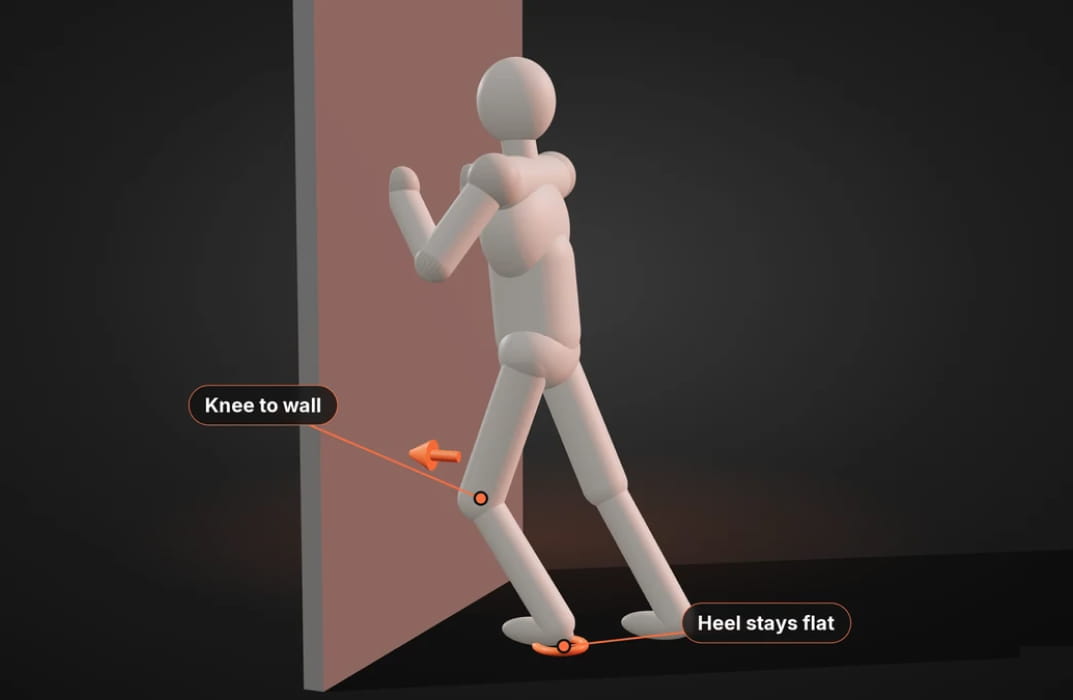
For context, an ankle dorsiflexion guide from Odin Fitness estimates that a pistol squat may require around 35–45° of ankle dorsiflexion. Treat this as a reference, not a pass/fail number.
If your heel lifts or you start falling backward as you squat deeper, ankle mobility may be one of the things holding you back.
How Should You Warm Up for Pistol Squats?
Spend a few minutes walking, cycling or marching first. Then prepare the specific positions you are about to use.
- Move your ankles: Face a wall and drive one knee forward over the toes while keeping the heel down. Complete 6–8 slow repetitions per side.
- Practise narrow squats: Bring your feet closer together than in your usual squat and perform 6–8 controlled reps.
- Lift the free leg: Sit tall, straighten one leg and lift the foot from the floor without leaning backward. Complete 5–8 per side.
- Rehearse your pistol variation: Perform 3–5 easy reps per side using the support or box you will train with.
If you cannot keep the free leg straight during the seated lift, bend your knee. You can work toward straightening it later.
The warm-up should make your pistol position feel easier, not tire your legs before training begins.
Which Pistol Squat Progression Should You Use?
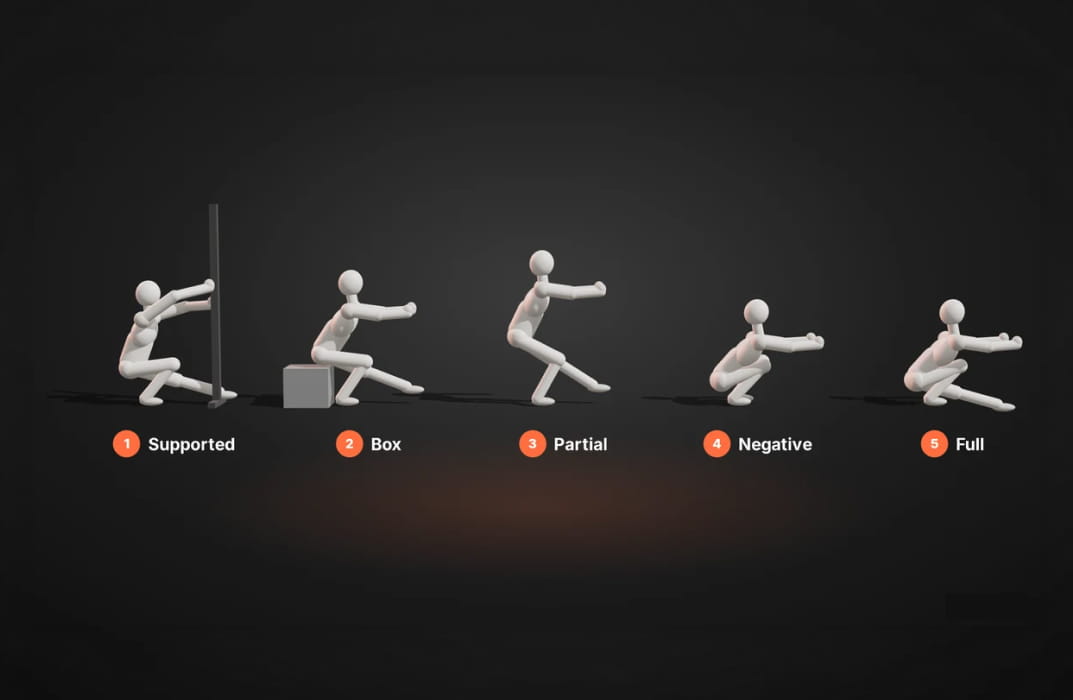
You do not need to master every pistol squat progression in order. Start with the variation that matches where your rep breaks down. From there, use exercise progression to make one thing harder at a time: use less support, squat deeper or take more control of the movement.
1. Supported Pistol Squat
Use it when: You start reaching for something as soon as you lose your balance.
How to do it:
- Hold a secure railing, rack or strap.
- Stand on one leg and raise the other foot in front.
- Lower as far as you can while keeping your standing foot flat.
- Use the support only enough to keep yourself balanced.
- Straighten your standing leg to come back up.
Focus on: Your leg should still be doing most of the work. If you have to pull yourself up with your arms, squat a little less deeply.
As your balance improves, go from a firm grip to a light hold and eventually just your fingertips. Strength coach Mike Dewar, MS, CSCS recommends a similar approach of gradually reducing assistance.
Progress when: You can reach the same depth with less support.
2. Box Pistol Squat
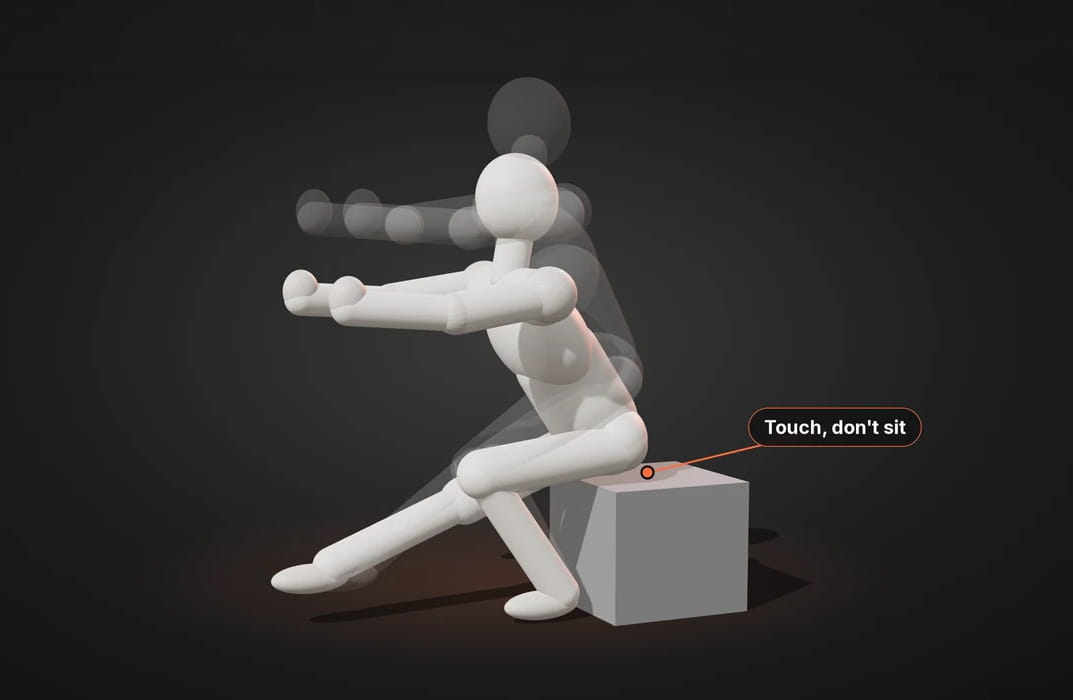
Use it when: You can balance on one leg, but lose control as you get closer to the floor.
How to do it:
- Place a sturdy box or bench behind you.
- Choose a height just above the point where you normally lose control.
- Lower on one leg until your glutes lightly touch the box.
- Do not sit down or shift your weight onto it.
- Stand back up on the same leg.
Focus on: Touching the box gently rather than dropping onto it. If you have to rock forward to get back up, use a higher box.
Once that height feels controlled, lower the box slightly. Dewar uses the same progressive box-height approach in his pistol squat progression.
Progress when: You can use a lower box without dropping onto it or rocking forward to stand.
3. Partial Pistol Squat
Use it when: You no longer need support, but cannot reach the bottom without losing control.
How to do it:
- Start a pistol squat without holding onto anything.
- Lower only as far as you can control.
- Stop before your heel lifts, your free foot touches down or you begin to fall.
- Stand back up from there.
- Gradually squat deeper as you get stronger.
Focus on: Making your controlled squat deeper, rather than forcing yourself all the way to the floor.
Progress when: You can go deeper without your heel lifting or your balance changing.
4. Pistol Squat Negative
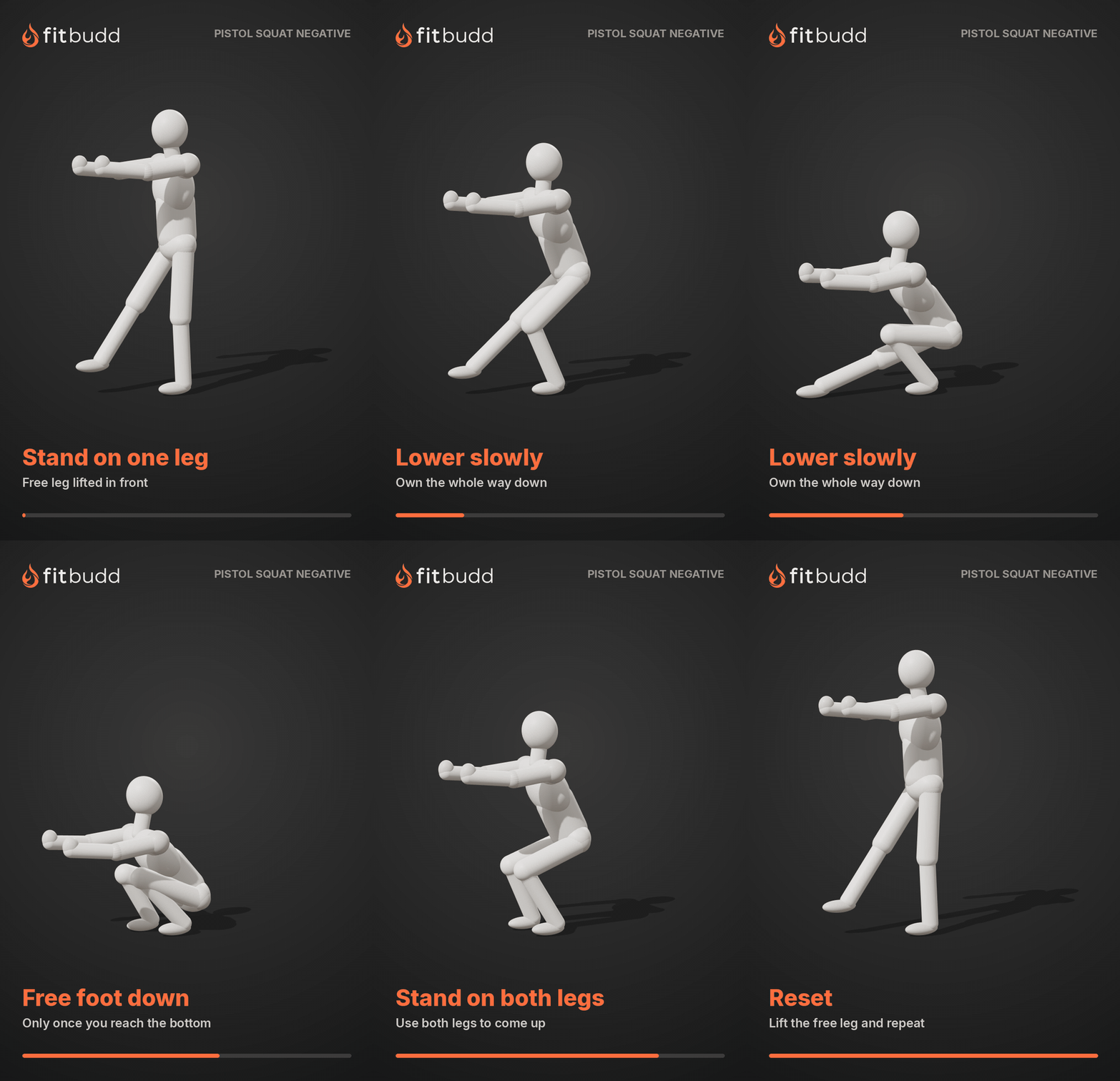
Use it when: You can lower yourself to the bottom but cannot stand back up.
How to do it:
- Stand on one leg with the other raised in front.
- Lower yourself slowly and stay in control for as long as possible.
- At the bottom, place your free foot on the floor.
- Use both legs to stand and reset.
Focus on: Owning the entire way down. If you suddenly drop near the bottom, stop slightly higher on the next rep.
You do not need to chase a specific lowering time. A slow rep is useful only if you can control it from top to bottom.
Progress when: You can lower all the way without dropping into the bottom.
5. Full Pistol Squat
Use it when: You can lower to full depth and stand back up without support, bouncing or putting your free foot down.
Once you get your first clean pistol squat, the goal changes. Instead of trying to get lower, you are trying to make that same rep repeatable by gradually increasing your training volume without sacrificing form.
Start with clean single reps. When those feel consistent on both sides, begin adding a second rep, then a third. Michael Perry of StrongFirst similarly recommends building from singles into doubles and short ladders rather than jumping straight into long sets.
Focus on: Making every rep look like the first. If the next rep requires a bounce, becomes shallower or ends with your free foot on the floor, stop the set there.
Progress when: You can add reps without losing depth, balance or control.
What Comes After a Full Pistol Squat?
Once you can perform controlled pistol squats on both legs, you do not need another progression simply for the sake of making the exercise harder.
What you do next depends on your goal. If you want to keep making the exercise more challenging, progressive overload can come from adding resistance, increasing reps or making each rep more demanding
Ready to Put It Into Practice?
You now know which pistol squat progression matches where you are.
The Pistol Squat Workout Plan turns that into a structured routine, with exercises, sets, reps and progression targets for your current level.
Choose your starting track. Follow the plan. Track your reps and move forward as your control improves.
%20to%20Become%20a%20Certified%20Personal%20Trainer-min.avif)