
The best gym and fitness club management software in 2026 depends on your facility type. FitBudd is the best fit for trainer-led gyms and hybrid coaching. Mindbody suits high-volume boutique studios. Zen Planner and PushPress suit CrossFit and functional fitness gyms. GymMaster suits 24/7 health clubs that need door access control. All five handle billing, scheduling and member management, but they differ sharply on member apps, marketing automation and price
If you’ve spent any time managing a gym, fitness studio, or health club, you’ve probably crossed paths with Club OS or Club Automation. They’ve been around the block. They do the job mostly. But “mostly” is a frustrating word when you’re trying to run a tight operation, retain members, and actually grow your business.
The truth is, many gym owners are quietly outgrowing these platforms. Maybe the interface feels dated. Maybe the mobile experience is an afterthought. Maybe you’re paying for features you don’t use while the ones you actually need are buried three menus deep or locked behind an enterprise tier.
Whatever your reason for looking around, you’re not alone, and you have real options. Gym management software helps streamline operations like billing, scheduling, attendance tracking, and member management, reducing administrative burdens and supporting business growth.
This guide breaks down the five best alternatives to Club OS and Club Automation for gym management, what each one does well, where they fall short, and how to figure out which one actually fits your business.
What Member Management Features Should I Look for in a Fitness Club Management Software?
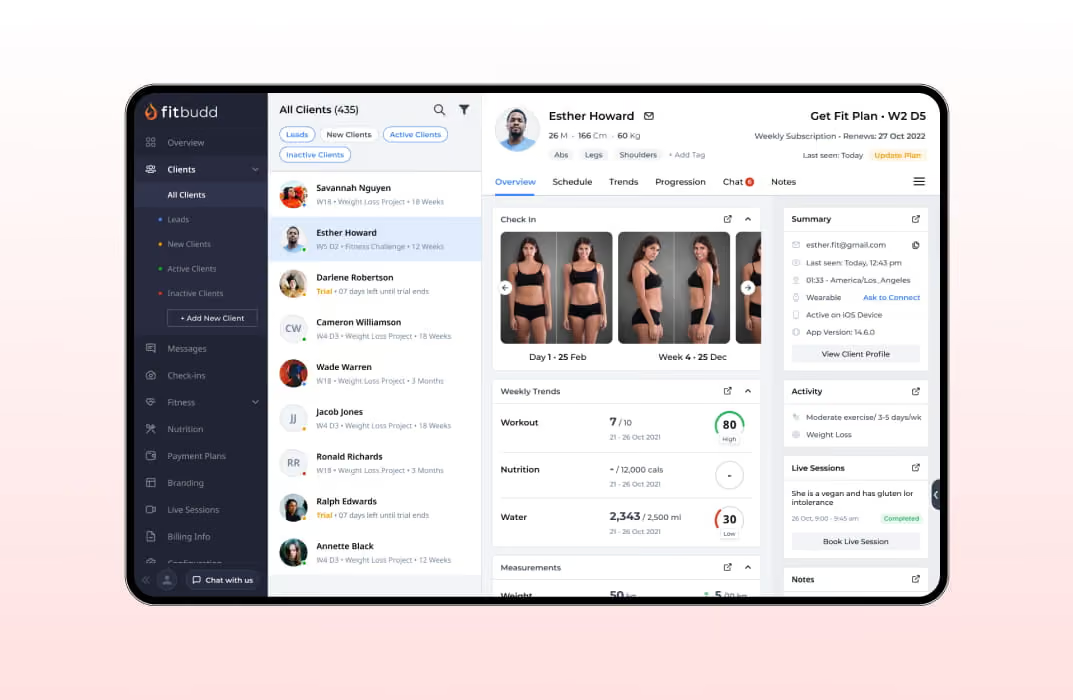
Before we get into the list, let’s be clear about what “good” actually means in this category. Not every gym needs the same thing, but there’s a baseline set of capabilities that any serious fitness facility software should cover:
- Member Management: You need a clean, searchable database of members with their billing history, attendance, health notes, and communication logs all in one place. Efficient management of sign-ups and member data is essential for smooth onboarding and ongoing engagement. Jumping between spreadsheets and software is a time tax you shouldn’t be paying in 2025.
- Billing and Payment Processing: Recurring billing, failed payment recovery, plan upgrades, refunds, all of it should be automated or nearly so. Reliable member billing, recurring payments, and overdue payments tracking are essential for automated, reliable revenue collection. Members should be able to pay online easily, reducing administrative workload and ensuring timely payments. Fitness center billing software that still requires manual intervention for basic renewals is a red flag.
- Scheduling and Class Management: Whether you run group classes, personal training sessions, or open gym time, your software should let members book classes themselves online and let staff manage capacity without a spreadsheet backup.
- Mobile Experience: Both for your staff and your members. If your health club software doesn’t have a solid mobile app, you’re essentially asking your front desk staff to be chained to a desktop and your members to call to book a class. A user-friendly user interface is crucial for both staff and members to ensure smooth navigation and satisfaction.
- Reporting and Analytics: Revenue trends, churn risk, class attendance, staff performance. The numbers you need to make decisions should be easy to pull, not something you export to Excel every Monday morning. The ability to track attendance is key for operational insights and optimizing schedules.
- Attendance Tracking: Monitoring class participation and attendance tracking helps optimize class schedules and improve operational efficiency.
- Lead and Sales Pipeline: This is where Club OS specifically positioned itself, CRM-style lead tracking for gyms. Not every gym needs a full sales pipeline, but if you run a larger facility or franchise, this matters. CRM tools are important for managing member relationships and automating engagement.
- Automation Tools: Automation tools streamline lead management, membership renewals, appointment reminders, and reporting, reducing manual work and improving operational efficiency.
- Member Retention: Tools that help reduce churn and keep members engaged are vital for long-term business growth and member satisfaction.
- Client Management: Comprehensive systems handle appointments, payments, and customer information, thereby improving operational efficiency.
- Workout Tracking & Fitness Tracking: Features that allow members and trainers to monitor and record workout data and progress are essential for personalized coaching and engagement.
- Nutrition Coaching: Integrated nutrition coaching supports a holistic wellness offering and enhances member results.
- Website Integration: Seamless integration enables online booking and scheduling directly from your gym’s website, providing a professional, convenient experience.
- Day-to-Day Operations: Effective gym manager software should streamline day-to-day operations by simplifying routine tasks such as scheduling, member management, billing, and operational oversight.
- Engage Members: Features that help members stay engaged, such as communication and community tools, are important for fostering ongoing involvement and motivation.
Now, with that baseline in mind, let’s look at how the alternatives stack up.
How Does Club Automation Streamline Gym Management?
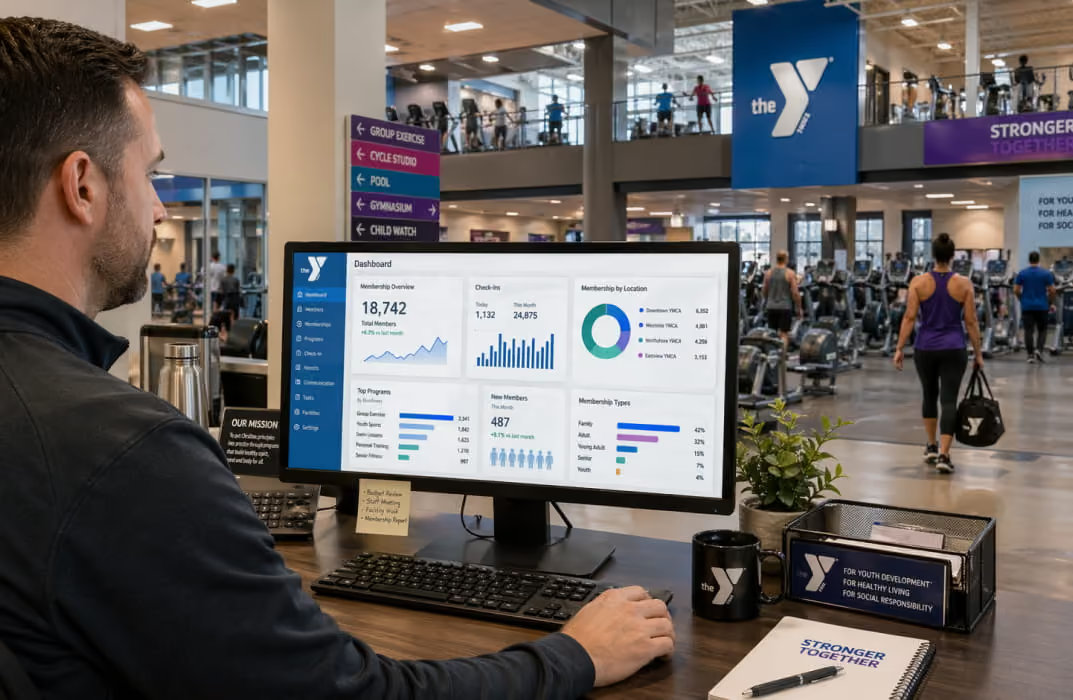
Club Automation (now part of the Daxko family) was built specifically for fitness facilities, YMCAs, JCCs, and multi-location clubs, with a strong focus on efficiently managing multiple locations. It handles membership management, facility access control, program registration, and billing under one roof.
Where it genuinely shines is in large, community-based facilities with complex program structures, such as aquatics, childcare, group fitness, and open gym running simultaneously. The reporting is solid, tracking key metrics like member attendance, and the access control integrations (door readers, turnstiles, and other access control systems) are more mature than most competitors.
But here’s where Club Automation runs into friction for a lot of operators:
- It’s not designed for smaller gyms or boutique studios. The feature set and pricing reflect enterprise-level expectations.
- The UI hasn’t kept pace with modern software design. Staff onboarding takes time, and the learning curve is steep. Having a responsive support team is crucial for smooth setup and troubleshooting.
- Mobile functionality is limited compared to newer mobile-first platforms.
- Customization is restricted if your business model doesn’t fit their template; you’re doing workarounds.
So if you’re not a YMCA or a multi-location facility with a dedicated admin team, you might be paying for more complexity than you need, and the user experience may not fully optimize the member journey for seamless interactions.
Club OS and Fitness Management Platforms- Why People Are Moving On
Club OS built its reputation as a CRM-first platform for gym sales teams. Lead tracking, automated follow-ups, and trial management it was genuinely useful for large-box gyms running aggressive membership sales campaigns.
But the fitness industry has changed. Boutique studios, personal training businesses, and hybrid (in-person/online) models have exploded. Club OS was designed for a world where getting someone to sign a 12-month contract was the finish line. Today, optimizing the entire member journey, from sign-up to ongoing engagement, is crucial. Retention, engagement, and digital experience matter just as much as the initial sale, with member retention now a key metric when evaluating gym manager software.
Common complaints from Club OS users include:
- Clunky integrations with class scheduling and billing tools
- Outdated interface that feels like software from a different era
- Limited mobile app functionality for both staff and members
- Pricing that doesn’t scale well for smaller or growing operators
- Support responsiveness that doesn’t match the cost
None of this means Club OS is a bad product for everyone. But if your priorities have shifted toward member experience, digital engagement, or running a leaner operation, it’s worth exploring what else is out there. When you switch gym software, consider how your previous software handled data and forms, and look for other platforms that make the transition seamless, especially those that support easy data migration and integration to avoid member data loss and ensure continuity.
The 5 Best Alternatives to Club OS and Club Automation
1. FitBudd
Best for: Personal trainers, coaches, and boutique gym owners who want a modern, mobile-first platform
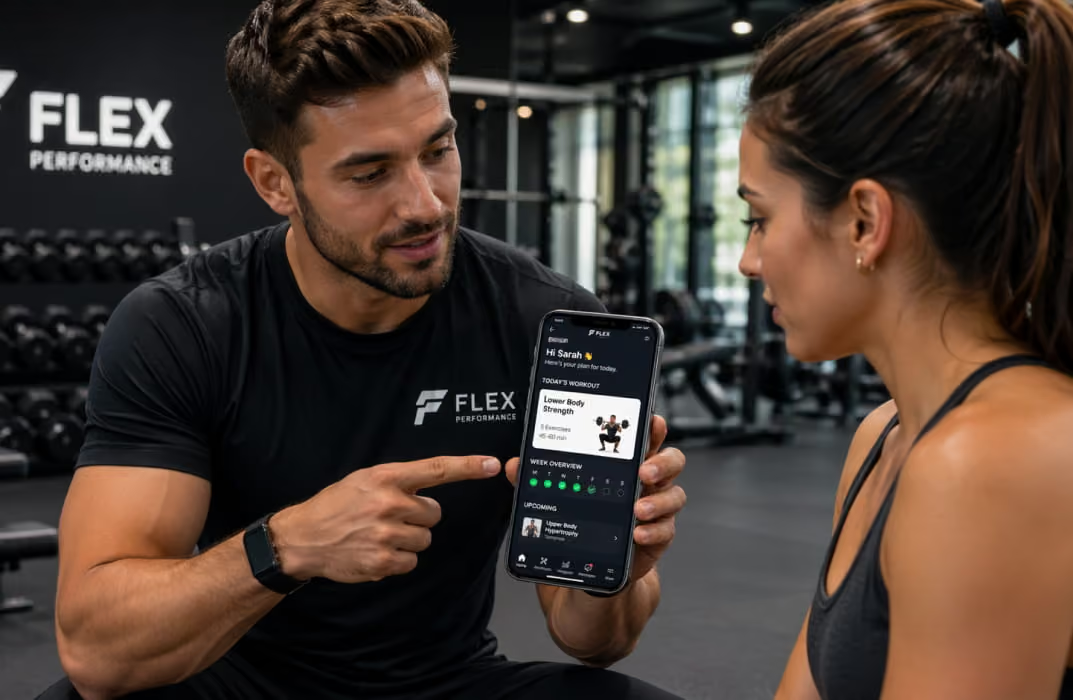
FitBudd takes a fundamentally different approach from legacy club administration software. Instead of building another back-office management tool, FitBudd was designed from the ground up as a mobile-first platform, meaning your members get branded apps with your name on them, enhancing your brand identity and member engagement, and you get a clean dashboard to run everything from.
What makes FitBudd genuinely different is the combination of business management and client experience in one place. You’re not stitching together a scheduling tool, a billing platform, and a separate app for workouts. It’s all connected.
Key features:
- Branded mobile app for your gym or coaching business (members see your brand, not FitBudd’s)
- Workout and program delivery built in, assign plans, workout tracking, track progress, communicate with clients
- Nutrition coaching features for holistic client wellness
- Scheduling, booking, and calendar management
- Billing and payment processing with recurring plan support
- Member engagement tools, check-ins, progress tracking, and in-app messaging to keep members engaged
- Automation tools for lead management, appointment reminders, membership renewals, and reporting
- Client management system for appointments, customer info, payments, and operational data
- Business analytics and reporting dashboard
- Works for both in-person and online/hybrid coaching models
Where FitBudd stands out vs. Club OS: Club OS was built for sales pipelines in large gyms. FitBudd is built for the full member lifecycle, from first contact to long-term retention, optimizing the member journey at every stage. If you’re a personal trainer, small gym owner, or boutique studio, you’re getting tools that were designed for you rather than adapted from an enterprise playbook.
Who it’s ideal for: Independent trainers, small-to-mid gym owners, online coaches, and anyone running a hybrid model who wants a polished, professional client experience without enterprise-level complexity or cost.
2. Mindbody
Best for: Established boutique studios and wellness businesses with high-class volume
Mindbody is probably the most well-known name in gym manager software and fitness facility software outside of the legacy club management category. It’s been around since 2001 and has an enormous user base across yoga studios, pilates, gyms, spas, and wellness centers. Mindbody is ideal for managing a wellness business or any type of fitness business, offering tailored solutions for different operational needs.
What it does well:
- Class scheduling and booking are genuinely excellent, and the consumer-facing booking experience is polished and familiar to members
- Online booking and the ability to book classes through the web or mobile make scheduling easy and convenient for members
- Streamlined member sign-ups and onboarding processes help automate new member registration
- Recurring payments are handled through automated billing, reducing admin work and ensuring reliable revenue collection
- Website integration allows seamless class booking directly from your studio’s website, providing a professional and secure experience
- Marketplace discovery (Mindbody’s consumer app) can drive new client traffic to your studio
- Robust reporting and revenue analytics
- Strong third-party integrations
- Payroll and staff management features
Where it falls short:
- Pricing is high, especially once you factor in add-ons like marketing tools or the branded app features
- The backend interface can be overwhelming, particularly for smaller operators
- Customer support quality has been inconsistent based on user reviews
- Mobile app for operators (not just clients) has room for improvement
vs. Club OS: Mindbody wins on scheduling and member-facing experience. Club OS wins on sales CRM features. If you’re not running an aggressive new-member sales operation, Mindbody is likely the stronger everyday tool.
Pricing: Starts around $139/month, scales up significantly with add-ons.
3. Zen Planner
Best for: CrossFit boxes, martial arts gyms, and functional fitness studios
Zen Planner has carved out a strong niche in the CrossFit and functional fitness world, and for good reason. It handles the specific rhythms of those communities, WOD tracking, athlete performance records, and belt/rank progression for martial arts better than most generic fitness center management software.
What it does well:
- WOD and performance tracking built in (a big deal for CrossFit and strength communities)
- Member attendance and the ability to track attendance for improved engagement and operational efficiency
- Secure handling of member data for operational continuity and smooth data migration
- Automated billing with solid failed-payment recovery tools
- Automation tools for email marketing and automated workflows to streamline processes
- Member self-service portal for booking and account management
- Client management for handling appointments and member information
- Belt/rank and skill tracking for martial arts schools
Where it falls short:
- The interface is functional but not modern; it feels like software that prioritizes utility over experience
- Mobile app is decent, but not a standout
- Doesn’t serve online or hybrid coaching models well
- Reporting is useful, but not as sophisticated as some competitors
vs. Club Automation: For smaller CrossFit boxes or martial arts schools, Zen Planner is significantly more accessible and appropriately scoped. Club Automation’s complexity is overkill unless you’re running a 50,000-square-foot multi-program facility.
Pricing: Around $99–$348/month, depending on member count.
4. PushPress
Best for: CrossFit affiliates and independent gyms that want clean, simple software
PushPress has a loyal following in the CrossFit community and has been growing steadily across independent gyms. It’s built around the idea that gym software should be simple, transparent, and actually pleasant to use, which sounds obvious but is apparently harder to pull off than it looks.
What it does well:
- Clean, modern user interface that staff actually enjoy using
- Strong member billing and payment automation, including recurring payments
- Automated reminders for memberships, renewals, and payments
- Member check-in app
- Lead management and automated follow-up sequences
- Integrations with popular tools (Wodify, Zapier, Mailchimp)
- Free plan available for very small gyms (with limited features)
Where it falls short:
- Class programming and workout delivery are limited; you’ll likely need Wodify or another tool alongside it
- Less suited for large multi-location facilities
- Advanced reporting requires the higher-tier plans
- Not ideal for online coaching or hybrid models
vs. Club OS: PushPress is a much cleaner, more modern day-to-day experience than Club OS. Club OS has more robust CRM and sales pipeline features, but PushPress wins on usability, supports a seamless member journey, and offers greater overall value for independent gym owners.
Pricing: Free plan available (with higher payment processing fees); Pro is $159/month and Max is $229/month. Marketing and CRM tools are a separate Grow add-on at $329/month.
5. GymMaster
Best for: 24/7 gyms, health clubs, and facilities that need access control integration
GymMaster is a solid, comprehensive option that has been quietly serving health clubs and fitness centers for years. It covers the full spectrum of club administration software needs , membership, billing, scheduling, access control , and has a reputation for reliable customer service.
What it does well:
- Access control systems for secure, automated check-ins (RFID, barcode, fingerprint)
- Door access and 24/7 facility management built in
- Secure management of member data, including data migration and privacy
- Efficiently managing multiple locations from a single platform
- Automated billing with multiple payment gateway options
- Member portal and mobile app
- Point-of-sale for merchandise and supplements
- Class and appointment scheduling
- Robust reporting suite
- Reliable support team for onboarding, integration, and troubleshooting
- Good value relative to its feature set
Where it falls short:
- The interface is dated, and it prioritizes function over form
- Mobile experience for members is passable but not impressive
- Marketing automation is basic compared to competitors
- Not ideal for online coaching or digital-first businesses
vs. Club Automation: GymMaster is a strong alternative if you need access control and 24/7 management without the enterprise price tag. Both serve similar facility types, but GymMaster is more accessible for independent operators.
Pricing: Starts around $65/month; scales with member count.
Side-by-Side Comparison
Best Fitness Club Billing Software
Good health club billing software should handle recurring memberships, retry failed payments automatically, and keep processing fees predictable.
- Zen Planner: Automated billing with strong failed-payment recovery, which matters most for gyms with large monthly memberships.
- PushPress: Clean recurring billing with automated payment reminders. Processing fees are noticeably higher on the free plan than on paid tiers.
- GymMaster: Supports multiple payment gateways and includes point-of-sale for merchandise and supplements, which suits health clubs with a retail counter.
- Mindbody: Automated recurring billing alongside payroll and staff management, built for studios with many instructors.
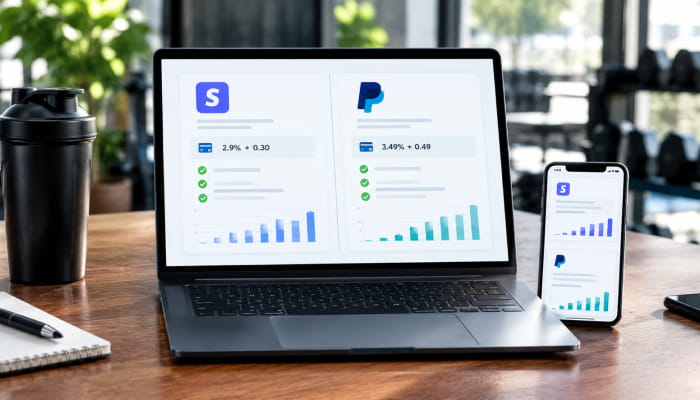
- FitBudd: Recurring plans billed directly through Stripe or PayPal with zero platform commission, plus personal training packages and memberships in the same system.
If failed payments are your biggest revenue leak, start with Zen Planner or PushPress. If you sell training packages alongside memberships, FitBudd keeps both in one place.
Best Gym Marketing Automation Software for Member Engagement
Gym marketing automation comes in two kinds. Acquisition automation turns leads into members. Engagement automation keeps existing members active so they don’t cancel. Most gym software is strong on the first and weak on the second.
- Club OS: The original CRM-first option, with automated lead follow-ups built for membership sales teams. It focuses on closing the sale more than on retention.
- PushPress: Automated lead follow-up sequences, with full marketing and CRM tools sold separately as its Grow add-on.
- Zen Planner: Email marketing and automated workflows for reminders and renewals.
- FitBudd: Engagement automation inside a branded member app: automated check-ins, renewal and appointment reminders, progress tracking and in-app messaging that keep members in contact with their coach between visits.
- GymMaster: Marketing automation is basic compared with the others.
If your problem is filling the top of the funnel, Club OS or PushPress Grow fits. If your problem is members drifting away after month three, prioritize engagement tools like FitBudd’s.
Best Online Scheduling Tools for Fitness Centers
- Mindbody: The most polished class booking experience. Its consumer marketplace can also send new clients to your studio.
- PushPress: Simple online class sign-up from your website, suited to independent gyms.
- Zen Planner: A member self-service portal for booking and account management.
- GymMaster: Class and appointment scheduling tied to door access, so bookings and check-ins match.
- FitBudd: Scheduling and booking inside your own branded app and website, alongside workouts and payments.
How to Choose the Right Alternative for Your Gym

There’s no single “best” platform; it depends on what your gym actually looks like day to day. Choosing the right gym management software is crucial for streamlining operations, integrating scheduling, billing, and member management, and ensuring your gym can scale efficiently while delivering a consistent member experience. Here’s a quick decision framework:
- Choose FitBudd if you’re a personal trainer, boutique gym owner, or running (or planning to run) any online or hybrid coaching. FitBudd supports fitness professionals with tools for managing multiple locations, a branded app, workout delivery features, and robust analytics to help you make smarter business decisions. The platform is designed to help coach-led businesses grow and operate efficiently.
- Choose Mindbody if you run a high-volume boutique studio (yoga, pilates, barre, cycling) or a wellness business and want the class booking experience your members already know and trust. Mindbody is tailored for wellness service providers, offering features that cater to the unique needs of wellness businesses.
- Choose Zen Planner if you run a CrossFit affiliate or martial arts school and need WOD tracking and belt/rank progression baked in. Zen Planner also supports fitness professionals with tools to manage classes, memberships, and client engagement.
- Choose PushPress if you want something clean, modern, and simple for an independent gym, and potentially start free while you’re growing.
- Choose GymMaster if you run a 24/7 facility or health club that needs door access control and a comprehensive back-office without enterprise-level pricing. GymMaster is ideal for managing multiple locations, offering centralized data management and operational efficiency across all your sites.
Final Thoughts
Club OS and Club Automation aren't bad products. They built real businesses by solving real problems in the fitness industry. But software needs to grow with the industry, and the fitness world has changed considerably, with more boutique studios, more hybrid models, more members who expect a polished digital experience.
If either platform is leaving you frustrated, understaffed for the features you're actually using, or just feeling like your software is working against you rather than for you, this is a good time to look around.
The five platforms above represent genuinely different approaches to gym management. Take a few demos, map the features to your actual workflow, and don't be afraid to switch. Your software should be the easiest part of running your gym.