

You run a studio clients love, but your tech stack feels stitched together: a generic booking app, a separate coaching tool, and your brand barely shows up anywhere. Clients log into “someone else’s” app instead of your own, and it quietly weakens your brand every single day.
A true white label gym app fixes that by putting your studio’s name, logo, and colors on the iOS and Android stores, with all the coaching, booking, and payments built in. You get native apps that look like you built them from scratch, without sinking months and tens of thousands into custom development.
This guide ranks the best white label gym apps for studio owners, compares customization options, and shows which platforms work best for hybrid, yoga, and Pilates businesses.
What "White Label" Actually Means for a Gym or Studio
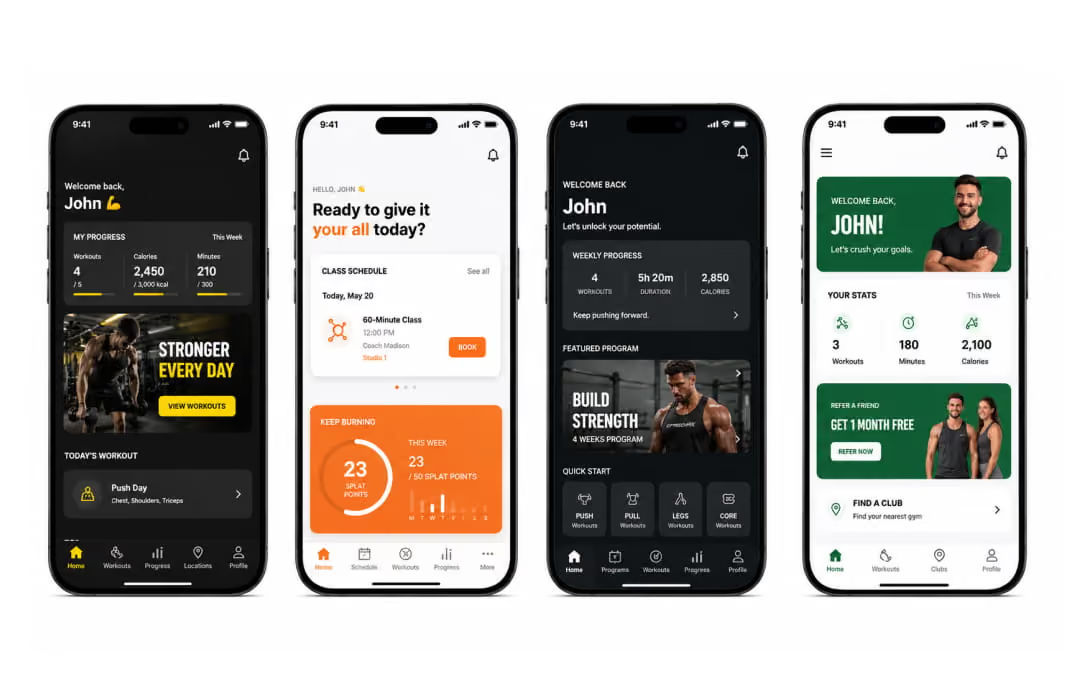
Before comparing platforms, you need to know what you're comparing. The term gets used loosely, and it matters.
Full white label
Your studio name appears in the App Store and Google Play as the publisher. Clients search for your business name, find your app, and download it. The platform powering it is invisible.
Branded app (partial)
Your logo and colors appear inside the platform's existing app. The store listing still shows the software company's name. Clients download "Platform X" and see your branding after login.
Custom-built app
Built from scratch for your studio. Maximum flexibility. Costs $50,000 to $300,000 and takes 20–40 weeks to develop, according to industry estimates.
Most platforms offer the second option and market it as the first. The difference shows up in the App Store listing, and it shapes how clients perceive your business from the moment they search for you.
For studio owners, the brand experience starts before your client walks through the door. An app that carries your name from the store listing to the workout log reinforces that you're running a professional operation, not just coaching through borrowed software.
Related reading: White Label Fitness App Customization Guide covers the full spectrum of what's actually customizable across platforms.
How does this ranking compares white label gym apps?

Every platform in this list is evaluated on the same five criteria. The scores reflect studio-specific needs, not general personal trainer use cases.
1. Branding depth
Does your name appear in the App Store? Can you control colors, icons, and the splash screen? Or is it just a logo inside someone else's app?
2. Studio operations
Class scheduling, QR check-in, multi-trainer logins, and capacity management. These are the day-to-day mechanics that matter to a physical location.
3. Online/hybrid delivery
On-demand content, 1:1 video calls, async workout delivery, and progress tracking for clients who aren't in the studio every session.
4. Pricing transparency
What does the platform actually cost at 20 clients? At 50? At 100? Are the features you need included, or are they add-ons?
5. Fit by studio type
How well does the platform serve the specific context (boutique gym, yoga/pilates studio, hybrid training business)?
Rankings for White Label Gym Apps for Studio Owners
1. FitBudd
.avif)
Best for: Coach-first boutique studios, hybrid training businesses, yoga/pilates studios scaling beyond solo operation
White label depth: Fully enter your name in App Store and Google Play under your developer account (Super Pro and above)
FitBudd's pricing starts at $15/month (Starter, up to 2 clients) and moves through Pro ($79/month, 20 clients, custom theming and branded website) and Super Pro ($149/month, fully white labeled iOS and Android app, Apple Pay and Google Pay, direct in-app sign-ups).
The Elite Studio plan is custom-priced for businesses managing 100+ clients and adds group classes, QR check-in, multi-location access, admin and coach logins, Mindbody integration, challenges and leaderboards, and dedicated account management.
Branding depth: Logo, custom colors, app icon, and store listing under your name (Super Pro+). The Pro plan adds custom theming and a branded website but keeps the FitBudd app store listing.
Studio operations: Group class scheduling, QR check-in, and multi-location access are all available at the Elite Studio tier. Appointments, team logins, and on-demand video library are available as add-ons ($50/month each) on Pro and Super Pro, and included in Elite.
Online/hybrid delivery: Workout delivery with follow-along video, async client messaging, 1:1 video calls, nutrition planning, wearable integration, Smart Flow automation for client communications. The platform handles both in-person and online clients from a single dashboard.
Honest limitations: Full white label requires your own Apple Developer ($99/year) and Google Developer ($25 one-time) accounts. Group classes and QR check-in aren't available below the Elite tier. Studios with very complex booking workflows (e.g., spot booking for spin classes with specific bike assignments) may find the class management less granular than dedicated booking-first platforms.
Pricing at a glance (monthly billing):
One-time setup: $75 (Super Pro), $100 (Elite). Annual billing saves roughly two months vs. monthly rates.
See full plan breakdown: FitBudd Pricing
2. ABC Trainerize
Best for: Online-first coaches adding studio elements; studios with large client rosters who need deep wearable integrations
White label depth: Partial to full, depending on tier logo theming available at lower tiers; full App Store listing requires top-tier branded app plan and a registered business
ABC Trainerize (owned by ABC Fitness since 2023) offers three levels of branded apps: light customization (logo, in-app branding), a mid-tier with more visual control, and a full white-label with an App Store listing. The top branded app tier carries a $169 setup fee and additional monthly charges. Nutrition coaching is a $45/month add-on at most tiers.
Branding depth: Light, mid, or full, depending on plan. At the highest tier: custom icon, colors, and store listing. At lower tiers: your logo inside Trainerize's app.
Studio operations: Studio plans include class scheduling, capacity management, and staff management. The platform integrates with a wide ecosystem, including Garmin, Fitbit, Withings, Apple Health, and MyFitnessPal the broadest wearable integration set in this comparison.
Online/hybrid delivery: Workout delivery, nutrition (add-on), habit tracking, messaging, check-ins. Designed primarily for 1:1 coaching, with group/studio features added on top.
Honest limitations: The platform was built for personal trainers and adapted for studios. Studio-specific features feel less native than on platforms purpose-built for class-based businesses. Nutrition as an add-on adds to the total monthly cost for studios where it's essential. A full white-label requires meeting business registration requirements.
Pricing: Starts free for up to 2 clients. Paid tiers from $9/month (Grow) to $275/month (Studio Large). The branded app is a separate cost on top of plan pricing. Always verify current pricing directly with Trainerize, as tiers change.
Also, read Best Trainerize Alternative
3. Virtuagym
Best for: Mid-to-large gyms and health clubs that need full operational software alongside digital coaching
White label depth: Full member-facing app published under your brand name, with custom logo, colors, and icons
Virtuagym was founded in Amsterdam in 2008 and now serves 9,000+ fitness businesses across 80 countries. Its white label gym app is backed by a 4,000+ exercise library with 3D animated demonstrations, recurring billing, contract management, and door access integration. The platform is genuinely built for club operations, not adapted from a personal trainer tool.
Branding depth: Strong. App icon, name, colors, and store listing are all customizable. The member app experience is fully branded.
Studio operations: Class scheduling, membership management, payment processing, door access control, POS for retail, and business analytics. This is where Virtuagym has an edge over more coach-centric platforms.
Online/hybrid delivery: Digital coaching, nutrition module, workout assignment, and progress tracking are available. Less focused on on-demand content monetization than platforms built for online coaches.
Honest limitations: Pricing is not published publicly and typically requires a sales call. Reviews on G2 and Capterra consistently mention customer support as a friction point (slow response times, frequent staff changes). The platform can feel over-specified for small boutique studios. The operational depth is designed for clubs managing 200+ members, not a 30-person yoga studio. The entry point is typically $120–$150/month for small studios, with mid-size clubs landing at $300–$600/month, according to user reports.
Best fit: Studios that have outgrown boutique-scale software and need operational infrastructure (door access, POS, contract management) alongside digital coaching.
4. ABC Glofox
Best for: Single-location boutique studios in the ABC Fitness ecosystem; studios where marketplace discovery matters
White label depth: Partial to full branded member app with logo and colors; full App Store ownership depends on tier
ABC Glofox (also acquired by ABC Fitness in 2023, sister product to Trainerize and Mindbody) focuses on boutique studio management: class scheduling, membership billing, member engagement, and a branded app experience. The consumer-facing Mindbody marketplace, shared across the ABC ecosystem, is a genuine differentiator for studios trying to attract new members passively.
Branding depth: Branded member app with your logo and colors. App Store listing details vary by tier; pricing is not publicly listed and requires a demo.
Studio operations: Strong class scheduling, waitlist management, membership plan management, push notifications, and automated communications. Built specifically for group-class studios.
Online/hybrid delivery: More limited than platforms built for online coaching. On-demand content and individual programming are less developed features. Better suited for studios where most delivery is in-person, class-based.
Honest limitations: Pricing ranges roughly $80–$600+/month per location based on user reports (not publicly published). Long-term contract commitments have been flagged in reviews. Studios with significant 1:1 personal training alongside group classes may find the PT-side feature set less mature.
Best fit: Class-based boutique studios (cycling, yoga, barre) that want marketplace exposure and strong booking-side infrastructure.
Related Reading: FitBudd vs Glofox Pricing
5. Everfit
Best for: Coaching-heavy studios, S&C facilities, programming-focused boutique gyms
White label depth: Partial to full white label app available from Pro tier; App Store listing included
Everfit's white label app is available from its Pro plan, which makes it one of the more accessible entry points for branded apps in this comparison. The platform's standout feature is its AI-powered workout builder, which generates programming based on client goals, experience level, and available equipment. Community features (group challenges, leaderboards) and habit tracking are also strong.
Branding depth: App icon, colors, and store listing are customizable. White label is included with Pro, not gated to enterprise tiers.
Studio operations: Class scheduling and studio management features are less developed than platforms purpose-built for class-based businesses. Everfit works better as a platform for software delivery and client management than as a full studio operations tool.
Online/hybrid delivery: Strong. Workout delivery, progress tracking, habit coaching, nutrition (add-on), video messaging, automated workflows, and community features. The AI workout builder sets it apart from competitors in this area.
Honest limitations: Add-on pricing adds up quickly. Nutrition costs an extra $33–$39/month. Automation is $24/month. Payments are $8/month. A fully featured stack at 50 clients lands around $125–$150/month, higher than headline plan pricing suggests. Some users report bugs in the messaging system and a high number of clicks required to navigate client workouts.
Pricing (annual billing, approximate): Free for 5 clients; Pro from $19/month for small rosters; $63/month at ~25 clients; $79/month at 50 clients; $117/month at 100 clients before add-ons.
Related Reading: Best Everfit Alternative
6. My PT Hub
Best for: Budget-conscious studios and solo trainers prioritizing cost per feature over operational depth
White label depth: Partial to full, depending on tier white label app available at the ultimate tier or as a separate purchase
My PT Hub is UK-based, used by 130,000+ trainers, and built around flat per-trainer pricing with unlimited clients on all paid tiers. That unlimited-client pricing structure is the platform's sharpest selling point for studios with large rosters.
Branding depth: The branded app is available on the Ultimate plan or as a $95 one-time add-on (Custom Branded App). Full white label is $225/month on top of a Premium plan. Users have noted that at lower tiers, the app doesn't appear under your brand in the App Store.
Studio operations: Workout programming, client management, check-ins, and basic scheduling. Less studio-focused than Glofox or Virtuagym for class-based operations.
Online/hybrid delivery: Workout delivery, nutrition tracking (basic), progress tracking, messaging, and resource sharing. The exercise library (8,000+ videos) is one of the strongest in this comparison.
Honest limitations: The interface is frequently cited in reviews as cluttered and slow. The white label option's App Store presence at lower tiers is inconsistent. Studios that need robust class scheduling and studio operations tools will find gaps.
Pricing (approximate): Starter ~$22.50/month, Premium ~$19.50/month (annual), Ultimate ~$135/month with branded app included. Always verify current pricing at their own website.
Ranking white label gym apps by customization depth
Here is a high‑level view of how different platforms stack up on branding and customization, based on their current white label offerings and public comparisons.
*Always double‑check the vendor site for updated pricing and white label terms.
How to Match Your Studio Type to the Right Platform
Not every studio has the same needs. Here's a direct mapping based on the most common studio models.
Boutique Gym or Personal Training Studio (Under 50 Clients)
Your priority is a professional, branded app without enterprise pricing or overly complex setup. You need workout delivery, progress tracking, client communication, and, ideally, some automation so you don't have to manually send check-ins.
Platforms that fit well: FitBudd Super Pro, Everfit Pro. Both offer white label at accessible price points without requiring a sales call to see pricing.
What to watch: Add-ons. Both platforms have a lower headline price that climbs once you add nutrition, automation, or booking features separately.
Yoga and Pilates Studios
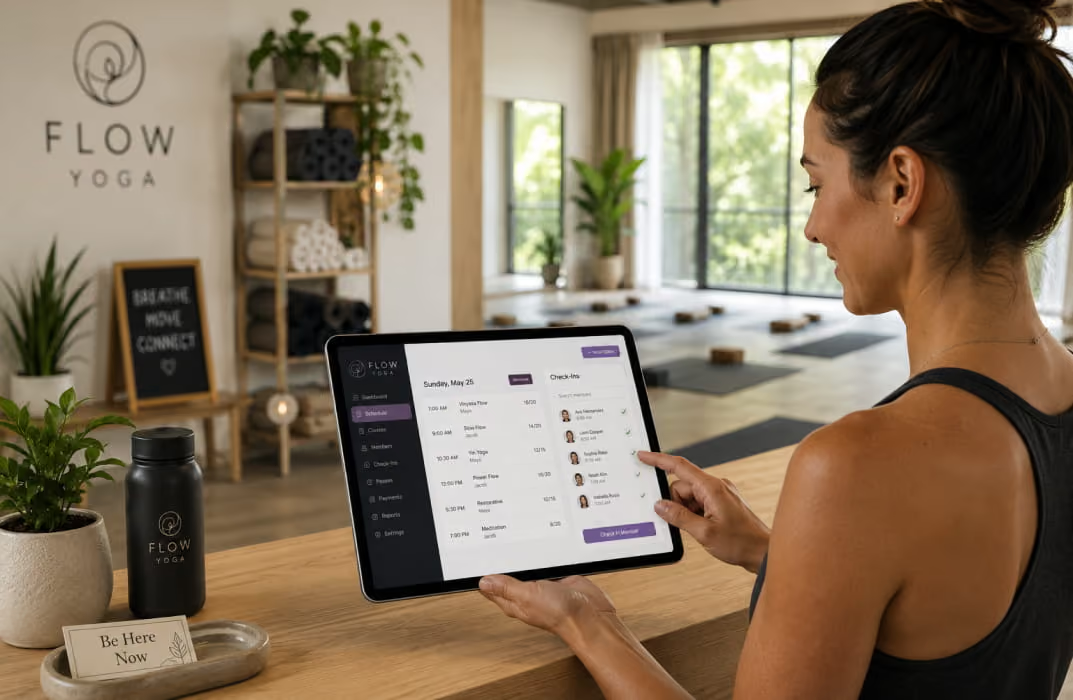
Your needs differ from those of a weight-room gym. The aesthetic matters. Flexible membership types (single sessions, class packs, and monthly) and class scheduling with simple check-in are baseline requirements. On-demand video for members who miss live sessions is increasingly expected.
What to look for in a white label fitness studio app for yoga/pilates: Custom color palette that isn't locked to "gym red and black," class scheduling with capacity control, flexible pricing structures, and a client-facing experience that matches the calm, intentional aesthetic of your studio.
Platforms that fit well: FitBudd (full customization of colors and aesthetic, class scheduling at the Elite tier), ABC Glofox (strong class scheduling and boutique-studio focus).
What to watch: Neither platform was built specifically for yoga. Test the client-side app experience thoroughly before committing the booking flow, and notification behavior should feel appropriate for a mindful movement studio, not a HIIT gym.
See how the platform handles yoga-specific workflows: FitBudd for Yoga Studios
Hybrid Training Businesses
You run in-person sessions and deliver programming online simultaneously. The challenge is that most platforms were optimized for one or the other, and the friction shows up in the client experience.
Specifically: a client who trains with you on Tuesday morning should seamlessly follow their week's programming through your app, receive a check-in nudge on Thursday, and book their next in-person session all inside one branded environment.
What to look for in a custom gym management app for hybrid businesses: Unified client profile, in-studio booking alongside online workout delivery, a coach-side dashboard that shows both, and automation that bridges the two.
Platforms that fit well: FitBudd (single dashboard for in-person and online delivery, Smart Flow automation), ABC Trainerize (strong online delivery with wearable integration, studio features added on top).
What to watch: Check whether the platform's in-studio and online features are genuinely integrated or just two separate modules running side by side. The former gives you real visibility. The latter gives you two management problems.
Read how gym CRM capabilities tie hybrid delivery together: FitBudd Gym CRM Software
Growing Studios (50–200 Clients, Multi-Trainer)
You're past the solo-operator stage. You have staff to manage, a mix of 1:1 and group formats, and you need software that scales without creating new admin overhead.
What to look for: Multi-trainer logins with role-based permissions, group class scheduling, multi-location access if applicable, client migration support, and business analytics that give you visibility across your whole operation.
Platforms that fit well: Virtuagym (deep club operations, door access, POS), FitBudd Elite Studio (multi-trainer, multi-location, dedicated account management), ABC Glofox (boutique studio focus with strong class-side infrastructure).
What to watch: Virtuagym's pricing and support experience have been consistent friction points in user reviews. ABC Glofox's pricing is undisclosed and requires a demo. Factor in the total onboarding and migration costs, not just the monthly subscription.
Watch how to set up a branded studio app before committing to a platform:
The Real Cost Calculation: What You're Actually Paying
Monthly subscription numbers are entry points, not final prices. Here's what studio owners frequently miss when evaluating a white label gym app.
- Developer account fees
Full white label requires your own Apple Developer account ($99/year) and Google Play Developer account ($25 one-time). Platforms that publish under their own developer accounts keep their name in the store, not yours.
- Setup fees
These vary: FitBudd charges $75 one-time (Super Pro) or $100 (Elite). Trainerize charges $169 for its top-tier branded app. My PT Hub charges $95 for a custom-branded app or $225/month for a full white label.
- Add-on stacking
Nutrition, automation, booking management, team logins, and on-demand content are almost always add-ons below enterprise tiers. At Everfit, nutrition costs $33–$39/month, automation costs $24/month, and payments cost $8/month. At FitBudd: Appointments, Team, and On-Demand each add $50/month to Pro and Super Pro.
- Per-client overages
FitBudd charges $2 per client per month for any usage above plan limits. Trainerize scales by per-client count at higher tiers. Know your current client count and your 12-month projection before committing.
- Migration costs
Moving an existing client database to a new platform takes time and sometimes money. Some platforms include client migration support at higher tiers; others don't offer it at all. Factor this in if you're switching from an existing system.
- Contract length
Some platforms (Mindbody is the most frequently cited example in reviews) operate on 24-month contracts. Month-to-month flexibility has real value when your studio's needs are still changing.
The actual monthly cost for a fully featured white label gym app with 30–50 clients typically lands between $150 and $300/month across most platforms, once add-ons are included. That's still a fraction of the cost of custom app development, but it's meaningfully different from headline pricing.
A Practical Checklist Before You Sign Up
Use these questions before committing to any branded gym app:
1. Whose name is in the App Store?
Ask the sales rep to show you a live example of a current customer's app as it appears in the store. If they can't produce one in under a minute, that's the answer.
2. What happens when the platform releases updates?
Who manages app store resubmission? What's the typical turnaround from update release to your branded version going live?
3. Can you see the full client journey?
Sign up as a test client. Go through onboarding, book a class, and complete a workout. Does it feel like your brand or like a software product someone re-skinned?
4. What's the exit path?
Can you export your full client database? Is there a minimum notice period to cancel? Are there penalties for switching?
5. What's locked vs. flexible?
Every platform has elements you can't change. Ask specifically what you cannot customize; the answers are more useful than the sales brochure.
6. What's the support model?
Email-only at entry plans is fine when things work. When a client can't log in before a Monday class, response time matters.
Final Thoughts
The fitness app market is growing fast. Grand View Research estimates it will reach $33.58 billion by 2033, up from $12.12 billion in 2025. Studio owners who build their brand on a generic platform are building someone else's recognition every time a client opens their phone.
A white label gym app is infrastructure, not just software. The right platform handles your studio's day-to-day operations while keeping your brand visible at every client touchpoint. The wrong one adds admin overhead and locks you into someone else's ecosystem.
No single platform is the right answer for every studio type. The rankings above give you a consistent framework to evaluate your options and match the platform to how your studio actually operates, not how the sales pitch describes it.
For studios running both in-person and online delivery without enterprise complexity, read this FitBudd for Gym Studios
For a broader view of how the personal trainer software market fits into this decision: FitBudd Personal Trainer Software.










.jpg)