


The best home workout programs for weight loss share three inputs regardless of format, price, or platform:
- A program with progression
- 4 to 5 training days per week
- A calorie deficit
Every at home weight loss workout format, from free YouTube to a trainer-built online workout program for weight loss, follows the same three principles. The picks below cover every budget. Each one earned its place on structure, not production quality.
What are the best home workout programs for weight loss?
The best home workout programs for weight loss fall into three tiers by price and support level:
- Free YouTube programs
Caroline Girvan's Iron series and Nourish Move Love's trimester-free weekly calendars deliver structured strength and cardio blocks at no cost and with no equipment beyond dumbbells.
- Workout apps
Nike Training Club is free with no paid tier, Apple Fitness+ costs $9.99 per month (Apple, 2026), and Peloton App One costs $12.99 per month (Peloton, 2026) after its free tier was discontinued.
- Trainer-built online programs
A coach builds the plan around your equipment and schedule, checks in weekly, and adjusts as you lose weight. This tier costs the most and produces the highest adherence.
Choose based on support requirements, not on content library size. People who quit programs need accountability, not more videos.
How the Three Tiers Compare
What makes a home workout plan for weight loss work?
A home workout plan for weight loss works when it pairs a calorie deficit with enough weekly activity to protect muscle. The Physical Activity Guidelines for Americans set the target at 150 to 300 minutes of moderate activity per week, with greater weight-loss benefits beyond 300 minutes.
Strength training is the half that most at-home weight loss workout plans skip. Two to three resistance sessions per week preserve muscle while calorie intake drops, keeping metabolism higher than with cardio-only plans.
What does a weekly at-home weight loss workout schedule look like?
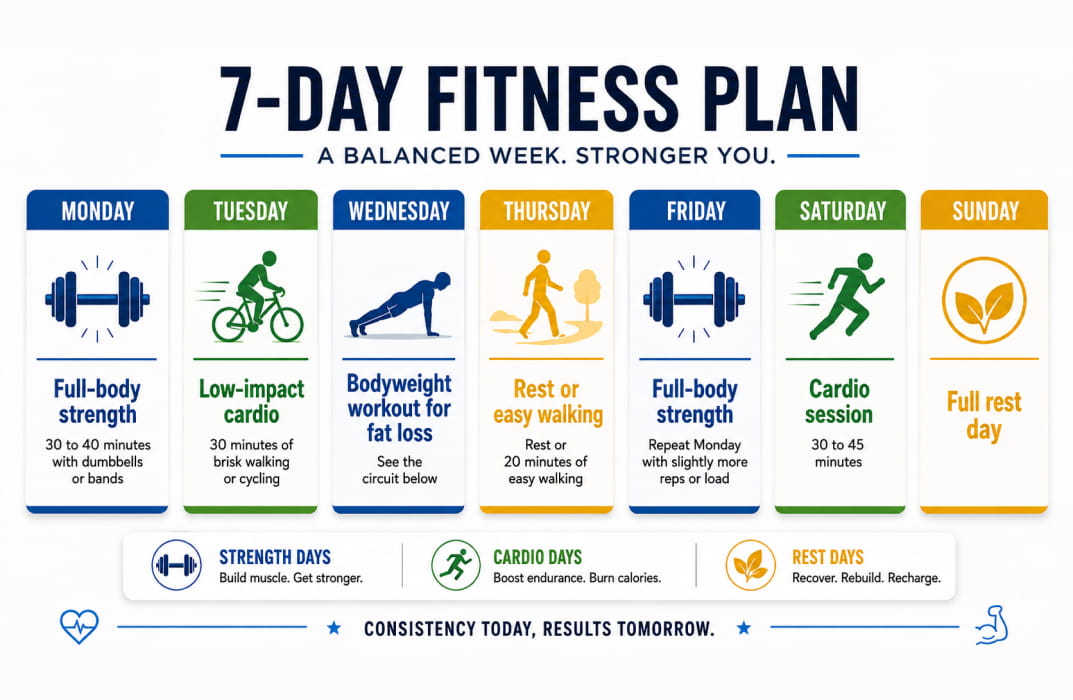
An effective at home weight loss workout week alternates strength and cardio:
- Monday: Full-body strength, 30 to 40 minutes with dumbbells or bands
- Tuesday: Low-impact cardio, 30 minutes of brisk walking or cycling
- Wednesday: Bodyweight workout for fat loss (see the circuit below)
- Thursday: Rest or 20 minutes of easy walking
- Friday: Full-body strength, repeating Monday with slightly more reps or load
- Weekend: One 30 to 45 minute cardio session, one full rest day
Progress by adding reps, load, or a round each week. Trainers formalizing this for clients can start from these workout plan template samples.
Trainers building online programs around home workouts can use this schedule as a template. The structure above is not new. What makes it sellable is the layer on top: a coach who checks whether the client followed it, adjusts load when life gets in the way, and holds the plan across 12 weeks rather than one.
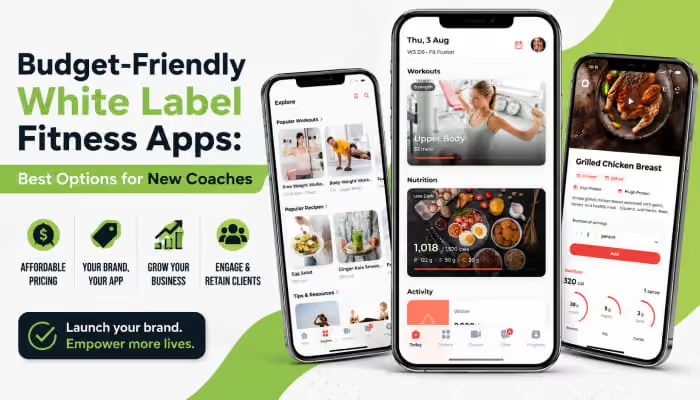
FitBudd helps coaches deliver this schedule with video demos, track weekly completion, and run check-ins from one app their clients open daily.
Wednesday Bodyweight Workout for Fat Loss: Sample Circuit
This bodyweight workout for fat loss requires no equipment and takes approximately 25 minutes.
Complete 3 rounds with 60 seconds of rest between each round.
Progress to 4 rounds once 3 rounds feels manageable without form breakdown. This circuit can be repeated on any rest day when full sessions are not scheduled.
Can you lose weight with a free home workout plan?
Yes. A free home workout plan produces the same fat loss as a paid one when it includes progression and you pair it with a food deficit, because the workout is the smaller half of the equation. The free tier fails on accountability, not content.
A community thread for people training at home without gym access asked which workout programs had actually worked long-term. The top-voted answers named consistency and having someone to check in with as the deciding factors, not which specific program they chose.
This is what the research confirms. According to the 90-Day Dropout Report, supervised exercise adherence holds at 72% during an active coaching relationship and drops to 43% in the six months after supervision ends. Exercise habits also take an average of 66 days to become automatic, which means the first two months of any program decide whether it becomes a lasting behavior or another abandoned plan.
Coaches serving this audience can package answers using this guide to create free workout plans for clients.
How do trainers turn home workouts into an online workout program for weight loss?
Trainers convert home workouts into an online workout program for weight loss by adding what free YouTube programs cannot: accountability. Weekly check-ins, progress photos, habit targets, and load adjustments turn a static plan into a service clients pay for and finish.
Reports show that habit formation for structured exercise takes an average of 66 days. A trainer who holds a client through that window is not just delivering a workout. They are building the behavioral infrastructure that makes results permanent.
Free content is your competition and accountability is your edge over it. FitBudd lets coaches deliver home workout programs with video demos, track weekly completion, and run check-ins from one app their clients open daily. Book a demo to see how it works.












-1.avif)