
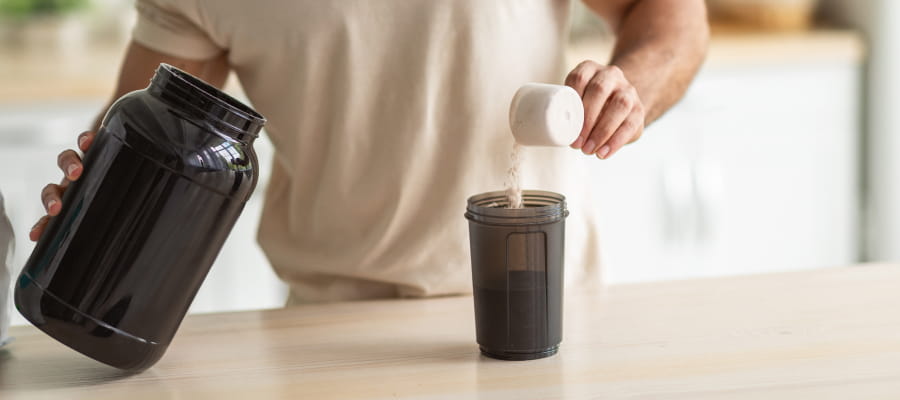

The best protein powder for most trainers to recommend is the one that's actually been lab-tested for what's inside the tub, beyond whatever the label promises. Protein powder is a food product first and a supplement second, so pick it the way you'd pick food: check ingredient quality and testing before you check the marketing. The most common recommendation trainers give is a whey isolate with third-party certification, swapped for a pea-and-rice blend when dairy is off the table. The sections below cover the types, the whey-versus-plant evidence, and a checklist for buying one.
What is the best protein powder?
A third-party-tested protein powder is the best protein powder for most people. Whey isolate delivers a complete amino acid profile, 25 to 27 grams of protein per scoop with minimal lactose, and the strongest absorption evidence of any protein type. NSF Certified for Sport screens for banned athletic substances, and Informed Choice focuses on label accuracy and contaminant limits. Either certification clears the bar for a client asking whether a product is safe.
The best powder is also the one that meets your dietary needs. Vegans need a plant blend, people with dairy sensitivity beyond lactose need egg or plant options, and anyone training early morning benefits from a fast-mixing isolate over a thicker concentrate. The types below cover those details.
Types of Protein Powder: Whey, Casein, Plant, and More
The main types of protein powder, split by source, are whey concentrate, whey isolate, casein, egg white, and plant proteins from pea, rice, soy, and hemp. GoodRx groups them by digestion speed and completeness. Whey digests quickly, casein digests slowly, and single-plant sources need blending to become complete.
Soy stands out on the plant side because it's the one single plant source that forms a complete protein on its own. Hemp brings a solid omega-3 profile but a lower protein-per-scoop count than whey or soy, which is why most plant blends lean on pea and rice instead.
Match the type to the job: use whey after training, casein before bed for a slower release, and a pea-plus-rice blend as the plant-based equivalent of whey when dairy is off the table. Coaches who field these questions from clients can structure their answers with this nutrition coaching guide.
Here's how the main types stack up side by side:
Whey protein vs plant protein: which one wins?
Whey wins on protein quality and purity, while plant blends win on dietary fit. In Consumer Reports' testing of 23 protein products, plant-based powders averaged nine times more lead than dairy-based powders, and about 70% of all products exceeded CR's daily level of concern for lead. Dairy powders came out cleanest, which further supports the whey isolate recommendation.
Context keeps this from becoming panic: the flagged products still sat below the FDA's maximum daily exposure levels. The practical takeaway is to buy certified products, favor dairy sources where diet allows, and rotate rather than triple-scoop any single plant powder daily.
California is moving to make this easier to verify. Senate Bill 1033 would require protein powder makers to test for heavy metals and publicly disclose the results, and it cleared a state Senate committee in March 2026. Until it becomes law nationwide, third-party certification is still your best proxy for a clean tub.
What is the best protein powder for muscle gain?
The best protein powder for muscle gain is one that delivers 20 to 40 grams of protein and 2 to 3 grams of leucine per serving, which whey isolate hits in one scoop, though how many servings you need depends on the daily target a protein intake calculator sets. Leucine is the amino acid that triggers muscle protein synthesis, and whey carries more of it per gram than any plant source. The powder only works alongside a structured workout plan that provides the training stimulus the protein supports.
Mass gainers are the exception, not the default. Healthline positions them for people who cannot consume enough calories to gain weight, since a single serving can pack 700 to 1,200 calories. Checking your intake against a TDEE calculator shows which camp you fall into: hard gainers benefit; everyone else gains fat.
How should beginners choose a protein powder?
Protein powder for beginners comes down to a four-point check, which doubles as a protein supplement guide for anyone:
- Third-party certification: NSF Certified for Sport or Informed Choice on the label.
- Protein per serving: 20 grams minimum, with protein making up at least 80% of the scoop weight.
- Short ingredient list: Protein, flavor, sweetener. Skip proprietary blends that hide dosages.
- Food first: The Cleveland Clinic frames powders as a gap filler after whole-food protein, not a replacement for it.
Beginners ask this exact question in public every week. A thread on Reddit opens with the question "What's the best protein powder 2026...", and answers pile up because label reading is a skill nobody teaches. That is how to choose protein powder without a coach; with one, the four checks above become a two-minute conversation.
How can trainers guide clients on protein supplements?
Trainers guide protein choices best by teaching the checklist rather than prescribing brands. Recommending certified categories keeps you within scope while still answering the question every client asks, following the boundaries covered in the dos and don'ts of nutrition coaching.
Supplement questions signal demand for paid nutrition guidance. Coaches using a nutritionist app set daily protein targets, track client intake through meal logging, and answer supplement questions during a structured check-in rather than scattered texts.
Tired of answering "which protein should I buy?" Every supplement question is a client telling you they want nutrition guidance. Talk to Our Success Team and see how FitBudd turns those questions into a paid coaching service with protein targets, meal tracking, and check-ins in your own branded app.










.jpg)


.avif)