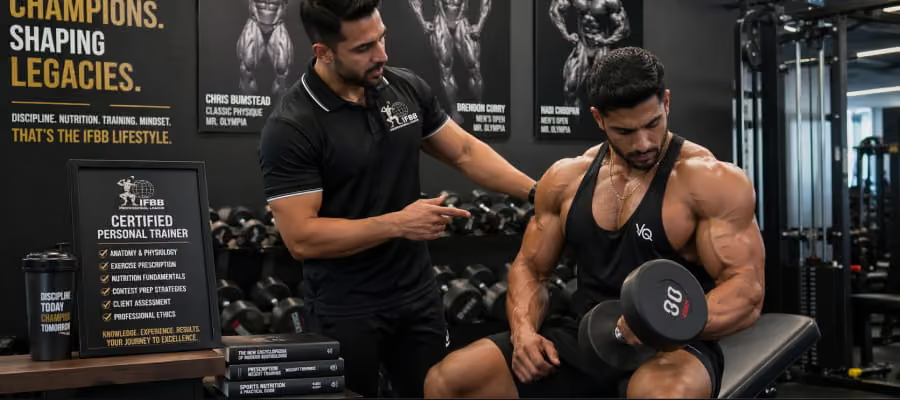

If you’ve spent any time in the bodybuilding or competitive fitness world, you already know the IFBB name. The International Federation of Bodybuilding and Fitness governs amateur bodybuilding in more than a hundred countries, while professional events such as Mr. Olympia now run under the separate IFBB Pro League. What many people don’t realize is that the IFBB Academy, the federation’s educational arm, offers an internationally recognized IFBB Personal Trainer Certification for coaches who want to specialize in bodybuilding and physique training.
So if you’re wondering whether the IFBB certification is the right path for you, how it works, what it costs, how it stacks up against NASM or ACE, and what kind of career you can realistically build with it, you’re in the right place. The benefits of obtaining the IFBB certification include international recognition and career portability, making it a strong choice for those looking to advance in the fitness industry.
This guide covers everything: the certification structure, the exam, costs, continuing education, and honest career outcomes. If you have a passion for fitness, pursuing the IFBB Personal Trainer Certification can help you turn that passion into a rewarding fitness career. No fluff, no vague promises.
What Is the IFBB Personal Trainer Certification?
The IFBB Personal Trainer Certification is a credential issued by the IFBB Academy, the education arm of the International Federation of Bodybuilding and Fitness, through a network of national academies. The course can be taken online or in person and covers training principles, exercise science, nutrition basics, and client coaching, with a clear emphasis on hypertrophy and physique training. Graduates become IFBB certified personal trainers and can join the International College of IFBB Coaches.
Unlike generalist certifications that focus heavily on general population wellness, the IFBB certification leans into the competitive and aesthetic fitness world. That makes it a natural fit for trainers who want to work with bodybuilders, physique athletes, figure competitors, or anyone with serious aesthetic or performance goals.
The IFBB certification is ideal for those who want to become a bodybuilding coach, as it prepares trainers to work with competitive athletes and physique clients. IFBB-certified trainers are recognized as specialists in the competitive fitness and bodybuilding niches, setting them apart from general gym trainers.
Who Is the IFBB Certification For?
Before diving into the specifics, it helps to understand who this certification is actually built for. If you’re an aspiring trainer looking to pursue a career in bodybuilding coaching or competitive fitness, the IFBB PT certification is a strong option. The IFBB PT certification tends to attract:
- Competitive bodybuilders and physique athletes who want to transition into coaching
- Gym trainers and fitness enthusiasts working in performance-oriented or bodybuilding-focused facilities
- Students who are passionate about fitness and want to deepen their expertise through a specialized program
- Coaches in countries where the IFBB is a dominant or recognized fitness authority
- Trainers who already hold a general certification (like ACE or NASM) and want a specialized credential in the competitive fitness space
- Fitness entrepreneurs looking to coach online clients in body transformation, contest prep, or muscle-building programs
If your client base skews toward recreational gym-goers with general weight-loss goals and you’re working in a mainstream corporate gym, this might not be your primary cert. But if you’re embedded in the bodybuilding community or want to build a reputation in that niche, the IFBB certification carries real recognition.
Ben Pakulski, IFBB Professional Bodybuilder, Mr. Canada, two-time Mr. Olympia competitor, and founder of Muscle Intelligence — who holds an Honours Degree in Kinesiology from the University of Western Ontario — built one of the most respected physique coaching brands in the world from exactly this foundation. His coaching philosophy reflects what the IFBB niche demands at its highest level: "You have to curate the subjective experience of your client. The subjective experience is what they are perceiving in their brain, and you have to intentionally be aware of that — this high-level meta-level awareness — and progressing that in whatever way you can is a high-level approach to helping anyone." That level of psychological and physiological precision is what separates a credentialed physique coach from a general trainer who knows the muscle groups. The IFBB credential opens the door to clients who expect that standard.
How Do I Get Certified as a Personal Trainer Through the IFBB?
This is one of the most commonly searched questions about this credential, and the answer depends slightly on where you’re based. Here’s the general pathway that applies across most regions:
Before you begin, it’s important to take the time to decide which IFBB certification package or pathway best fits your career goals. Each option is a valid and rewarding step toward a successful career in personal training.
At the end of the process, the structured training and exam preparation are designed to build your confidence, not only for the certification test itself, but also for your future professional roles as a personal trainer.
Step 1: Meet the Basic Prerequisites
Most IFBB certification programs require you to:
- Be at least 18 years old
- Hold a high school diploma or equivalent
- Have a current CPR/AED certification (this is standard across virtually all personal trainer credentials)
- Show basic fitness knowledge or experience (some programs require prior coursework; others don't)
Some regional IFBB bodies may require you to be an active IFBB member before enrolling in their education programs. Membership costs vary by country.
Step 2: Enroll in the IFBB Personal Trainer Course
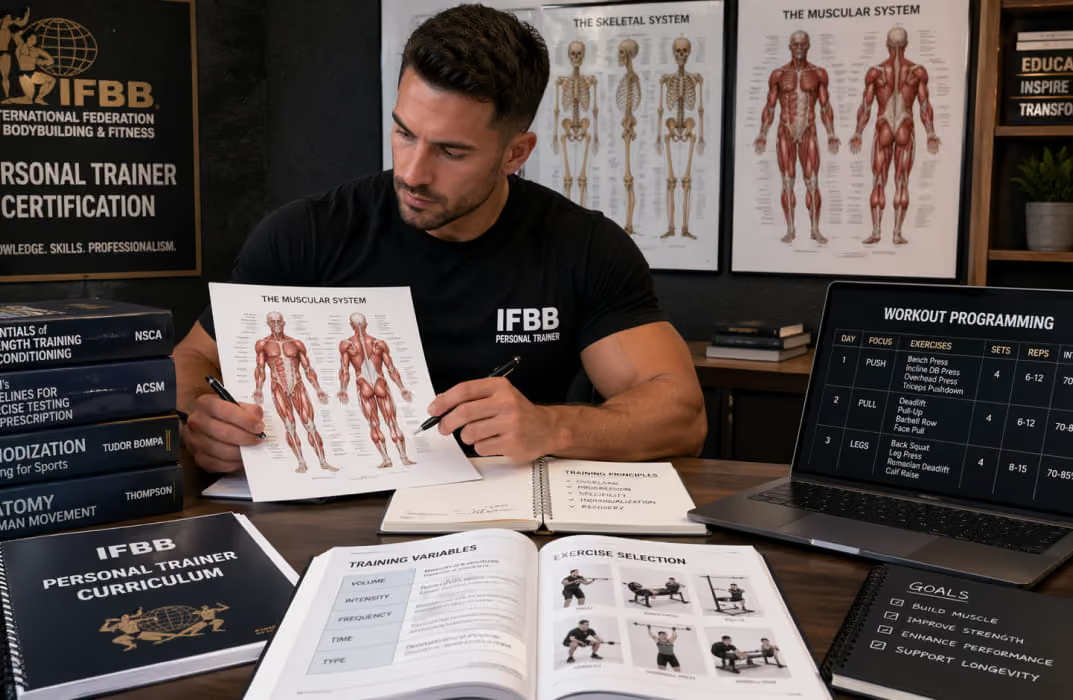
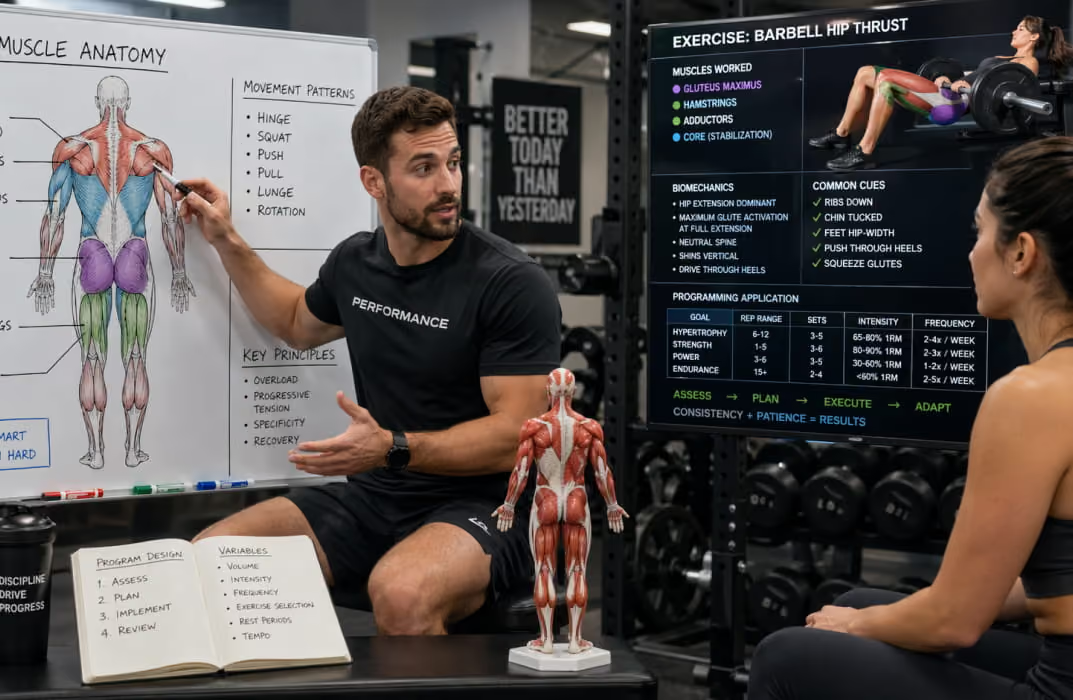
The IFBB PT course, provided by the IFBB Academy, is the meat of the certification process. Depending on the provider and delivery format, the course covers:
- Anatomy and physiology, muscle groups, joint mechanics, movement patterns
- Exercise science, principles of resistance training, cardiovascular conditioning, periodization
- Nutrition fundamentals, macronutrients, caloric balance, supplementation basics
- Client assessment, fitness testing, posture analysis, goal setting
- Program design, how to build structured training plans for different goals
- Special populations, working with beginners, older adults, and athletes
- Coaching and communication, motivational techniques, behavior change, and professional ethics
- Business basics, in some versions of the course, you’ll get an introduction to running a training practice
The course usually includes around 50-120 hours of study material, depending on the specific academy branch. The entire certification course must generally be completed within one year of registration.
Step 3: Complete Required Practical Hours (If Applicable)
Some IFBB affiliate programs include a practical or hands-on component where you demonstrate training techniques, coach mock clients, or complete supervised sessions. Many certification programs, including IFBB, emphasize practical skills and hands-on experience through practical workshops and supervised training sessions, allowing students to apply theoretical knowledge in real-world settings. A comprehensive curriculum in personal trainer certification includes not only foundational knowledge but also practical skills necessary for effective client management and program delivery. This varies significantly by region; some programs are entirely exam-based, while others require documented practical experience.
Step 4: Pass the Written Examination
The certification exam tests your knowledge across the subject areas covered in the course. Each module of the certification program typically ends with a multiple-choice test, and candidates must achieve a minimum score of 60% to pass. The overall exam is usually multiple-choice and covers exercise science, anatomy, training principles, and client management. Pass rates and exam difficulty vary, but the exam is considered moderately challenging, not a rubber stamp, but not as rigorous as the NCCA-accredited exams from NASM or ACE.
Step 5: Receive Your Certification and Register
Once you pass, you'll receive your IFBB Personal Trainer certification. In many countries, you'll also be registered in the IFBB's official trainer directory, which can help with visibility and credibility.
Also read: Top Tools for Personal Trainers to Manage Workouts
IFBB Personal Trainer Certification Courses: What Do They Cover?
Let’s break down the curriculum in more detail, because this matters when you’re comparing credentials. The IFBB personal trainer certification curriculum is grounded in fitness science and research-based education, ensuring students receive credible, up-to-date knowledge essential to professional success. Students also benefit from a variety of resources and ongoing support throughout their studies, helping them build a strong foundation and continue their growth as fitness professionals.

Foundational Science Modules
- Anatomy: The course covers skeletal and muscular anatomy, major muscle groups with origin/insertion points, joint types, and range of motion, and postural alignment.
- Exercise Physiology: Energy systems (ATP-PC, glycolytic, oxidative), muscle fiber types, cardiovascular adaptations, and the core principles of overload, specificity, progression, and recovery.
- Biomechanics: Force production, lever systems, and how technique affects injury risk and performance.
Training and Program Design
This is where the IFBB curriculum starts to distinguish itself from generalist programs. IFBB heavily prioritizes advanced resistance and weight training, as well as aesthetic training protocols. There’s a noticeably stronger emphasis on:
The science base for this curriculum emphasis is well established. Ben Pakulski — who built his coaching career on applying Kinesiology principles to IFBB-level physique development — describes the core distinction that separates physique-specific coaching from general training: "I had to address my physique. My weaknesses were very weak, but my strengths very strong. So I needed to come up with a way to even out my physique." That diagnostic approach — assessing the client's structural imbalances, prioritizing lagging muscle groups, and designing programming to correct asymmetries — is precisely what the IFBB curriculum's emphasis on hypertrophy-specific program design and aesthetic training protocols is built to teach. It is a fundamentally different skill set from general fitness programming, and one that mainstream certifications cover in far less depth.
- Hypertrophy training, the science of muscle growth, volume, intensity, and frequency
- Strength and power development, periodization models including linear, undulating, and block periodization
- Contest prep concepts, peak week, cutting phases, and competition-specific preparation
- Resistance training variables, sets, reps, tempo, rest periods, and how to manipulate them for different outcomes
The IFBB personal trainer certification is distinguished by its specialized focus on hypertrophy, contest preparation, and high-performance physique training.
Nutrition
The IFBB course covers nutrition at a foundational level: macronutrients and their roles, caloric balance and energy expenditure, nutrient timing basics, supplementation overview (protein, creatine, vitamins), and dietary approaches for muscle gain and fat loss. Understanding supplements is crucial for designing effective training programs, enhancing performance, and ensuring client safety. Always be cautious with supplement recommendations, as some products may contain banned or unsafe substances.
Note: This is not a nutrition coaching certification. For in-depth nutrition counseling, you’d need a separate credential, such as a sports nutrition certificate.
Client Assessment and Program Delivery
- Health history intake and PAR-Q screening
- Fitness assessments (strength, cardiovascular, flexibility, body composition)
- Goal setting and progressive program design
- Session structure and coaching cues
- Communication and motivational interviewing basics
The IFBB personal trainer certification curriculum prepares professionals in anatomy, training techniques, and nutrition, with a strong focus on bodybuilding and fitness. This comprehensive foundation enables trainers to help clients achieve their fitness goals, especially those related to muscle gain, physique transformation, and overall health improvement.
Business and Professional Skills
Some versions of the IFBB PT course include modules on legal and ethical responsibilities, liability and professional conduct, marketing your services, and client retention and business growth basics. Being a respected fitness professional also means actively engaging with professional communities and continuously adapting to the evolving standards and expectations of society.
IFBB Personal Trainer Certification Cost: What to Expect
The IFBB Personal Trainer course has been listed at around €450 (roughly $480 to $500) through the IFBB Academy, though the price depends on your country’s academy, the course format, and whether exam fees, membership, or a practical assessment are billed separately. Because the certification is delivered through regional affiliates, there is no single global price, so always confirm the current fee with your national IFBB academy before enrolling. Once extras are added, most trainers budget between $400 and $1,200 in total.
Course and Exam Fees
For comparison: NASM CPT typically runs $500-$1,500 depending on the package. ACE CPT ranges from $400 to $1,000. ISSA CPT is often available at $500-$800 with frequent promotional pricing. The IFBB certification sits in a comparable price range, not the cheapest option, but not the most expensive either.
Regional Price Variations
In countries like India, the Middle East, and parts of Europe and Latin America, where IFBB affiliates are very active, pricing may be lower, and course availability may be higher. In North America, the IFBB certification is less widely recognized than NCCA-accredited credentials, affecting both availability and the types of employers that accept it.
Renewal and Continuing Education Costs
Like most certifications, the IFBB PT credential requires periodic renewal every 2 years. This typically involves completing continuing education credits (CECs), paying a renewal fee ($50-$150), and maintaining your CPR/AED certification.
How Does the IFBB Certification Compare to Other Personal Trainer Certifications?
This is one of the most important questions you can ask, and it deserves a thorough, honest answer.
Obtaining a Certified Personal Trainer (CPT) certification is a foundational step for anyone looking to become a certified personal trainer and advance their career in the fitness industry. Recognized certifications, especially those accredited by organizations such as the NCCA, are widely regarded as marks of professionalism and quality, helping trainers build credibility and open more career opportunities.
IFBB vs. NASM (National Academy of Sports Medicine)
NASM is one of the most widely recognized personal training certifications in the world, and it holds NCCA accreditation, which is the gold standard for third-party certification validation in the fitness industry.
Bottom line: If you're targeting a job at a major gym chain like LA Fitness, Equinox, or a hospital wellness center, NASM is the safer bet. If you're building a practice in the competitive bodybuilding space or operating in a country where IFBB carries significant weight, the IFBB cert can be more relevant.
IFBB vs. ACE (American Council on Exercise)
Bottom line: ACE leans heavily into behavioral health and working with general populations. If you want to work with people who care about their physique and performance, the IFBB's curriculum is more aligned.
IFBB vs. ISSA
Bottom line: ISSA has built a significant following in the online fitness coaching world and includes more business training. IFBB has stronger credibility in the competitive and in-person training world.
IFBB vs. NSCA
The Accreditation Question
Here’s something you need to understand clearly: The IFBB personal trainer certification is not currently NCCA-accredited. This matters because many major gym chains and fitness employers require or strongly prefer NCCA-accredited certifications, and some insurance providers base professional liability coverage on holding an NCCA-accredited cert.
That said, NCCA accreditation is not the only measure of a certification’s value. In specialized niches, such as competitive bodybuilding, physique coaching, and online transformation coaching, the IFBB name can open doors that NASM cannot. Recognition within your actual target market matters more than general employer acceptance if you’re building your own practice. Additionally, the IFBB Academy offers a wide range of internationally certified training courses, including Personal Trainer, Advanced Nutrition, and a Master's in Fitness Coaching, that help individuals excel in their careers as fitness professionals.
Is the IFBB Certification Recognized?
Recognition varies significantly by context:
Where IFBB Certification Is Well-Recognized
- Bodybuilding gyms and competitive fitness facilities, especially in countries with active IFBB federations
- Online coaching, clients drawn to credentials in the bodybuilding space
- Countries with strong IFBB affiliate bodies, such as India, Spain, Brazil, the UAE, and many others
- Competition prep coaching, clients preparing for IFBB-sanctioned events
Where IFBB Certification May Face Challenges
- Many corporate gym chains in the US, many require NCCA-accredited credentials
- Hospital or clinical fitness settings typically require NASM, ACE, or ACSM credentials
- University or sports performance programs tend to prefer NSCA
IFBB Certification: Online vs. In-Person Options
The delivery format of the IFBB certification has evolved, and today you have genuine options depending on how you learn best. The IFBB now offers an online course option, providing flexibility and accessibility for students worldwide who want to become certified fitness professionals.
Online Format
Online IFBB PT courses allow you to study at your own pace, access materials from anywhere, complete modules on a flexible schedule, and take the exam remotely in many cases. This format works well for people who are already working in fitness and want to add a credential.
In-Person Workshops
Some IFBB affiliates run multi-day intensive workshops that combine instruction with practical demonstrations. These are particularly common in countries where the IFBB affiliate runs active education programs. The in-person format is beneficial if you learn better through hands-on instruction, want direct feedback on your technique, or prefer networking with other trainers.
Hybrid Programs
Some providers offer a hybrid approach , online theory with an in-person practical assessment component. This is increasingly common and gives you flexibility without sacrificing the hands-on component.
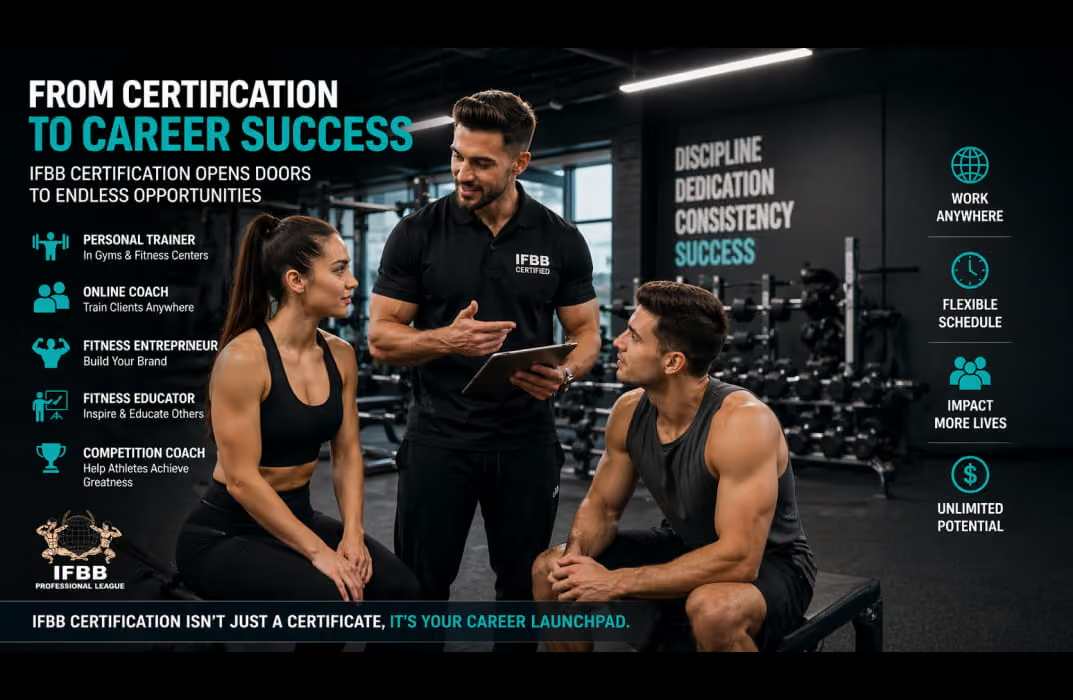
Career Outlook: What Can You Do with an IFBB Personal Trainer Certification?
Job Roles Available
1. Personal Trainer (In-Person)
The most direct application. You can work as a floor trainer at a gym, as a private trainer with your own clientele, or within a boutique fitness studio. In bodybuilding-oriented gyms, the IFBB credential can be a meaningful differentiator.
2. Competition Prep Coach
This is a niche but lucrative specialty. Helping clients prepare for IFBB-sanctioned bodybuilding, figure, bikini, and physique competitions requires exactly the kind of knowledge the IFBB curriculum emphasizes. Prep coaches can charge premium rates, $200-$500+ per month for ongoing coaching.
3. Online Fitness Coach
The online coaching model is one of the fastest-growing segments in the fitness industry. With a platform to deliver programming and communication tools, you can build a client base without geographic limitations.
Platforms like FitBudd make scalability possible by automating client management, progress tracking, and program delivery, all within your own custom branded app.
4. Gym Manager or Fitness Director
With experience, many trainers move into management roles. A recognized certification adds credibility when you’re overseeing other trainers or running a facility’s fitness programming. These roles often require leading and collaborating with a team of fitness professionals to ensure high-quality programs and client satisfaction.
5. Content Creator or Fitness Educator
Many certified trainers leverage their credentials to build a content presence on YouTube, Instagram, and TikTok, where the IFBB association adds authority in the bodybuilding and physique space.
Income Potential
The Online Coaching Opportunity
Online coaching removes the ceiling on your income by expanding your client capacity. Instead of training 8-10 clients in person per day, you can manage 30, 50, or even 100+ clients online with the right systems in place. The IFBB credential, paired with a bodybuilding or physique specialty, is a compelling value proposition for online clients who want results from a trainer with a credible background in competitive fitness.
IFBB Certification Renewal and Continuing Education
Your certification isn’t a set-it-and-forget-it credential. Keeping it current requires ongoing professional development. Ongoing support is essential for personal trainers to stay up to date on the latest trends, techniques, and best practices in fitness training.
Renewal Requirements
Most IFBB affiliates require renewal every 2 years. Requirements typically include:
- Completing a set number of Continuing Education Credits (CECs), usually 20-30 credits per cycle
- Maintaining a valid CPR/AED certification
- Paying a renewal fee
Ways to Earn CECs
- IFBB-approved workshops and seminars
- Online continuing education courses
- Conferences and fitness expos
- Specialty certifications (nutrition, corrective exercise, etc.)
- First aid and emergency response courses
IFBB Personal Trainer Certification: Pros and Cons
Final Thoughts
The IFBB Personal Trainer Certification is a legitimate, credible credential, particularly if you're serious about working in the competitive bodybuilding and physique space, or if you're based in a country where the IFBB is a primary fitness authority. It's not the right fit for every trainer or every market, but for the right person, it's an excellent foundation.
The certification provides you with the science, the framework, and a recognized credential. What you do with it, the clients you build results for, the reputation you cultivate, and the business you grow, is entirely up to you.
If you're ready to turn your IFBB certification into a thriving coaching business, FitBudd gives you the tools to manage clients, deliver programs, and scale your fitness practice — all in one place.