
Article

Gym Business Plan Template: Free Sample for 2026

Use this free gym business plan template for 2026 to structure your financials, marketing, and operations, built for gym owners and fitness professionals

10 min read
Business Plan Template
Table of Contents
Key Takeaways
  • A gym business plan template is essential for turning your idea into a structured, investor-ready, and scalable fitness business.
  • A complete plan must include core sections like executive summary, market analysis, services, marketing, operations, and financial projections.
  • Successful gyms in 2026 rely on diversified revenue streams such as memberships, personal training, online coaching, and corporate wellness.
  • Operations and tech stack are now critical, with platforms like FitBudd enabling automation, client management, and scalable growth.
  • FitSW-level basic systems are no longer enough; modern gyms need automation, branding, and hybrid coaching capabilities built into their infrastructure.
  • The strongest gym businesses combine clear planning, validated market demand, and efficient systems to maximize profitability and long-term growth.

If you've ever searched "how to start a successful gym" and ended up drowning in conflicting advice, you're not alone. Most aspiring gym owners and fitness entrepreneurs know what they want to build, but structuring it into a clear, investor-ready, operationally sound plan is where the real challenge begins.

This guide gives you a free gym business plan template built specifically for 2026, covering everything from financial plans and marketing strategy to your tech stack and operations model. 

Whether you're launching a boutique fitness studio, scaling a personal training business, or opening a multi-location gym, this template has you covered.

And if you're already running a fitness business and need the right software to support it, FitBudd is the all-in-one platform trusted by over 3,500 coaches and gym owners worldwide to manage clients, automate operations, and grow revenue.

Why You Need a Gym Business Plan Before You Open Your Doors

A gym business plan isn't just paperwork for a bank loan. It's a strategic document that forces you to think through your market, model, margins, and milestones before you spend a dollar.

The US fitness industry (gyms/clubs) hit $47 billion in 2026, driven by personalized training, hybrid coaching, and wellness culture. That opportunity is real, but so is the competition. 

A solid fitness business plan template helps you cut through the noise and build a business that's actually profitable, not just passionate.

If you want a broader look at how to start a gym from scratch, check out our January 2026 business plan guide for fitness professionals. This article focuses specifically on the template structure, section by section.

Free Gym Business Plan Template: Full Structure

Below is a comprehensive gym business plan sample you can adapt for your own fitness business. Each section explains what to include and why it matters.

1. Executive Summary

What it is: A one-page overview of your entire gym business plan. Write this last, but place it first.

What to include:

  • Your gym name, location, and concept
  • The problem you're solving for whom
  • Your gym type (membership gym, personal training studio, boutique fitness, online coaching)
  • A summary of your financial projections and funding needs
  • A compelling mission statement

Why it matters: Investors, lenders, and partners read the executive summary first. If it's weak, they stop there. Keep it sharp, specific, and compelling. State your business model clearly: are you SBA loan-funded, self-financed, or seeking investors?

Pro tip: If you're running an online or hybrid training business alongside your gym, tools like FitBudd let you manage both in-person and remote clients from a single branded app- making your "gym" bigger than four walls.

2. Business Overview & Company Description

What it is: The detailed identity of your fitness business - who you are, what you offer, and how you're structured.

What to include:

  • Legal structure (LLC, S-Corp, Sole Proprietorship)
  • Ownership and management structure
  • Gym type and specialty (CrossFit box, yoga studio, HIIT gym, personal training gym, wellness center)
  • Location and facility description (square footage, equipment, amenities)
  • Hours of operation
  • Your unique selling proposition (USP) - what makes your gym different
  • Brand identity: colors, atmosphere, culture
Sample language:

"[Gym Name] is a boutique personal training studio located in [City], structured as a single-member LLC. We offer personalized fitness programs, group classes, and hybrid coaching through our branded mobile app. Our USP is real-time progress tracking and weekly coaching check-ins - offering a level of accountability that large-box gyms simply cannot match."

3. Market Analysis

What it is: Proof that your gym concept has a real, addressable, growing market.

What to include:

  • Fitness market size, growth trends, and local market data
  • Your target market: demographics (age, income, occupation) and psychographics (goals, lifestyle, values)
  • Market trends you're capitalizing on: hybrid fitness, wellness tech, boutique gyms, online personal training
  • Demand validation: pre-registrations, surveys, competitor footfall analysis

High-impact data to reference:

  • The US gym and fitness club market is growing at a compound rate driven by increasing consumer health awareness
  • Boutique fitness studios now command premium pricing and retain members 2–3x longer than traditional gyms
  • The demand for online personal training and gym management software has surged post-2020 and continues to grow

Target market profiles to consider:

  • White-collar professionals aged 28–45 seeking time-efficient training
  • Corporate wellness clients (B2B contract opportunity)
  • Fitness enthusiasts are willing to pay a premium for personalization
  • Seniors and rehabilitation-focused members (underserved segment)

Use Google Trends, local demographic data, and competitor review mining to ground this section in real numbers rather than assumptions.

4. Competitive Analysis

What it is: A structured review of your direct and indirect competitors, and where you win.

What to include:

  • Direct competitors: gyms and studios with similar offerings in your area
  • Indirect competitors: home workouts, online apps, corporate gyms, YouTube fitness content
  • Competitor strengths and weaknesses (use review analysis from Google Maps)
  • A comparison grid: your gym vs. key competitors across services, pricing, tech, and experience
  • Your competitive advantages

What most gym business plans miss: Real competitive intelligence. Don't just list local gym names. Visit during peak hours (6–8 AM, 5–7 PM). Count attendance. Read reviews. Identify what members consistently complain about - that's your opportunity.

Chart your positioning by price (X-axis) vs. perceived value (Y-axis). The sweet spot most gyms miss is high perceived value at moderate pricing, and that's where a strong brand, digital experience, and great coaching win.

5. Services & Membership Offerings

What it is: A detailed breakdown of what you sell and how you price it.

What to include:

  • Membership tiers and pricing structure (monthly, annual, pay-per-session)
  • Personal training packages
  • Group fitness class schedule and pricing
  • Specialty programs (nutrition coaching, weight loss challenges, corporate wellness)
  • Add-on services: supplements retail, branded merchandise, recovery services
  • Online and hybrid coaching options

2026 Revenue Strategy - Don't Rely on One Stream:

Modern profitable gyms diversify across 8–12 revenue streams. Here's a blueprint:

Revenue Stream Description
Base memberships Monthly/annual recurring revenue
Personal training 1:1 sessions at a premium rate
Group classes Higher margin, scalable
Online coaching Unlimited geographic reach
Corporate wellness contracts B2B, $2,000–$5,000/month per account
Nutrition coaching High-value add-on
Fitness challenges 6-12 week paid programs
Merchandise & supplements 40–60% margin
Branded app subscriptions Scalable digital revenue

FitBudd advantage: FitBudd lets you sell memberships, one-time packages, subscription plans, and fitness challenges, all through your own branded app and website. No third-party commissions. Every dollar you earn stays yours.

6. Marketing Plan

What it is: Your strategy to attract new members and retain existing ones.

What to include:

  • Brand identity and positioning
  • Digital marketing strategy: SEO, social media, Google Ads, email marketing
  • Local marketing: partnerships, referral programs, community events
  • Launch strategy and pre-sale campaigns
  • Retention marketing: loyalty programs, re-engagement flows, progress milestone recognition

Channels that convert for gym businesses in 2026:

Instagram & TikTok remain the top platforms for fitness brands. Before-and-after transformations, coaching clips, and behind-the-scenes content drive both brand trust and direct conversions.

Google Business Profile optimization is non-negotiable. Most gym discovery happens locally. A strong profile with consistent reviews, photos, and updated hours drives walk-ins and calls.

Email marketing for member retention and winback. Automated sequences for new-member onboarding, progress check-ins, and lapsed-member reactivation outperform manual outreach by a wide margin.

Referral programs with member incentives consistently deliver the lowest cost per acquisition in the fitness industry.

FitBudd supports your marketing stack with integrated email automation (Mailchimp), social media reach tools, and a customizable website that converts traffic into paying clients. You can also capture leads via forms and move them through an automated onboarding flow.

7. Operations Plan

What it is: How your gym runs day-to-day, week-to-week.

What to include:

  • Staffing structure: roles, certifications required, hiring timeline
  • Facility management: cleaning schedules, equipment maintenance, safety protocols
  • Class scheduling and booking management
  • Client onboarding process
  • Customer service protocols
  • Supplier and vendor relationships (equipment, supplements, insurance)
  • Operating hours and capacity management

Operational efficiency tip: The highest hidden cost in gym operations isn't rent, it's admin time. Coaches and gym managers who manually handle scheduling, client check-ins, payment collection, and progress tracking lose 10–15 hours per week to tasks that software should handle.

A modern gym management software platform eliminates this drag. FitBudd automates scheduling, QR check-ins, payment processing (Stripe/PayPal), client progress tracking, and nutrition coaching, all from one platform with zero third-party commissions.

8. Tech Stack for Your Gym Business

What it is: The software and tools that power your gym's operations and client experience.

This section is increasingly critical for investors and lenders seeking scalable, efficient operations. A gym running on spreadsheets and group texts is a liability. A gym running on purpose-built software is an asset.

Why FitBudd belongs in your business plan:

FitBudd is purpose-built for fitness professionals and gym owners. It gives you a branded iOS and Android app under your name, a professional coaching website, automated scheduling, client progress tracking, nutrition coaching, and integrated payments with 0% platform fees. Over 3,500 coaches rate FitBudd at 4.6+ stars on Capterra, with 88% awarding it 5 stars.

For multi-location gyms, FitBudd's Elite plan includes multi-location access, team logins, Mindbody and Zapier integrations, group classes, and QR check-ins. It scales as you do.

9. Management Team

What it is: Who runs the gym and why they're qualified.

What to include:

  • Founders and co-founders: background, certifications, relevant experience
  • Key hires: gym manager, head trainer, front desk/operations
  • Advisors or mentors with industry credibility
  • Hiring plan timeline aligned with your growth projections

Investors back people before they back plans. Make this section strong.

10. Financial Projections

What it is: A 3–5 year financial forecast that demonstrates your path to profitability.

What to include:

  • Startup costs (one-time): equipment, lease deposit, renovation, branding, technology
  • Fixed monthly operating costs: rent, payroll, insurance, software subscriptions
  • Variable costs: utilities, supplies, marketing spend
  • Revenue projections: membership numbers × average revenue per member
  • Break-even analysis: how many members do you need to cover costs?
  • Profit & loss forecast (monthly, Year 1; annually, Years 2–5)
  • Cash flow forecast
  • Funding requirements and use of funds

Gym startup cost benchmarks (2026):

Cost Category Estimated Range
Lease (first + last + deposit) $10,000 – $60,000
Equipment (commercial grade) $20,000 – $150,000
Renovation/buildout $15,000 – $100,000
Branding & marketing setup $3,000 – $15,000
Technology (gym software, app) $100 – $500/month
Insurance (liability, property) $2,000 – $8,000/year
Working capital (6 months) $30,000 – $80,000

Revenue projection formula:

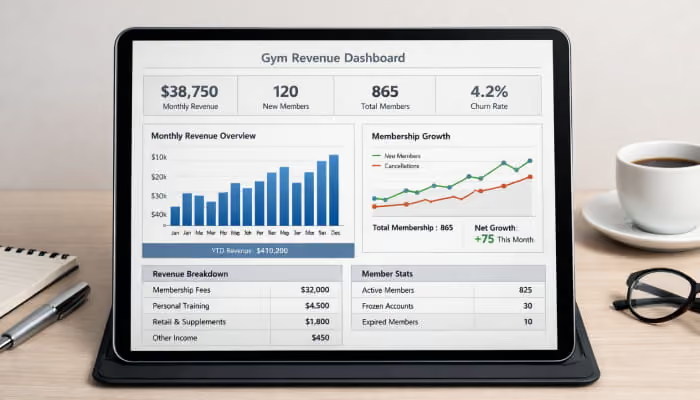
Monthly Revenue = Total Active Members × Average Monthly Revenue Per Member

For a gym with 200 members at $75/month average: $15,000/month. Add personal training ($5,000), online coaching ($2,000), and corporate wellness ($3,000): $25,000/month - a much stronger, diversified model.
11. SWOT Analysis

A SWOT analysis gives you and your stakeholders an honest picture of where your gym stands. Complete this for your specific business:

Positive Negative
Internal Strengths (e.g., certified coaching team, branded app, premium location) Weaknesses (e.g., limited capital, new brand, no existing client base)
External Opportunities (e.g., growing local demand, hybrid fitness trend, corporate clients) Threats (e.g., established competitors, economic downturns, low-cost national chains)

How to Use This Gym Business Plan Template

  1. Download and customize - adapt every section to reflect your specific gym concept, market, and numbers. Don't use placeholder language in your final version.
  2. Validate your assumptions - every projection should be grounded in research. Talk to local gym owners, survey potential members, and study your market before committing to revenue forecasts.
  3. Update it regularly - a business plan is a living document. Revisit it quarterly as you gather real operating data.
  4. Pair it with the right software - the best business plan in the world won't save a gym running on inefficient systems. Before you open, choose your gym management platform carefully. FitBudd offers a free demo so you can see how it fits your operation before you commit.

Ready to Build Your Gym Business?

In 2026, the fitness industry rewards gym owners who combine great coaching with smart operations. A thorough business plan gets you funded and focused. The right tech stack keeps you efficient and scalable.

FitBudd is the platform designed to grow with your gym from your first client to your thousandth, from a single location to a national brand. Book a free demo at FitBudd to see what your gym could look like when everything runs in one place.
Frequently Asked Questions
What should a gym business plan include?
How much does it cost to start a gym in 2026?
Can I use a gym business plan template for a personal training business?
How do I write financial projections for a gym business plan?
Sources
  1. IBISWorld - Gym, Health & Fitness Clubs in the US Industry Analysis, 2026: ibisworld.com
  2. Mordor Intelligence - Health and Fitness Club Market Analysis | Industry Trends, Size & Forecast Report 2031: mordorintelligence.com
  3. Upmetrics - 30+ Fitness Industry Statistics (2026 Edition): upmetrics.co

Written by

Gaurav Saini is a dedicated fitness enthusiast and a key member of FitBudd’s product team. He focuses on UI/UX design for fitness apps and websites, creating user-friendly digital experiences for coaches, trainers, and gym owners while combining his passion for fitness with product innovation.

Gaurav Saini

UI/UX Designer at FitBudd, Fitness Enthusiast

Reviewed by

Amy Holdings is the CEO of BossFitAmy and a bold voice at the intersection of fitness and business. She’s building a calorie-tracking ecosystem designed to drive real results and scalable income for coaches. Using FitBudd, Amy delivers structured programs, tracks client progress, and runs a high-performance coaching business with precision and impact.

Amy Hollings

Calorie & Macro Coaching Expert

92% trainers worldwide gave us 5 stars

Talk to your dedicated success manager and launch your branded fitness app during the demo in minutes.

Start your paid subscription for $79 FREE

No credit card required  •  Cancel Anytime
By submitting this form, you agree to be contacted by FitBudd via call, email, and SMS. Msg & data rates may apply. Reply STOP to opt out. See Terms of Use and Privacy Policy.
Thank you! Your details has been received.
Uh Oh! Something went wrong ...
FitBudd Insights

Latest Articles

Articles & insights by author.

Gym Business Plan Template: Free Sample for 2026

Use this free gym business plan template for 2026 to structure your financials, marketing, and operations, built for gym owners and fitness professionals

Read more
March 27, 2026
 FitSW Alternatives: Better Fitness Software for Personal Trainers
FitSW Alternatives: Better Fitness Software for Personal Trainers

Looking for the best FitSW alternatives? Compare pricing, features, automation, and client experience to choose the right personal training software for your business growth.

Read more
March 26, 2026
AI Gym Trainer Technology: How It Works and What It Means for Fitness Pros

Discover how AI gym trainer technology works from rep counting and form analysis to adaptive programming. A guide for fitness professionals ready to use AI smarter.

Read more
March 26, 2026
Best AI Workout App: What Trainers Need to Know About the Competition

Best AI workout apps for trainers: FitBudd, FitnessAI, Fitbod, Dr. Muscle & Planfit reviewed. Learn to differentiate your services and win clients.

Read more
March 26, 2026
Everfit vs Trainerize vs TrueCoach: Which Wins in 2026?

Compare Everfit vs Trainerize vs TrueCoach features, pricing, and scalability. Discover which fitness coaching platform best fits trainers and gyms.

Read more
March 26, 2026
GymSales Alternatives: Better Gym Software for Sales & Member Onboarding (2026)

Discover the best GymSales alternatives for 2026. Compare top gym CRM and lead management tools that help fitness businesses capture leads, automate follow-ups, and improve member retention.

Read more
March 26, 2026
Personal Trainer Program Design Templates (Free Downloads)

Download 2026 personal trainer program design templates. Get free workout program templates for Excel & PDF.

Read more
March 26, 2026
Fitness Meal Plan: How Coaches Can Build Custom Nutrition Services for Clients

Learn how to create custom fitness meal plans for clients. Understand scope of practice, build systematic frameworks, and add nutrition services that differentiate your coaching business.

Read more
March 26, 2026
Protein Rich Food for Bodybuilding: A Coach's Guide to Programming Client Nutrition

A coach's guide to protein-rich food for bodybuilding. Covers daily targets, animal and plant sources, meal timing, and how to program nutrition for clients.

Read more
March 26, 2026
Must-Have Features in a Fitness App for iOS: What Clients Actually Want

Launch your online fitness app with features clients actually want. From AI tracking to FitBudd tools, discover how to scale your brand.

Read more
March 26, 2026
AI Personal Trainer Free: The Complete Guide for Fitness Professionals

Discover how AI personal trainer free apps work, their accuracy, injury risks, and limitations. Learn whether the best AI personal trainer or gym coach AI can replace human coaching.

Read more
March 26, 2026
Best Vegetarian Protein Sources: How Fitness Professionals Can Better Serve Vegetarian Clients

Help vegetarian clients achieve their fitness goals. Learn the best vegetarian protein sources, coaching strategies, and how to differentiate your services for this growing market segment.

Read more
March 26, 2026
Group Fitness Drills: The Complete Guide for Fitness Professionals

Master group fitness drills that energize classes and deliver results. Learn drill selection, programming strategies, scaling methods, and proven formats for engaging group training sessions.

Read more
March 26, 2026
Best 24-Hour Gym Management Software for Unattended Access

Discover the best 24-hour gym management software for unattended gyms. Compare features, pricing, and access control systems to find the right solution to automate billing & manage members

Read more
March 26, 2026
RIR (Reps in Reserve): The Complete Guide for Fitness Professionals

Master RIR (Reps in Reserve) for smarter training prescription. Learn what RIR means, how to implement it, RIR vs RPE differences, and programming strategies for client results.

Read more
March 26, 2026
Pilates Franchise: The Complete Guide to Starting Your Studio

Everything you need to know about starting a Pilates franchise. Compare top brands, understand costs, evaluate requirements, and make informed decisions about franchise ownership.

Read more
March 26, 2026
BodyBar Pilates: What Fitness Professionals Need to Know

Explore BodyBar Pilates as a franchise model and boutique fitness concept. Learn about their methodology, business structure, and what fitness professionals can learn from their growth strategy.

Read more
March 26, 2026
Indoor Climbing Gym: The Complete Guide for Fitness Professionals

Explore the indoor climbing gym industry from a fitness professional perspective. Learn about business models, training integration, partnership opportunities, and how to serve climbing athletes.

Read more
March 26, 2026
How to Generate a Workout Plan: Manual vs AI Methods for Trainers

Master your programming. Compare manual design vs. an AI workout builder, learn 2026 periodization, and scale your business with FitBudd.

Read more
March 26, 2026
High-Intensity Yoga Sleep Benefits: What Fitness Professionals Need to Know

Discover how high-intensity yoga improves sleep quality. Learn the science behind vigorous yoga's effects on rest, recovery timing, and practical programming strategies for fitness professionals.

Read more
March 26, 2026
Gym Partnerships: The Complete Guide for Fitness Business Owners

Learn how to build profitable gym partnerships that drive member acquisition, reduce costs & strengthen your fitness business.

Read more
March 26, 2026
BJJ and MMA Gym Business: The Complete Guide for Academy Owners

Learn how to build a profitable BJJ or MMA gym business. Covers pricing strategies, membership models, operations, software solutions, & growth tactics.

Read more
March 26, 2026
Mayhem Programming: The Complete Guide to Implementation, Delivery, and Scaling Your Coaching Business

Explore Mayhem Programming's methodology and tracks. Learn how coaches & gym owners can deliver programming effectively, track athlete data, and build scalable coaching businesses.

Read more
March 26, 2026
Gym Management Software: The Complete Guide for Fitness Business Owners

Learn how to evaluate & select gym management software for your fitness business. Covers scheduling, CRM, CrossFit options, free vs paid solutions.

Read more
March 26, 2026
Free AI Gym Trainer Apps: What Your Clients Are Using (And How to Compete)

Free AI gym trainer apps like Planfit & FitnessAI are popular with clients. Learn their critical limitations and how to compete as a personal trainer in 2026

Read more
March 26, 2026
AI Workout Builder Tools: How Personal Trainers Can Create Programs Faster

Master your workflow with an AI workout builder. Generate a workout plan in seconds, maintain personalization, and scale your business with FitBudd.

Read more
March 26, 2026
Hybrid Personal Training: Equipment, Techniques, and How to Offer It

Master hybrid personal training with this complete guide. Learn essential equipment, proven techniques, and how to build a successful blended coaching practice that serves clients anywhere.

Read more
March 26, 2026
ACE Personal Training Classes: Complete Course Guide & What to Expect

Complete guide to ACE personal training classes: course formats, curriculum breakdown, study timeline, exam prep, costs, and continuing education requirements

Read more
March 26, 2026
Advanced Personal Trainer Certification: Take Your Career to the Next Level

Take your career to the next level with an advanced personal trainer certification. Master specialized niches and scale with FitBudd’s elite software.

Read more
March 26, 2026
ACE Personal Training Certification: Complete Guide (Cost, Exam, Career)

Learn everything bout ACE personal training certification including cost, exam format, eligibility, career opportunities, and business growth tips.

Read more
March 26, 2026
Best 24-Hour Gym Management Software for Unattended Access

Discover the best 24 hour gym management software for unattended gyms. Compare features, pricing, access control systems, and find the right solution to automate billing, manage members, and grow your fitness business.

Read more
March 26, 2026
Workout Accountability Strategies: Keeping Clients Motivated and On Track

Discover proven workout accountability strategies that boost client retention. Learn how to use apps, check-ins, and tracking to keep clients motivated

Read more
March 26, 2026
Best Online Personal Training Platforms for Coaches in 2026

Compare the best online personal training platforms for fitness coaches. Features, pricing, and detailed reviews of FitBudd, Trainerize, TrueCoach & more.

Read more
March 26, 2026