
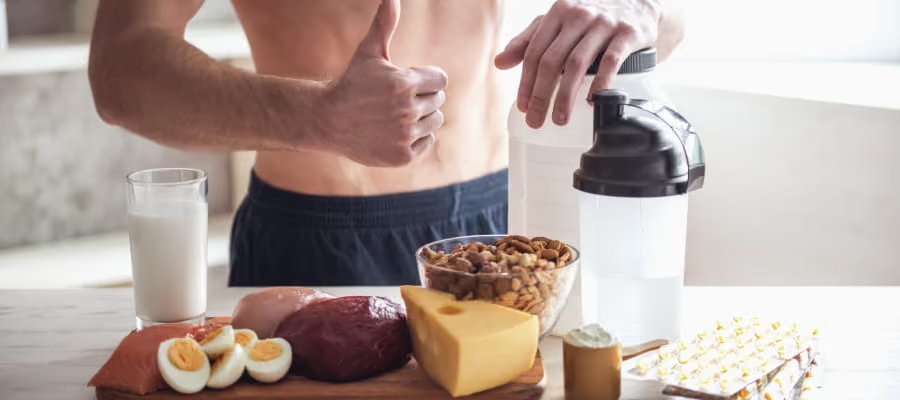

Protein-rich foods for bodybuilding remain among the most frequently discussed topics among coaches and clients.
Whether your client is preparing for a physique competition or simply trying to add lean mass during an off-season block, the foods they eat and the distribution of protein throughout the day directly influence outcomes.
As a fitness professional, your ability to guide clients toward the right protein sources, in the right amounts, at the right times, separates generic advice from effective coaching. This guide breaks down the current research on protein requirements for hypertrophy, identifies the highest-value food sources (both animal- and plant-based), and provides practical frameworks for programming nutrition for bodybuilding clients.
How Much Protein Do Bodybuilding Clients Actually Need?
Before selecting specific foods, coaches need to establish a daily protein target for each client. The research on this has evolved significantly over the past decade.
The International Society of Sports Nutrition (ISSN) and the American College of Sports Medicine (ACSM) recommend that physically active adults consume 1.2-2.0 g of protein per kilogram of body weight daily. For clients actively pursuing muscle hypertrophy through resistance training, a 2019 narrative review published in the journal Sports recommended 1.6 to 2.2 g/kg/day, with optimal per-meal amounts of 0.40 to 0.55 g/kg distributed across 3 to 6 meals.
More recent evidence has pushed that upper range higher. A 2025 study using the Indicator Amino Acid Oxidation (IAAO) technique found that experienced male bodybuilders required an average of 1.7 g/kg on non-training days, with an upper confidence limit of 2.2 g/kg to cover 97.5% of the population.
For practical coaching purposes, a target of 1.6-2.2 g/kg/day covers most bodybuilding clients. Coaches working with advanced trainees, clients in a caloric deficit, or older adults with anabolic resistance may consider pushing toward 2.0-2.4 g/kg/day.
However, any intake above 2.0 g/kg should be discussed in the context of a client's overall health profile, and coaches should recommend medical consultation for clients with kidney concerns or other contraindications.
Quick Reference: Daily Protein Targets by Client Type
Sources: ISSN Position Stand on Protein (2017); Iraki et al., Sports (2019); Morton et al. meta-analysis (2018); Bandegan et al. IAAO study (2019).
Top Protein Rich Foods for Bodybuilding Clients
The quality of a protein source matters. Two factors drive protein quality for hypertrophy: the amino acid profile (specifically leucine content and the full spectrum of essential amino acids) and digestibility. Animal-based proteins generally score higher on both counts, but well-planned plant-based diets can achieve comparable results when variety and total volume are accounted for.
Animal-Based Protein Sources
These foods form the backbone of most bodybuilding diets due to their high bioavailability and complete amino acid profiles.
Chicken breast remains a staple for bodybuilding nutrition. A 100g serving delivers roughly 31g of protein with minimal fat, making it easy to fit into almost any caloric target. It is versatile across meal prep styles and widely accessible.
Eggs are one of the most nutrient-dense protein sources available. Each large egg provides about 6g of protein along with choline, vitamin D, and B vitamins. The amino acid profile of whole eggs is often used as the reference standard against which other proteins are measured. For clients managing cholesterol, current evidence from the American Heart Association suggests that moderate egg consumption (up to one egg per day) fits within a heart-healthy dietary pattern for most people, though individual guidance from a healthcare provider is recommended.
Greek yogurt offers around 10g of protein per 100g and provides a combination of whey and casein proteins. The whey fraction is rapidly absorbed, stimulating an initial spike in muscle protein synthesis, while the casein fraction is digested more slowly, sustaining amino acid delivery over several hours. This makes it a particularly useful option for pre-sleep meals.
Lean beef (such as sirloin or tenderloin) provides roughly 26g of protein per 100g along with creatine, iron, zinc, and B12. For bodybuilding clients who are not following a plant-based diet, beef offers a dense nutrient profile that supports recovery from training.
Fish and seafood round out the animal protein category. Salmon provides approximately 20g of protein per 100g plus omega-3 fatty acids, which have documented anti-inflammatory properties relevant to training recovery. Tuna, cod, and shrimp are leaner options with comparable protein density.
Best Vegetarian Protein Sources for Bodybuilding
Vegetarian bodybuilding is entirely viable, but it requires more intentional planning. Most plant proteins are "incomplete," meaning they lack sufficient quantities of one or more essential amino acids (commonly lysine or methionine). The practical solution is combining complementary sources throughout the day, not necessarily within the same meal.
Lentils are among the strongest plant-based options, delivering about 9g of protein per 100g cooked, along with fiber, iron, and folate. They are low in fat and extremely cost-effective for clients on a budget.
Chickpeas provide roughly 8.9g of protein per 100g cooked and work well in meal-prepped formats. They also supply complex carbohydrates, making them useful for clients who need to hit both protein and energy targets simultaneously.
Tofu and tempeh are soy-based proteins with complete amino acid profiles. Firm tofu delivers about 8g of protein per 100g, while tempeh provides approximately 19g per 100g. Soy protein has been shown in research to stimulate muscle protein synthesis, though at a slightly lower rate per gram compared to whey. The practical takeaway for coaches: soy-based foods work well for muscle-building when total daily protein targets are met.
Edamame offers about 11g of protein per 100g and serves as a convenient high-protein snack or meal addition.
Quinoa is one of the few plant foods that provides all nine essential amino acids, with about 4.4g of protein per 100g cooked. While the protein density is lower than legumes, quinoa functions well as a carbohydrate source that contributes meaningfully to daily protein totals.
Seitan (wheat gluten) is the highest-protein plant food per gram, delivering roughly 25g of protein per 100g. It is not suitable for clients with celiac disease or gluten sensitivity, but for others, it is an effective meat substitute in bodybuilding diets.
Supplemental Protein Sources
Whole foods should form the foundation of any bodybuilding nutrition plan. Supplements serve a role when whole food intake is impractical, such as immediately post-training or when a client needs to hit a protein target without excess calories.
Whey protein is the most researched sports supplement for muscle building. It is rapidly digested, high in leucine, and consistently demonstrates strong muscle protein synthesis responses in controlled studies.
Casein protein is a slower-digesting protein and is well-suited for pre-sleep consumption.
Research by Prof. Luc van Loon, Ph.D., Professor of Exercise Physiology and Nutrition at Maastricht University Medical Centre and one of the world's leading muscle protein metabolism researchers, established that protein consumed before sleep is effectively digested and absorbed overnight, directly stimulating muscle protein synthesis during sleep. His team's review, published in Sports Medicine (2019), concluded that pre-sleep protein supplementation produces measurable gains in muscle mass and strength over prolonged resistance training. Their research indicates that at least 40g of protein is needed to generate a robust overnight MPS response — and that performing resistance exercise earlier in the day amplifies the effect. Casein protein is the most studied source for this application due to its slow digestion rate, though more recent research from the same group has shown that whey protein taken before sleep is also effective.
Plant-based protein blends (typically combining pea, rice, and hemp proteins) can approximate the amino acid profile of whey when formulated correctly. Coaches working with vegan clients should look for blends that provide at least 2.5g of leucine per serving.
Protein Timing and Distribution: What Coaches Should Program
Hitting a daily protein target matters most. But how that protein is distributed across the day also influences muscle protein synthesis outcomes.
Research consistently shows that distributing protein evenly across 3 to 6 meals, with each meal providing 0.40 to 0.55 g/kg of body weight, maximizes the muscle protein synthesis response throughout the day. For an 80kg client targeting 2.0 g/kg daily (160g total), that translates to roughly 32 to 44g of protein per meal across 4 meals.
The International Society of Sports Nutrition (ISSN) Position Stand on Protein and Exercise the field's most comprehensive consensus document, co-authored by 21 researchers and published in 2017 established that protein should be distributed in doses of 20–40g every 3–4 hours across 3–6 meals per day to maximize the muscle protein synthesis response. The Position Stand also specifically identifies pre-sleep casein (30–40g) as an effective strategy to increase overnight muscle building, and notes that protein consumed close to resistance exercise promotes measurably greater activation of muscle-hypertrophy signaling pathways. For coaches building nutrition plans for bodybuilding clients, the ISSN framework provides the evidence foundation that individual meal targets should be built on.
Consuming protein within 1 to 2 hours before and after resistance training is also supported by evidence, though the "anabolic window" is wider than once thought. What matters more is that the client has consumed adequate protein in the meals surrounding their training session, rather than rushing to drink a shake within 30 minutes of their last set.
For coaches programming nutrition for bodybuilding clients, a simple framework is: assign a daily protein target based on body weight and training phase, divide that target across the number of meals the client realistically eats, and ensure a protein-rich meal or snack falls within two hours of training on both sides.
Platforms like FitBudd allow coaches to build and assign custom nutrition plans alongside training programs, making it simpler to track whether clients are consistently hitting their protein targets across meals rather than backloading everything into a single dinner.
Programming Protein for Vegetarian Bodybuilding Clients
Coaches working with vegetarian and vegan bodybuilders face a specific challenge: plant proteins have lower digestibility scores (measured by the Digestible Indispensable Amino Acid Score, or DIAAS) compared to animal proteins. This means clients may need to consume slightly more total protein to achieve the same muscle-building stimulus.
A practical approach is to set vegetarian clients' targets about 10 to 15% higher than those of omnivorous clients at the same training level. For example, if an omnivorous client targets 2.0 g/kg, a vegetarian client of similar size and training status might target 2.2 g/kg.
This approach is supported by one of the world's leading protein metabolism researchers. Dr. Stuart Phillips, Ph.D., Professor of Kinesiology at McMaster University and Tier 1 Canada Research Chair in Skeletal Muscle Health with more than 400 peer-reviewed publications on protein and muscle has stated plainly that plant-protein users can "compensate for 'poorer' quality proteins by just eating more protein." In an interview with Form Nutrition, he added: "Just a small increase in the amount of plant protein you eat can bring you up to a similar leucine level [as animal types], which makes the overall effect pretty much the same." For coaches programming nutrition for vegetarian bodybuilding clients, this translates to a straightforward strategy: slightly higher total targets, combined with source diversification, close the gap.
Beyond total protein, coaches should help vegetarian clients diversify their protein sources to cover all essential amino acids across the day. Combining legumes (rich in lysine but low in methionine) with grains (rich in methionine but low in lysine) is a classic strategy. Soy-based foods are an exception, providing a complete amino acid profile on their own.
Meal prep becomes especially important for vegetarian bodybuilding clients, since achieving high-protein targets from plant foods often requires more food volume. Coaches who use FitBudd's nutrition tracking features can monitor whether clients are maintaining both protein adequacy and caloric balance, catching shortfalls before they affect training progress.
Common Mistakes Coaches Should Watch For
Over-reliance on a single protein source. Clients who eat chicken breast for every meal miss out on the micronutrient variety that comes from eggs, fish, dairy, and legumes. Encourage dietary diversity even when protein is the primary focus.
Ignoring leucine thresholds. Research suggests that a "leucine threshold" of approximately 2.5 to 3g per meal is needed to maximally stimulate muscle protein synthesis. Animal proteins reach this threshold more easily per serving, while plant proteins often require larger portions or leucine-rich combinations.
Protein backloading. Many clients consume little protein at breakfast and lunch, then eat most of it at dinner. This pattern underutilizes the muscle protein synthesis response that could occur at earlier meals. Coaches should redistribute protein more evenly.
Neglecting total calories. High protein intake does not override a caloric deficit when the goal is muscle gain. Coaches must ensure that protein recommendations exist within an appropriate caloric framework for the client's goal, whether that is a surplus for growth or a controlled deficit for contest preparation.
Key Takeaways for Fitness Professionals
Protein-rich food for bodybuilding is not just about listing high-protein foods. It is about understanding how much protein a specific client needs, selecting sources that align with their dietary preferences and health profile, and distributing intake throughout the day to optimize the muscle-building response.
For most bodybuilding clients, 1.6 to 2.2 g/kg/day from a mix of animal and/or plant sources, spread across 3 to 6 meals with a focus on leucine-rich options, provides a strong evidence-based foundation. Vegetarian clients can achieve comparable outcomes with slightly higher targets and deliberate diversification of sources.
The coach's role is to translate this science into practical, sustainable meal structures that clients can actually follow. Tools like FitBudd's integrated nutrition and workout programming make it easier to build, assign, and monitor these plans alongside training, keeping protein intake visible and accountable rather than leaving it to guesswork.
Disclaimer: This article is intended as an educational resource for fitness professionals. It does not constitute medical or dietetic advice. Coaches should encourage clients to consult a qualified physician, registered dietitian, or general practitioner before making significant dietary changes, especially clients with pre-existing health conditions, kidney concerns, food allergies, or those who are pregnant or nursing. Protein recommendations cited in this article are drawn from peer-reviewed research and established sports nutrition guidelines, but individual needs vary.












.jpg)
.jpg)