-1.avif)

Walking into a gym for the first time when you're carrying extra weight is intimidating. Let's just say that out loud, because pretending otherwise doesn't help anyone.
You're looking around at people who seem to know exactly what they're doing, the machines look complicated, and somewhere in the back of your mind, you're wondering if people are watching you. Maybe you've already talked yourself out of going a few times. Maybe you've started and stopped before.
Here's the truth: every single person in that gym started somewhere. And the certified personal trainers who work with obese clients every day will tell you that showing up is genuinely the hardest part and you've already done it or you're about to.
Drew Manning — NASM-certified personal trainer and author of Fit2Fat2Fit who famously gained 70 pounds deliberately to understand what his overweight clients experience — put it plainly after completing the experiment: "The biggest thing I learned was that losing weight and becoming healthy isn't as black-and-white as I had thought. Being overweight, and trying to lose the weight, is much more of a mental and emotional struggle than it is a physical one." That insight shapes everything else in this guide.
This guide is built on real advice from fitness professionals who specialize in working with people in larger bodies.
1. Get a Fitness Assessment Before Starting Any New Exercise Program
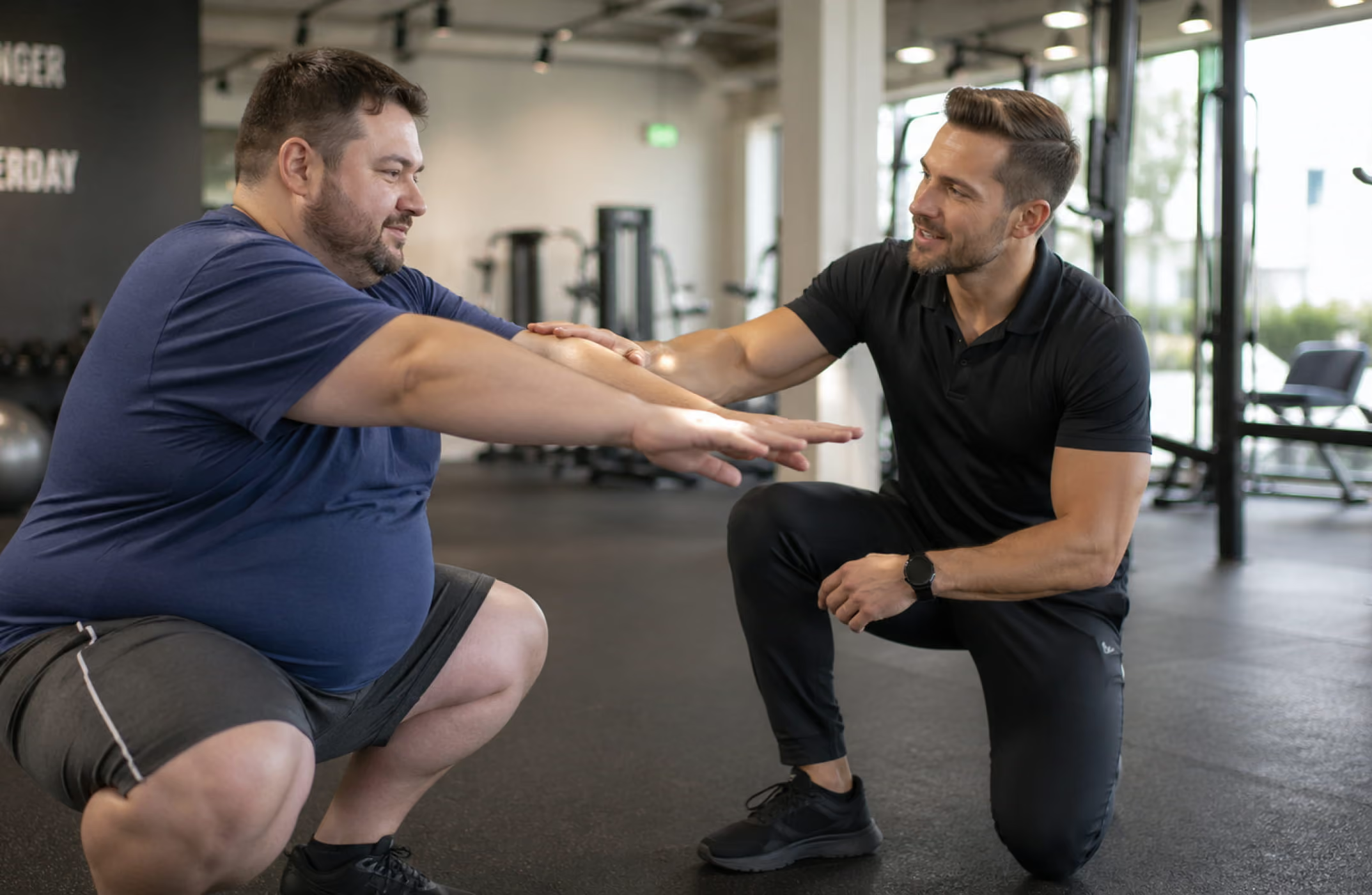
Before you touch a single piece of equipment, one of the most valuable things you can do is get a baseline fitness assessment. Many gyms offer these for free, and a good trainer will use it to understand where your body actually is not where you think it should be.
This matters because overweight beginners often make the mistake of going too hard too fast. They've been sedentary for a while, feel motivated in the moment, and push themselves to the point of soreness or injury in the first week. Then they take a week off to recover. Then the motivation is gone. Sound familiar?
If you have existing conditions, high blood pressure, knee pain, joint pain, or a history of cardiovascular events, it's worth talking to a physical therapist or your doctor before starting a new exercise program. The American College of Sports Medicine recommends medical clearance for people with morbid obesity or multiple chronic disease risk factors before beginning a vigorous exercise plan. A quick conversation can make your exercise routine far safer from day one.
A fitness assessment helps you understand your current cardiovascular fitness, mobility, and physical fitness baseline. From there, you and a trainer can build an exercise program that challenges you without destroying you.
2. Prioritize Low-Impact Aerobic Exercise to Protect Your Joints
This is one of the most important pieces of advice personal trainers give to overweight beginners, and it gets ignored more than almost any other tip.
When you're carrying extra weight, your joints, especially your knees, hips, and ankles, are already under more stress than they would be on a lighter frame. High-impact exercises like running, jumping, or burpees multiply that stress and dramatically increase your injury risk. Knee pain and joint pain are among the most common reasons people abandon their fitness routine early. Don't let that be you.
Low-impact forms of exercise for obese people are not "easier" they're smarter. Moderate intensity aerobic exercise done consistently produces real, measurable health benefits: reduced blood pressure, improved heart health, lower body fat, and significantly reduced risk factors for heart disease and other chronic diseases.
Here's what fitness professionals consistently recommend:
- Stationary Bike or Recumbent Bike: Excellent for aerobic exercise with almost zero joint impact. The recumbent version is especially comfortable if you have lower back sensitivity or find upright positions uncomfortable. A stationary bike is one of the safest starting points for obese people, period.
- Water Aerobics or Swimming: Water supports your body weight, which takes almost all pressure off your joints. Many people who find land-based exercise painful discover they can work at genuinely high intensity in the pool without pain. Water aerobics is particularly well-studied in older adults and sedentary women returning to physical activity.
- Elliptical Machine: Mimics the motion of running without the impact. Most gyms have these and they're an excellent middle ground between the stationary bike and walking.
- Walking (Incline or Slow Walking): Plain walking even slow walking is a legitimate, research-backed form of physical activity. A systematic review in sports medicine literature showed that regular walking significantly reduced blood pressure and supported weight loss in overweight and obese populations.
3. Don't Skip Resistance Training: It Changes Everything
There's a persistent myth that overweight people should focus only on cardio and avoid resistance training until they've lost some weight first. Fitness professionals hear this constantly, and they'll tell you it's completely backwards.
Resistance training and strength training which include free weights, machines, and resistance bands are among the most powerful tools an obese beginner has. Carrying excess weight doesn't disqualify you from lifting; in fact, it's one of the strongest reasons to start. Muscle tissue is metabolically active, meaning it burns more calories even when you're at rest. The more muscle you build, the higher your resting metabolic rate becomes. A meta analysis of resistance training interventions in overweight adults consistently shows this leads to meaningful body fat reduction and weight loss over time independent of dietary changes.
For a starter workout for obese beginners, fitness professionals generally recommend beginning with:
- Bodyweight exercises like chair squats, wall push-ups, and step-ups before adding any external weight. These bodyweight exercises are genuinely effective don't dismiss them.
- Resistance bands for upper and lower body work. They're joint-friendly, easily adjusted, and great for people not yet comfortable with free weights.
- Machine-based exercises rather than free weights initially, because machines guide your movement and reduce injury risk while you're learning proper form.
- Compound movements that engage the entire body or multiple muscle groups at once leg presses, chest presses, seated rows rather than isolation exercises.
Two to three resistance training sessions per week, with rest days in between, is a solid starting structure. Gradually increase weight and volume as your strength and fitness level improve over time.
4. Learn Which Equipment Actually Works for Larger Bodies
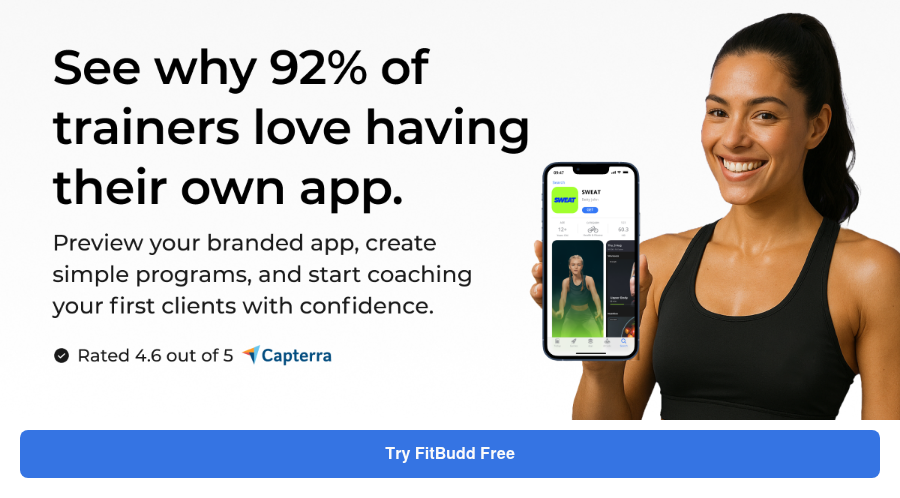
Not all gym equipment is created equal for people carrying extra weight. Some machines have weight limits that aren't always posted. Some seats are too narrow. Some positions feel awkward at a heavier body weight. Knowing this in advance saves you from uncomfortable trial-and-error on the gym floor.
Equipment that tends to work well:
- Cable machines: Incredibly versatile and adjustable. You can strengthen muscles across the entire body rows, pull-downs, chest flies, tricep push-downs. The adjustable pulley makes them accessible regardless of your body size or current fitness level.
- Leg press machine: Much more joint-friendly than barbell squats for beginners, especially if you're managing knee pain. Builds lower body strength safely while your joints adapt to regular exercise.
- Assisted pull-up/dip machine: Uses a counterweight to reduce how much of your body weight you're lifting. Great for building upper body pulling strength without requiring full bodyweight capacity.
- Rowing machine: Full-body aerobic exercise that's low-impact, burns a significant number of calories, and develops cardiovascular fitness and muscular endurance simultaneously. One of the most underused pieces of equipment for obese beginners.
- Resistance bands: Easily adjusted, safe on joints, and versatile enough to work the entire body from a seated or standing position.
Equipment to approach carefully at first:
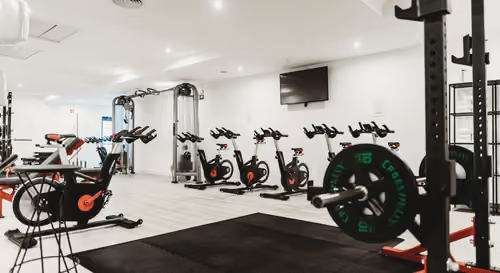
Standard treadmills have weight limits (typically 250–300 lbs on consumer models; commercial gym treadmills often reach 400 lbs check before using). Spin bikes similarly have limits and seat designs that can be uncomfortable try before committing to a class. If anything feels unsafe, ask a staff member. That's what they're there for.
5. Always Warm Up: Every Single Session, No Exceptions
This sounds obvious. It gets skipped constantly.
A proper warm up before exercise is non-negotiable, and this is especially true for obese people whose cardiovascular system and joints need time to prepare for the demands of a workout. Sports medicine experts consistently flag inadequate warm-up as a leading contributor to exercise-related injury in beginners.
A good warm up for overweight beginners looks like 5–10 minutes of light physical activity that gradually elevates your heart rate slow walking on the treadmill, easy pedaling on the stationary bike, or gentle arm circles and bodyweight movements. This isn't wasted time. It literally prepares your muscles, lubricates your joints, and reduces the cardiovascular shock of jumping straight into moderate intensity aerobic exercise from a fully rested state.
6. Master Proper Form Before Chasing Intensity
One of the most common mistakes in any beginner workout not just for overweight exercisers is chasing weight and reps before nailing down proper form.
Poor form doesn't just increase injury risk. It also means you're not actually targeting the muscles you think you're targeting. You can spend months doing squats with poor alignment and get far less out of them than someone doing correct bodyweight exercises at lower intensity.
For overweight beginners specifically, proper form matters even more because:
- Carrying extra weight shifts your center of gravity, which changes how movements feel and where your body naturally compensates
- Certain positions (like deep squats or floor-based exercises) may be restricted initially due to mobility or joint pain
- Learning good movement patterns early prevents ingrained bad habits that are much harder to fix later
7. Build a Workout Plan You Can Actually Stick To
Here's something fitness professionals see constantly: beginners create overly ambitious workout plans in a burst of motivation, burn out within two to three weeks, and quit. Then the guilt cycle kicks in and starting again feels even harder.
The best exercise program for obese beginners isn't the most intense one it's the one you'll actually maintain. Because regular exercise done consistently produces far better results for weight loss, cardiovascular fitness, and overall health than heroic sessions done sporadically.
- Start with 3 days per week. Not 5, not 6. Three days. This gives your body adequate time to recover (which is when muscles actually rebuild stronger and body fat is metabolized) and keeps the psychological pressure manageable.
- Schedule workouts like appointments. Put them in your calendar. Decide which days and what time. Research on behavior change consistently shows that specificity dramatically increases follow-through. "I'll work out Tuesday and Thursday at 6pm" is infinitely more likely to happen than "I'll try to get to the gym this week."
- Keep early sessions short. Thirty to forty minutes is plenty for the first few weeks. You're not cheating yourself you're being smart about gradually increasing volume over time.
- Give yourself permission to have off days. Some days you'll come in tired and have a mediocre workout. That's fine. A mediocre workout is infinitely better than no workout. The goal is a consistent fitness routine, not perfection.
8. Fuel Your Body Properly Before and After Exercise

Nutrition is its own world, and this isn't a diet guide but there are a few workout-specific fueling principles that make a real difference for overweight beginners.
- Don't exercise completely fasted during moderate intensity sessions. There's a popular idea that working out on an empty stomach burns more body fat. While some research supports fasted cardio in certain contexts, for most beginners it means lower energy, worse performance, and potentially feeling dizzy or lightheaded. Eat a small, balanced snack 1–2 hours before your workout something with carbohydrates for energy and protein to protect muscle.
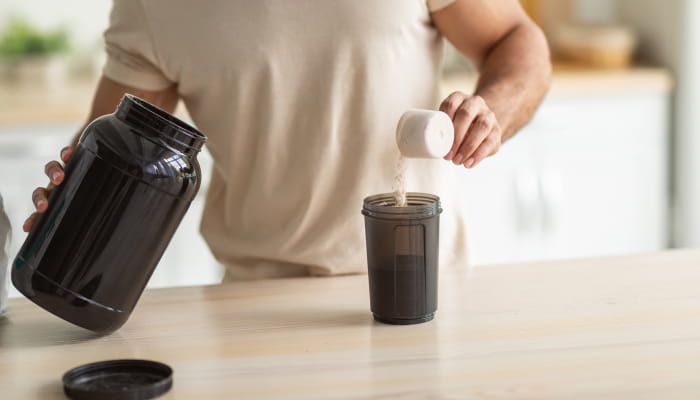
- Prioritize protein after your workout. When you do resistance training, you create tiny tears in muscle fibers. Protein is what your body uses to build muscle and repair those fibers stronger. Aim for a protein-containing meal within 1–2 hours post-session Greek yogurt, eggs, chicken, cottage cheese, or a protein shake all work well.
- Hydration matters more than most people realize. When carrying extra weight, you sweat more and lose fluids faster during exercise. Dehydration impairs physical performance and makes recovery harder. Drink water before, during, and after every session.
You don't need to overhaul your diet before starting to exercise. Dietary changes and a new exercise program can happen simultaneously, gradually. Small, consistent improvements in both areas compound into significant results for health, weight loss, and physical fitness over time.
9. Track Progress Beyond the Scale and Celebrate Small Wins
The scale is one of the most misleading tools for measuring early progress, and yet it's the one most people fixate on.
In the first weeks of a new exercise program, several things happen simultaneously. You begin to build muscle. You increase glycogen stores in your muscles (glycogen binds water, temporarily adding scale weight). You retain some fluid from exercise-related inflammation.
Personal trainers working with obese clients consistently recommend tracking these markers instead:
- Body measurements: Waist, hips, thighs, arms. These often reflect body fat loss faster than scale weight and are far more meaningful for long-term health outcomes and weight reduction.
- Fitness benchmarks: How long can you sustain moderate intensity aerobic exercise before needing to slow down? How does your resting heart rate compare to last month? How many bodyweight exercises can you complete in a set? These numbers will improve consistently with regular exercise and are deeply motivating to track.
- Energy and daily function: Can you climb stairs without getting winded? Does your knee pain feel less severe? Do you sleep better? These quality-of-life improvements are early signs your exercise plan is genuinely working and they're tied to real reductions in risk factors for heart disease, high blood pressure, and other chronic diseases. Public health research consistently shows these functional improvements often precede visible weight loss, especially in previously sedentary women and older adults starting a new fitness routine.
- Mental health: This one gets underrated. Regular physical activity has well-documented mental health benefits reduced anxiety, improved mood, better self image, and more day-to-day confidence. Many people who start a workout plan for weight loss find the mental health improvements to be the most immediately felt.
- Clothing fit: Your clothes will start to fit differently before the scale tells you anything meaningful. Pay close attention to this.
Celebrate every win. First full week completed? That's a win. Added five minutes to your cardio session? Win. Tried a new machine you were nervous about? Big win. Psychological momentum is real, and acknowledging progress even small progress is what keeps people in the gym long enough to see the results they came for.
Read more: Efficient progress tracking for continuous growth
A Note for Personal Trainers Working With This Population
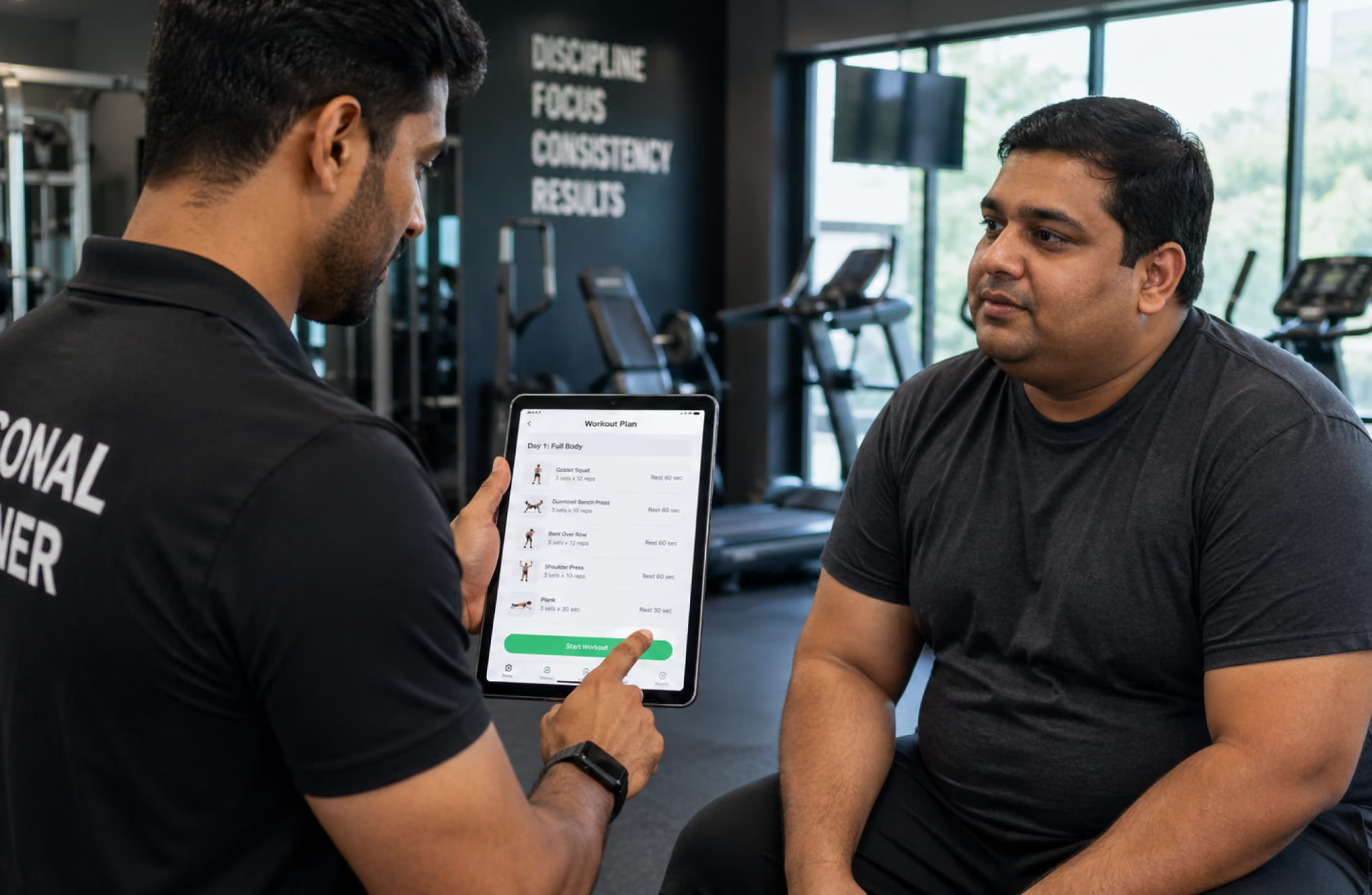
If you're a certified trainer building programs for obese clients, this population has specific needs that generic workout templates simply don't address. Joint-friendly exercise selection, appropriate progression rates, mobility limitations, psychological barriers around self image, and the need for exercise modifications all require genuinely individualized programming.
Platforms like FitBudd allow personal trainers to build and deliver fully customized beginner programs for clients in larger bodies including guided exercise routines, habit tracking, and ongoing check-ins, so that obese clients get the individualized support they actually need, not a one-size-fits-all PDF. For fitness professionals who want to serve this underserved population well, the right tools make a significant difference in client outcomes and long-term retention.
Sample First-Month Workout Plan for Obese Beginners
Here's what a realistic, trainer-approved first month looks like. This isn't a strict prescription everyone's fitness level and starting point is different but it gives you a concrete picture of what gradually increasing your physical activity actually means in practice.
Week 1–2: Building the Foundation
- 3 days per week (e.g., Monday, Wednesday, Friday)
- 15–20 minutes of low-impact aerobic exercise (stationary bike or elliptical at a comfortable pace)
- 10–15 minutes of bodyweight exercises: chair squats, wall push-ups, seated leg raises, standing marches
- Proper warm up before each session; short cooldown after
- Focus entirely on proper form and getting comfortable in the gym environment
Week 3–4: Adding Volume and Resistance
- Still 3 days per week
- 25–30 minutes of moderate intensity aerobic exercise, gradually increasing resistance or incline
- Introduction of 2–3 machine-based exercises or resistance bands: leg press, chest press, seated cable row
- 2–3 sets of 10–12 reps at a weight that challenges you without compromising proper form
By the end of week four, most beginners are breathing easier during cardio, feel stronger in the lower body climbing stairs, and have built enough routine that going to the gym no longer requires mental negotiation. That's real progress even if the scale hasn't moved much yet.
Final thoughts

Starting a fitness journey when you're carrying extra weight isn't about overnight transformation. It's about building a sustainable, healthy relationship with physical activity one workout at a time, one good decision at a time.
The tips in this guide aren't about working harder. They're about working smarter: protecting your joints, choosing the right forms of exercise for your body and fitness level, building a fitness routine you can actually maintain, and tracking the markers of progress that actually matter for your health.
Regular exercise reduces body fat, lowers blood pressure, reduces risk factors for heart disease and other chronic diseases, improves mental health, and builds a version of physical fitness that makes everyday life genuinely better helping you lose weight, strengthen muscles, and maintain good health for the long term.
You don't need to be fit to start. You need to start to become fit.
The gym is for everyone. Including you. Especially you.