
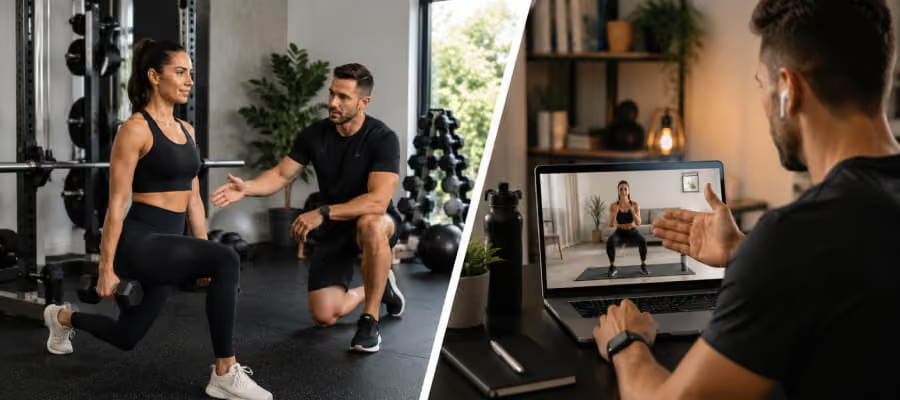

Half of all personal trainers now run hybrid coaching as their primary model, according to the 2026 State of the Personal Training Industry Report. Not as a side option. As their main model.
The blending of in-person coaching with digital delivery has moved into the mainstream. In its 2026 Worldwide Fitness Trends forecast — a survey of around 2,000 fitness professionals — the American College of Sports Medicine (ACSM) ranks wearable technology, mobile exercise apps, and data-driven fitness tech (including online and hybrid in-person-plus-virtual platforms) among the leading trends shaping the industry. The Health & Fitness Association echoes the same shift, reporting that Americans are increasingly combining facility-based training, coaching, and digital formats. Hybrid is no longer a side option — it is how a growing share of coaching businesses operate.
That shift has happened for a reason. Hybrid personal training is quickly becoming the preferred option for clients who want the flexibility to work out when and where they choose, without sacrificing quality or results, thus driving business growth for trainers. This hybrid approach combines the benefits of in-person and online coaching, making it a modern, effective, and client-centric fitness solution.
But a hybrid does not work by accident. It requires the right equipment setup for in-person sessions, a clear structure for online delivery, a platform that handles the digital side without adding admin overhead, and a pricing model that makes both components feel coherent to the client. This guide covers everything, from the physical setup to the software stack, with a specific focus on how to run the online half of a hybrid model without it consuming your coaching hours.
Hybrid personal training combines scheduled in-person sessions with an online coaching infrastructure that delivers programs, tracks progress, and maintains client accountability between sessions. Hybrid training is especially beneficial for busy professionals and those with limited gym access, as it allows them to schedule in-person sessions around their availability and continue workouts remotely, overcoming traditional barriers.
FitBudd runs the online half of this model by providing a branded app, workout builder, check-in tools, nutrition tracking, and payment processing on a single platform, so the trainer can focus on in-person sessions rather than digital admin.
When it comes to pricing, clients appreciate the cost-effectiveness of hybrid personal training, as it allows them to select a mix of in-person and virtual sessions that fit their budget while still receiving high-quality coaching.
The hybrid approach makes sense for a wide range of clients, offering benefits such as flexibility, scalability, better progress tracking, and accessibility. These key features are driving the evolution of the fitness industry and helping trainers achieve sustainable business growth.
What Is Hybrid Personal Training and Coaching?
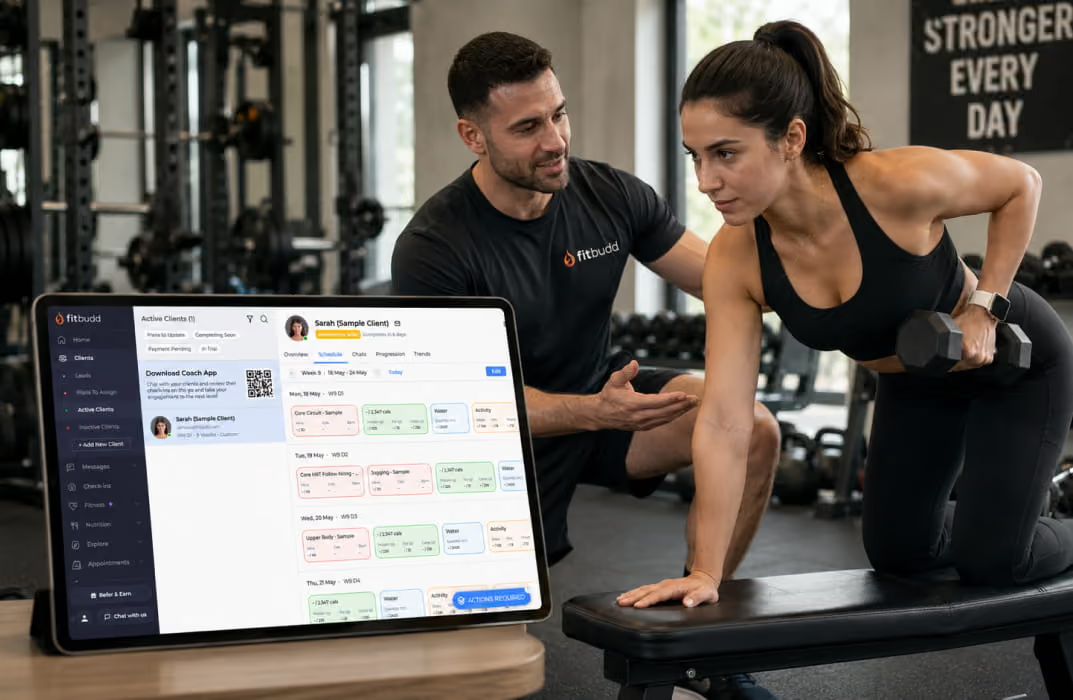
Hybrid Personal Training and Coaching is a model that combines scheduled in-person sessions with structured online coaching delivered between those sessions. Clients receive the personal touch of face-to-face training for technique correction, performance assessment, and motivation, alongside a digital coaching layer that delivers programs, tracks progress, and keeps them accountable on the days they train independently.
The two components work together rather than separately. In-person sessions inform the online programming. Online progress data informs the trainer’s focus during in-person sessions.
The hybrid training model provides ongoing support and accountability throughout the week, which is crucial for maintaining consistent progress and making progress. Neither component functions in isolation, and neither is a downgrade of the other.
This is the core distinction between hybrid personal training and simply offering both in-person and online coaching as separate products. In a true hybrid model, the two are integrated. The client experience is continuous, not split.
This training model allows trainers to offer personalized support and accountability, helping clients stay motivated and committed to their fitness plans.
For a deeper breakdown of how this model works in practice and why it has become the default for growing coaching businesses, the hybrid personal training guide on FitBudd covers the operational and business case in full.
What Equipment and Techniques Are Commonly Used in Hybrid Personal Training?
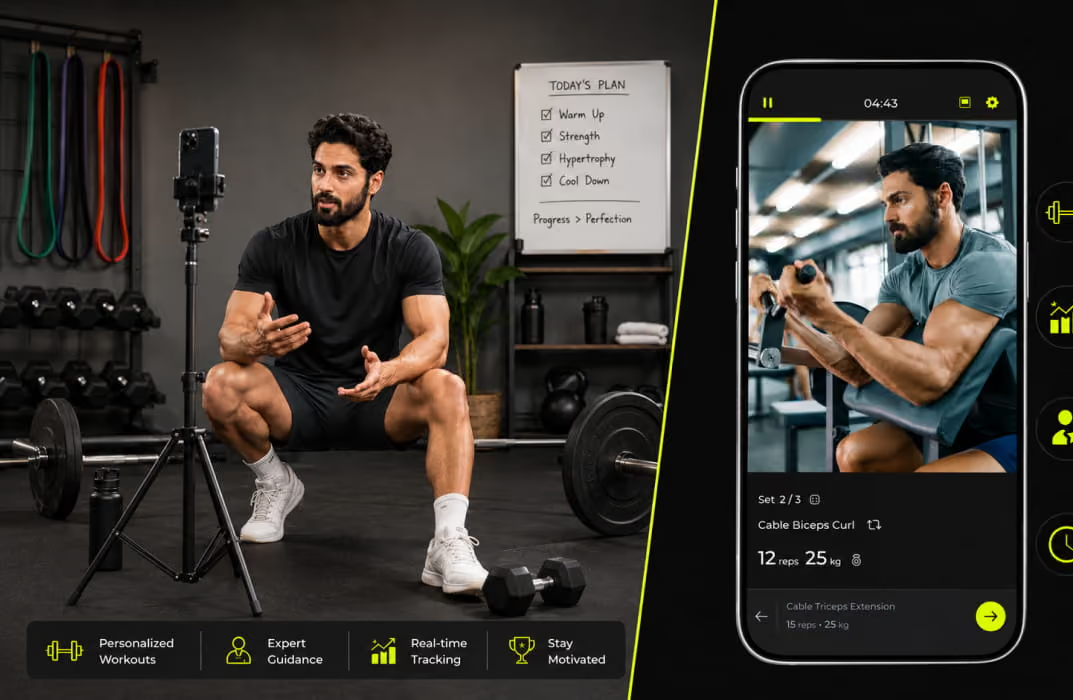
"What equipment and techniques are commonly used in hybrid personal training?" is one of the first questions trainers ask when considering a transition. The answer depends on which side of the model you are equipping: the in-person environment or the online delivery infrastructure.
In-Person Equipment for Hybrid Training Sessions
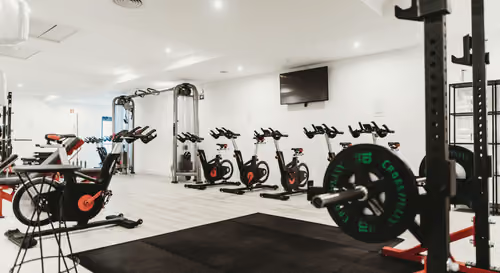
The physical equipment for in-person hybrid sessions is consistent with standard personal training setups. What changes is the intentionality behind how each session is structured, since in-person time is used for what cannot be replicated online.
Strength and resistance equipment: Barbells, dumbbells, and kettlebells remain the core tools for in-person strength sessions. Their value in a hybrid model is that the trainer can observe and correct form in real time, a coaching function that video calls cannot fully replace. In-person sessions in a hybrid model should lean heavily on compound movement work where technique coaching is of the highest value.
Resistance bands and suspension trainers (TRX) are worth including in the in-person setup because they are also compatible with home training, allowing the trainer to prescribe the same equipment for online program days. This continuity reduces the "I don't have the equipment" issue that breaks down online compliance.
Cardio and conditioning equipment: Rowing machines, assault bikes, and slam balls are useful for conditioning blocks in in-person sessions. These are typically not replicated in the client's home environment, so they stay in the in-person session structure.
Assessment tools: In-person sessions in hybrid models are the right environment for fitness assessments. This includes movement screens, body composition measurements, strength testing (1RM or submaximal estimates), and mobility assessments. These inform the online programming that runs between sessions.
A skinfold caliper, measurement tape, and a movement assessment checklist cost nothing compared to the data they produce. Trainers running hybrid models should schedule formal assessment blocks every 4 to 8 weeks as part of the in-person session structure.
Camera and screen setup for recording: Even in-person sessions benefit from a camera setup. Recording a client's squat or hinge pattern from a side angle and sending the clip with coaching notes through the platform bridges the gap between in-person observation and online feedback. A smartphone on a tripod is all this requires.
Online Delivery Equipment and Infrastructure
Coaching platform (non-negotiable): This is the most important piece of infrastructure in a hybrid model. The coaching platform is what runs the online half. Without it, the "online" component is just WhatsApp messages and emailed PDFs, which do not produce the structured, trackable experience clients are paying for.
The platform needs to deliver workout programs to clients' phones, track their session compliance, allow check-in submissions, facilitate messaging, and process payments. FitBudd does all of this inside a single branded app. See how the workout delivery and tracking features work on the FitBudd workouts feature page.
Camera and lighting for video calls: For virtual coaching sessions, form checks, or accountability calls within the hybrid model, a 1080p webcam or smartphone and a ring light or softbox provide enough quality for the trainer to observe movement and deliver coaching. This is a one-time investment that typically costs $50 to $150.
Stable internet connection: A minimum of 10 Mbps upload speed for video calls. Trainers coaching clients in different time zones or conducting live form-check calls need reliable connectivity. A wired Ethernet connection is preferable to Wi-Fi for any live video component.
Microphone: A lapel or desk microphone for online sessions significantly improves the client experience. Built-in laptop microphones pick up room noise, making the sound less professional. An entry-level USB microphone in the $40-$80 range is sufficient.
Techniques Commonly Used in Hybrid Personal Training
Session blocking: In-person sessions are reserved for high-touch coaching: technique work, performance testing, and relationship building. Online sessions handle volume, conditioning, and independent training. This division ensures the in-person component is never wasted on work the client could do from a gym floor without coaching supervision.
Asynchronous feedback loops: The trainer reviews recorded workouts or client check-in submissions and provides written or video feedback through the platform. This does not require a live session. It creates a coaching touchpoint between in-person meetings without requiring the trainer to be online at a specific time.
Progressive overload tracking across both environments: The platform tracks every session the client logs, whether in-person or online. This gives the trainer a complete picture of training volume and compliance, rather than just knowing what happened during the supervised sessions.
Habit check-ins: Weekly digital check-ins covering sleep, nutrition adherence, stress, and session compliance give the trainer data to adjust programming. This is where coaching quality in a hybrid model often exceeds that of pure in-person training, since the trainer has ongoing visibility into the client's week rather than just during the session hour.
How Do Trainers Blend In-Person and Online Coaching?
"How do trainers blend in-person and online coaching?" is the structural question at the heart of hybrid personal training. The answer is a clear session split, a platform that handles the digital layer, and a communication rhythm that keeps clients engaged between in-person meetings.
Here is how the most effective hybrid models are structured:
Step 1: Define the Session Split
The most common hybrid structures are:
2 in-person sessions per week, 2 to 3 programmed online sessions per week: The client sees the trainer twice for supervised work and trains independently for three additional days using the coach's program delivered through the app. This is the most popular hybrid format and works well for intermediate clients with fitness goals around strength, body composition, or athletic performance.
1 in-person session per week, 4 programmed online sessions per week: Used for clients who are more self-motivated, have busier schedules, or are geographically limited for frequent in-person access. The single weekly in-person session becomes a high-value technique and performance check-in.
Bi-weekly in-person sessions with full online programming: Used for remote clients who visit occasionally, or for clients transitioning from fully online to hybrid. The in-person sessions act as formal assessment and recalibration points.
Step 2: Use the Online Platform to Deliver the Program
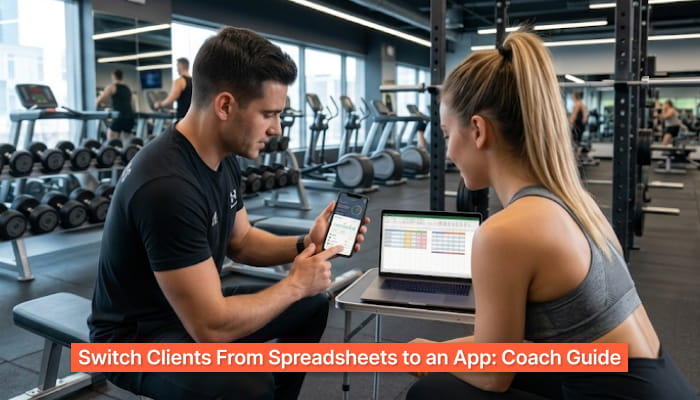
The program the client follows on their independent training days needs to be delivered via a professional interface, not a Google Doc link or a WhatsApp PDF. When a client opens their coaching app and sees their session planned out with exercise videos, set and rep targets, rest periods, and a note from their coach, the perceived value of the program is fundamentally different from opening a spreadsheet.
FitBudd delivers this experience inside a branded app that carries the trainer's logo and identity. Clients can log workouts, submit check-ins, track progress, and message their coach all within the same interface. The trainer receives compliance notifications and views performance data without having to manually chase client updates.
For coaches considering transitioning from a tool like TrueCoach to FitBudd, the key difference is this: FitBudd's app is published under the trainer's brand name in the App Store. When a client searches for their coach's app, it appears under the coach's business name.
TrueCoach clients download the TrueCoach app and see the TrueCoach brand, with the coach's logo applied inside. That distinction affects how clients perceive the professionalism and independence of the coaching business they have joined.
Step 3: Establish the Communication Rhythm
A hybrid model without a clear communication structure becomes a coaching relationship that feels disorganized for the client and draining for the trainer. The communication rhythm should be defined at onboarding and held consistently.
A practical communication structure for hybrid clients:
Weekly check-in (online): A structured submission covering the previous week's training compliance, sleep quality, nutrition adherence, energy levels, and any issues. This takes the client 5 minutes to complete and gives the trainer 80% of what they need to adjust programming.
Post-session message (in-person): A brief note from the trainer after each in-person session summarizing what was worked on and what to focus on in the upcoming online sessions. This keeps the two components connected in the client's mind.
Mid-week check-in (optional): For clients who need more accountability, a mid-week message prompt asking about the previous two sessions is effective. FitBudd's notification tools handle this automatically.
Monthly review call: A 20 to 30-minute video call to review progress data, adjust goals, and plan the next training block. This is where the coaching relationship deepens and where client retention is reinforced.
Step 4: Price the Model Transparently
Hybrid pricing should make both components of the model clear. Clients who understand what they are getting in person and what they are getting online are more likely to see value in the total package than to compare the in-person session rate to a standalone personal training session.
A practical hybrid pricing framework:
Foundational hybrid package: 2 in-person sessions per month, full online program delivery, weekly check-ins. $200 to $400 per month, depending on location and trainer credentials.
Standard hybrid package: 4 in-person sessions per month, full online program delivery, weekly check-ins, nutrition guidance. $350 to $600 per month.
Premium hybrid package: 8 in-person sessions per month, full online program delivery, weekly check-ins, nutrition tracking, monthly video review call, priority messaging. $600 to $1,000 per month.
For a detailed breakdown of how to set these rates and what the market benchmarks look like in 2026, the online fitness coaching pricing guide covers the full framework.
How FitBudd Runs the Online Half of a Hybrid Model
FitBudd is built for exactly the role the online component of hybrid training requires: delivering the program, tracking compliance, maintaining client engagement, and processing payments, all without adding admin hours to the trainer's week.
Here is what that looks like in practice for a hybrid coach:
Program delivery: The trainer builds a weekly training block inside FitBudd's workout builder using the 4,000-exercise library. Programs are assigned to the client's app. On each programmed training day, the client opens the app and sees their session waiting, with exercise videos, set and rep targets, rest periods, and coaching notes. They log each set as they complete it. The trainer sees compliance data in real time.
Check-ins and progress tracking: FitBudd's check-in tools collect weekly submissions covering training compliance, sleep, nutrition, energy, and any physical feedback. Progress photos, weight logs, and strength tracking data accumulate in the client's profile. The trainer reviews this between in-person sessions and adjusts programming accordingly.
In-app messaging: All client communication stays inside the platform. No WhatsApp, no email back-and-forth, no messages lost in a thread from six months ago. The trainer can send voice notes, video feedback clips, or written messages. Clients respond in the same interface.
Payment processing: Hybrid membership packages are set up in FitBudd's billing dashboard. Clients subscribe through the app. Payments are processed through Stripe and PayPal, with FitBudd charging no commission. A trainer running 20 hybrid clients at $400 per month collects $8,000 monthly with no platform cut beyond the $149 Super Pro subscription fee.
Branded app: At the Super Pro tier, the trainer's app is published in the App Store and Google Play under their brand name. This matters for hybrid models because the digital component of the coaching relationship should reinforce the trainer's brand, not that of a third-party platform.
According to the 2025 HFA US Health and Fitness Consumer Report, nearly 1 in 4 fitness members worked with a personal trainer in 2024, a historic high, as Americans increasingly blend in-person coaching with digital tools and training formats. To understand how FitBudd's virtual coaching tools specifically support hybrid delivery, the virtual personal trainer apps guide covers the full feature set in a coaching context.
For coaches just building the digital side of their hybrid business, the Online Personal Training Business's guide walks through the infrastructure setup from the beginning.
TrueCoach for Hybrid Training: Where It Falls Short
TrueCoach is often described as a hybrid coaching tool, and its program delivery and workout-tracking features are highly regarded by 1-to-1 coaches. But several verified limitations make it a weaker choice for trainers who want the online component of their hybrid model to feel as professional as the in-person component.
No branded App Store listing: Clients download the TrueCoach app, not the trainer's app. The trainer can add their logo and select from six color themes, but the App Store listing says TrueCoach, not the coach's business name. For hybrid trainers building a recognizable brand, this is a meaningful gap.
Coach mobile app lacks full functionality: According to verified user reviews on Capterra and GetApp, the TrueCoach mobile app for coaches lacks the full programming capabilities available on the web version. Coaches who are in-person sessions and want to make quick adjustments to a client's online program need to switch to a browser. Multiple reviewers note that the Android version redirects to the website rather than functioning as a native app.
Nutrition features are external: TrueCoach's nutrition tracking relies on MyFitnessPal integration. For hybrid clients who need nutrition guidance as part of their online coaching layer, the data lives in a separate app and requires manual cross-referencing.
Limited payment customization: Multiple Capterra reviews from gym owners and hybrid coaches note that invoicing and payment customization is restricted. Coaches who want to set flexible hybrid package pricing and bill clients automatically report that the current payment tools require workarounds.
No website builder: TrueCoach has no built-in website or lead capture page. Hybrid coaches who want to generate online inquiries and convert them into hybrid clients need a separate website, a landing page tool, and CRM.
FitBudd addresses each of these gaps directly. The Super Pro plan includes a branded app, a full coach dashboard on mobile, built-in nutrition tracking, zero-commission payment processing, and an integrated website builder with lead-capture forms, all for $149 per month.
Setting Up a Hybrid PT Business: The Full Checklist
In-person setup:
- Confirm gym or studio access (rented, owned, or client-site)
- Barbells, dumbbells, and resistance bands as minimum equipment set
- Suspension trainer if space allows
- Phone tripod for recording client sessions
- Assessment tools: measurement tape, skinfold caliper, movement assessment checklist
- Printed or digital intake forms for new clients
Online setup:
- FitBudd Super Pro account configured with branding, programs, and payment settings
- App published in the App Store and Google Play under your brand name
- Webcam or phone camera and ring light for video calls
- USB microphone for session audio quality
- Stable internet (10 Mbps upload minimum for live calls)
- Client onboarding sequence built in FitBudd: welcome message, first check-in form, first program assigned
Business setup:
- Hybrid packages defined with clear in-person and online components per tier
- Pricing set and published through FitBudd's billing dashboard
- Cancellation and rescheduling policy written and included in client agreements
- Communication rhythm defined: weekly check-in day, post-session note protocol, monthly review call
For coaches building the business systems side of their hybrid model from scratch, the starting an online personal training business guide covers the setup process in detail.
The online personal training packages guide covers how to structure and price hybrid packages to maximize both conversion and retention.
How to Price a Hybrid Personal Training Model
Pricing is where hybrid models either work financially or fall apart. Hybrid personal training is often a cost-effective solution, offering clients quality coaching at a lower price point by combining in-person and virtual sessions.
Trainers who undervalue the online component end up delivering significant coaching work for a rate that reflects only the in-person session cost. Trainers who overprice the online component without delivering structured, visible value lose clients to cheaper options.
The right pricing approach treats the online component as a distinct, structured service with clear deliverables, not as a bonus attached to in-person sessions.
When designing hybrid packages, it's essential to align offerings with clients' personal goals to ensure the training plan meets their individual needs and objectives.
What to include in hybrid pricing:
In-person sessions: The rate per session should reflect your local market, credentials, and the specificity of the work done. In-person technique coaching for strength training or performance sport justifies higher per-session rates than general fitness sessions.
Online program delivery: Clients should understand they are receiving a structured, customized workout plan delivered to their app each week. This is not a PDF. It is a live, adaptive program that updates based on its performance data. Customized workout plans are a key feature of hybrid personal training, enhancing both in-person and remote coaching experiences by providing tailored routines that increase client engagement and satisfaction.
Check-in analysis and programming adjustments: The time the trainer spends reviewing check-in data and adjusting the program is included in the coaching service. Build it into the package price rather than absorbing it as unpaid work.
Nutrition guidance: Nutrition coaching can be integrated as a value-add in hybrid personal training packages. Including nutrition coaching, such as basic nutrition tracking and macro guidance, not only adds value to the package but also creates an opportunity for upselling and justifies higher pricing, while enhancing client engagement and retention.
Sample hybrid package pricing (2026 benchmarks):
Basic: 2 in-person sessions per month plus online programming and weekly check-ins. $200 to $350 per month. Standard: 4 in-person sessions per month plus online programming, nutrition guidance, and weekly check-ins. $350 to $600 per month. Premium: 8 or more in-person sessions per month plus full online program, nutrition tracking, monthly strategy call, and priority messaging. $600 to $1,200 per month.
For the full pricing framework and how to calculate a rate that works for your location, client type, and service level, see the online personal training pricing breakdown and the personal trainer cost guide.
Blended Fitness Coaching in Practice: What a Typical Hybrid Week Looks Like
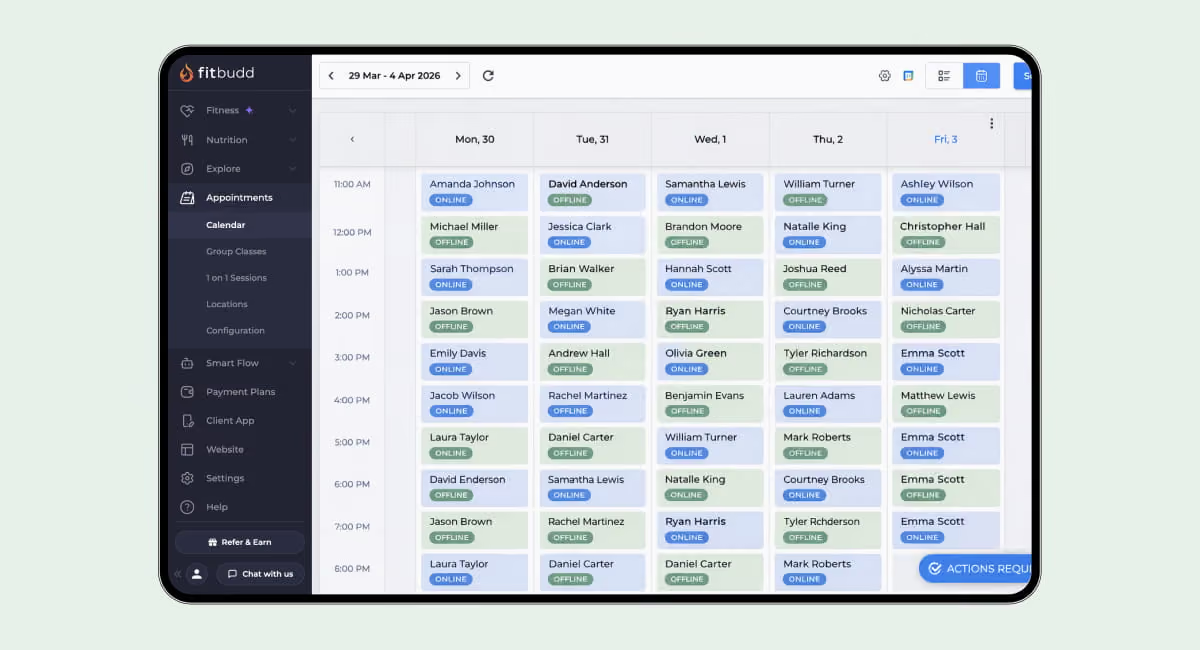
Here is how a well-structured hybrid week runs for a client on a Standard hybrid package:
Monday: In-person session with the trainer. Upper body strength focus, technique coaching on barbell movements, and performance assessment data collected. The trainer takes notes on the week's programming.
Tuesday: Client trains independently. FitBudd delivers a lower-body program to its app. They log each set on completion. The trainer sees the session marked complete by 8 pm.
Wednesday: Rest or active recovery. FitBudd sends a midweek check-in notification. Client submits sleep, stress, and energy scores in 2 minutes.
Thursday: Client trains independently. FitBudd delivers a conditioning session. The trainer reviews Tuesday's performance data and makes a small adjustment to Thursday's program via the dashboard.
Friday: In-person session with the trainer. Reviews Thursday's logged performance data before the session starts. Adjusts the session focus based on the data. Technique work and progressive overload on the movements logged on Tuesday.
Saturday: Client trains independently on an optional session available in the app.
Sunday: Trainer sends a brief end-of-week note through FitBudd's messaging tool, reviewing the week's compliance and previewing next week's focus.
The trainer spent two in-person hours with this client. The platform handled all of the digital delivery, tracking, and communication infrastructure. The client experienced seven days of continuous coaching, not two sessions with nothing in between.
This is the operational difference between hybrid personal training done well and hybrid training done as an afterthought.
The Bottom Line: Build the Online Half Before You Scale the In-Person Half
The trainers who make hybrid personal training work financially are not the ones with the most in-person clients. They are the ones whose online component runs smoothly enough that adding five more clients does not add five more hours of admin per week.
FitBudd is built specifically to be that online layer. Your clients receive programs through your branded app, submit check-ins through the same interface, pay through the platform, and communicate with you without ever leaving the ecosystem you have built. You spend your hours on in-person sessions and coaching decisions, not on chasing compliance data or manually sending program updates.
According to Smart Health Clubs, virtual personal training via fitness apps has grown 37% year-over-year, and over 50% of millennials and Gen Z gym members prefer gyms that provide a dedicated app for scheduling, progress tracking, and coaching. For coaches ready to move their hybrid model onto a professional platform, the virtual personal trainer apps overview shows how FitBudd fits into a modern hybrid coaching business.
For coaches exploring online training as a complement to their existing in-person client base, the online personal training guide is the right starting point.
Ready to run your hybrid model on FitBudd? Start your 30-day free trial, no credit card required.












.jpg)